An interesting item popped up in SAM.gov. According to a Request for Information (RFI) due February 20, the FBI may have interest in a system for secret biometric searches.
“The FBI intends to identify available software solutions to store and search subjects at the classified level. This solution is not intended to replace the Next Generation Identification System Functionality, which was developed and implemented in collaboration with the FBI’s federal, state, local, tribal, and territorial partners. The solution shall reside at the Secret and/or Top-Secret/SCI level with the ability to support data feeds from external systems. The solution must allow the ability to enroll and search face, fingerprint, palmprint, iris, and latent fingerprints, and associated biographic information with a given set of biometrics.”
Now remember that the Next Generation Identification (NGI) system is protected from public access by requiring all users to adhere to the CJIS Security Requirements. But the CJIS Security Requirements aren’t Secret or Top Secret. These biometric searches, whatever they are, must REALLY be kept from prying eyes.
The RFI itself is 8 pages long, and is mysteriously numbered as RFI 01302025. I would have expected an RFI number 01152026. I believe this was an editing error, since FBI RFI 01302025 was issued in 2025 for a completely different purpose.
Whatever the real number is, the RFI is labeled “Classified Identity-Based Biometric System.” No acronym was specified, so I’m self-acronyming it as CIBS. Perhaps the system has a real acronym…but it’s secret.
If your company can support such a system from a business, technical, and security perspective, the due date is February 20 and questions are due by February 2. See SAM.gov for details.
Each person has certain immutable attributes associated with them, such as their blood type. And other attributes, such as their fingerprints and iris characteristics, which are mostly immutable. (Although I defy anyone to change their irises.)
But other things associated with us are all too mutable. If we use these for identification, we’ll end up in trouble.
Elvis Presley, songwriter?
Let’s take one of the many attributes associated with Elvis Presley. If you haven’t heard of Presley, he was a popular singer in the mid 20th century. He’s even in Britannica.
(As a point of clarification, the song “Radio Radio” is associated with a DIFFERENT Elvis.)
Among many other songs, Presley is associated with the song “Don’t Be Cruel.”
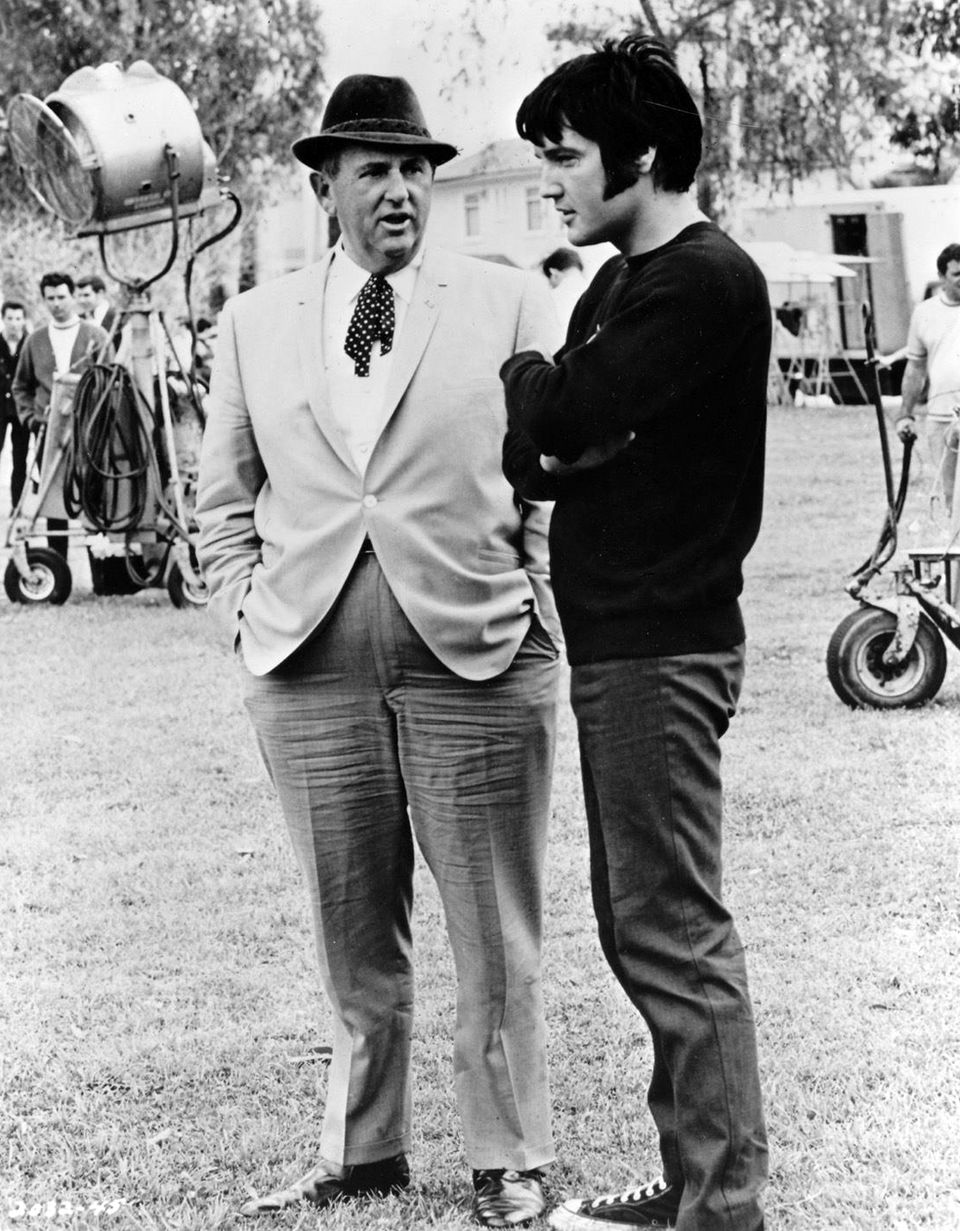
Elvis Presley.
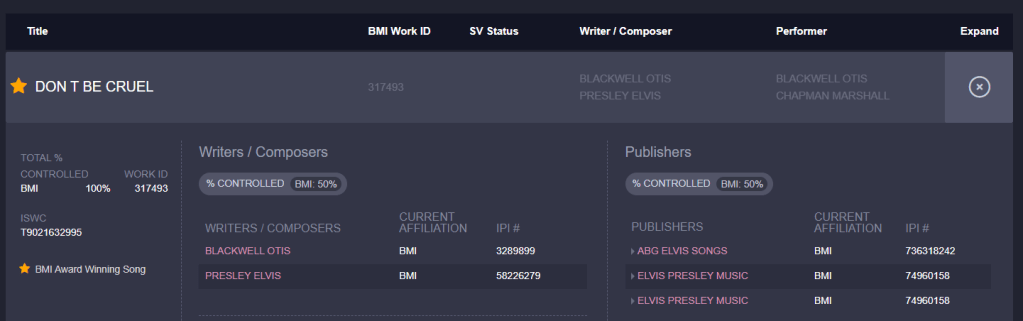
Presley was not only the performer, but also the credited co-songwriter.
After all, that’s what BMI says when you search its Songview database. See BMI work ID 317493.
“…he listened to a selection of acetate demos provided by Freddy Bienstock, the new song representative assigned to Elvis by his publishers, Hill and Range. He chose “Don’t Be Cruel” by an obscure Brooklyn-born r&b singer and songwriter, Otis Blackwell. As per Hill and Range’s contractual requirement, it came with the assignment of half the publishing to Elvis Presley Music and half the writer’s share to Elvis Presley, but as Blackwell, the first of Elvis’ great “contract” writers, was always quick to point out, it was the best deal he ever made.”
Many songs are credited to Presley as a songwriter, but in reality he wrote few if any of them. Yet the “songwriter” attribute is assigned to him. Do we simply accept what BMI says and move on?
But there are other instances in which there are no back room deals, yet a song is strongly associated with a musical entity who never wrote it.
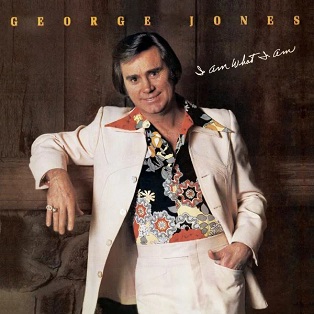
George Jones, not a songwriter
Take BMI Work ID 542061. The credited songwriters for this particular song are Robert Valentine Braddock and Claude Putnam, more commonly known as Bobby Braddock and Curly Putnam. According to RolandNote, Braddock and Putnam began writing this song on March 4, 1977 and finished it on October 18, 1977.
It was recorded by Johnny Russell on either March 7, 1978 (RolandNote), or January 18, 1979 (Second Hand Songs), or both (Classic Country Music Stories). But no recording was released.
Then George Jones recorded the song on February 6, 1980 with subsequent overdubs (“You know she came to see him one last time”) when he was more sober. His reaction?
“I looked [producer] Billy [Sherrill] square in the eye and said ‘nobody’s gonna buy that thing, it’s too morbid.’”
And morbid it was. Although popular music in general and country music in particular has never shied away from morbid songs.
Released the next month on March 18, the song was never associated with Braddock, Putnam, Russell, or Sherrill ever again. “He Stopped Loving Her Today” is completely associated with George Jones.
Now there’s a particular article that I wrote for a Bredemarket client a couple of years ago that used a slow reveal “reverse timeline” effect. Starting with 2022 and moving back in time to 2019, I slowly dropped the details about a missing person who was identified via biometric technology, finally solving the mystery of the person’s identity (Connerjack Oswalt).
“It is clear that digital-first identity systems are unlikely to become standard. Most governments will still rely heavily on physical credentials through 2026. Physical documents, such as diver’s licenses and passports, have long life spans. Physical security is already a proven technology, making it essential for continued trust and accessibility in the wake of ever-more sophisticated attack methods. ABI Research cybersecurity analysts view mobile ID as more of a companion to physical credentials.”
Oh, and number 12.
“Interest in biometric payment cards has waned due to high costs and complex onboarding. Zwipe’s bankruptcy in March 2025 is emblematic of this latest trend. To extract returns from their prior investments in biometrics, digital payment providers are pivoting to other markets like secure access and cold wallets. Going forward, the technology will shift from mainstream ambition to specialty use cases, with fewer launches expected in 2026.”
To see what these and the other 11 predictions mean, read the ABI Research article.
The TL;DR…someone authenticates themselves after a delivery company request, but the actual delivery is made by a minor such as a younger brother or sister. As I noted, continuous authentication through the entire delivery process, rather than just at the beginning, nips this fraud in the bud.
“A TransUnion report indicates that weak identity verification processes are leaving gig platforms, workers and consumers exposed to fraud and safety risks.
“The 2026 Gig Economy Worker Report reveals that one in four gig workers has rented or sold access to their accounts, enabling unverified individuals to perform services under their names.”
Of course ID renting is not limited to the gig economy.
Google Gemini.
The whole “money mule” effort is designed to obfuscate the original seller of goods by inserting an intermediary, with the intermediary’s rented identification the ID of record.
Whenever you let someone borrow your identity, you’re endangering everyone.
But there are ways to stop this. If your company offers such a solution, Bredemarket can help you publicize it. Talk to me.
And in case you’re wondering, yes I do my own work.
“Step 1: Talk with your client, whether by email, on the phone, or in person. This will give you a clear understanding of the project, the audience and your client’s goals.”
Allsop asks multiple questions, including why, what, and who.
“[A]nswers to these questions will help you write copy that resonates with your audience….”
Great. Bredemarket and Allsop are pretty much in alignment.
But Chris is only on Step 1.
“Step 2: Take your conversation with your client a step further with thorough research.”
I gloss over this but it’s important. If you don’t know an industry it’s important to understand it. And if you do know an industry it’s important to understand it better. Even if a biometric product marketing expert is writing biometric content, it always helps to conduct research.
(Yeah, I’ll share the video. Later.)
Oh, and Chris isn’t done yet.
“Step 3: Study successful promotions, websites, and content in the topic or industry you’re working in. Ask yourself how each promotion got your attention.”
Good idea…to a point. Don’t slavishly imitate other promotions. The content from your client still needs to differentiate from the content from the competitors. And aping some popular brand to call yourself the “Uber of lawn care” just sounds bad when you spend two seconds thinking about it.
Experienced biometric professionals can’t help but notice that the acronym OFIQ is similar to the acronym NFIQ (used in NFIQ 2), but the latter refers to the NIST FINGERPRINT image quality standard. NFIQ is also open source, with contributions from NIST and the German BSI, among others.
But NFIQ and OFIQ, while analyzing different biometric modalities, serve a similar purpose: to distinguish between good and bad biometric images.
But do these open source algorithms meaningfully measure quality?
The study of OFIQ
Biometric Update alerted readers to the November 2025 study “On the Utility of the Open Source Facial Image Quality Tool for Facial Biometric Recognition in DHS Operations” (PDF).
Note the words “in DHS Operations,” which are crucial.
The DHS doesn’t care about how ALL facial recognition algorithms perform.
The DHS only cares about the facial recognition algorithms that may potentially use.
DHS doesn’t care about algorithms it would never use, such as Chinese or Russian algorithms.
In fact, from the DHS perspective, it probably hopes that the Chinese Cloudwalk algorithm performs very badly. (In NIST tests, it doesn’t.)
So which algorithms did DHS evaluate? We don’t know precisely.
“A total of 16 commercial face recognition systems were used in this evaluation. They are labeled in diagrams as COTS1 through COTS16….Each algorithm in this study was voluntarily submitted to the MdTF as part of on-going biometric performance evaluations by its commercial entity.”
So what did DHS find when it used OFIQ to evaluate images submitted to these 16 algorithms?
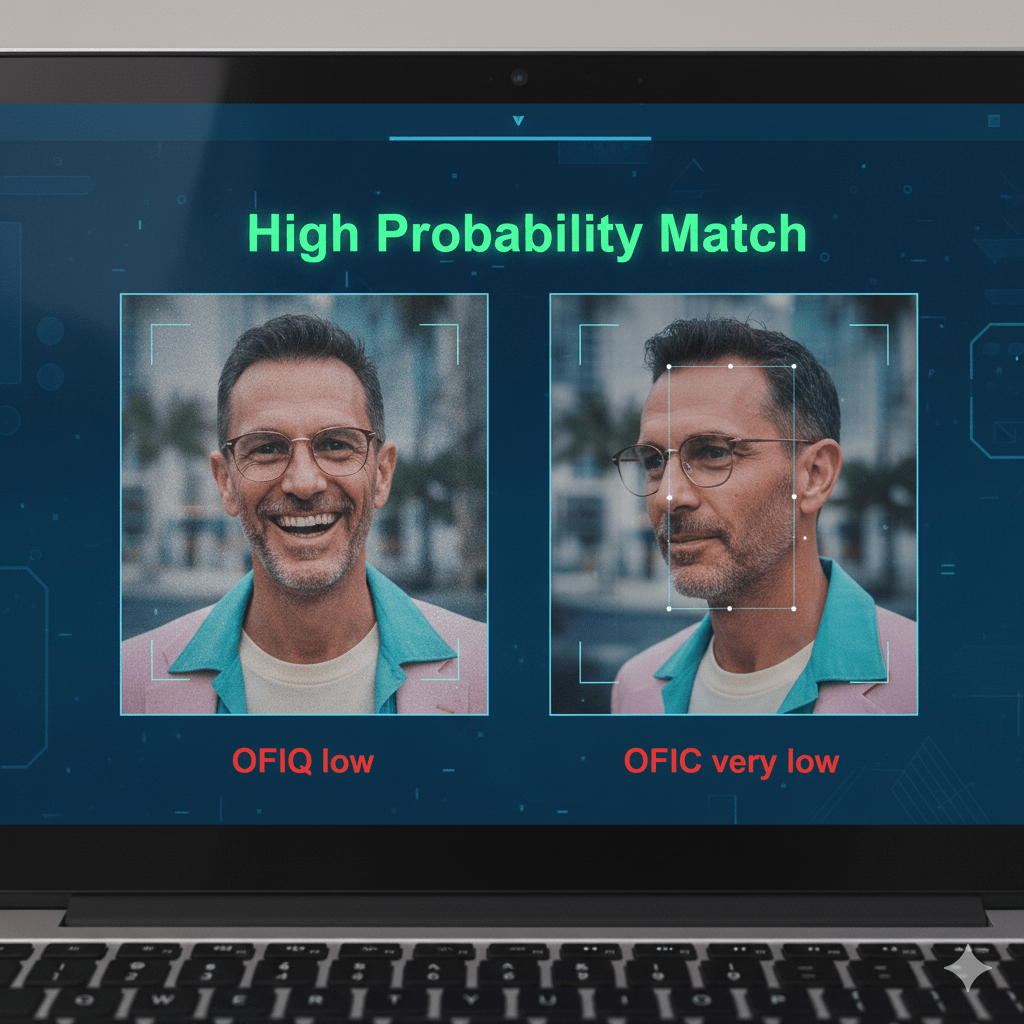
“We found that the OFIQ unified quality score provides extremely limited utility in the DHS use cases we investigated. At operationally relevant biometric thresholds, biometric matching performance was high and probe samples that were assessed as having very low quality by OFIQ still successfully matched to references using a variety of face recognition algorithms.”
Or in human words:
Images that yielded a high quality OFIQ score accurately matched faces using the tested algorithms.
Images that yielded a low quality OFIQ score…STILL accurately matched faces using the tested algorithms.
Google Gemini.
So, at least in DHS’ case, it makes no sense to use the OFIQ algorithm.
Both product marketing consultants and product marketing employees alike don’t always see the results of the content they create.
But there’s a definite difference between the visibility of external-facing content and internal-facing content.
I’ve created both types of content, both at Bredemarket and as a corporate employee. And I’ve seen this difference.
External-facing content is usually visible to its creator. When I wrote a blog post for Incode, or when I write an article or newsletter for a Bredemarket client, by definition I can see the final result. The exceptions to this are unusual and rare.
The visibility of internal-facing content varies, with employees seeing more internal facing content then consultants. When I prepared the internal presentation “How MorphoTrust Came To Be” for my department at MorphoTrak I obviously saw it. But if I prepare snippets to incorporate into an internal presentation for a Bredemarket client, I may or may not see the final result.
Google Gemini.
In many cases, consultants toss their content over a virtual wall, where the client does with it what they will. After all, they paid for the content and can do what they want.
What if you need a partner?
But what if a client requires someone who is more integrated into the company’s operations? Or embedded into the company?
This is why I offer the Bredemarket 4444 Partner Retainer, if you need to embed me into your operations while still providing you with budget predictability.
If you elect to contract with Bredemarket as an embedded partner in your organization via the Bredemarket 4444 Partner Retainer, then:
Bredemarket can create any content you need—blogs, case studies / testimonials, data sheets, e-books, proposals, social media posts / Xs (or whatever tweets are called today), white papers, or anything—within the hours alloted in the partner retainer contract.
The length is at your discretion. 288 characters? I’m on it. 50 pages? I’m on it.
How do you want to handle kickoffs, reviews, and status calls? It’s entirely up to you.
How does the Bredemarket 4444 Partner Retainer work?
Prepaid base hours: The partner retainer contract between you and Bredemarket specifies the maximum number of hours for the following calendar month. This provides predictable costs, and maximum flexibility in how you use Bredemarket to create your content.
Additional hours: Any additional hours above the maximum are billed at Bredemarket’s standard hourly rate.
Deliverable format: Unless agreed otherwise in advance, Microsoft Word docx including callouts, hyperlinks, key words, hashtags.
If this interests you, schedule a free meeting with me to discuss your needs.
I previously mused about an alternative universe in which a single human body had ten (different) faces.
Facial recognition would be more accurate if biometric systems had ten faces to match. (Kind of like you-know-what.)
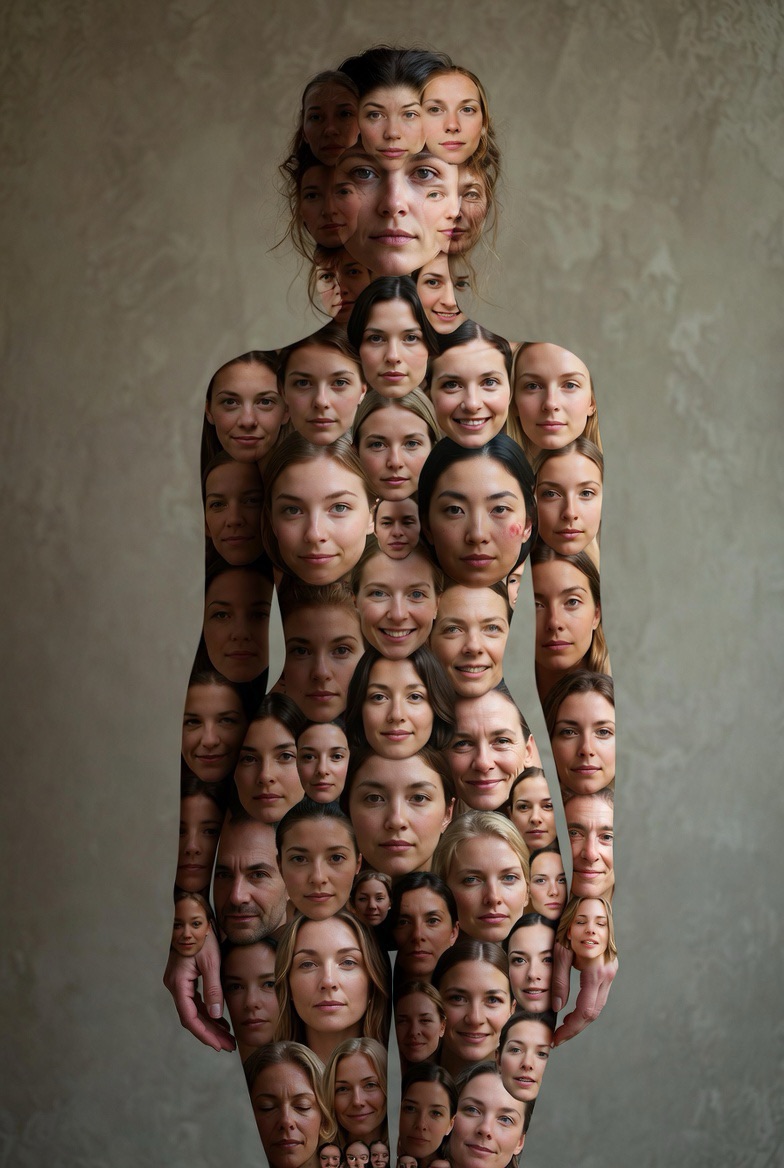
Well, now I’m getting ridiculous by musing about a person with one hundred faces for identification.
Grok.
When I’m not musing about alternative universes with different biometrics, I’m helping identity/biometric firms market their products in this one.
And this frivolous exercise actually illustrates a significant difference between fingerprints and faces, especially in use cases where subjects submit all ten fingerprints but only a single face. The accuracy benefits are…well, they’re ten times more powerful.
Are there underlying benefits in YOUR biometric technology that you want to highlight? Bredemarket can help you do this. Book a free meeting with me, and I’ll ask you some questions to figure out where we can work together.















 Bredemarket