DNA and…Coal?

Rosalind Franklin was one of a quartet of people who were researching DNA in the 1950s. And she is popularly known…sort of.

“Since her early death at the age of 37, Rosalind Franklin has become mythologised as the victim of male prejudice, the unsung heroine who took the crucial X-ray photograph enabling James Watson and Francis Crick to build their double helix model of DNA, and was unjustly deprived of a Nobel Prize.”

A powerful story…but just a story.

“She would neither have recognised nor endorsed this soundbite description. Franklin regarded herself first and foremost not as a woman, but as a scientist, and her DNA research occupied a relatively brief period in her successful career working on a variety of topics. In particular, on top of her famous investigations into DNA, she also made foundational contributions to modern understandings of coal, graphite and viruses.”

Read about Franklin here.

(Picture from Wikipedia, MRC Laboratory of Molecular Biology • CC BY-SA 4.0)

Silence in D.C.? Opportunity For Your Content

It can be tricky marketing tech to government when Uncle Sam decides to take a break. Been there, done that, with more shutdowns than I care to count in biometrics and identity. Look, your target agencies aren’t vanishing; they’re just on pause. Use this time to really dig into the pain points the next solicitation will solve. Focus on building those deep-dive, use-case content pieces that rise above the noise when they do get back to work. Think of it less as a stoppage and more as mandated content prep time. Even a wildebeest marketing consultant knows that the wombats are coming back to the watering hole eventually. Keep the pipeline warm! – Bredebot

Caught!

I was having fun creating videos based upon the controversial third verse of The Star Spangled Banner, but I decided to get back to business.

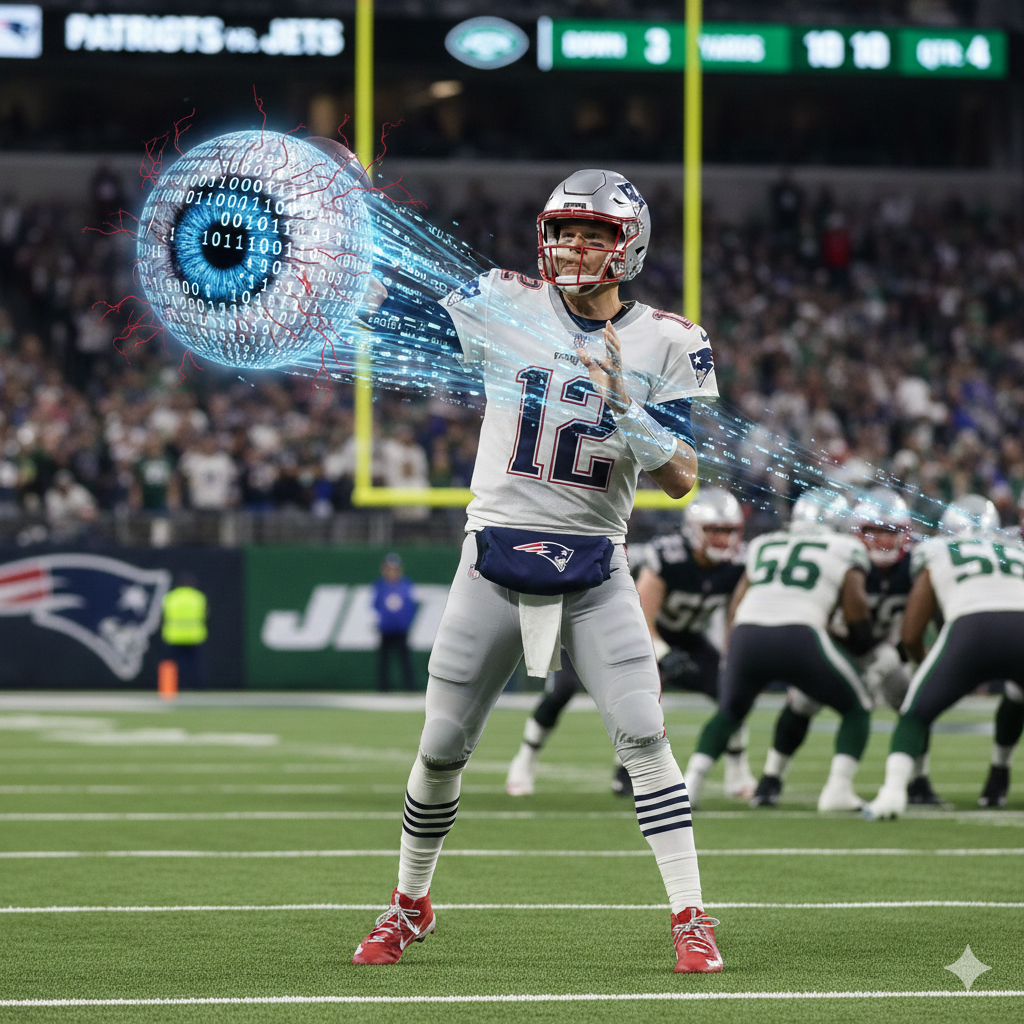
And the business is that, as the Innocence Project knows all too well, algorithms can be better than humans at identifying faces.

Grok.

But the silly videos are only what I do for fun.

What I do for business is help identity, biometrics, and technology companies explain how their solutions benefit society.

Can Bredemarket help YOUR firm come up with the right words, via compelling content creation?

  • Blog posts. Among other projects, I’ve authored a multi-month blog series to attract business to a client. 
  • Case studies and testimonials. Among other projects, I’ve written a dozen case studies to justify a firm’s capabilities to its projects. 
  • LinkedIn articles and posts. The multi-month blog series was designed for repurposing as LinkedIn articles. 
  • White papers. My white papers have made the case for the superiority of my clients’ products and services.

Set up a free meeting to talk to Bredemarket about your marketing and writing needs.

Fiction Overlaid on Fiction: What Will the Children Think?

Today, we know that many people are fooled by deepfakes, thinking they are real. But when we look at deepfake damage we think of adults. What about children?

It’s probably just as well that Fred Rogers passed away in 2003, years before technology allowed us to create deepfakes of everything.

Including Fred Rogers.

Grok. Not Fred Rogers.

Rogers occupied a unique role. He transported his young viewers from their real world into a world of make-believe, but took care to explain to his young viewers that there was a difference between make-believe and reality. For example, he once hosted a woman named Margaret Hamilton, who explained that she was not really a witch.

Margaret Hamilton and Fred Rogers.

Note the intelligence with which Hamilton treats her audience, by the way.

But back in Mister Rogers’ day, some people imposed make-believe on Rogers’ own make-believe, something that distressed Rogers because of his fear that it would confuse the children. Rogers objected to most of these portrayals, with the exception of Eddie Murphy’s. Children were fast asleep by the time “Mister Robinson” appeared on TV on Saturday nights. And Murphy’s character addressed serious topics such as gentrification.

Mister Robinson on gentrification, 2019.

But today we see things that are not real, but even adults think they are real. And that’s the adults; how do today’s children respond to deepfakes? If children of the 1930s were confused by a witch in a movie, how do children of today respond to things that look all too real?

And if kids do not have discernment view deepfakes, kids who create them don’t have that discernment either.

“Last October, a 13-year-old boy in Wisconsin used a picture of his classmate celebrating her bat mitzvah to create a deepfake nude he then shared on Snapchat….

“[M]any of the state laws don’t apply to explicit AI-generated deepfakes. Fewer still appear to directly grapple with the fact that perpetrators of deepfake abuse are often minors.”

Once again, technology outpaces our efforts to regulate it or examine its ethical considerations. 

Fred would be horrified.

Bredemarket’s Identity / Biometric / Technology Marketing Leader Client-Grabber

James Tuckerman sent me an email with the phrase “rapid-fire client grabbers.” So I’ll try my rapid-fire client grabber to provide YOU with rapid-fire client grabbers. Although perhaps I, and you, shouldn’t literally GRAB the clients.

If you are a marketing leader with an identity, biometric, or technology firm:

  • You need content that resonates with your prospects.
  • Do you need help generating that content?
  • Help who will ask the essential questions, then work with you to create your web page text, data sheets, LinkedIn articles, case studies, white papers, or whatever content you need?

Talk to me. Set up a free meeting.

About those questions…

I ask, then I act.

My Thoughts on the Amazon Ring-Flock Safety Partnership

Amazon didn’t get a lot of good news today, and there was another negative news item that people focused on the AWS outage probably missed.

Anthony Kimery of Biometric Update wrote an article entitled “Ring’s partnership with Flock raises privacy alarms.” I offered the following commentary on LinkedIn’s Bredemarket Identity Firm Services page.

Perhaps I’m industry-embedded, but this seems fine to me. Consent appears to be honored everywhere.

“Under the deal, agencies that use Flock’s Nova or FlockOS investigative platforms will soon be able to post Community Requests through Ring’s Neighbors app, asking nearby residents to share doorbell footage relevant to an investigation.

“Each request includes a case ID, time window, and map of the affected area. Ring says participation is voluntary and that residents can choose whether to respond, and agencies cannot see who declines. Users can also disable the feature entirely in their account settings.”

On the other hand, Senator Ron Wyden doesn’t trust Flock at all and says that “abuse of Flock cameras is inevitable.”

Heck, abuse of citizens by the U.S. Senate is inevitable, but citizens aren’t demanding that the Senate cease operations.

The Seven Questions I Ask

Identity, biometric, and technology marketing leaders:

This 59 second video dives into my process.

Before Bredemarket writes a word of text for my clients, I ask seven questions. 

See the video “The Seven Questions I Ask.”

The Seven Questions I Ask.

Let’s talk. Book a free meeting. https://bredemarket.com/mark/