KeyData Cyber Sums Up The Most Visible Change in NIST SP 800-63-4

As we all transition from version 3 of NIST SP 800-63 to the new version 4 (63 63A 63B 63C), Biometric Update has published an article authored by Dustin Hoff of KeyData Cyber, “Navigating the crossroads of identity: leveraging NIST SP 800-63-4 for business advantage.”

So what has changed?

“Perhaps the most visible change is the push for phishing-resistant authentication—methods like passkeys, hardware-backed authenticators, and device binding….This shift signals that yesterday’s non-phishing-resistant MFA (SMS codes, security questions, and email OTPs) is no longer enough because they are easily compromised through man-in-the-middle or social engineering attacks like SIM swapping.”

Iguana-in-the-middle. Google Gemini.

Hoff says a lot more about version 4, including tips of transitioning to the new NIST standard. Read Hoff’s piece here on Biometric Update.

OK, How Does Orchestration REDUCE Complexity?

I’m stealing work from my bot.

I just asked Google Gemini to conceive an illustration of the benefits of orchestration. You can see my original prompt and the resulting illustration, credited to Bredebot, in the blog post “Orchestration: Harmonizing the Tech Universe.” (Not “Harmonzing.” Oh well.)

Google Gemini.

Note the second of the two benefits listed in Bredebot’s AI-generated illustration: “Reduced Complexity.”

On the surface, this sounds like generative AI getting the answer wrong…again.

  • After all, the reason that software companies offer a single-vendor solution is because when everything comes from the same source, it’s easier to get everything to work together.
  • When you have an orchestrated solution incorporating elements from multiple vendors, common sense tells you that the resulting solution is MORE complex, not less complex.

When I reviewed the image, I was initially tempted to ask Bredebot to write a response explaining how orchestrated solution reduce complexity. But then I decided that I should write this myself.

Because I had an idea.

The discipline from orchestration

When you orchestrate solutions from multiple vendors, it’s extremely important that the vendor solutions have ways to talk to each other. This is the essence of orchestration, after all.

Because of this need, you HAVE to create rules that govern how the software packages talk to each other.

Let me cite an example from one of my former employers, Incode. As part of its identity verification process, Incode is capable of interfacing to selected government systems and processing government validations. After all, I may have something that looks like a Mexican ID, but is it really a Mexican ID?

Mexico – INE Validation. When government face validation is enabled this method compares the user’s selfie against the image in the INE database. The method should be called after add-face is over and one of (process-id or document-id) is over.

So Incode needs a standard way to interface with Mexico’s electoral registry database for this whole thing to work. Once that’s defined, you just follow the rules and everything should work.

The lack of discipline from single-vendor solutions

Contrast this with a situation in which all the data comes from a single vendor.

Now ideally interfaces between single-vendor systems should be defined in the same way as interfaces between multi-vendor systems. That way everything is nicely neatly organized and future adaptations are easy.

Sounds great…until you have a deadline to meet and you need to do it quick and dirty.

Google Gemini.

In the same way that computer hardware server rooms can become a tangle of spaghetti cables, computer software can become a tangle of spaghetti interfaces. All because you have to get it done NOW. Someone else can deal with the problems later.

So that’s my idea on how orchestration reduces complexity. But what about those who really know what they’re talking about?

Chris White on orchestration

In a 2024 article, Chris White of Prefect explains how orchestration can be done wrong, and how it can be done correctly.

“I’ve seen teams struggle to justify the adoption of a first-class orchestrator, often falling back on the age-old engineer’s temptation: “We’ll just build it ourselves.” It’s a siren song I know well, having been lured by it myself many times. The idea seems simple enough – string together a few scripts, add some error handling, and voilà! An orchestrator is born. But here’s the rub: those homegrown solutions have a habit of growing into unwieldy systems of their own, transforming the nature of one’s role from getting something done to maintaining a grab bag of glue code.

“Orchestration is about bringing order to this complexity.”

So how do you implement ordered orchestration? By following this high-level statement of purpose:

“Think of orchestration as a self-documenting expert system designed to accomplish well-defined objectives (which in my world are often data-centric objectives). It knows the goal, understands the path to achieve it, and – crucially – keeps a detailed log of its journey.”

Read White’s article for a deeper dive into these three items.

Now think of a layer

The concept of a layer permeates information technology. There are all sorts of models that describe layers and how they work with each other.

Enter the concept of an orchestration layer:

“In modern IT systems, an orchestration layer is a software layer that links the different components of a software system and assists with data transformation, server management, authentication, and integration. The orchestration layer acts as a sophisticated mediator between various components of a system, enabling them to work together harmoniously. In technical terms, the orchestration layer is responsible for automating complex workflows, managing communication, and coordinating tasks between diverse services, applications, and infrastructure components.”

Here’s an example from NIST:

Figure 7 in NIST SP 500-292.

Once you visualize an orchestration layer, and how this layer interacts with the other layers, things become…simple.

So maybe Bredebot does know what he’s talking about.

What is the NIST FIPS 204 Module-Lattice-Based Digital Signature Standard?

In this edition of The Repurposeful Life, I’m revisiting a prior post (“Is the Quantum Security Threat Solved Before It Arrives? Probably Not.“) and extracting just the part that deals with the National Institute of Standards and Technology (NIST) Federal Information Processing Standard (FIPS) 204.

Thales used the NIST “FIPS 204 standard to define a digital signature algorithm for a new quantum-resistant smartcard: MultiApp 5.2 Premium PQC.”

The NIST FIPS 204 standard, “Module-Lattice-Based Digital Signature Standard,” can be found here. This is the abstract:

“Digital signatures are used to detect unauthorized modifications to data and to authenticate the identity of the signatory. In addition, the recipient of signed data can use a digital signature as evidence in demonstrating to a third party that the signature was, in fact, generated by the claimed signatory. This is known as non-repudiation since the signatory cannot easily repudiate the signature at a later time. This standard specifies ML-DSA, a set of algorithms that can be used to generate and verify digital signatures. ML-DSA is believed to be secure, even against adversaries in possession of a large-scale quantum computer.”

ML-DSA stands for “Module-Lattice-Based Digital Signature Algorithm.”

Now I’ll admit I don’t know a lattice from a vertical fence post, especially when it comes to quantum computing, so I’ll have to take NIST’s word for it that modules and lattice are super-good security.

Google Gemini.

But wait, there’s more!

Since I wrote my original post in October, I’ve read NordVPN’s definition of a lattice on its lattice-based access control (LBAC) page.

“A lattice is a hierarchical structure that consists of levels, each representing a set of access rights. The levels are ordered based on the level of access they grant, from more restrictive to more permissive.”

You can see how this fits into an access control mechanism, whether you’re talking about a multi-tenant cloud (NordVPN’s example) or a smartcard (Thales’ example).

Because there are some things that Tom Sawyer can access, but Injun Joe must not access.

Google Gemini.

Is the Quantum Security Threat Solved Before It Arrives? Probably Not.

I’ll confess: there is a cybersecurity threat so…um…threatening that I didn’t even want to think about it.

You know the drill. The bad people use technology to come up with some security threat, and then the good people use technology to thwart it.

That’s what happens with antivirus. That’s what happens with deepfakes.

But I kept on hearing rumblings about a threat that would make all this obsolete.

The quantum threat and the possible 2029 “Q Day”

Today’s Q word is “quantum.”

But with great power comes great irresponsibility. Gartner said it:

“By 2029, ‘advances in quantum computing will make conventional asymmetric cryptography unsafe to use,’ Gartner said in a study.”

Frankly, this frightened me. Think of the possibilities that come from calculation superpowers. Brute force generation of passcodes, passwords, fingerprints, faces, ID cards, or whatever is necessary to hack into a security system. A billion different combinations? No problem.

So much for your unbreakable security system.

Thales implementation of NIST FIPS 204

Unless Thales has started to solve the problem. This is what Thales said:

“The good news is that technology companies, governments and standards agencies are well aware of the deadline. They are working on defensive strategies to meet the challenge — inventing cryptographic algorithms that run not just on quantum computers but on today’s conventional components.

“This technology has a name: post-quantum cryptography.

“There have already been notable breakthroughs. In the last few days, Thales launched a quantum-resistant smartcard: MultiApp 5.2 Premium PQC. It is the first smartcard to be certified by ANSSI, France’s national cybersecurity agency.

“The product uses new generation cryptographic signatures to protect electronic ID cards, health cards, driving licences and more from attacks by quantum computers.”

So what’s so special about the technology in the MultiApp 5.2 Premium PQC?

Thales used the NIST “FIPS 204 standard to define a digital signature algorithm for a new quantum-resistant smartcard: MultiApp 5.2 Premium PQC.”

Google Gemini.

The NIST FIPS 204 standard, “Module-Lattice-Based Digital Signature Standard,” can be found here. This is the abstract:

“Digital signatures are used to detect unauthorized modifications to data and to authenticate the identity of the signatory. In addition, the recipient of signed data can use a digital signature as evidence in demonstrating to a third party that the signature was, in fact, generated by the claimed signatory. This is known as non-repudiation since the signatory cannot easily repudiate the signature at a later time. This standard specifies ML-DSA, a set of algorithms that can be used to generate and verify digital signatures. ML-DSA is believed to be secure, even against adversaries in possession of a large-scale quantum computer.”

ML-DSA stands for “Module-Lattice-Based Digital Signature Algorithm.”

Google Gemini.

Now I’ll admit I don’t know a lattice from a vertical fence post, especially when it comes to quantum computing, so I’ll have to take NIST’s word for it that modules and lattice are super-good security.

Certification, schmertification

The Thales technology was then tested by researchers to determine its Evaluation Assurance Level (EAL). The result? “Thales’ product won EAL6+ certification (the highest is EAL7).” (TechTarget explains the 7 evaluation assurance levels here.)

France’s national cybersecurity agency (ANSSI) then certified it.

However…

…remember that certifications mean squat.

For all we know, the fraudsters have already broken the protections in the FIPS 204 standard.

Google Gemini.

And the merry-go-round between fraudsters and fraud fighters continues.

If you need help spreading the word about YOUR anti-fraud solution, quantum or otherwise, schedule a free meeting with Bredemarket.

Reducing Biometric Marketing Internal Bias By Using Bredemarket

Identity/biometric marketing leaders continuously talk about how their companies have reduced bias in their products. But have they reduced bias in their own marketing to ensure it resonates with prospects?

I recently talked about the problem of internal bias:

“Marketers are driven to accentuate the positive about their companies. Perhaps the company has a charismatic founder who repeatedly emphasizes how ‘insanely great’ his company is and who talked about ‘bozos.’ (Yeah, there was a guy who did both of those.) 

“And since marketers are often mandated to create both external and internal sales enablement content, their view of their own company and their own product is colored.”

Let’s look at two examples of biometric marketing internal bias…and how to overcome it.

Google Gemini.

Internal bias at Company A

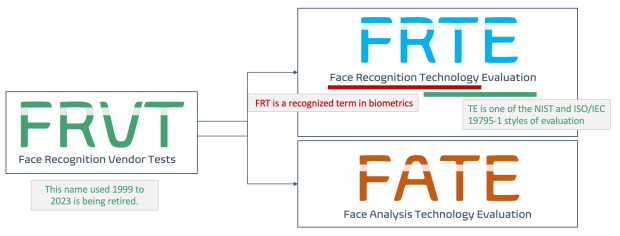
  • Company A does not participate in the U.S. National Institute of Standards and Technology (NIST) Face Recognition Technology Evaluation (FRTE) for technical reasons. 
  • As a result, the company’s marketing machine constantly discredits NIST FRTE, and the company culture is permeated with a “NIST is stupid” mentality. 
  • All well and good…until it runs into that one prospect who asks, “Why are you scared to measure yourself against the competition? Does your algorithm suck that bad?”

Internal bias at Company B

  • Company B, on the other hand, participates in FRTE, FATE, FRIF (previously FpVTE), and every other NIST test imaginable. 
  • This company’s marketing machine declares its superiority as a top tier biometric vendor, supported by outside independent evidence. 
  • All well and good…until it runs into that one prospect who declares, “That’s just federal government test data. How will you perform in our benchmark using our real data and real computers?”

Internal bias at Bredemarket 

Well, I have my admittedly biased solution to prevent companies from tumbling into groupthink, drinking of Kool-Aid, and market irrelevance.

Contract with an outside biometric product marketing expert. (I just happen to know one…me.)

Google Gemini.

I haven’t spent 30 years immersed in your insular culture. I’ve heard all the marketing-speak from different companies, and I’ve written the marketing-speak for nearly two dozen of them. I can ensure that your content resonates with your external customers and prospects, not only with your employees.

All well and good…until…

Reducing internal bias at Bredemarket 

“But John, what about your own biases? IDEMIA, Motorola, Incode, and other employers paid you for 25 years! You probably have an established process that you use to prepare andouillette at home, based upon a recipe from 2019!”

Google Gemini.

I don’t…but point taken. So how do I minimize my own biases?

My breadth of experience lessens the biases from my past. Look at my market-speak from 1994 to 2023, in order:

  • We are Printrak, a nimble private company that will dominate AFIS with our client-server solution.
  • We are Printrak (stock symbol AFIS) a well-funded public company that will dominate AFIS, mugshot, computer aided dispatch, and microfiche.
  • We are Motorolans, and our multi-tier Digital Justice Solution has a superior architecture to that of Sagem Morpho and others.
  • We are MorphoTrak, bringing together the best technologies from MetaMorpho and Printrak BIS, plus superior French technology for secure credentials and road safety…unencumbered by the baggage that weighs down MorphoTrust.
  • We are IDEMIA North America, bringing together the best technologies from MorphoTrust and MorphoTrak for ABIS, driver’s licenses, and enrollment, coupled with the resources from the rest of IDEMIA, a combined unbreakable force.
  • We are Incode, not weighed down with the baggage of the old dinosaurs, and certainly not a participant in the surveillance market.

Add all the different messaging of Bredemarket’s clients, plus my continuous improvement (hello MOTO) of my capabilities, and I will ensure that my content, proposals, and analysis does not trap you in a dead end.

Reducing internal bias at your company 

Are you ready to elevate your company with the outside perspective of a biometric product marketing expert?

Let’s talk (a free meeting). You explain, I ask questions, we agree on a plan, and then I act.

Schedule a meeting at https://bredemarket.com/mark/

I’m a Barbie Girl

So I just finished writing some technical content for a blog post, and for other purposes.

The content relates to a publication (the 2017 version of Special Publication 800-63A) from the National Institute of Standards and Technology, or NIST.

(Note to self: gotta check the new version.)

I figure that after the work day is done, the NISTies turn to less strenuous tasks.

And so shall I.

Bredemarket Identity Assurance Level 3 (IAL3) Posts Over the Years

I’m preparing to promote four of my Identity Assurance Level 3 (IAL3) Bredemarket blog posts on my social media channels. You know, the posts that discuss in-person and remote supervised identity proofing. But I said to myself, “Self, why not re-promote them on the blog also?”

12/3/2020 IAL3 post

From the Bredemarket blog, December 2020:

“The U.S. National Institute of Standards and Technology has defined ‘identity assurance levels’ (IALs) that can be used when dealing with digital identities. It’s helpful to review how NIST has defined the IALs.”

“Identity assurance levels (IALs) and digital identity”: https://bredemarket.com/2020/12/03/identity-assurance-levels-ials-and-digital-identity/

7/19/2023 IAL3 post

From the Bredemarket blog, July 2023:

“If we ignore IAL1 and concentrate on IAL2 and IAL3, we can see one difference between the two. IAL2 allows remote, unsupervised identity proofing, while IAL3 requires (in practice) that any remote identity proofing is supervised.”

“The Difference Between Identity Assurance Levels 2 and 3”: https://bredemarket.com/2023/07/19/ial2-vs-ial3/

8/11/2025 IAL3 post

From the Bredemarket blog, August 2025:

“I’ve talked about Identity Assurance Levels 1, 2, and 3 on several occasions…..But as usually happens, IAL2 is yesterday’s news. Because biometric tech always gets harder better faster stronger.”

“Identity Assurance Level 3 (IAL3): When Identity Assurance Level 2 (IAL2) Isn’t Good Enough”: https://bredemarket.com/2025/08/11/ial3-when-ial2-isnt-good-enough/

9/17/2025 IAL3 post

From the Bredemarket blog, September 2025:

“Governments aren’t the only entities that need to definitively know identities in critically important situations.

“What about banks and other financial institutions, which are required by law to know their customers?

“Now the bank assumed a level of risk by [accepting a Bredemarket client check in a remote unsupervised manner] especially since the deposited check would not be in the bank’s physical possession after the deposit was completed.

“But guess what? The risk was acceptable for my transactions. I’m disclosing Bredemarket company secrets, but that client never wrote me a million dollar check.

“What about remote supervised transactions at financial institutions, where you are not physically present, but someone at the bank remotely sees you and everything you do?

“It turns out that the identity verification providers support video sessions between businesses (such as banks) and their customers.”

“Unlocking High-Value Financial Transactions: The Critical Role of Identity Assurance Level 3 (IAL3)”: https://bredemarket.com/2025/09/17/financial-ial3/

The “How” of IAL3 Supervised Remote Identity Proofing

If the subject of identity proofing is remote, how do you supervise it? Here’s what NIST says:

“The camera(s) a CSP [Credential Service Provider] employs to monitor the actions taken by a remote applicant during the identity proofing session should be positioned in such a way that the upper body, hands, and face of the applicant are visible at all times. Additionally, the components of the remote identity proofing station (including such things as keyboard, fingerprint capture device, signature pad, and scanner, as applicable) should be arranged such that all interactions with these devices is within the field of view. This may require more than one camera to view both the applicant and the room itself.”

If you’re not familiar with the difference between supervised and unsupervised remote identity proofing, please read “The Difference Between Identity Assurance Levels 2 and 3.”

In Health, Benefits of Identity Assurance Level 2 (IAL2) are CLEAR

Is the medical facility working with the right patient?

Hackensack Meridian Health in New Jersey claims that it knows who its patients are. It has partnered with CLEAR for patient identification, according to AInvest. Among the listed benefits of the partnership are enhanced security:

“CLEAR1 meets NIST’s Identity Assurance Level 2 (IAL2) standards, a rare feat in the healthcare sector, ensuring robust protection against fraud.”

But is IAL2 that rare in healthcare?

Other vendors, such as Proof, ID.me, and Nametag certainly talk about it.

And frankly (if you ignore telehealth) the healthcare field is ripe for IAL3 implementation.

If you are a healthcare solution marketer, you’re NOT with CLEAR, and you’re angry that AInvest claims that IAL2 is “a rare feat” in healthcare…

Is your IAL2 healthcare solution hidden in the shadows? Imagen 4.

…then you need to get the word out about your solution.

And Bredemarket can help. Schedule a free meeting with me.

Battling deepfakes with…IAL3?

(Picture designed by Freepik.)

The information in this post is taken from the summary of this year’s Biometrics Institute Industry Survey and is presented under the following authority:

“You are welcome to use the information from this survey with a reference to its source, Biometrics Institute Industry Survey 2025. The full report, slides and graphics are available to Biometrics Institute members.”

But even the freebie stuff is valuable, including this citation of two concerns expressed by survey respondents:

“Against a backdrop of ongoing concerns around deepfakes, 85%
agreed or agreed strongly that deepfake technology poses a
significant threat to the future of biometric recognition, which
was similar to 2024.
“And two thirds of respondents (67%) agreed or agreed strongly
that supervised biometric capture is crucial to safeguard against
spoofing and injection attacks.”

Supervised biometric capture? Where have we heard that before?

IAL3 requires “[p]hysical presence” for identity proofing. However, the proofing agent may “attend the identity proofing session via a CSP-controlled kiosk or device.” In other words, supervised enrollment.

Now remote supervised enrollment and even in-person supervised enrollment is not a 100.00000% guard against deepfakes. The subject could be wearing a REALLY REALLY good mask. But it’s better than unsupervised enrollment.

How does your company battle deepfakes?

How do you tell your clients about your product?

Do you need product marketing assistance? Talk to Bredemarket.