Biometric security company Facewatch…is facing a lawsuit after its system wrongly flagged a 19-year-old girl as a shoplifter….(The girl) was shopping at Home Bargains in Manchester in February when staff confronted her and threw her out of the store…..’I have never stolen in my life and so I was confused, upset and humiliated to be labeled as a criminal in front of a whole shop of people,’ she said in a statement.
While Big Brother Watch and others are using this story to conclude that facial recognition is evil and no one should ever use it, the problem isn’t the technology. The problem is when the technology is misused.
Were the Home Bargains staff trained in forensic face examination, so that they could confirm that the customer was the shoplifter? I doubt it.
Even if they were forensically trained, did the Home Bargains staff follow accepted practices and use the face recognition results ONLY as an investigative lead, and seek other corroborating evidence to identify the girl as a shoplifter? I doubt it.
Again, the problem is NOT the technology. The problem is MISUSE of the technology—by this English store, by a certain chain of U.S. stores, and even by U.S. police agencies who fail to use facial recognition results solely as an investigative lead.
A prospect approached me some time ago to have Bredemarket help tell this story. However, the prospect has delayed moving forward with the project, and so their story has not yet been told.
Does YOUR firm have a story that you have failed to tell?
If you’re a biometric product marketing expert, or even if you’re not, you’re presumably analyzing the possible effects to your identity/biometric product from the proposed changes to the Biometric Information Privacy Act (BIPA).
As of May 16, the Illinois General Assembly (House and Senate) passed a bill (SB2979) to amend BIPA. It awaits the Governor’s signature.
What is the amendment? Other than defining an “electronic signature,” the main purpose of the bill is to limit damages under BIPA. The new text regarding the “Right of action” codifies the concept of a “single violation.”
(T)he amended law DOES NOT CHANGE “Private Right of Action” so BIPA LIVES!
Companies who violate the strict requirements of BIPA aren’t off the hook. It’s just that the trial lawyers—whoops, I mean the affected consumers make a lot less money.
We get all sorts of great tools, but do we know how to use them? And what are the consequences if we don’t know how to use them? Could we lose the use of those tools entirely due to bad publicity from misuse?
According to a report released in September by the US Government Accountability Office, only 5 percent of the 196 FBI agents who have access to facial recognition technology from outside vendors have completed any training on how to properly use the tools.
It turns out that the study is NOT limited to FBI use of facial recognition services, but also addresses six other federal agencies: the Bureau of Alcohol, Tobacco, Firearms and Explosives (the guvmint doesn’t believe in the Oxford comma); U.S. Customs and Border Protection; the Drug Enforcement Administration; Homeland Security Investigations; the U.S. Marshals Service; and the U.S. Secret Service.
Initially, none of the seven agencies required users to complete facial recognition training. As of April 2023, two of the agencies (Homeland Security Investigations and the U.S. Marshals Service) required training, two (the FBI and Customs and Border Protection) did not, and the other three had quit using these four facial recognition services.
The FBI stated that facial recognition training was recommended as a “best practice,” but not mandatory. And when something isn’t mandatory, you can guess what happened:
GAO found that few of these staff completed the training, and across the FBI, only 10 staff completed facial recognition training of 196 staff that accessed the service. FBI said they intend to implement a training requirement for all staff, but have not yet done so.
Although not a requirement, FBI officials said they recommend (as a best practice) that some staff complete FBI’s Face Comparison and Identification Training when using Clearview AI. The recommended training course, which is 24 hours in length, provides staff with information on how to interpret the output of facial recognition services, how to analyze different facial features (such as ears, eyes, and mouths), and how changes to facial features (such as aging) could affect results.
However, this type of training was not recommended for all FBI users of Clearview AI, and was not recommended for any FBI users of Marinus Analytics or Thorn.
I should note that the report was issued in September 2023, based upon data gathered earlier in the year, and that for all I know the FBI now mandates such training.
Or maybe it doesn’t.
What about your state and local facial recognition users?
Of course, training for federal facial recognition users is only a small part of the story, since most of the law enforcement activity takes place at the state and local level. State and local users need training so that they can understand:
The anatomy of the face, and how it affects comparisons between two facial images.
How cameras work, and how this affects comparisons between two facial images.
How poor quality images can adversely affect facial recognition.
How facial recognition should ONLY be used as an investigative lead.
If facial recognition users had been trained, none of the false arrests over the last few years would have taken place.
The users would have realized that the poor images were not of sufficient quality to determine a match.
The users would have realized that even if they had been of sufficient quality, facial recognition must only be used as an investigative lead, and once other data had been checked, the cases would have fallen apart.
But the false arrests gave the privacy advocates the ammunition they needed.
Not to insist upon proper training in the use of facial recognition.
Like nuclear or biological weapons, facial recognition’s threat to human society and civil liberties far outweighs any potential benefits. Silicon Valley lobbyists are disingenuously calling for regulation of facial recognition so they can continue to profit by rapidly spreading this surveillance dragnet. They’re trying to avoid the real debate: whether technology this dangerous should even exist. Industry-friendly and government-friendly oversight will not fix the dangers inherent in law enforcement’s discriminatory use of facial recognition: we need an all-out ban.
(And just wait until the anti-facial recognition forces discover that this is not only a plot of evil Silicon Valley, but also a plot of evil non-American foreign interests located in places like Paris and Tokyo.)
Because the anti-facial recognition forces want us to remove the use of technology and go back to the good old days…of eyewitness misidentification.
Eyewitnesses are often expected to identify perpetrators of crimes based on memory, which is incredibly malleable. Under intense pressure, through suggestive police practices, or over time, an eyewitness is more likely to find it difficult to correctly recall details about what they saw.
Forensic examiners, YOU’RE DOING IT WRONG based on this bold claim:
“Columbia engineers have built a new AI that shatters a long-held belief in forensics–that fingerprints from different fingers of the same person are unique. It turns out they are similar, only we’ve been comparing fingerprints the wrong way!” (From Newswise)
Couple that claim with the initial rejection of the paper by multiple forensic journals because “it is well known that every fingerprint is unique” (apparently the reviewer never read the NAS report), and you have the makings of a sexy story.
Or do you?
And what is the paper’s basis for the claim that fingerprints from the same person are NOT unique?
““The AI was not using ‘minutiae,’ which are the branchings and endpoints in fingerprint ridges – the patterns used in traditional fingerprint comparison,” said Guo, who began the study as a first-year student at Columbia Engineering in 2021. “Instead, it was using something else, related to the angles and curvatures of the swirls and loops in the center of the fingerprint.”” (From Newswise)
Perhaps there are similarities in the patterns of the fingers at the center of a print, but that doesn’t negate the uniqueness of the bifurcations and ridge ending locations throughout the print. Guo’s method uses less of the distal fingerprint than traditional minutiae analysis.
But maybe there are forensic applications for this alternate print comparison technique, at least as an investigative lead. (Let me repeat that again: “investigative lead.”) Courtroom use will be limited because there is no AI equivalent to explain to the court how the comparison was made, and if any other expert AI algorithm would yield the same results.
As I said, I shared the piece above to several places, including one frequented by forensic experts. One commenter in a private area offered the following observation, in part:
What was the validation process? Did they have a qualified latent print examiner confirm their data?
From a private source.
Before you dismiss the comment as reflecting a stick-in-the-mud forensic old fogey who does not recognize the great wisdom of our AI overlords, remember (as I noted above) that forensic experts are required to testify in court about things like this. If artificial intelligence is claimed to identify relationships between fingers from the same person, you’d better make really sure that this is true before someone is put to death.
I hate to repeat the phrase used by scientific study authors in search of more funding, but…
Having passed, eventually, through the UK’s two houses of Parliament, the bill received royal assent (October 26)….
[A]dded in (to the Act) is a highly divisive requirement for messaging platforms to scan users’ messages for illegal material, such as child sexual abuse material, which tech companies and privacy campaigners say is an unwarranted attack on encryption.
This not only opens up issues regarding encryption and privacy, but also specific identity technologies such as age verification and age estimation.
This post looks at three types of firms that are affected by the UK Online Safety Act, the stories they are telling, and the stories they may need to tell in the future. What is YOUR firm’s Online Safety Act-related story?
What three types of firms are affected by the UK Online Safety Act?
As of now I have been unable to locate a full version of the final final Act, but presumably the provisions from this July 2023 version (PDF) have only undergone minor tweaks.
Among other things, this version discusses “User identity verification” in 65, “Category 1 service” in 96(10)(a), “United Kingdom user” in 228(1), and a multitude of other terms that affect how companies will conduct business under the Act.
I am focusing on three different types of companies:
Technology services (such as Yoti) that provide identity verification, including but not limited to age verification and age estimation.
User-to-user services (such as WhatsApp) that provide encrypted messages.
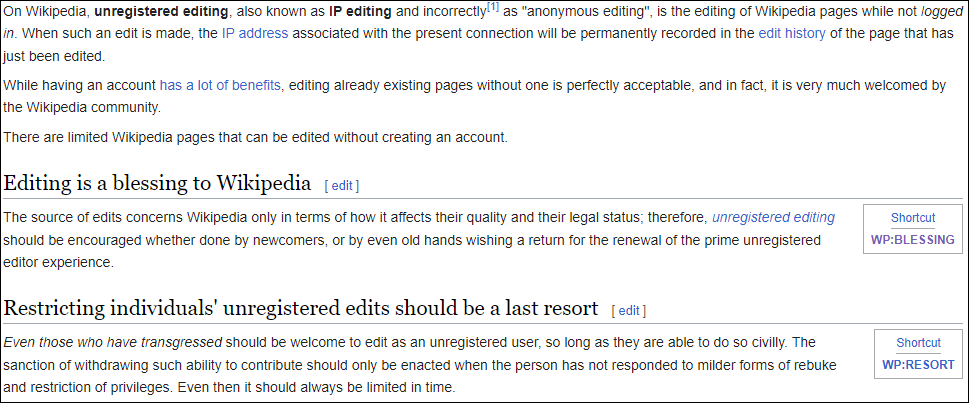
User-to-user services (such as Wikipedia) that allow users (including United Kingdom users) to contribute content.
What types of stories will these firms have to tell, now that the Act is law?
For ALL services, the story will vary as Ofcom decides how to implement the Act, but we are already seeing the stories from identity verification services. Here is what Yoti stated after the Act became law:
We have a range of age assurance solutions which allow platforms to know the age of users, without collecting vast amounts of personal information. These include:
Age estimation: a user’s age is estimated from a live facial image. They do not need to use identity documents or share any personal information. As soon as their age is estimated, their image is deleted – protecting their privacy at all times. Facial age estimation is 99% accurate and works fairly across all skin tones and ages.
Digital ID app: a free app which allows users to verify their age and identity using a government-issued identity document. Once verified, users can use the app to share specific information – they could just share their age or an ‘over 18’ proof of age.
MailOnline has approached WhatsApp’s parent company Meta for comment now that the Bill has received Royal Assent, but the firm has so far refused to comment.
[T]o comply with the new law, the platform says it would be forced to weaken its security, which would not only undermine the privacy of WhatsApp messages in the UK but also for every user worldwide.
‘Ninety-eight per cent of our users are outside the UK. They do not want us to lower the security of the product, and just as a straightforward matter, it would be an odd choice for us to choose to lower the security of the product in a way that would affect those 98 per cent of users,’ Mr Cathcart has previously said.
Companies, from Big Tech down to smaller platforms and messaging apps, will need to comply with a long list of new requirements, starting with age verification for their users. (Wikipedia, the eighth-most-visited website in the UK, has said it won’t be able to comply with the rule because it violates the Wikimedia Foundation’s principles on collecting data about its users.)
All of these firms have shared their stories either before or after the Act became law, and those stories will change depending upon what Ofcom decides.
For example, when biometric companies want to justify the use of their technology, they have found that it is very effective to position biometrics as a way to combat sex trafficking.
Similarly, moves to rein in social media are positioned as a way to preserve mental health.
Now that’s a not-so-pretty picture, but it effectively speaks to emotions.
“If poor vulnerable children are exposed to addictive, uncontrolled social media, YOUR child may end up in a straitjacket!”
In New York state, four government officials have declared that the ONLY way to preserve the mental health of underage social media users is via two bills, one of which is the “New York Child Data Protection Act.”
But there is a challenge to enforce ALL of the bill’s provisions…and only one way to solve it. An imperfect way—age estimation.
Because they want to protect the poor vulnerable children.
By Paolo Monti – Available in the BEIC digital library and uploaded in partnership with BEIC Foundation.The image comes from the Fondo Paolo Monti, owned by BEIC and located in the Civico Archivio Fotografico of Milan., CC BY-SA 4.0, https://commons.wikimedia.org/w/index.php?curid=48057924
And because the major U.S. social media companies are headquartered in California. But I digress.
So why do they say that children need protection?
Recent research has shown devastating mental health effects associated with children and young adults’ social media use, including increased rates of depression, anxiety, suicidal ideation, and self-harm. The advent of dangerous, viral ‘challenges’ being promoted through social media has further endangered children and young adults.
Of course one can also argue that social media is harmful to adults, but the New Yorkers aren’t going to go that far.
So they are just going to protect the poor vulnerable children.
CC BY-SA 4.0.
This post isn’t going to deeply analyze one of the two bills the quartet have championed, but I will briefly mention that bill now.
The “Stop Addictive Feeds Exploitation (SAFE) for Kids Act” (S7694/A8148) defines “addictive feeds” as those that are arranged by a social media platform’s algorithm to maximize the platform’s use.
Those of us who are flat-out elderly vaguely recall that this replaced the former “chronological feed” in which the most recent content appeared first, and you had to scroll down to see that really cool post from two days ago. New York wants the chronological feed to be the default for social media users under 18.
The bill also proposes to limit under 18 access to social media without parental consent, especially between midnight and 6:00 am.
And those who love Illinois BIPA will be pleased to know that the bill allows parents (and their lawyers) to sue for damages.
Previous efforts to control underage use of social media have faced legal scrutinity, but since Attorney General James has sworn to uphold the U.S. Constitution, presumably she has thought about all this.
Enough about SAFE for Kids. Let’s look at the other bill.
The New York Child Data Protection Act
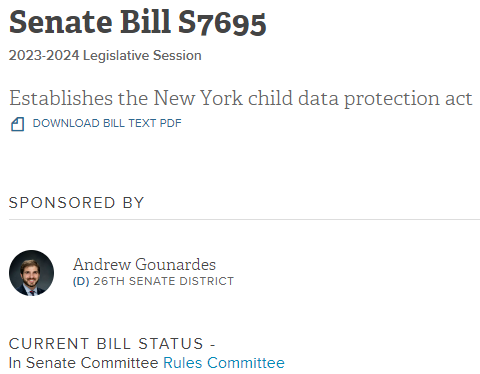
The second bill, and the one that concerns me, is the “New York Child Data Protection Act” (S7695/A8149). Here is how the quartet describes how this bill will protect the poor vulnerable children.
CC BY-SA 4.0.
With few privacy protections in place for minors online, children are vulnerable to having their location and other personal data tracked and shared with third parties. To protect children’s privacy, the New York Child Data Protection Act will prohibit all online sites from collecting, using, sharing, or selling personal data of anyone under the age of 18 for the purposes of advertising, unless they receive informed consent or unless doing so is strictly necessary for the purpose of the website. For users under 13, this informed consent must come from a parent.
And again, this bill provides a BIPA-like mechanism for parents or guardians (and their lawyers) to sue for damages.
But let’s dig into the details. With apologies to the New York State Assembly, I’m going to dig into the Senate version of the bill (S7695). Bear in mind that this bill could be amended after I post this, and some of the portions that I cite could change.
This only applies to natural persons. So the bots are safe, regardless of age.
Speaking of age, the age of 18 isn’t the only age referenced in the bill. Here’s a part of the “privacy protection by default” section:
§ 899-FF. PRIVACY PROTECTION BY DEFAULT.
1. EXCEPT AS PROVIDED FOR IN SUBDIVISION SIX OF THIS SECTION AND SECTION EIGHT HUNDRED NINETY-NINE-JJ OF THIS ARTICLE, AN OPERATOR SHALL NOT PROCESS, OR ALLOW A THIRD PARTY TO PROCESS, THE PERSONAL DATA OF A COVERED USER COLLECTED THROUGH THE USE OF A WEBSITE, ONLINE SERVICE, ONLINE APPLICATION, MOBILE APPLICA- TION, OR CONNECTED DEVICE UNLESS AND TO THE EXTENT:
(A) THE COVERED USER IS TWELVE YEARS OF AGE OR YOUNGER AND PROCESSING IS PERMITTED UNDER 15 U.S.C. § 6502 AND ITS IMPLEMENTING REGULATIONS; OR
(B) THE COVERED USER IS THIRTEEN YEARS OF AGE OR OLDER AND PROCESSING IS STRICTLY NECESSARY FOR AN ACTIVITY SET FORTH IN SUBDIVISION TWO OF THIS SECTION, OR INFORMED CONSENT HAS BEEN OBTAINED AS SET FORTH IN SUBDIVISION THREE OF THIS SECTION.
So a lot of this bill depends upon whether a person is over or under the age of eighteen, or over or under the age of thirteen.
And that’s a problem.
How old are you?
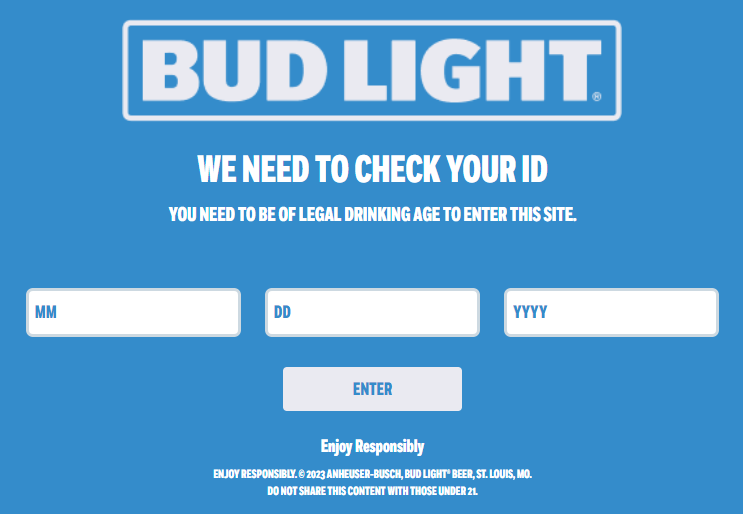
The bill needs to know whether or not a person is 18 years old. And I don’t think the quartet will be satisfied with the way that alcohol websites determine whether someone is 21 years old.
Attorney General James and the others would presumably prefer that the social media companies verify ages with a government-issued ID such as a state driver’s license, a state identification card, or a national passport. This is how most entities verify ages when they have to satisfy legal requirements.
For some people, even some minors, this is not that much of a problem. Anyone who wants to drive in New York State must have a driver’s license, and you have to be at least 16 years old to get a driver’s license. Admittedly some people in the city never bother to get a driver’s license, but at some point these people will probably get a state ID card.
However, there are going to be some 17 year olds who don’t have a driver’s license, government ID or passport.
And some 16 year olds.
And once you look at younger people—15 year olds, 14 year olds, 13 year olds, 12 year olds—the chances of them having a government-issued identification document are much less.
What are these people supposed to do? Provide a birth certificate? And how will the social media companies know if the birth certificate is legitimate?
But there’s another way to determine ages—age estimation.
How old are you, part 2
As long-time readers of the Bredemarket blog know, I have struggled with the issue of age verification, especially for people who do not have driver’s licenses or other government identification. Age estimation in the absence of a government ID is still an inexact science, as even Yoti has stated.
Our technology is accurate for 6 to 12 year olds, with a mean absolute error (MAE) of 1.3 years, and of 1.4 years for 13 to 17 year olds. These are the two age ranges regulators focus upon to ensure that under 13s and 18s do not have access to age restricted goods and services.
So if a minor does not have a government ID, and the social media firm has to use age estimation to determine a minor’s age for purposes of the New York Child Data Protection Act, the following two scenarios are possible:
An 11 year old may be incorrectly allowed to give informed consent for purposes of the Act.
A 14 year old may be incorrectly denied the ability to give informed consent for purposes of the Act.
Is age estimation “good enough for government work”?
At the highest level, debates regarding government and enterprise use of biometric technology boil down to a debate about whether to keep people safe, or whether to preserve individual privacy.
In the state of Montana, school safety is winning over school privacy—for now.
The state Legislature earlier this year passed a law barring state and local governments from continuous use of facial recognition technology, typically in the form of cameras capable of reading and collecting a person’s biometric data, like the identifiable features of their face and body. A bipartisan group of legislators went toe-to-toe with software companies and law enforcement in getting Senate Bill 397 over the finish line, contending public safety concerns raised by the technology’s supporters don’t overcome individual privacy rights.
School districts, however, were specifically carved out of the definition of state and local governments to which the facial recognition technology law applies.
At a minimum Montana school districts seek to abide by two existing Federal laws when installating facial recognition and video surveillance systems.
Without many state-level privacy protection laws in place, school policies typically lean on the Children’s Online Privacy Protection Act (COPPA), a federal law requiring parental consent in order for websites to collect data on their children, or the Family Educational Rights and Privacy Act (FERPA), which protects the privacy of student education records.
If a vendor doesn’t agree to abide by these laws, then the Montana School Board Association recommends that the school district not do business with the vendor.
The Family Educational Rights and Privacy Act was passed by the US federal government to protect the privacy of students’ educational records. This law requires public schools and school districts to give families control over any personally identifiable information about the student.
(The Sun River Valley School District’s) use of the technology is more focused on keeping people who shouldn’t be on school property away, he said, such as a parent who lost custody of their child.
(Simms) High School Principal Luke McKinley said it’s been more frequent to use the facial recognition technology during extra-curricular activities, when football fans get too rowdy for a high school sports event.
Technology (in this case from Verkada) helps the Sun River School District, especially in its rural setting. Back in 2022, it took law enforcement an estimated 45 minutes to respond to school incidents. The hope is that the technology could identify those who engaged in illegal activity, or at least deter it.
What about other school districts?
When I created my educational identity page, I included the four key words “When permitted by law.” While Montana school districts are currently permitted to use facial recognition and video surveillance, other school districts need to check their local laws before implementing such a system, and also need to ensure that they comply with federal laws such as COPPA and FERPA.
I may be, um, biased in my view, but as long as the school district (or law enforcement agency, or apartment building owner, or whoever) complies with all applicable laws, and implements the technology with a primary purpose of protecting people rather than spying on them, facial recognition is a far superior tool to protect people than manual recognition methods that rely on all-too-fallible human beings.
Machine learning models need training data to improve their accuracy—something I know from my many years in biometrics.
And it’s difficult to get that training data—something else I know from my many years in biometrics. Consider the acronyms GDPR, CRPA, and especially BIPA. It’s very hard to get data to train biometric algorithms, so they are trained on relatively limited data sets.
At the same time that biometric algorithm training data is limited, Kevin Indig believes that generative AI large language models are ALSO going to encounter limited accessibility to training data. Actually, they are already.
The lawsuits have already begun
A few months ago, generative AI models like ChatGPT were going to solve all of humanity’s problems and allow us to lead lives of leisure as the bots did all our work for us. Or potentially the bots would get us all fired. Or something.
But then people began to ask HOW these large language models work…and where they get their training data.
Just like biometric training models that just grab images and associated data from the web without asking permission (you know the example that I’m talking about), some are alleging that LLMs are training their models on copyrighted content in violation of the law.
I am not a lawyer and cannot meaningfully discuss what is “fair use” and what is not, but suffice it to say that alleged victims are filing court cases.
Comedian and author Sarah Silverman, as well as authors Christopher Golden and Richard Kadrey — are suing OpenAI and Meta each in a US District Court over dual claims of copyright infringement.
The suits alleges, among other things, that OpenAI’s ChatGPT and Meta’s LLaMA were trained on illegally-acquired datasets containing their works, which they say were acquired from “shadow library” websites like Bibliotik, Library Genesis, Z-Library, and others, noting the books are “available in bulk via torrent systems.”
This could be a big mess, especially since copyright laws vary from country to country. This description of copyright law LLM implications, for example, is focused upon United Kingdom law. Laws in other countries differ.
Systems that get data from the web, such as Google, Bing, and (relevant to us) ChatGPT, use “crawlers” to gather the information from the web for their use. ChatGPT, for example, has its own crawler.
But that only includes the sites that blocked the crawler when Originality AI performed its analysis.
More sites will block the LLM crawlers
Indig believes that in the future, the number of the top 1000 sites that will block ChatGPT’s crawler will rise significantly…to 84%. His belief is based on analyzing the business models for the sites that already block ChatGPT and assuming that other sites that use the same business models will also find it in their interest to block ChatGPT.
The business models that won’t block ChatGPT are assumed to include governments, universities, and search engines. Such sites are friendly to the sharing of information, and thus would have no reason to block ChatGPT or any other LLM crawler.
The business models that would block ChatGPT are assumed to include publishers, marketplaces, and many others. Entities using these business models are not just going to turn it over to an LLM for free.
One possibility is that LLMs will run into the same training issues as biometric algorithms.
In biometrics, the same people that loudly exclaim that biometric algorithms are racist would be horrified at the purely technical solution that would solve all inaccuracy problems—let the biometric algorithms train on ALL available biometric data. In the activists’ view (and in the view of many), unrestricted access to biometric data for algorithmic training would be a privacy nightmare.
Similarly, those who complain that LLMs are woefully inaccurate would be horrified if the LLM accuracy problem were solved by a purely technical solution: let the algorithms train themselves on ALL available data.
Could LLMs buy training data?
Of course, there’s another solution to the problem: have the companies SELL their data to the LLMs.
In theory, this could provide the data holders with a nice revenue stream while allowing the LLMs to be extremely accurate. (Of course the users who actually contribute the data to the data holders would probably be shut out of any revenue, but them’s the breaks.)
But that’s only in theory. Based upon past experience with data holders, the people who want to use the data are probably not going to pay the data holders sufficiently.
Google and Meta to Canada: Drop dead / Mourir
By The original uploader was Illegitimate Barrister at Wikimedia Commons. The current SVG encoding is a rewrite performed by MapGrid. – This vector image is generated programmatically from geometry defined in File:Flag of Canada (construction sheet – leaf geometry).svg., Public Domain, https://commons.wikimedia.org/w/index.php?curid=32276527
Even today, Google and Meta (Facebook et al) are greeting Canada’s government-mandated Bill C-18 with resistance. Here’s what Google is saying:
Bill C-18 requires two companies (including Google) to pay for simply showing links to Canadian news publications, something that everyone else does for free. The unprecedented decision to put a price on links (a so-called “link tax”) breaks the way the web and search engines work, and exposes us to uncapped financial liability simply for facilitating access to news from Canadian publications….
As a result, we have informed them that we have made the difficult decision that, when the law takes effect, we will be removing links to Canadian news publications from our Search, News, and Discover products.
Google News Showcase is the program that gives money to news organizations in Canada. Meta has a similar program. Peter Menzies notes that these programs give tens of millions of (Canadian) dollars to news organizations, but that could end, despite government threats.
The federal and Quebec governments pulled their advertising spends, but those moves amount to less money than Meta will save by ending its $18 million in existing journalism funding.
Bearing in mind that Big Tech is reluctant to give journalistic data holders money even when a government ORDERS that they do so…
…what is the likelihood that generative AI algorithm authors (including Big Tech companies like Google and Microsoft) will VOLUNTARILY pay funds to data holders for algorithm training?
If Kevin Indig is right, LLM training data will become extremely limited, adversely affecting the algorithms’ use.
What does AdvoLogix say about using AI in the workplace?
AdvoLogix’s post is clear in its intent. It is entitled “9 Ways to Use AI in the Workplace.” The introduction to the post explains AdvoLogix’s position on the use of artificial intelligence.
Rather than replacing human professionals, AI applications take a complementary role in the workplace and improve overall efficiency. Here are nine actionable ways to use artificial intelligence, no matter your industry.
I won’t list ALL nine of the ways—I want you to go read the post, after all. But let me highlight one of them—not the first one, but the eighth one.
Individual entrepreneurs can also benefit from AI-driven technologies. Entrepreneurship requires great financial and personal risk, especially when starting a new business. Entrepreneurs must often invest in essential resources and engage with potential customers to build a brand from scratch. With AI tools, entrepreneurs can greatly limit risk by improving their organization and efficiency.
The AdvoLogix post then goes on to recommend specific ways that entrepreneurs can use artificial intelligence, including:
AI shopping
Use AI Chatbots for Customer Engagement
Regardless of how you feel about the use of AI in these areas, you should at least consider them as possible options.
Why did AdvoLogix write the post?
Obviously the company had a reason for writing the post, and for sharing the post with people like me (and like you).
AdvoLogix provides law firms, legal offices, and public agencies with advanced, cloud-based legal software solutions that address their actual needs.
Thanks to AI tools like Caster, AdvoLogix can provide your office with effective automation of data entry, invoicing, and other essential but time-consuming processes. Contact AdvoLogix to request a free demo of the industry’s best AI tools for law offices like yours.
So I’m not even going to provide a Bredemarket call to action, since AdvoLogix already provided its own. Good for AdvoLogix.
But what about Steven Schwartz?
The AdvoLogix post did not specifically reference Steven Schwartz, although the company stated that you should control the process yourself and not cede control to your artificial intelligence tool.
Roberto Mata sued Avianca airlines for injuries he says he sustained from a serving cart while on the airline in 2019, claiming negligence by an employee. Steven Schwartz, an attorney with Levidow, Levidow & Oberman and licensed in New York for over three decades, handled Mata’s representation.
But at least six of the submitted cases by Schwartz as research for a brief “appear to be bogus judicial decisions with bogus quotes and bogus internal citations,” said Judge Kevin Castel of the Southern District of New York in an order….
In late April, Avianca’s lawyers from Condon & Forsyth penned a letter to Castel questioning the authenticity of the cases….
Among the purported cases: Varghese v. China South Airlines, Martinez v. Delta Airlines, Shaboon v. EgyptAir, Petersen v. Iran Air, Miller v. United Airlines, and Estate of Durden v. KLM Royal Dutch Airlines, all of which did not appear to exist to either the judge or defense, the filing said.
Schwartz, in an affidavit, said that he had never used ChatGPT as a legal research source prior to this case and, therefore, “was unaware of the possibility that its content could be false.” He accepted responsibility for not confirming the chatbot’s sources.
Schwartz is now facing a sanctions hearing on June 8.

















 Bredemarket