An interesting item popped up in SAM.gov. According to a Request for Information (RFI) due February 20, the FBI may have interest in a system for secret biometric searches.
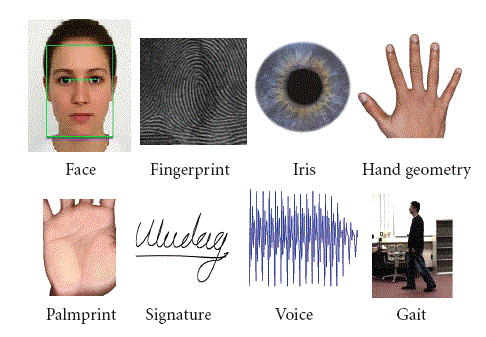
“The FBI intends to identify available software solutions to store and search subjects at the classified level. This solution is not intended to replace the Next Generation Identification System Functionality, which was developed and implemented in collaboration with the FBI’s federal, state, local, tribal, and territorial partners. The solution shall reside at the Secret and/or Top-Secret/SCI level with the ability to support data feeds from external systems. The solution must allow the ability to enroll and search face, fingerprint, palmprint, iris, and latent fingerprints, and associated biographic information with a given set of biometrics.”
Now remember that the Next Generation Identification (NGI) system is protected from public access by requiring all users to adhere to the CJIS Security Requirements. But the CJIS Security Requirements aren’t Secret or Top Secret. These biometric searches, whatever they are, must REALLY be kept from prying eyes.
The RFI itself is 8 pages long, and is mysteriously numbered as RFI 01302025. I would have expected an RFI number 01152026. I believe this was an editing error, since FBI RFI 01302025 was issued in 2025 for a completely different purpose.
Whatever the real number is, the RFI is labeled “Classified Identity-Based Biometric System.” No acronym was specified, so I’m self-acronyming it as CIBS. Perhaps the system has a real acronym…but it’s secret.
If your company can support such a system from a business, technical, and security perspective, the due date is February 20 and questions are due by February 2. See SAM.gov for details.
Bredemarket works with a number of technologies, but it’s no secret that my primary focus is biometrics. After all, I call myself the “biometric product marketing expert,” having worked with friction ridge (fingerprint, palm print), face, iris, voice, and rapid DNA.
The biometric product marketing expert in the desert.
If I can help your biometric firm with your content, proposal, or analysis needs, schedule a free meeting with me to discuss how I can help.
“In Jordan, the apparel sector relies heavily on a large migrant workforce, many of whom lack access to bank accounts and remain unbanked. Wage payments have traditionally been cash-based…”
To facilitate cash payments to unbanked apparel workers in Jordan, IrisGuard stepped in with its EyePay product.
“Cairo Amman Bank (CAB) Jordan…has launched a national-scale biometric cash salary payment network for unbanked workers.
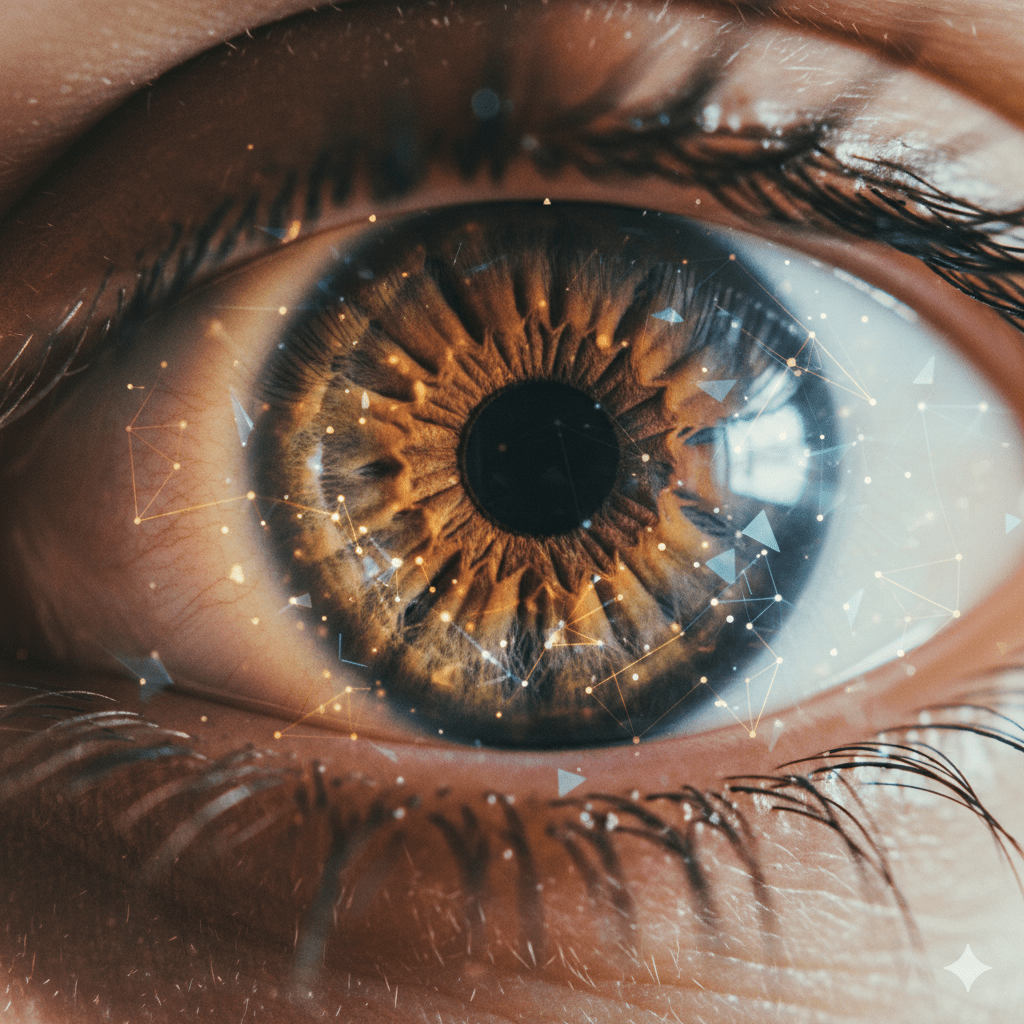
“With just a simple iris scan, employees can securely access their wages instantly, without the need for a bank account, PIN, or physical ID.”
I don’t think this is tied to an iris-based time and attendance system, but that is the obvious next step.
“M5 provides an even faster, smoother, and more responsive experience for Apple Vision Pro users, while introducing new opportunities for developers to create more advanced spatial and immersive experiences. Built using third-generation 3-nanometer technology, M5 on Vision Pro features an advanced 10-core CPU that delivers higher multithreaded performance, resulting in faster experiences throughout the system, including faster load times for apps and widgets and more responsive web browsing.”
Source: Apple.
“The Dual Knit Band delivers an even more comfortable fit for users. It features upper and lower straps that are 3D-knitted as a single piece to create a unique dual-rib structure that provides cushioning, breathability, and stretch. The lower strap features flexible fabric ribs embedded with tungsten inserts that provide a counterweight for additional comfort, balance, and stability. And the intuitive dual-function Fit Dial allows users to make fine-tuned adjustments to achieve their ideal fit. The new Dual Knit Band comes in small, medium, and large sizes; is available to purchase separately; and is compatible with the previous-generation Apple Vision Pro.”
I had to read the fine print in the press release, and this is what it says about Apple.
“Apple revolutionized personal technology with the introduction of the Macintosh in 1984. Today, Apple leads the world in innovation with iPhone, iPad, Mac, AirPods, Apple Watch, and Apple Vision Pro. Apple’s six software platforms — iOS, iPadOS, macOS, watchOS, visionOS, and tvOS — provide seamless experiences across all Apple devices and empower people with breakthrough services including the App Store, Apple Music, Apple Pay, iCloud, and Apple TV. Apple’s more than 150,000 employees are dedicated to making the best products on earth and to leaving the world better than we found it.”
All right and fine, but Apple (then Apple Computer) existed before 1984. And while the Macintosh changed everything, including the non-Apple computer that I’m typing on today, there never would have been a Macintosh if it hadn’t been for the Apple II. Remember the Apple II, Tim? Woz does.
And another thing
Reminder to marketing leaders: if you need Bredemarket’s content-proposal-analysis help, book a meeting at https://bredemarket.com/mark/
Whether you are a human or a non-person entity (NPE) with facial recognition capability, you rely on visual cues to positively identify or authenticate a person. Let’s face it; many people resemble each other, but specific facial expressions or emotions are not always shared by people who otherwise look alike.
All pictures Google Gemini.
But in one of those oddities that fill the biometric world, you can have TOO MUCH expression. Part 3 of International Civil Aviation Organization (ICAO) Document 9303, which governs machine readable travel documents, mandates that faces on travel documents must maintain a neutral expression without smiling. At the time (2003) it was believed that the facial recognition algorithms would work best if the subject were expressionless. I don’t know if that holds true today.
But once the smile is erased, any other removal of expression or emotion degrades identification capability significantly. For example, closing the eyes not only degrades facial recognition, but is obviously fatal to iris recognition.
And if you remove the landmarks upon which facial recognition depends, identification is impossible.
While expression or lack thereof does not invalidate the assumption of permanence of the biometric authentication factor, it does govern the ability of people and machines to perform identification or authentication.
Biometric marketing leaders, do your firm’s product marketing publications require the words of authority?
John E. Bredehoft of Bredemarket, the biometric product marketing expert.
Can John E. Bredehoft of Bredemarket—the biometric product marketing expert—contribute words of authority to your content, proposal, and analysis materials?
I offer:
30 years of biometric experience, 10 years of product marketing expertise, and complementary proposal and product management talents.
Success with numerous biometric firms, including Incode, IDEMIA, MorphoTrak, Motorola, Printrak, and over a dozen biometric consulting clients.