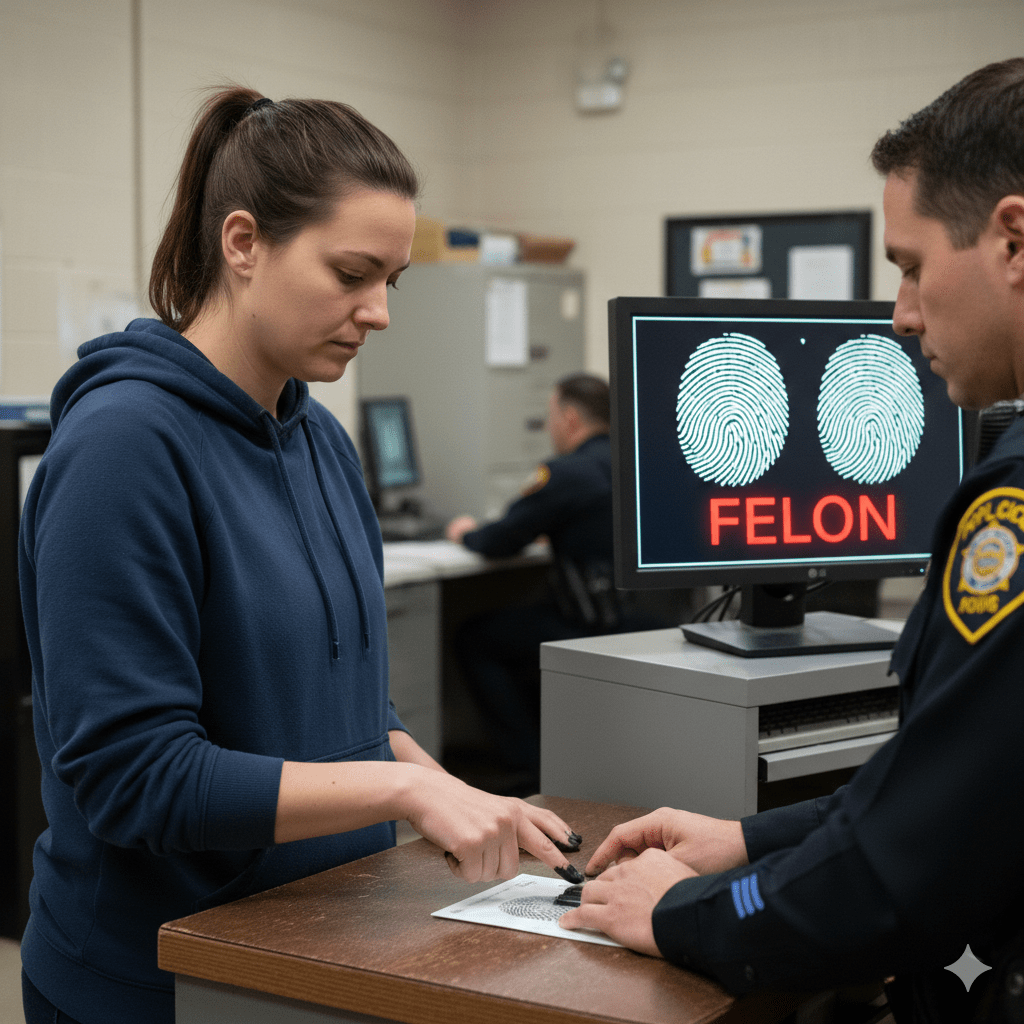
Remember Hygiene?

When I first worked with (then) MorphoTrak’s MorphoWave in the mid-2010s, speed and convenience were the selling points.

A few years later, hygiene was all the rage for (now) IDEMIA and other companies.

As COVID recedes (for now), speed and convenience take center stage again.

Grok.

Reminder to marketing leaders: if you need Bredemarket’s content-proposal-analysis help, book a meeting at https://bredemarket.com/mark/

Communicate with the Words of Authority

Biometric marketing leaders, do your firm’s product marketing publications require the words of authority?

John E. Bredehoft of Bredemarket, the biometric product marketing expert.

Can John E. Bredehoft of Bredemarket—the biometric product marketing expert—contribute words of authority to your content, proposal, and analysis materials?

I offer:

  • 30 years of biometric experience, 10 years of product marketing expertise, and complementary proposal and product management talents.
  • Success with numerous biometric firms, including Incode, IDEMIA, MorphoTrak, Motorola, Printrak, and over a dozen biometric consulting clients.
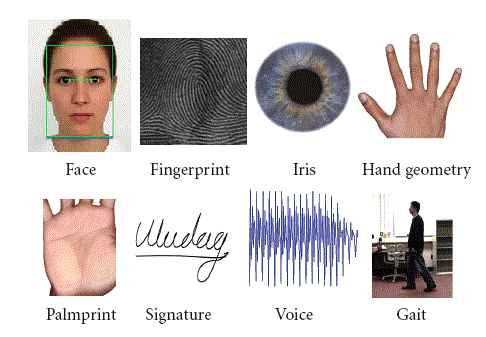
  • Mastery of multiple biometric modalities: friction ridge (fingerprint, palm print), face, iris, voice, DNA.
  • Compelling CONTENT creation: blog posts, case studies and testimonials, LinkedIn articles and posts, white papers.
  • Winning PROPOSAL development: managing, writing, editing for millions of dollars of business for my firms.
  • Actionable ANALYSIS: strategic, market, product, competitive.

To embed Bredemarket’s biometric product marketing expertise within your firm, schedule a free meeting with me.

Make an impact.

Is Your Content Up-to-date?

Are you a technology marketing leader who lies awake at night worrying about the following?

“Keeping up with the speed and complexity of the digital landscape.”

Well, maybe not that exact phrase. That sounds like something generative AI would write.

And in fact, my buddy Bredebot wrote it when answering a question about Chief Marketing Officer pain points relative to content.

In a huddle space in an office, a smiling robot named Bredebot places his robotic arms on a wildebeest and a wombat, encouraging them to collaborate on a product marketing initiative.
Bredebot is the one in the middle.

But I’m not going to let Bredebot write an entire post about it, because I’m going to write it myself.

The human way to reflect the sentiment above is to ask whether your content is up-to-date, or is as dated as a Pentium.

And that’s something that a marketing leader DOES worry about, because they (usually) want their firms to be perceived as innovative, not old fashioned.

Let me give you an example of outdated content that persists today.

SEO, AEO, GEO…I believe they’re different

For years we have been discussing search engine optimization, or SEO. The whole point of SEO is to ensure that your content appears at the top of results when you use Google or Bing or another search engine to launch a search. (Ignore “sponsored content” for a minute here.)

In case you haven’t noticed, fewer and fewer people are using search engines. Instead, they are searching for answers from their favorite generative AI tool, and now the new term the kids are using is answer engine optimization, or AEO. Or perhaps you can follow the lead of Go Fish and refer to generative engine optimization, or GEO.

Now some people are continuing to use SEO when they mean AEO and GEO, under the theory that it’s all just optimization, and it’s all just searching but just with a different tool. Personally, I believe that continuing to refer to SEO is confusing because the term has always been associated with search engines.

Plus, the concept of keywords is fading away, as Lisa Garrud noted in May.

“Unlike traditional SEO, which focuses on ranking for keywords, AEO concentrates on providing comprehensive, authoritative answers that AI systems can easily process and deliver to users….

“Think about how you use AI tools today. You don’t ask for ‘electrician Auckland residential services’, you ask, ‘What’s causing the flickering in my kitchen lights?’ or ‘How much should it cost to rewire a 1970s house?’ You want answers, not search results.”

But forget about XEO and let’s return to the content YOU create.

How do you keep YOUR content up-to-date?

Let’s say that you’ve reached the point in your content calendar where you have to write a blog post about pop music.

And let’s also say that you’re old enough to remember the 20th century.

You may have a problem.

For example, when you see the words “pop music,” you may immediately spell the second word with a “z” and a “k” when you TALK ABOUT.

Pop Muzik.

Or if someone mentions INTERPOL, you immediately respond with Deutsche Bank, FBI, and (und?) Scotland Yard.

Computer World.

And now that I’ve lost half my reading audience, you can see my point. While personas are approximations, you need to refer to them when crafting your content. If your hungry people (target audience) tend to be in their 20s and 30s, they’re probably not going to understand or respond to songs from M (Robin Scott) or Kraftwerk.

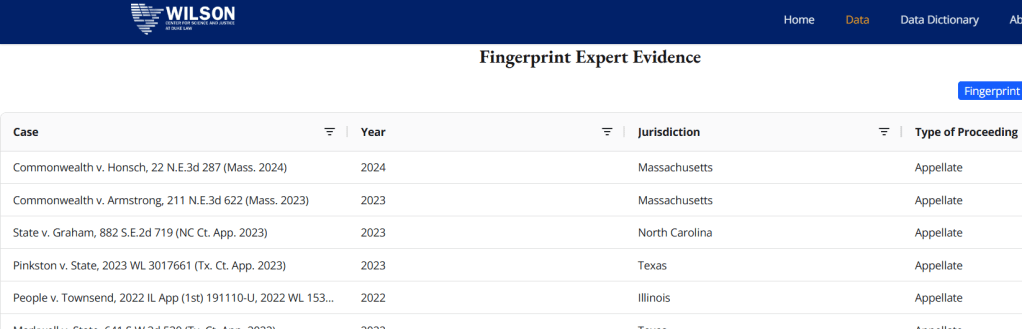
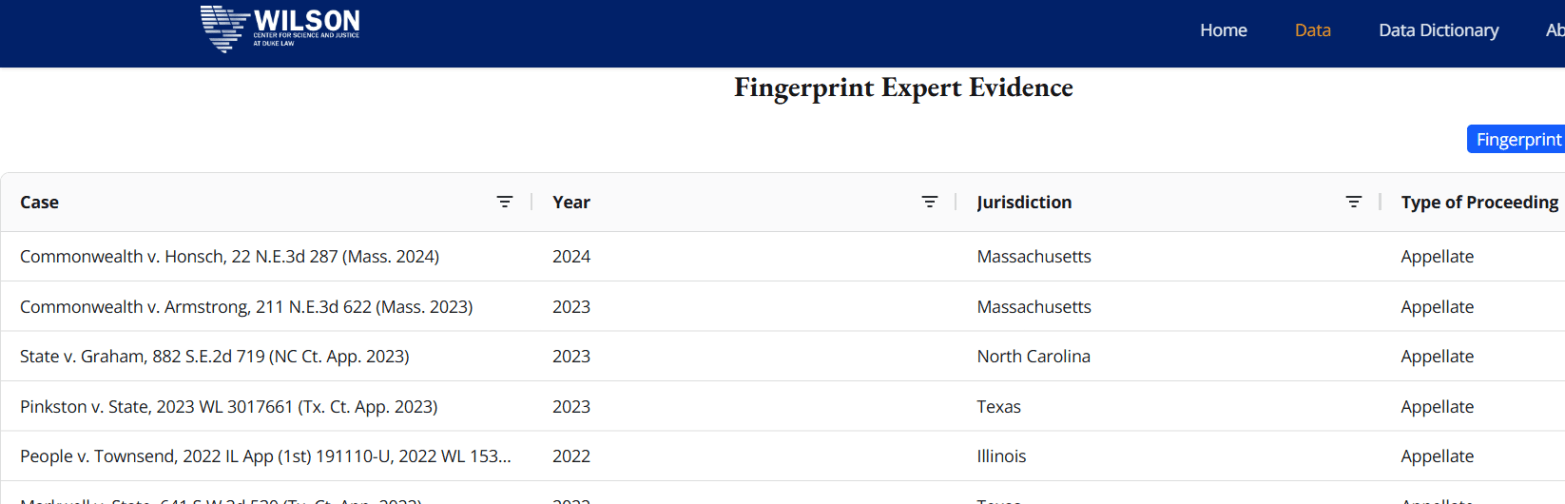
There are other things you can write that are obviously old, such as “fingerprint identification decisions are infallible.” That statement was questioned back in 2003BEFORE the whole Brandon Mayfield thingie.

So how does a marketer ensure that their content is not dated? By remembering to ask, then act. Question your assumptions, do your research, write your content, then check your content.

Question your assumptions

Before you write your content, ensure your premise is correct. For example, I didn’t assume without questioning that “keeping up with the speed and complexity of the digital landscape” was a pressing issue. I KNEW that it was a pressing issue, because I encounter it daily.

Do your research

Next, take a moment and check what you are about to say. Was your assumption about fingerprint examiner infallibility affected by the NAS report? Was your assumption affected by activities that occurred after the NAS report?

Write your content

At some point you have to stop asking and start acting, writing your content. Write your draft 0.5 to get your thoughts down, then write your draft 1.0. And keep your personas in mind while you do it.

Check your content

Once it’s drafted, check it again. Have your dated assumptions crept into your writing? Did you use the term “SEO” out of habit, by mistake? Fix it.

The results of up-to-date content

If you do all these things, you’ll ensure that your competitors don’t laugh at your content and tell you how out of touch you are.

Ideally, you want your competitors to show how out of date they are.

“Look at WidgetCorp, who doesn’t even know how to spell! Their writer’s left finger slipped while typing, and they typed the so-called word ‘AEO’ rather than ‘SEO’! Everybody know the term is SEO!”

Which gives you the opportunity to write a succinct reply to your bozo competitor.

I’ll give you the joy of writing it yourself.

Unless you want Bredemarket to write it, or other content. Book a free meeting to discuss your needs. https://bredemarket.com/mark/

IB360° Launch Week Recap

(Imagen 4. A slight hallucination.)

Here’s a recap of all IB360° online content as of Friday September 12.

Integrated Biometrics (IB) public-facing IB360° content

The IB360° product page is here. It also includes the following downloads:

  • IB360 Overview
  • IB360 for Integrators: IB360 for Software Integrators | IB360 for Hardware Integrators | IB360 for Systems Integrators
  • IB360 Build Your Own Biometrics: IB360 SW BYOB | IB360 HW BYOB
  • IB360 Interviews: IB360 Spotlight Werner Cilliers

The IB360° press release is here.

The IB360° article “Navigating Identity Market Evolution with IB360 Software Integrator Solution” is here.

Bredemarket commentary on the above

Yes, I have commented on the items above.

Bredemarket posts to date are listed below, and can also be found at the IB360 tag.

Other commentary on the above

For those of you with a keen eye, Biometric Update mentioned IB360 over a year ago, back in September 2024.