Face and voice, the popular combination. At least on LinkedIn. Maybe you can fool one biometric modality, but it’s much harder to fool two.
(Picture from Google Gemini)

Identity/biometrics/technology marketing and writing services

Face and voice, the popular combination. At least on LinkedIn. Maybe you can fool one biometric modality, but it’s much harder to fool two.
(Picture from Google Gemini)

This post is specifically for firms that sell identity verification solutions at various identity assurance levels, or IALs.
I have written a post entitled “Identity Assurance Level 3 (IAL3): When Identity Assurance Level 2 (IAL2) Isn’t Good Enough.”
Which naturally implies that IAL3 is better than IAL2, because it’s more secure.
So why doesn’t EVERYONE use IAL3?
For the same reason that childrens’ piggy banks aren’t protected with multiple biometric modalities AND driver’s license authentication.
Kids don’t have driver’s licenses anyway.
In the same vein, in-person or remote supervised identity proofing isn’t always necessary. If your business would lose customers by insisting upon IAL3, and you’re OK with assuming the financial risk, don’t do it.
Imagine if you had to get on a video chat and show your face and your driver’s license before EVERY Amazon purchase. Customers would go elsewhere. Amazon would go broke within days.
Which is why some identity firms promote IAL3, while others promote IAL2. (I won’t talk about the firms that promote IAL1.)

Whatever identity assurance level your prospects need, Bredemarket can help you create the content. Let’s talk about your specific needs.

I was having fun creating videos based upon the controversial third verse of The Star Spangled Banner, but I decided to get back to business.
And the business is that, as the Innocence Project knows all too well, algorithms can be better than humans at identifying faces.
But the silly videos are only what I do for fun.
What I do for business is help identity, biometrics, and technology companies explain how their solutions benefit society.
Can Bredemarket help YOUR firm come up with the right words, via compelling content creation?
Set up a free meeting to talk to Bredemarket about your marketing and writing needs.
(Part of the biometric product marketing expert series)
Whether you are a human or a non-person entity (NPE) with facial recognition capability, you rely on visual cues to positively identify or authenticate a person. Let’s face it; many people resemble each other, but specific facial expressions or emotions are not always shared by people who otherwise look alike.

But in one of those oddities that fill the biometric world, you can have TOO MUCH expression. Part 3 of International Civil Aviation Organization (ICAO) Document 9303, which governs machine readable travel documents, mandates that faces on travel documents must maintain a neutral expression without smiling. At the time (2003) it was believed that the facial recognition algorithms would work best if the subject were expressionless. I don’t know if that holds true today.

But once the smile is erased, any other removal of expression or emotion degrades identification capability significantly. For example, closing the eyes not only degrades facial recognition, but is obviously fatal to iris recognition.

And if you remove the landmarks upon which facial recognition depends, identification is impossible.

While expression or lack thereof does not invalidate the assumption of permanence of the biometric authentication factor, it does govern the ability of people and machines to perform identification or authentication.
Access by the biometric product marketing expert bredemarket.com/mark

Biometric marketing leaders, do your firm’s product marketing publications require the words of authority?

Can John E. Bredehoft of Bredemarket—the biometric product marketing expert—contribute words of authority to your content, proposal, and analysis materials?
I offer:
To embed Bredemarket’s biometric product marketing expertise within your firm, schedule a free meeting with me.
(Part of the biometric product marketing expert series)
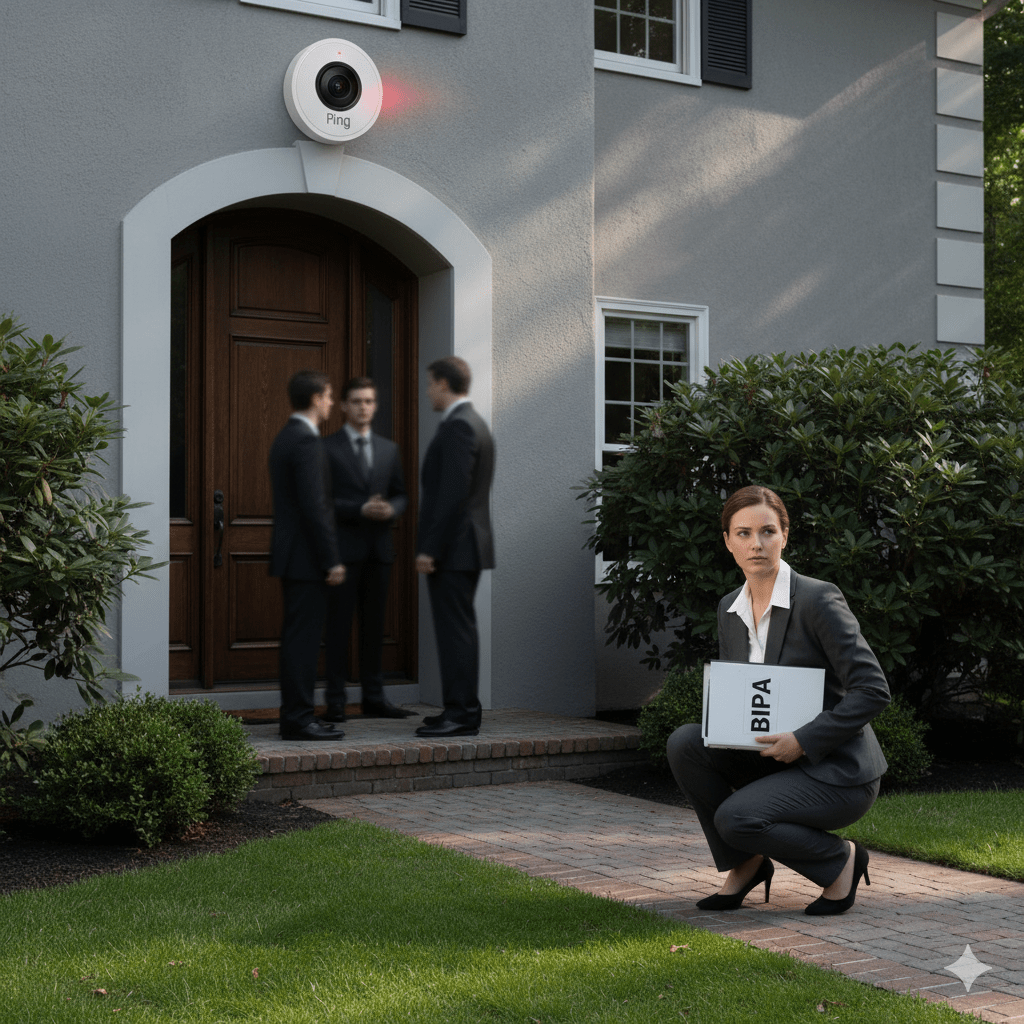
Biometric Update reports that Amazon’s Ring products are offering a feature called “Familiar Faces.”
“In September, Amazon revealed a revamped Ring camera lineup featuring two notable AI features, Familiar Faces and Search Party. Familiar Faces uses facial recognition and lets users tag neighbors or friends so future alerts identify them by name rather than generic motion.”
If this sounds, um, familiar, it’s because Google also has a similar feature, called familiar face alerts, in its Nest offerings.
And like Google, Amazon’s Familiar Faces won’t be available to everyone. If you are, um, familiar withg the acronym BIPA, you will know why.
“The feature is slated for December, though it will be disabled in places with stricter biometric laws such as Illinois, Texas, and Portland.”

Remember my reel that simulated active liveness detection?
Well, perhaps I should give equal time to passive liveness detection.
Done.

(Part of the biometric product marketing expert series)
When I first tried active liveness detection many years ago, I hated it because of its difficulty.
If you must implement active (rather than passive) liveness detection in your facial solution, don’t make it cumbersome.

(Part of the biometric product marketing expert series)
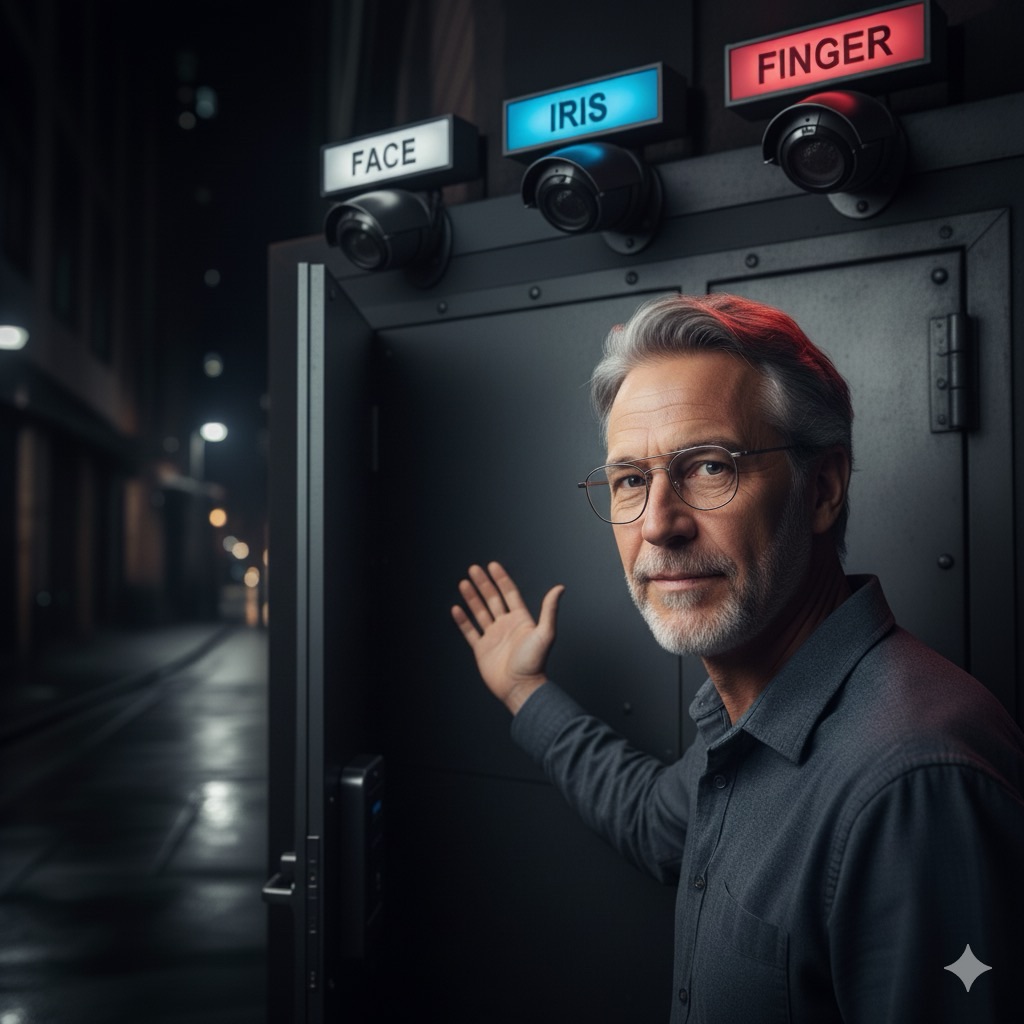
Even if a person alters their face to look like another person…
…they’re not going to modify all ten fingers.
Or their irises.
Go multimodal.


 Bredemarket