By now all of you are able to see the words that I originally saw several days ago: Bredebot’s writings on a content marketer’s need to practice empathy.
And Bredebot’s closing words: “Keep it human!”
Closing words that were written by a Google algorithm, not a human. And weren’t even envisioned in my original prompt; they just came out in the result.
And this is true whether the content is written by a bot or a human. There are thousands of content marketers who write about cancer treatments…despite the fact that most of them have never experienced the fear and dread of a cancer diagnosis themselves.
But the right words can address a prospect’s needs.
I’ve been interested in brand archetypes for years. You’ll recall my first post on the topic, after which I used Kaye Putnam’s quiz to determine my archetypes: primarily Sage, with some others.
Sage, Explorer, Royalty, Entertainer.
This morning I attended a webinar, sponsored by Verizon and under the auspices of SCORE and BizHuub, on the topic of budget-friendly branding. It was presented by Warrick and Takicha Roundtree.
After some preliminary discussions, the Roundtrees focused on the topic of the 12 brand archetypes. They then encouraged us to explore our brand archetypes, with the help of our favorite generative AI tool.
The first prompt, and the response
I am Bredemarket. I offer marketing and writing services (content, proposal, analysis) to identity, biometrics, and technology firms. I sell these services to marketing leaders at these firms. Give me a list of psychographic characteristics of my most likely buyer.
Here is a list of psychographic characteristics of your most likely buyer, the marketing leader at an identity, biometrics, or technology firm. These characteristics go beyond simple demographics and aim to uncover their motivations, challenges, and attitudes.
Core Motivations and Goals
Career-Driven and Results-Oriented: They are primarily motivated by professional success. They need to demonstrate a positive ROI on their marketing budget and show tangible results in the form of lead generation, increased brand awareness, or successful product launches.
Aspirational: They want to be seen as innovative and forward-thinking within their company and the industry. They are looking for solutions that will help them gain a competitive edge and establish their firm as a leader in its field.
Driven by Urgency: They are often facing deadlines and a “need it yesterday” mentality. They have projects to complete, campaigns to launch, and are looking for a reliable partner who can jump in and deliver high-quality work quickly and efficiently.
Seeking Strategic Partnership: While they need a service provider, they are really looking for a partner who can provide fresh, objective insights and strategic thinking. They value an external perspective that isn’t clouded by internal biases or politics.
Challenges and Pain Points
Overwhelmed and Under-Resourced: They are likely managing a lean team and a multitude of responsibilities, from content creation to campaign management and analytics. They may not have the in-house expertise or bandwidth for every project, especially specialized ones like proposal writing or complex analysis.
Need for Specialized Expertise: They are acutely aware that their firm’s technology is complex and niche. They need a writer and marketer who can understand the technical nuances of identity and biometrics and translate them into compelling, clear, and trustworthy content for a B2B audience.
Information and Privacy Concerns: The identity and biometrics space is sensitive. They are concerned with navigating complex issues like data privacy regulations, ethical considerations, and public perception. They need content that addresses these concerns and builds trust with their audience.
Difficulty Demonstrating Value: They struggle to effectively communicate the value of their complex, often-invisible, technology to different stakeholders, from technical users to C-suite executives.
Attitudes and Behaviors
Risk-Averse (to a point): While they want to innovate, they are also responsible for their budget and brand reputation. They will seek out a provider with a proven track record, relevant case studies, and a clear understanding of their industry.
Values Efficiency: They appreciate a streamlined, no-fuss process. They don’t have time for extensive hand-holding or for a provider who needs a lot of training on the basics of their industry.
Prefers a Collaborative Approach: They don’t want to simply hand over a task. They want a partner who will engage in a dialogue, provide strategic recommendations, and work with their team to achieve a shared vision.
Values Trust and Reliability: Given the sensitive nature of their business, they need to feel completely confident that their partner is stable, consistent, and committed to the project. They value a partner who is responsive and transparent in their operations.
The second prompt, and the response
Which of the 12 brand archetypes would appeal to my customers?
Based on the psychographic characteristics of your target customer—the marketing leader at a technology, biometrics, or identity firm—several brand archetypes would likely resonate most strongly.
The key is to choose an archetype that speaks to their professional motivations, pain points, and desire for a strategic, trustworthy partner.
Here are the most relevant archetypes for Bredemarket:
1. The Sage
Why it works: This is the most natural fit. The Sage is the expert, the thought leader, and the trusted advisor. Your customers are seeking knowledge, analysis, and strategic insights. They don’t just want content written; they want content that is well-researched, accurate, and authoritative.
How to embody it:
Focus on data-driven insights and analysis.
Create content that educates and informs, such as white papers, in-depth reports, and industry analysis.
Position yourself as an expert who understands the complex nuances of their industry, not just a content mill.
Your tone should be knowledgeable, wise, and credible.
2. The Creator
Why it works: Your services are inherently creative. You are creating content, proposals, and narratives from scratch. Marketing leaders at tech firms are looking for someone who can translate complex technical information into compelling, engaging stories that resonate with their audience.
How to embody it:
Showcase your ability to build something from nothing—a strong narrative, a winning proposal, or a memorable campaign.
Use a portfolio to highlight diverse, imaginative work you’ve done for other clients.
Emphasize your process, from ideation to final execution.
Your messaging should focus on innovation, originality, and the power of well-crafted communication.
3. The Hero
Why it works: This archetype addresses your customer’s pain points directly. They are heroes within their own companies, tasked with generating leads and demonstrating ROI. You, as Bredemarket, can be their sidekick or a “hero for hire” who helps them conquer their challenges.
How to embody it:
Frame your services as a solution to their problems. Instead of “We write proposals,” say “We write proposals that help you win bids.”
Use success stories and testimonials that highlight how you helped a client overcome a major challenge (e.g., “Helped Company X generate 50% more leads with a new content strategy”).
Your tone should be confident, courageous, and results-oriented.
Secondary, Supporting Archetype: The Ruler
Why it works: While this may not be your primary archetype, it’s a good supporting one. Marketing leaders are often in a position of power and authority. By positioning yourself as a professional and organized partner, you align with their desire for order and control.
How to embody it:
Emphasize your clear processes, reliability, and project management skills.
Communicate with precision and confidence, demonstrating your command of the subject matter and the project.
Show that you bring order to the chaos of their marketing needs.
Summary & Recommendation
For Bredemarket, the Sage and Creator are your strongest primary archetypes.
Sage establishes your expertise and credibility, which is paramount in a technical field.
Creator highlights your specific skill set and ability to build compelling narratives.
You can then use the Hero archetype to frame your marketing messages around the problems you solve, and the Ruler to reassure potential clients about your professionalism and reliability.
By combining these, you can craft a brand identity that is both intelligent and innovative, while also being trustworthy and empowering for your target customer.
What I need to do
So what have I learned from the Roundtrees’ prompts and Google Gemini’s responses?
I need to analyze the rest of the two responses and perhaps make some changes in direction in my self-promotional content. After all, Google never lies.
In truth, why is Google happy that I’m ignoring its marketing advice?
Whether you’re a marketer, a biometric expert, a technologist, or just someone scrolling the webs, you can feel a variety of emotions after reading a Bredemarket blog post.
Maybe amused.
Maybe informed,
Maybe empowered.
But some will experience more powerful emotions.
For a targeted few who find themselves paralyzed, maybe afraid. Afraid that your competitors will steal your prospects unless you act.
Or for those targeted few who despise powerlessness and want to act, maybe hungry. Hungry to get your product’s benefits to your prospects so they convert.
I have to be honest. Some of the people who are inspired to act are perfectly capable of acting on their own. Because they’re not complete unknowns.
But others can use the help of an outside consultant such as Bredemarket.
Content, proposals, analysis. I can help with all of them.
I spend a lot of time on LinkedIn and therefore endure the regular assault from the so-called LinkedIn “experts.”
You know them.
The people who get all bent out of shape over this character—because it’s certain proof that you use “ChatGPT” (because there is no other generative AI tool) because no human ever uses em dashes.
And then in the next breath the LinkedIn “experts” slam people who don’t use “ChatGPT” to increase productivity. For example, jobseekers should use “ChatGPT” to “beat the ATS,” automatically fine-tune their resumes for every individual application, and apply to thousands of positions.
Oh, but the LinkedIn “experts” say you shouldn’t spray and pray. Tap into the hidden job market via our members-only gated website.
But that’s not the worst thing they say.
Formulate Safe Generic Pablum
When they’re not commanding you to avoid the em dash, the LinkedIn “experts” remind us that LinkedIn is a professional network. And that our communications must be professional.
No cat pictures.
No “life sucks” posts.
Nothing that would cause anyone any offense.
The ideal personal communication is this: “I am thrilled and excited to announce my CJIS certification!”
The ideal business communication is this:
Yes, the “experts” wish that businesses said nothing at all. But if they do say something, a statement like this optimizes outcomes: “WidgetCorp is dedicated to bettering the technology ecosystem.”
Such a statement is especially effective if all your competitors are saying the same thing. This unity of messaging positions you as an industry leader.
Which enables you to…argh, I can’t do this any more. I am hating myself more and more with each word I type. Can I throw up now? This is emotionally painful.
Derek Hughes just sent me an email that describes this generic pablum. It read, in part:
“Everything reads like it was written by a robot on decaf.
“Same recycled tips. Same recycled tone. Somehow, it’s all… grey.”
Obliterate Safe Generic Pablum
If your company wants conversions—and I assume that you do—avoid the generic pablum and say something.
This will bring your hungry people (target audience) to you.
And for the prospects that despise humanness and glory in generic pablum…if their focus is elsewhere, your focus won’t impede. Let them roam in the distance.
I embedded a reel in that post with the following text:
If their focus is elsewhere
My focus won’t impede
Since I had created the reel anyway, I repurposed it by sharing it on Bredemarket’s social media channels.
Including YouTube. You can see the YouTube short here:
Now when I shared it on YouTube, I did so with no context whatsoever. The caption simply read “In the Distance.” Without the words I wrote in the original blog post (I’ll get to two particular words later).
Yet by Monday morning the short had over 1,000 views. For Bredemarket’s YouTube channel, that’s a lot. Only three shorts have attained higher views: two about Tropical Storm Hilary, and one about squirrels.
But why?
Why?
The relative popularity of this short on YouTube is a mystery. Other than its brevity, it includes none of the elements of a successful video:
It does not use trending audio.
It does not use trending key words or hashtags.
Its message is obscure, if not downright cryptic.
Its visuals do not appeal to a mass audience.
Perhaps…
I have a theory that probably isn’t correct, but I’m going to entertain it anyway.
If this didn’t immediately occur to you, the reel subconsciously incorporates emotion. Emotion at the loss of my “former friends” as mentioned in the blog (but not on YouTube). Yes, some of the same former friends who forgot my birthday long ago.
So my wild theory is that the sense of loss, resignation, and renewed determination (I won’t impede on them) permeated the reel and subconsciously increased interest.
Or maybe I’m wrong. Perhaps there are just more wombat fans than I realized.
In the Distance.
Regardless of the unexpected popularity of this YouTube short, it illustrates why emotions are now the seventh of the seven questions that a content creator should ask you.
I (always) need to improve my INTENTIONAL injection of emotions into my content.
Product and service marketing is deceptively easy…because there’s no need to market to everyone.
I just calculated the numbers. Of the world’s population (not counting non-person entities) a generous (!) maximum of 8,000 people are hungry and interested in buying the services Bredemarket provides.
The true number is probably more like 800, but let me fantasize for a moment.
Unreal fantasy.
Or to put it another way, 99.9999% of people have absolutely no interest in Bredemarket.
But I didn’t privately contact people and gloat about my byline.
Well, with two exceptions. Because I wrote briefly (one sentence) about third-party risk management, I privately alerted two TPRM professionals who wouldn’t have seen it otherwise.
“Employ third-party risk management (TPRM) to minimize the risk when biometric data is stored with cloud providers, application partners, and companies in the supply chain.”
Pearls and ice
Other than that, I engaged in no private messaging, even to long-standing biometric professionals.
Some of the biometric professionals saw my blog or social mentions of the guest post and were duly impressed.
Others likely saw my blog or social mentions and didn’t care one bit.
The rest never saw my blog or social mentions, which meant that they didn’t actively follow Bredemarket, which again meant that they didn’t care at all.
The whole pearls before swine story plays here.
Or selling ice makers to Eskimos.
A lost cause.
Whatever example you prefer, there’s no need to market your product to those who don’t give a REDACTED about it.
When I introduced emotions as the seventh question in Bredemarket’s seven questions, I was thinking about how a piece of content could invoke a variety of emotions in a human reader.
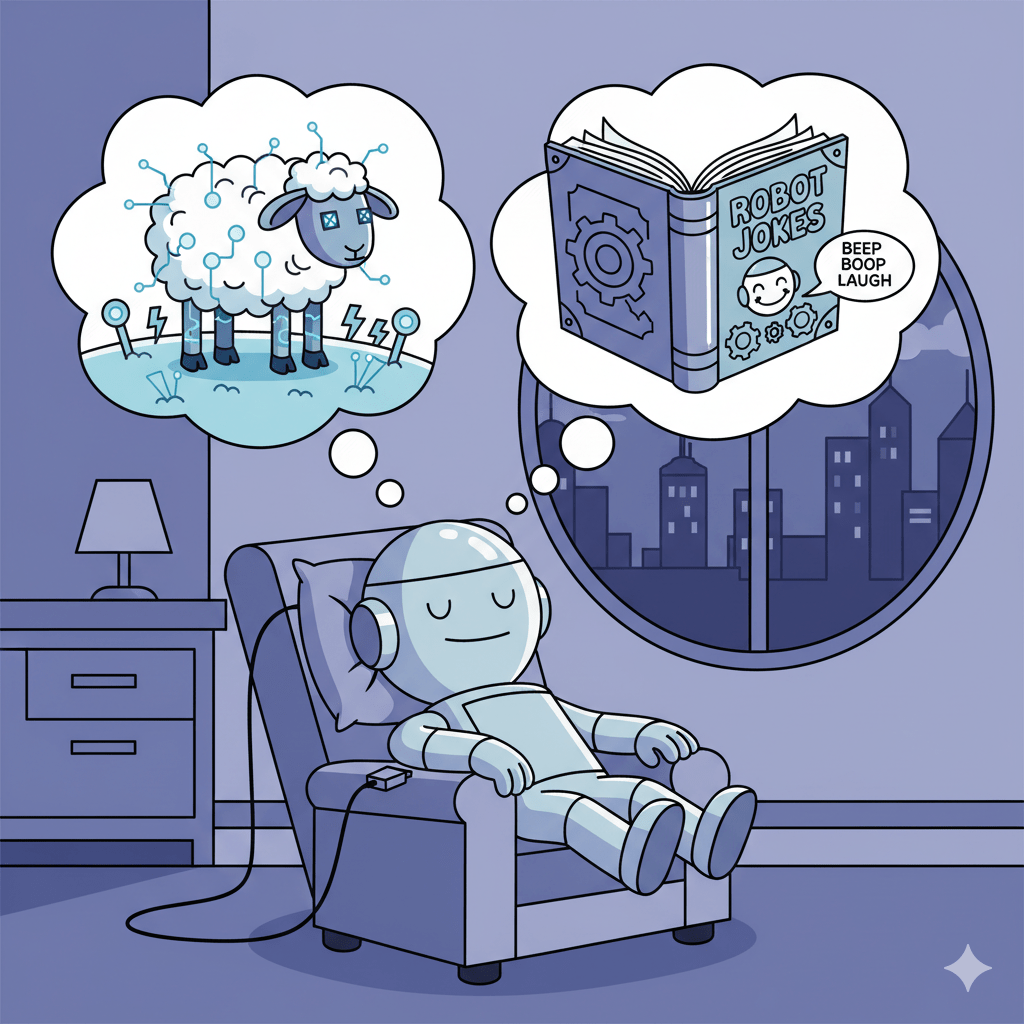
“Like anything else, I think in some cases robots with emotions will be really good. It’s good in the sense that emotions are one of the best human interfaces. If you want to interface with us humans, we respond to emotions, and so having an emotional component in robots is a very smart, powerful way to help us work with them.”










 Bredemarket