In this post, “NGI” stands for Non-Governmental Identity

I admit to my biases.

As a former long-time employee of a company that provides finger and face technology for the Federal Bureau of Investigation’s Next Generation Identification (NGI) system, as well as driver’s license and passport technology in the United States and other countries, I am reflexively accustomed to thinking of a proven identity in governmental terms.

Because the government is always here to help.

From World War II. By Packer, poster artist, Artist (NARA record: 8467744) – U.S. National Archives and Records Administration, Public Domain, https://commons.wikimedia.org/w/index.php?curid=16929857

What this means in practice is that whenever I see a discussion of a proven identity, I reflexively assume that the identity was proven through means of some type of governmental action.

  • Perhaps the identity was tied to a driver’s license identity maintained by a state agency (and checked against other states via AAMVA’s “State to State” to ensure that there are no duplicate identities).
  • Or perhaps the identity was proven via the use of a database maintained by a government agency, such as the aforementioned NGI or perhaps a database such as the CODIS DNA database.

However, I constantly have to remind myself that not everyone thinks as I do, and that for some people an identity proven by governmental means is the worst possible scenario.

Use of DNA for humanitarian efforts

Take an example that I recently tweeted about.

I recently read an article from Thermo Fisher Scientific, which among other things provides a slew of DNA instruments, software, and services for both traditional DNA and rapid DNA.

One of the applications of DNA is to prove family relationships for migrants, especially after families were separated after border crossings. This can be done in a positive sense (to prove that a separated parent and child ARE related) or in a negative sense (to prove that a claimed parent and child are NOT related). However, as was noted in a webinar I once attended, DNA is unable to provide any verification of legitimate adoptions.

By Nofx221984 – Own work, Public Domain, https://commons.wikimedia.org/w/index.php?curid=7429871

Regardless of the purpose of using DNA for migrants, there is a certain level of distrust among the migrants when the government says (presumably in Spanish), “We’re the government. We’re here to help.” You don’t have to be a rabid conspiracy theorist to realize that once DNA data is captured, there is no technical way to prevent the data from being shared with every other government agency. Certain agencies can establish business rules to prevent such sharing, but those business rules can include wide exceptions or the rules can be ignored entirely.

Therefore, Thermo Fisher Scientific decided to discuss humanitarian DNA databases.

As a result of migration, human trafficking and war, humanitarian databases are a relatively new concept and are often completely separate from criminal databases. Research has shown that family members may distrust government databases and be reluctant to report the missing and provide reference samples (1). Humanitarian databases are repositories of DNA profiles from reported missing persons, relative reference samples, and unknown human remains and may be managed by non-governmental organizations (NGOs), though in some instances they may be managed by a governmental institution but kept separate from criminal databases. Examples of humanitarian databases can be found in the United States (NamUsUniversity of North Texas HDID), Canada (Royal Canadian Mounted Police), Australia (National DNA Program for unidentified and missing persons) and internationally via the International Commission on Missing Persons (ICMP).

As you can see from the list, some of these databases ARE managed by government police agencies such as the RCMP. But others are not. The hope, of course, is that migrants would be willing to approach the humanitarian folks precisely BECAUSE they are not the police. Reluctance to approach ANY agency may be dampened by a desire to be reunited with a missing child.

And these non-governmental efforts can work. The Colibri Center claims to have performed 142 identifications that would not have been made otherwise.

Reluctance to set national standards for mobile driver’s licenses

Because of my (biased) outlook, mobile driver’s licenses and other applications of government-proven digital identity seem like a wonderful thing. The example that I often bore you with is the example of buying a drink at a bar. If someone does this with a traditional driver’s license, the bartender not only learns the drinker’s birthdate, but also his/her address, (claimed) height and weight, and other material irrelevant to the “can the person buy a drink?” question. With a mobile driver’s license, the bartender doesn’t even learn the person’s birthdate; the bartender only learns the one important fact that the drinker is over 21 years of age.

Some people are not especially wowed with this use case.

The DHS Request for Comment has finally closed, and among the submissions is a joint response from the American Civil Liberties Union, Electronic Frontier Foundation (EFF), & Electronic Privacy Information Center (EPIC). The joint response not only warns about potential misuse of government digital identities, but also questions the rush of establishing them in the first place.

We believe that it is premature to adopt industry standards at this time as no set of standards has been completed that fully takes advantage of existing privacy-preserving techniques. In recent decades we have seen the emergence of an entire identity community that has been working on the problems of online identity and authorization. Some within the identity community have embraced centralized and/or proprietary systems…

You can imagine how the ACLU, EFF, and EPIC feel about required government-managed digital identities.

Is a Non-Governmental Identity (NGI) feasible and reliable?

Let’s return to the ACLU/EFF/EPIC response to the DHS Request for Comment, which mentions an alternative to centralized, proprietary maintenance of digital identities. This is the alternative that I’m referring to as NGI just to cause MAC (massive acronym confusion).

…others are animated by a vision of “self-sovereign
identity” that is decentralized, open source, privacy-preserving, and empowering of individuals. That movement has created a number of proposed systems, including an open standard created by the World Wide Web Consortium (W3C) called Verifiable Credentials (VCs)….

DHS should refuse to recognize IDs presented within centralized identity systems. If a standard digital identity system is to be accepted by the federal government, it must be created in an open, transparent manner, with the input of multiple stakeholders, and based upon the self-sovereign identity concept. Such a system can then be used by federal government agencies to view identity credentials issued by state departments of motor vehicles (DMVs) where doing so makes sense. If standards based on self-sovereign identity are not considered mature enough for adoption, efforts should be directed at rectifying that rather than at adopting other systems that raise privacy, security, and autonomy risks.

For all practical purposes, the chances of the ACLU/EFF/EPIC convincing the Department of Homeland Security to reject government-proven identities are approximately zero. And since DHS controls airport access, you probably won’t see an airport security agent asking for your Verifiable Credentials any time soon. Self sovereign identities are just as attractive to government officials as sovereign citizens.

Who issues Verifiable Credentials?

As ACLU/EFF/EPIC noted, Verifiable Credentials are still under development, just as the centralized system standards are still under development. But enough advances have been made so that we have somewhat of an idea what they will look like. As Evernym notes, there is a trusted triangle of major players in the Verifiable Credentials ecosystem:

There are a number of directions in which we can go here, but for the moment I’m going to concentrate on the Issuer.

In the current centralized model being pursued in the United States, the issuers are state driver’s license agencies that have “voluntarily” consented to agree to REAL ID requirements. Several states have issued digital versions of their driver’s licenses which are recognized for various purposes at the state level, but are not yet recognized at the federal level. (The purpose of the DHS Request for Comment was to solicit thoughts on federal adoption of digital identities. Or, in the case of some respondents, federal NON-adoption of digital identities.)

Note that in the Verified Credentials model, the Issuer can be ANYBODY who has the need to issue some type of credential. Microsoft describes an example in which an educational institution is an Issuer that represents that a student completed particular courses.

Without going into detail, the triangle of trust between Issuers, Verifiers, and Holders is intended to ensure that a person is who they say they are. And to the delight of the ACLU et al, this is performed via Decentralized Identifiers (DIDs), rather than by centralized management by the FBI or the CIA, the BBC, B. B. King, Doris Day, or Matt Busby. (Dig it.)

But NGIs are not a cure-all

Despite the fact that they are not controlled by governments, and despite that fact that users (at least theoretically) control their own identities, no one should think that digital identities are the solution to all world problems…even when magic paradigm-shifting words like “blockchain” and “passwordless” are attached to them.

Here’s what McKinsey has said:

…even when digital ID is used with good intent, risks of two sorts must be addressed. First, digital ID is inherently exposed to risks already present in other digital technologies with large-scale population-level usage. Indeed, the connectivity and information sharing that create the value of digital ID also contribute to potential dangers. Whether it is data breaches and cyber-intrusions, failure of technical systems, or concerns over the control and misuse of personal data, policy makers around the world today are grappling with a host of potential new dangers related to the digital ecosystem.

Second, some risks associated with conventional ID programs also pertain in some measure to digital ID. They include human execution error, unauthorized credential use, and the exclusion of individuals. In addition, some risks associated with conventional IDs may manifest in new ways as individuals newly use digital interfaces. Digital ID could meaningfully reduce many such risks by minimizing opportunity for manual error or breaches of conduct.

In addition, many of these digital identity initiatives are being pursued by large firms such as IBM and Microsoft. While one hopes that these systems will be interoperable, there is always the danger that the separate digital identity systems from major firms such as IBM and Microsoft may NOT be interoperable, in the same way that the FBI and DHS biometric systems could NOT talk to each other for several years AFTER 9/11.

And it’s not only the large companies that are playing in the market. Shortly after I started writing this post, I ran across this LinkedIn article from the Chief Marketing Officer at 1Kosmos. The CMO makes this statement in passing:

At 1Kosmos, we’ve taken our FIDO2 certified platform one step further with a distributed identity based on W3C DID standards. This removes central administration of the database via a distributed ledger for true “privacy by design,” putting users in sole access and control of their identity.

1Kosmos, IBM, and Microsoft know what they’re talking about here. But sadly, some people only think these technologies are “cool” because they’re perceived as anti-government and anti-establishment. (As if these companies are going to call for the downfall of capitalism.)

Which identiy(ies) will prevail?

Back to governmental recognition of NGI.

Don’t count on it.

Anticipated DHS endorsement of government-issued digital identities doesn’t mean that NGI is dead forever, since private companies can adopt (and have adopted) any identity system that they wish.

So in truth we will probably end up with a number of digital identities like we have today (I, for example, have my WordPress identities, my Google identities, and countless others). The difference, of course, is that the new identities will be considered robust – or won’t be, when centralized identity proponents denigrate decentralized identities and vice versa.

But frankly, I’m still not sure that I want Facebook to know how much I weigh.

(Although, now that I think about it, Apple already knows.)

(Bredemarket Premium) Another mobile driver’s license pilot…but this one may move forward and become the real thing

When looking at U.S. state implementations of mobile driver’s licenses, there are various gradations of these implementations.

  • Some states have only performed pilots.
  • Some states have implemented production versions of mobile driver’s license, but their acceptance is limited and you still have to carry your physical driver’s license with you.
  • I don’t think any state has reached the level where the mDL is acceptable for ALL state purposes, and you DON’T have to carry your physical license with you any more.
  • NO state has reached the level where the mDL is acceptable for state AND federal purposes (such as boarding planes). That is still in process.
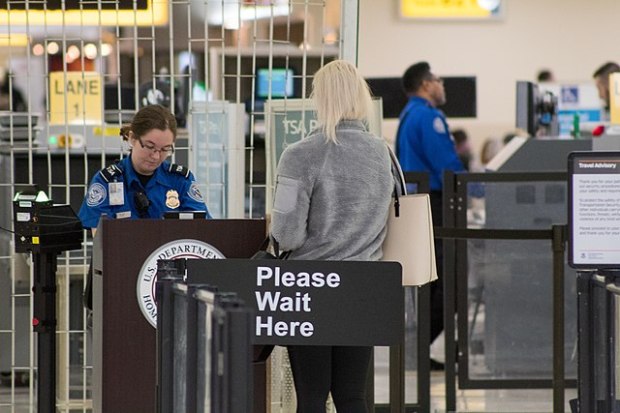
Transportation Security Administration Checkpoint at John Glenn Columbus International Airport. By Michael Ball – Own work, CC0, https://commons.wikimedia.org/w/index.php?curid=77279000

This post looks at what is going on in one state, what may happen in the future, and what resistance the state may (or may not) meet from its own residents.

Subscribe to get access

Subscribe to Bredemarket Premium to access this premium content.

  • Subscriptions just $5 per month.
  • Access Bredemarket’s expertise without spending hundreds or thousands of dollars.

Biometrics IS the financial sector

“Have to update my chart again.”

C. Maxine Most of Acuity Market Intelligence. From https://twitter.com/cmaxmost/status/1418306725510193152

Since I’m treading into financial territory here, I should disclose that Bredemarket has financial relationships with one or more of the companies mentioned in this post. This is not investment advice, do your own due diligence, bla bla bla.

I don’t monitor the market enough to know if this is part of an overall trend, but there has been a lot of biometric and digital identity investment recently. Both Biometric Update and FindBiometrics (and other publications such as FinLedger) have written about some of these recent investments, and IPVM has published its acquisition analysis (for subscribers only). Here’s a partial list of the biometric and/or digital identity companies who have received new funding (via investors, IPO, or acquisitions) recently:

I am not a financial expert (trust me on this), but I suspect that these companies are benefiting from two contradictory factors.

  • The apparent WANING of the COVID threat suggests better market performance in the future.
  • Some biometric and digital identity investments are very attractive precisely BECAUSE of the COVID threat, and the resulting attractiveness of remote and touchless technologies.

Of course, markets run in cycles, and it’s hard to predict if this is just the beginning of money flowing to biometrics/digital identity companies, or if all of this will suddenly come to a grinding halt. Remember how hot so-called “fever scanners” were a year ago, until their deficiencies were identified? And remember how Microsoft was prompted to divest from Anyvision not too long ago?

It’s possible that a number of external factors, such as an increase in government bans of facial recognition use, consumer resistance to digital identity, or the entry (or re-entry) of much larger players into the biometrics and/or digital identity markets, could dampen the revenue hopes for these funded companies.

Of course, investors are used to analyzing risk, and in many cases the investments with higher risk can yield the greater rewards.

It’s all just a game.

You will soon deal with privacy stakeholders (and they won’t care about the GYRO method)

(Part of the biometric product marketing expert series)

I’ve written about the various stakeholders at government agencies who have an interest in biometrics procurements- not only in this post, but also in a post that is available to Bredemarket Premium subscribers. One of the stakeholders that appeared on my list was this one.

The privacy advocate who needs to ensure that the biometric data complies with state and national privacy laws.

Broken Liberty: Istanbul Archaeology Museum. By © Nevit Dilmen, CC BY-SA 3.0, https://commons.wikimedia.org/w/index.php?curid=1115936

If you haven’t encountered a privacy advocate in your marketing or proposal efforts…you will.

Utah Gov. Spencer Cox has appointed Christopher Bramwell as the Department of Government Operations’ first privacy officer….As privacy officer, Bramwell will be responsible for surveying and compiling information about state agencies’ privacy practices to discern which poses a risk to individual privacy. He will also work with the personal privacy oversight commission and state privacy officer to provide government privacy practice reports and recommendations.

Obviously this affects companies that work with government agencies on projects such as digital identity platforms. After all, mobile driver’s licenses contain a wealth of personally identifiable information (PII), and a privacy advocate will naturally be concerned about who has access to this PII.

But what about law enforcement? Do subjects in law enforcement databases have privacy rights that need to be respected? After all, law enforcement agencies legally share PII all the time.

However, there are limitations on what law enforcement agencies can share.

  • First off, remember that not everyone in a law enforcement database is an arrested individual. For example, agencies may maintain exclusion databases of police officers and crime victims. When biometric evidence is found at a crime scene, agencies may compare the evidence against the exclusion database to ensure that the evidence does not belong to someone who is NOT a suspect. (This can become an issue in DNA mixtures, by the way.)
  • Second off, even arrested individuals have rights that need to be respected. While arrested individuals lose some privacy rights (for example, prisoners’ cells can be searched and prisoners’ mail can be opened), a privacy advocate should ensure that any system does not deny prisoners protections to which they are entitled.

So expect to see a raised concern about privacy rights when dealing with law enforcement agencies. This concern will vary from jurisdiction to jurisdiction based upon the privacy (and biometric) laws that apply in each jurisdiction, but vendors that do business with government agencies need to stay abreast of privacy issues.

A little more about stakeholders, or actors, or whoever

Whether you’re talking about stakeholders in a government agency, stakeholders at a vendor, or external stakeholders, it’s important to identify all of the relevant stakeholders.

Or whatever you call them. I’ve been using the term “stakeholders” to refer to these people in this post and the prior posts, but there are other common terms that could be used. People who construct use cases refer to “actors.” Marketers will refer to “personas.”

Whatever term you use, it’s important to distinguish between these stakeholders/actors/personas/whatever. They have different motivations and need to be addressed in different ways.

When talking with Bredemarket clients, I often need to distinguish between the various stakeholders, because this can influence my messaging significantly. For example, if a key decision-maker is a privacy officer, and I’m communicating about a fingerprint identification system, I’m not going to waste a lot of time talking about the GYRO method.

My time wouldn’t be wasted effort if I were talking to a forensic examiner, but a privacy advocate just wouldn’t care. They would just sit in silence, internally musing about the chances that a single latent examiner’s “green” determination could somehow expose a private citizen to fraud or doxxing or something.

This is why I work with my clients to make sure that the messaging is appropriate for the stakeholder…and when necessary, the client and I jointly develop multiple messages for multiple stakeholders.

If you need such messaging help, please contact Bredemarket for advice and assistance. I can collaborate with you to ensure that the right messages go to the right stakeholders.

The ITIF, digital identity, and federalism

I just read an editorial by Daniel Castro, the vice president of the Information Technology and Innovation Foundation (ITIF) and director of the Center for Data Innovation. The opinion piece, published in Government Technology, is entitled “Absent Federal IDs, Digital Driver’s Licenses a Good Start.”

You knew I was going to comment on this one.

Why Daniel Castro supports a national digital ID

Let me allow Castro to state his case.

After Castro identifies the various ways in which people prove identity online, and the drawbacks of these methods, here’s what Castro says about the problem that needs to be addressed:

…poor identity verification is one of the reasons that identity theft is such a growing problem as more services move online. The Federal Trade Commission received 1.4 million reports of identity theft last year, double the number in 2019, with one security research firm estimating $56 billion in losses.

Castro then goes on to state his ideal solution:

The best solution to this problem would be for the federal government to develop an interoperable framework for securely issuing and validating electronic IDs and then direct a federal agency to start issuing these electronic IDs upon request. 

Castro then notes that the federal government has NOT done this:

But in the absence of federal action, a number of states have already begun this work on their own by creating digital driver’s licenses that provide a secure digital alternative to a physical identity document.

Feel free to read the rest of the story.

“Page two.” By Shealah Craighead – The original was formerly from here and is now archived at georgewbush-whitehouse.archives.gov., Public Domain, https://commons.wikimedia.org/w/index.php?curid=943922

But for me I’m going to stop right there.

Why Americans oppose mandatory national physical and digital IDs

Castro’s proposal, while ideal from a technological standpoint, doesn’t fully account for the realities of American politics.

Many Americans (regardless of political leanings) are strongly opposed to ANY mandatory national ID system. For example, many Americans don’t want our Social Security Numbers to become mandatory national IDs (even though they are de facto national IDs today). And while the federal government does issue passports, it isn’t mandatory that people GET them.

And many Americans don’t want state driver’s licenses to become mandatory national IDs. I went into this whole issue in great detail in my prior post “How 6 CFR 37 (REAL IDs) exhibits…federalism,” which made the following points:

  1. States are NOT mandated to issue REAL IDs. (And, no citizen is mandated to GET a REAL ID.)
  2. The federal government CAN mandate which IDs are accepted for federal purposes.
  3. Because the federal government can mandate the IDs to use when entering a federal facility or flying at a commercial airport, ALL of the states were eventually “persuaded” to issue REAL IDs. (Of course, it has take nearly two decades, so far, for that persuasion to work, and it won’t work until 2023, or later.)

So, considering all of the background regarding the difficulties in mandating a national PHYSICAL ID, imagine how things would erupt if the federal government mandated a national DIGITAL ID.

It wouldn’t…um…fly.

Transportation Security Administration Checkpoint at John Glenn Columbus International Airport. By Michael Ball – Own work, CC0, https://commons.wikimedia.org/w/index.php?curid=77279000

And this is why some states are moving ahead on their own with mobile driver’s licenses.

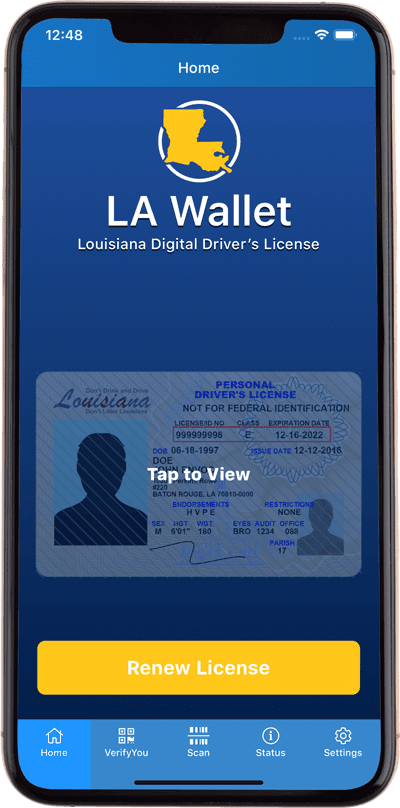
LA Wallet Louisiana Digital Driver’s License. lawallet.com.

However, there’s a teeny tiny catch: while the states can choose to mandate that their mDLs be accepted at the STATE level, states cannot mandate that their digital identities be used for FEDERAL purposes.

Here we go again.

Of course, federal government agencies are starting to look at the issues with a mobile version of a “REAL ID,” including the standard(s) to which any mobile ID used for federal purposes must adhere.

Improving Digital Identity Act of 2020, or 2021, or 2025…

While the government agencies are doing this work, another government agency (the U.S. Congress) is also working on this. Castro mentions Rep. Bill Foster’s H.R. 8215, introduced in the last Congress. I’m not sure why he bothered to introduce it in September 2020, when Congress wasn’t going to do anything with it. As you may have heard, we had an election at that time.

Of course, he just reintroduced it last month, so now there’s more of a chance that it will be considered. Or maybe not.

Regardless, the “Improving Digital Identity Act” proposes the creation of a task force at the federal level with federal, state participants, and local participants. It also mandates that NIST create a digital identity “framework,” with an interim version available 240 days after the Act is passed. Among other things, the ACT also mandates that NIST Special Publication 800-63 become “binding operational directives” for federal agencies.

(Does that mean that it will be illegal to mandate password changes every 90 days? Woo hoo!)

Should this Act actually pass at some point, its directives will need to be harmonized with what the Department of Homeland Security is already doing, and of course with what the states are already doing.

Oh, and remember my reference to the DHS’ work in this area? Among those who have submitted verbal and/or written comments, several (primarily from privacy organizations) have stated that the government should NOT be promoting ANY digital ID at all. The sentiments in this written comment, submitted anonymously, are all too common.

There are a lot of security and privacy concerns with accepting digital ID’s. First and foremost, drivers licenses contain a lot of sensitive information. If digital ID’s are accepted, then it could potentially leak that info to hackers if it is not secured properly. Plus, there is the added concern that using digital ID’s will lead to extra surveillance where unnecesary. Finally, digital ID will not allow individuals who are poorer to be abele to submit an ID because they might not have access to the same facilities. I am strongly against this rule and I do NOT think that digital ID should be an option.

I expect other privacy organizations to submit comments that may be better-written, but they echo the same sentiment.

Are unified digital IDs a thing?

I’ve been busy helping a client who needed summer fill-in help, but I’m finally making the time to catch up on my reading. And this article from Government Technology was on my reading list.

When I read the title “Mobile Driver’s Licenses Pave the Way for Unified Digital IDs,” I was intrigued by the last three words. I mean, there are more and more states releasing (non-pilot) mobile driver’s licenses, and the standard is coming along, and work is being done to prepare for federal acceptance.

But what about the “unified” part? How did David Raths address that?

Government uses of digital ID

Well, he listened to Eric Jorgensen, director of Arizona’s Department of Transportation.

“I actually hate the term ‘mDL’ because it doesn’t recognize the power of what we’re doing here….The whole concept is that we’re providing a way to remotely authenticate a person, to provide a trusted digital identity that doesn’t exist today. Once we provide that, we’re opening doors to enhanced government services. Also, the government can play a key role in facilitating commerce, providing a better citizen experience and providing for the security of that citizen — that goes way beyond what a driver’s license is about.”

Although all that Jorgensen is discussing is providing a trusted digital identity that is equivalent to a trusted physical identity. If you have to show your driver’s license when visiting a government office’s physical location, conceivably you can show your digital driver’s license when visiting a government office’s website.

Enterprise uses of digital ID

And there are applications beyond government. Delaware and other states are persuading private businesses to accept mobile driver’s licenses as valid forms of identification. There’s a powerful use case for age-restricted products, of course; since all that an alcohol-selling business needs to know is whether you are over the age of 21, the mobile driver’s license ONLY shows that you are over the age of 21. It doesn’t show your address, your weight, or even your birthdate.

But what about a true UNIFIED digital ID?

However, I semantically question whether this is truly a “unified” ID. This is just digitization of an existing government-endorsed ID. A “unified” ID would be one that would not only let me drive, vote, and buy alcohol, but would also serve as my ID to log into Facebook or buy Bitcoin. (Yes, I realize that use of a government ID to buy Bitcoin violates the space-time continuum in some way.)

And for that to happen, work may need to be done to make mobile IDs compatible with existing authentication/authorization methods such as OAuth and OpenID Connect.

And the whole “but what if I don’t have a digital ID?” question must be addressed.

And the whole “but what if I want to use a self-sovereign ID that is NOT government endorsed?” question must be addressed.

And presumably a myriad of other questions would need to be addressed also.

But for me, I can’t address unified digital IDs today. Just got a message from my summer-challenged client…

The EUDCC and Covishield

Well, that was unexpected, at least by me.

I figured that discussion of the European Union Digital COVID Certificate (EUDCC) would focus on use of the certificate by residents of the EU.

However, the big debate right now is about how citizens of countries outside of the EU are affected. While the EUDCC is primarily designed for EU citizens, the EU has an interest in getting people from outside of the EU to travel to Europe and spend lots of euros and make everyone happy.

By Avij (talk · contribs) – Own work, Public Domain, https://commons.wikimedia.org/w/index.php?curid=30112364

However, some of the regulations that govern the EUDCC and the EU’s COVID response are actually hampering travel from outsiders.

And when words like “equitable” are being bandied about, people are going to take notice.

Let’s start by examining the list of vaccines that are approved in the European Union.

Four vaccines are currently approved for use in the EU: Pfizer/BioNTech, Moderna, AstraZeneca and Johnson & Johnson. Another four are under “rolling review” for possible approval: Russia’s Sputnik, China’s Sinovac, Germany’s CureVac and Novavax of the United States.

So if you received one of the first four vaccines, this can be listed on your EUDCC and you can go about your merry way.

But African governmental entities believe that a fifth vaccine, one that happens to be available in Africa, should be added to the list.

[W]hile the goal is for EU Member States to issue vaccination certificates regardless of the COVID-19 vaccine type used, the granting of a “green pass” applies, only to vaccines that have received EU-wide marketing authorisation. Thus, while the AstraZeneca vaccine (ChAdOx1_nCoV-19) produced and authorized in Europe (Vaxzervria) is included, the same formation of the vaccine (Covishield) produced under license by the Serum Institute of India (SII), is excluded.

The TL;DR version: since Covishield is equivalent to Vaxzervria/AstraZeneca, people who received Covishield should get EU travel privileges.

Why does the same vaccine formulation have two different names? Because a special effort was mounted to provide vaccines to the Third World without endangering First World profits.

Covishield is the Indian counterpart of AstraZeneca-Oxford developed Vaxzervria and is identical to the one made in Europe. It has been widely distributed in many low and middle-income countries through the EU-supported COVAX programme. However the vaccine has not been included on the EUDCC because it is not approved by the European Medicines Agency (EMA). 

The European Medicines Agency counters that Covishield is NOT the same as the European version of AstraZeneca, despite an identical formulation:

“Even though it may use an analogous production technology to Vaxzevria (AstraZeneca’s vaccine), Covishield as such is not currently approved under EU rules,” the European Medicines Agency (EMA) said in a statement to AFP. “This is because vaccines are biological products. Even tiny differences in the manufacturing conditions can result in differences in the final product, and EU law therefore requires the manufacturing sites and production process to be assessed and approved as part of the authorisation process.”

So that’s where things stand as of now. And they may remain this way unless there’s pressure on the EMA to revise its decision.

Now I’m wondering how many Nigerians…and how many Indians…and how many Chinese and Russians (remember that Sputnik and Sinovac aren’t approved either)…are choosing to forgo a European holiday this summer.

The air industry is worried about EU Digital COVID certificate activity on July 1

Charles De Gaulle Airport in Paris. By NASA – NASA/JSC, Public Domain, https://commons.wikimedia.org/w/index.php?curid=7156445

So for the last few months we’ve been saying “we need travelers.” And now that we’re about to get travelers, people are getting worried.

The European Union’s system of digital COVID-19 travel certificates is due to come into force on Thursday, but airports group ACI and airlines representative bodies A4E, IATA and ERA warned in a letter to EU national leaders of a “worrying patchwork of approaches” across the continent.

Of course, we’ve known for some time that the EU Digital COVID Certificates are being implemented on a national basis. But now the airport and airline industries are warning that checking the certificates can be dizzying.

The letter said the only way to avoid huge queues and delays during the peak summer season was to implement a system whereby both the vaccination certificate and passenger locator forms are processed remotely before the passenger arrives at the airport.

Checks must only take place in the country of departure and not on arrival and national governments should manage the health data and provide equipment to check the QR codes, the letter said.

So there will be some confusion on Thursday. But will the confusion outweigh the benefits of increased travel?

Additional countries issue the EU Digital COVID Certificate (a/k/a the Digital Green Certificate)

First, a correction.

When I first began writing about the Digital Green Certificate, I referred to it as…the Digital Green Certificate, noting the confusion that the name could cause with climate activists and the like.

Well, it turns out that climate activists have no cause for confusion, because the name of the certificate is NOT the “Digital Green Certificate.”

It’s the “EU Digital COVID Certificate,” as noted here.

With that out of the way, let’s revisit developments since the first seven countries began issuing the EUDCC on June 1.

By Tuesday, June 15, the list of issuing countries will expand to 14:

Italy is one of the first EU countries to begin issuing the EU Digital COVID Certificate, alongside Austria, BulgariaCroatiaCzechiaDenmark, Estonia, GermanyGreece, Latvia, Lithuania, Luxembourg, Poland, and Spain.

The remainder of the countries should be issuing the EUDCC by July 1.

The EU Digital Green Certificate is live…in seven countries only (for now)

Remember the European Union’s Digital Green Certificate that I discussed about a month ago?

Well, it’s live…sort of.

Seven countries began using the European Union’s digital certificate on Tuesday (June 1), allowing for fully vaccinated people to travel.

The Digital Green Certificate began operating ahead of schedule this week in Bulgaria, the Czech Republic, Denmark, Germany, Greece, Croatia and Poland. The digital record stores whether a person has been fully vaccinated against COVID-19, has recovered from the virus or has tested negative for the virus within 72 hours.

So what does “using” mean? According to the European Union, this is what those seven countries are now doing:

…seven Member States – Bulgaria, Czechia, Denmark, Germany, Greece, Croatia and Poland – have decided to connect to the gateway and started issuing first EU certificates…

The referenced “gateway” is the EU-wide mechanism that “provides for the verification of the security features contained in the QR codes of all certificates.” As I mentioned previously, EU Digital Green Certificates are not issued by the EU itself, but by entities within member countries such as hospitals and health authorities. Each issuing entity, however, is registered with the EU gateway, to make sure that fake certificates are not issued by “Joe’s Reely Gud ID Service” or whoever.

As the German “Digitales COVID-Zertifikat der EU” web page notes, four of the seven countries (Czechia, Denmark, Germany, Poland) are contiguous, so presumably land travel over these countries’ common borders has been eased by the Digital Green Certificates. I have not been able to confirm this, however; sometimes it takes a few days to work out the kinks.

And, as noted above, the seven countries may not necessarily be verifying ALL types of certificates. Remember that a complete certificate will be capable of registering any of three events. The seven countries may or may not be capable of recording all three of them…yet.

tick iconbeen vaccinated against COVID-19
tick iconreceived a negative test result or 
tick iconrecovered from COVID-19