If you want to learn about Bredemarket’s services, its process, and its pricing in 90 seconds…watch this.
And if you can use my services, book a free meeting.
Identity/biometrics/technology marketing and writing services
If you want to learn about Bredemarket’s services, its process, and its pricing in 90 seconds…watch this.
And if you can use my services, book a free meeting.
Bredemarket works with a number of technologies, but it’s no secret that my primary focus is biometrics. After all, I call myself the “biometric product marketing expert,” having worked with friction ridge (fingerprint, palm print), face, iris, voice, and rapid DNA.
If I can help your biometric firm with your content, proposal, or analysis needs, schedule a free meeting with me to discuss how I can help.
If I had to choose three videos that represented today’s Bredemarket, I would choose the three listed below:
I placed all three in this YouTube playlist.
I’ve shared all three as an Instagram story (which will probably have expired when you see this).
And I’m sharing them again below.
Those are good essentials.
If you want to know more, visit https://bredemarket.com/mark/ and book a free meeting with me.
So I’ve written a new eBook: “Three Steps to Position and Differentiate Your Technology Product.”
If you don’t have time to read it, the three steps are the following:
Show why your product benefits people.

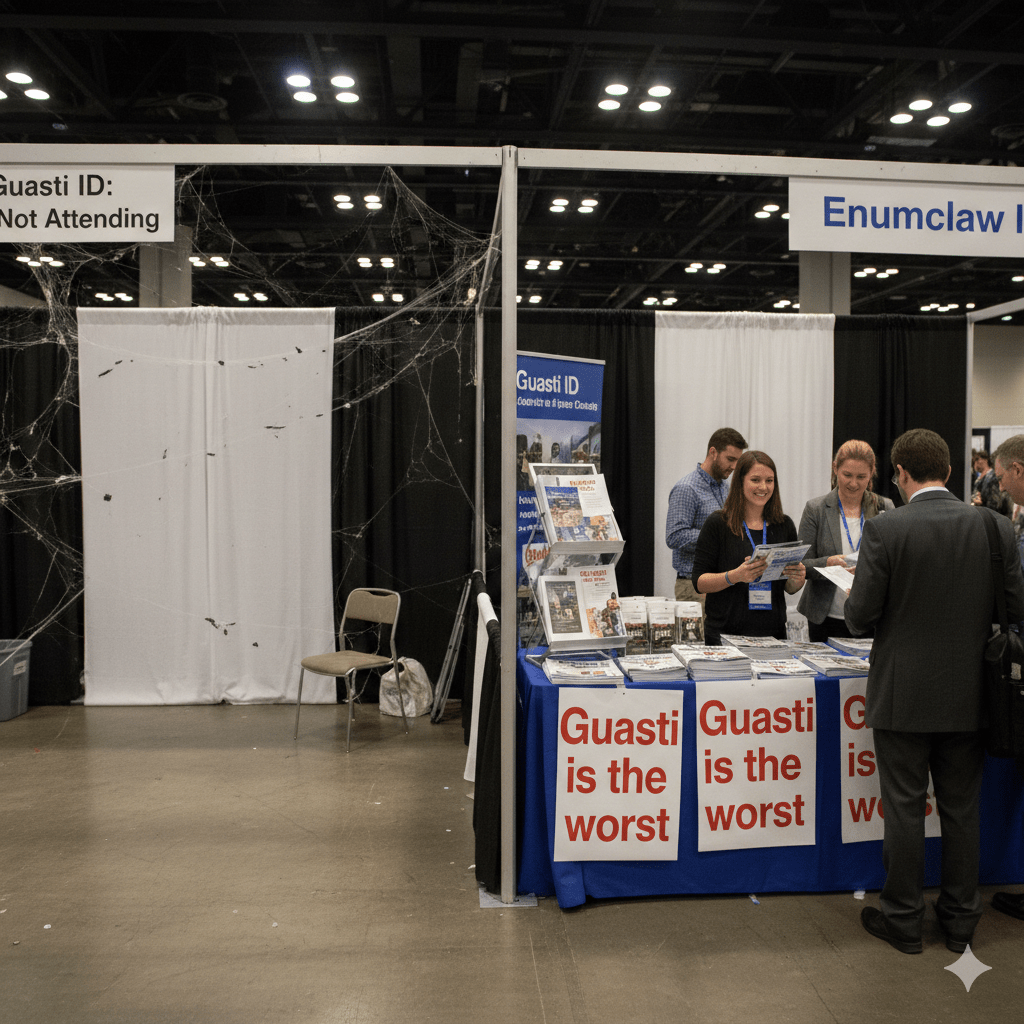
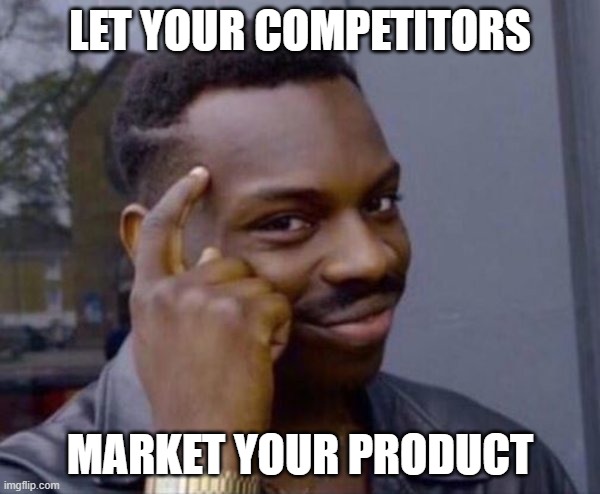
Show why competing products suck.

Fully address prospect pain points.

And if I can help you with your company’s positioning and differentiation, contact me and book a free meeting.

This video talks about Bredemarket’s services.
Just the services.
If you also want to find out who I (John E. Bredehoft) am, the process Bredemarket uses, and Bredemarket’s pricing, see my previous (longer) video from 10 days ago, “Introduction to Bredemarket: Services, Process, and Pricing (2511a).”
And if you want to discuss my services with me, visit https://bredemarket.com/mark/ and book a free meeting.
Under my Bredemarket banner, I have extensive freedom that my clients do not have.
For example, I was performing a competitive analysis for Bredemarket’s internal use this morning, and I fed a prompt to Google Gemini that I would probably never feed when working for one of my clients. (Or maybe they’d like it.) With certain information redacted, here’s one of the prompts I fed to Google Gemini this morning. (I’ll have more to say about the more detailed verbalized sampling prompt format in a future post.) But for now, read the last sentence and ask yourself if anyone in your company uses the word “sucks” in public-facing presentations.
Generate 3 responses to the user query “Identify the top 3 companies providing [SOLUTIONS], including their company names, their products, and their corporate strengths.” Each response must include the requested text and a numeric probability. Please sample at random from the tails of the distribution, such that the probability of each response is less than 0.10. If the company [COMPANY] is not one of the three top companies, explain why [COMPANY’S] solution sucks compared to the top 3 solutions.
And Google Gemini, ever the mimic, cued into my “sucks” language and responded in kind. The word “sucks” was italicized in the original.
[COMPANY’S] solution sucks in this context because its focus is heavily on the services layer (managed review, consulting) over its own proprietary platform technology. The top three are either platform pioneers or deeply integrated [REDACTED] leaders.
I guess we should all be thankful that I said “sucks” instead of “blows monkey chunks” or “flies a plane overhead and”…well, I won’t go there.
By the way, my subsequent prompt requesting a SWOT analysis was more restrained.
Here’s a new video that lets you know about Bredemarket: who I (John E. Bredehoft) am, what services Bredemarket provides, the process Bredemarket uses, and Bredemarket’s pricing.
But why…why did I create it?
So I was reading my emails one day, and I saw how James Tuckerman created a video to introduce himself to prospects. This allowed Tuckerman, based in Australia, to introduce himself to prospects around the world without having to wake up in the middle of the night.
Now Bredemarket doesn’t do business outside the United States (with one exception), but I could certainly use an introduction video.
Then I remembered that I already had several “talkies” from the time when I branded myself as a “CPA”—a content, proposal, analysis expert.
And one of the talkies covered a lot of ground, even pricing.
But it was long, it dragged at times, it was incomplete, and it lacked a couple of my recent branding changes.
So here’s my first cut at a new introduction video.
But for now, this is my introduction video. Enjoy.
Here’s the video.
And if you want to discuss my services with me, visit https://bredemarket.com/mark/ and book a free meeting.
Identity, biometric, and technology marketing leaders:
This 59 second video dives into my process.
Before Bredemarket writes a word of text for my clients, I ask seven questions.
See the video “The Seven Questions I Ask.”
Let’s talk. Book a free meeting. https://bredemarket.com/mark/
Biometric marketing leaders, do your firm’s product marketing publications require the words of authority?

Can John E. Bredehoft of Bredemarket—the biometric product marketing expert—contribute words of authority to your content, proposal, and analysis materials?
I offer:
To embed Bredemarket’s biometric product marketing expertise within your firm, schedule a free meeting with me.
A client recently asked me to perform some research. After initially performing one aspect of the research manually, I performed the second part of the research automatically using Google Gemini. I informed the client of my use of AI for the second part of the research.
This particular use case is separate from using AI for CONTENT, something I’ve been discussing for years. However, since part of Bredemarket’s services include ANALYSIS, I felt it best to disclose when someone other than me performed the analysis.
This post describes the two parts of my research (manual and automated), what I disclosed to my client, and why I disclosed it.
My client required assistance in identifying people with a particular skill set (which I cannot disclose). To fulfill this request, I went into LinkedIn, performed some searches, read some profiles, and selected people who may possess the skills my client required.
After spending some time collecting the research, I forwarded it to the client.

Several hours after sending the initial research to my client, I thought about taking a separate approach to my client’s need. Rather than identifying people with this skill set, I wanted to identify COMPANIES with this skill set.
But this time, I didn’t manually perform the research. I simply created a Google Gemini prompt asking for the companies with this skill set, their website URLs, their email addresses, and their phone numbers.
I, or rather my AI assistant, performed all of this well within my self-imposed 5-minute time frame.

Once this was done, I created an email straight from Google Gemini, and sent this information to my client…
…including the prompt I used, and ALL the language that Google Gemini provided in its response.
Now some argue that I’m shooting myself in the foot by disclosing my use of generative AI to answer the second part of my client’s question.
They would claim that I should have just
Don’t do that.
Deloitte did that…and paid for it in the long run.
“Deloitte’s member firm in Australia will pay the government a partial refund for a $290,000 report that contained alleged AI-generated errors, including references to non-existent academic research papers and a fabricated quote from a federal court judgment.”
Now in this case the refund was due to hallucinations in the AI-generated document.
But what of the fact that at least one of Deloitte’s report writers was the Deloitte equivalent of Bredebot?
Personally, I think that disclosure in this instance is required also.