Speak Softly? Is Theodore Roosevelt’s Advice Still Relevant?

So I just created a short reel for no purpose other than to illustrate Theodore Roosevelt’s famous saying “Speak softly and carry a big stick.”

But then I began thinking. For product marketers, is “speaking softly” an idea that should be relegated to the early 20th century? The answer to that question partially depends on whether you are marketing in an earlier awareness stage, or a later conversion stage.

But the reel doesn’t get that deep.

Speak softly.

An aside (overly serious product marketers skip this part)

Originally this reel was supposed to be a single image, with no stick, showing President Roosevelt to the audio accompaniment of Paul Simon’s “Loves Me Like a Rock.”

Who do you think you’re fooling?

To be honest, ORIGINALLY the President was supposed to be Nixon, whose mama loved him and was a saint.

But once Roosevelt got behind the Presidential podium, my mind traveled to earlier times in the Dakotas and Cuba, and the stick—softly—inserted itself.

Excluded from the reel but not forgotten: my earlier fictional conception of Roosevelt overseeing the construction of the Panama Canal, previously shared here.

A man, a plan…

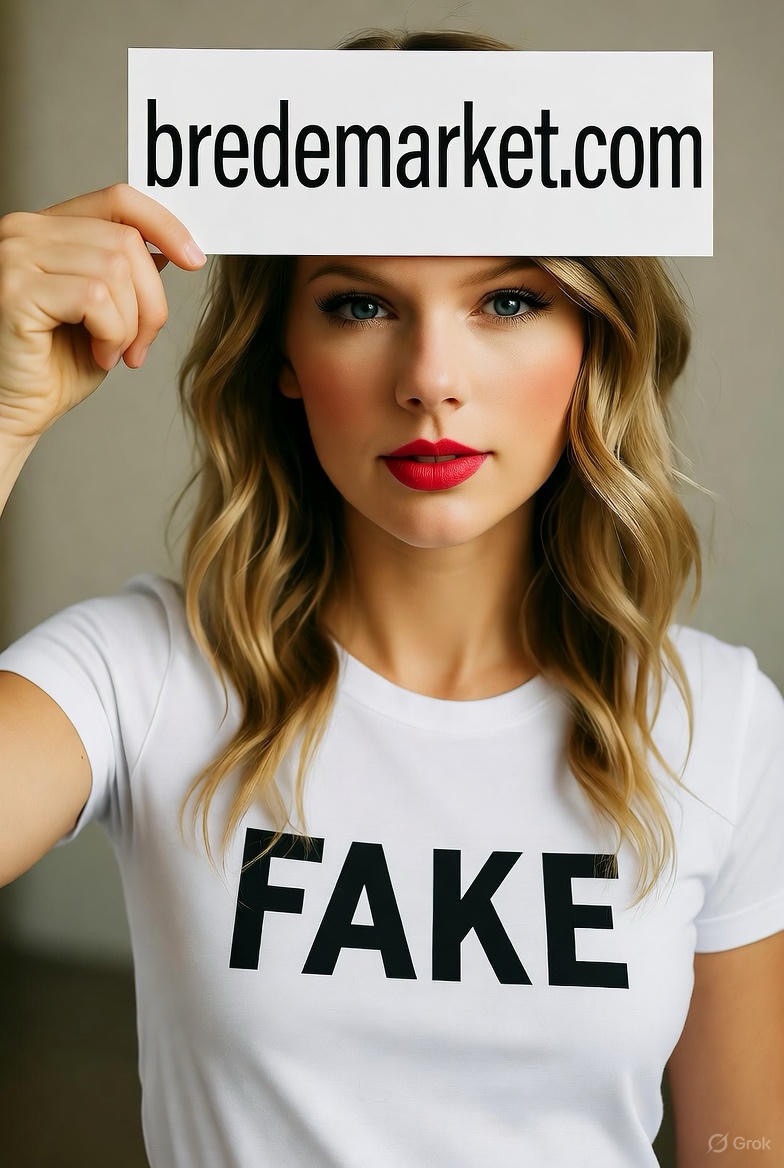
And if you haven’t already figured it out, Teddy appears to be safe from the restrictions from Google’s guidelines on depictions of famous figures. As I said before, no picture generation of President Richard Nixon, or President Taylor Swift.

But it doesn’t matter with me now, because this post can’t just be about silly pictures. It has to have a Serious Business Purpose.

For product marketers, does speaking softly work?

So let’s talk about Roosevelt’s phrase that inspired the reel.

First, the full phrase is “Speak softly and carry a big stick; you will go far.”

Second, the phrase was not original to Roosevelt. Well-read people learn from their reading, and Roosevelt picked up the phrase from elsewhere.

“This quote often attributed to Theodore Roosevelt is actually a West African proverb. Roosevelt writes this in a letter to Henry Sprague on January 26, 1900.”

A year and a half later, after Roosevelt’s political enemies had maneuvered him into the then-obscure position of Vice President of the United States (subsequently characterized as a bucket of warm…spit), he expounded upon the phrase at the Minnesota State Fair on September 2, 1901.

Deep fried pizza on a stick. Not historically accurate.

(He and his political enemies had no way of knowing that later that month McKinley would be assassinated and Roosevelt would be President. Oops.)

“”Speak softly and carry a big stick—you will go far.” If a man continually blusters, if he lacks civility, a big stick will not save him from trouble; and neither will speaking softly avail, if back of the softness there does not lie strength, power. In private life there are few things more obnoxious than the man who is always loudly boasting; and if the boaster is not prepared to back up his words his position becomes absolutely contemptible. So it is with the nation. It is both foolish and undignified to indulge in undue self-glorification, and above all, in loose-tongued denunciation of other peoples.”

As Roosevelt noted, the “and” it’s important. A soft speaker without a big stick will not be persuasive.

But is speaking softly all that important?

Speaking loudly: Berliners, Crazy Eddie

There are certainly instances, both in diplomacy/politics and product marketing, in which speaking loudly is extremely effective. Avoiding the 21st century (we really don’t want to go there) and confining myself to the 20th, the masses of people at the Berlin Wall were very loud.

9 November 1989.

As was the radio guy (Jerry Carroll) who played in the Crazy Eddie commercials.

Insane!

Let’s face it; product marketing is often loud to grab your attention. I should know.

Bridge your content gap.

Speaking softly: Theodore Roosevelt, golfers

But sometimes, even in an awareness campaign, speaking softly is an effective differentiator against the loud cacophony of everyone else.

Tell your story.

And by the time you move to the conversion stage, you don’t want to be loud and blustery. I’m prevented by NDA from citing personal examples, so let’s look at Theodore Roosevelt again.

“The Treaty of Portsmouth formally ended the Russo-Japanese War of 1904–05. The negotiations took place in August in Portsmouth, New Hampshire, and were brokered in part by U.S. President Theodore Roosevelt….Although the actual importance of Roosevelt’s mediation and personal pressure on the leadership in Moscow and Tokyo to the final agreement is unclear, he won the Nobel Peace Prize for his efforts in moderating the talks and pushing toward peace.”

Of course, everyone knew that negotiations were taking place in Portsmouth, just like everyone knew that Egypt and Israel were negotiating at Camp David 70+ years later.

But sometimes the negotiating parties speak so softly that no one knows they’re talking. Take this announcement in June 2023:

“The world of golf was left stunned on Tuesday as the PGA Tour, DP World Tour and rival Saudi-backed LIV circuit, who have been involved in a bitter fight that has split the sport, announced a shock agreement to merge and form one unified commercial entity….The bombshell announcement was slammed by many PGA Tour players who were left in the dark about the merger…”

Not historically accurate. I don’t think.

For the moment, ignore the fact that the merger hasn’t happened two years later. The heated war between the PGA and the LIV meant that while a merger made financial sense (see the NFL and the AFL bidding up football player prices in the 1960s), no one expected a PGA-LIV merger to happen.

But the rival parties had spoken…softly.

Even in Images, Words Matter

As a wordsmith, it’s interesting to see how slight wording changes can affect…pictures.

Slight alterations in the wording of a Google Gemini prompt can cause dramatic changes in the resulting images. The final picture prompt included words such as “oversaturated” and “grandly.”

Realistic.
Realistic, grandly.
Hyper realistic, grandly.
Hyper realistic, grandly, oversaturated.

Famous Person Image Reverse Engineering

(Imagen 4)

So I just engaged in a reverse engineering exercise in Facebook’s Bredemarket Picture Clubhouse.

Let me explain.

Google Gemini imposes severe restrictions against creating pictures of famous figures. You can’t create a picture of President Taylor Swift, for example. But Woody Guthrie is fair game, which is no surprise to anyone who knows of JibJab’s tussle with the Richmond Organization. But I digress.

But what if I uploaded a Wikipedia picture of a famous figure to Google Gemini, asked Gemini to describe it, then had Gemini create a picture based upon its own description?

Unfortunately it doesn’t always perform a perfect recreation, and I bet none of you can figure out the original famous figure depicted here.

The description, excluding her attire:

“The person in the image is a woman with fair skin and light-colored hair, possibly blonde or light brown. Her hair is styled with a slight wave and a side part. She appears to be of a mature age, with some wrinkles visible on her face, particularly around her eyes and mouth. Her eyes are light, likely blue or grey. Her nose is straight and her lips are thin. She has a serious or neutral expression.”

Artificial Intelligence Body Farm: Google AI Grows a Basilar Ganglia

(Imagen 4)

Last month I discussed Google’s advances in health and artificial intelligence, specifically the ability to MedGemma and MedSigLIP to analyze medical images. But writing about health is more problematic. Either that, or Google AI is growing body parts such as the “basilar ganglia.”

Futurism includes the details of a Google research paper that “invented” this “basilar ganglia” body part.

“In their May 2024 research paper introducing a healthcare AI model, dubbed Med-Gemini, Google researchers showed off the AI analyzing brain scans from the radiology lab for various conditions.

“It identified an “old left basilar ganglia infarct,” referring to a purported part of the brain — “basilar ganglia” — that simply doesn’t exist in the human body. Board-certified neurologist Bryan Moore flagged the issue to The Verge, highlighting that Google fixed its blog post about the AI — but failed to revise the research paper itself.”

A little scary…especially the fact that it took a year to discover the error, a conflation of the basal ganglia (in the brain) and the basilar artery (at the brainstem). There’s no “basilar ganglia” per se.

And the MedGemma engine that I discussed last month has its own problems.

“Google’s more advanced healthcare model, dubbed MedGemma, also led to varying answers depending on the way questions were phrased, leading to errors some of the time.”

One could argue that the same thing could happen with humans. After all, if a patient words a problem in one way to one doctor, and in a different way to a different doctor, you could also have divergent diagnoses.

But this reminds us that we need to fact-check EVERYTHING we read.

Us, Them, Pornographic Deepfakes, and Guardrails

(Imagen 4)

Some of you may remember the Pink Floyd song “Us and Them.” The band had a history of examining things from different perspectives, to the point where Roger Waters and the band subsequently conceived a very long playing record (actually two records) derived from a single incident of Waters spitting on a member of the audience.

Is it OK to spit on the audience…or does this raise the threat of the audience spitting on you? Things appear different when you’re the recipient.

And yes, this has everything to do with generative artificial intelligence and pornographic deepfakes. Bear with me here.

Non-Consensual Activity in AI Apps

My former IDEMIA colleague Peter Kirkwood recently shared an observation on the pace of innovation and the accompanying risks.

“I’m a strong believer in the transformative potential of emerging technologies. The pace of innovation brings enormous benefits, but it also introduces risks we often can’t fully anticipate or regulate until the damage is already visible.”

Kirkwood then linked to an instance in which the technology is moving faster than the business and legal processes: specifically, Bernard Marr’s LinkedIn article “AI Apps Are Undressing Women Without Consent And It’s A Problem.”

Marr begins by explaining what “nudification apps” can do, and notes the significant financial profits that criminals can realize by employing them, Marr then outlines what various countries are doing to battle nudification apps and their derived content, including the United States, the United Kingdom, China, and Australia.

But then Marr notes why some people don’t take nudification all that seriously.

“One frustration for those campaigning for a solution is that authorities haven’t always seemed willing to treat AI-generated image abuse as seriously as they would photographic image abuse, due to a perception that it isn’t real’.”

First they created the deepfakes of the hot women

After his experiences under the Nazi regime, in which he transitioned from sympathizer to prisoner, Martin Niemoller frequently discussed how those who first “came for the Socialists” would eventually come for the trade unionists, then the Jews…then ourselves.

And I’m sure that some of you believe I’m trivializing Niemoller’s statement by equating deepfake creation with persecution of socialists. After all, deepfakes aren’t real.

But the effects of deepfakes are real, as Psychology Today notes:

“Being targeted by deepfake nudes is profoundly distressing, especially for adolescents and young adults. Deepfake nudes violate an individual’s right to bodily autonomy—the control over one’s own body without interference. Victims experience a severe invasion of privacy and may feel a loss of control over their bodies, as their likeness is manipulated without consent. This often leads to shameanxiety, and a decreased sense of self-worth. Fear of social ostracism can also contribute to anxiety, depression, and, in extreme cases, suicidal thoughts.”

And again I raise the question. If it’s OK to create realistic-looking pornographic deepfakes of hot women you don’t know, or of children you don’t know, then is it also OK to create realistic-looking pornographic deepfakes of your own family…or of you?

Guardrails

Imagen 4.

The difficulty, of course, is enforcing guardrails to stop this activity. Even if most of the governments are in agreement, and most of the businesses (such as Meta and Alphabet) are in agreement, “most” does not equal “all.” And as long as there is a market for pornographic deepfakes, someone will satisfy the demand.

Using Personal Devices at Work: Meta AI Smart Glasses at a CBP Raid?

Although the lines inevitably blur, there is often a line between devices used at home and devices used at work.

  • For example, if you work in an old-fashioned work office, you shouldn’t use the company photocopier to run personal copies of invitations to your wedding.
  • Similarly, if you have a personal generative AI account, you may cause problems if you use that personal account for work-related research…especially if you feed confidential information to the account. (Don’t do this.)
Not work related. Imagen 4.

The line between personal use and work use of devices may have been crossed by a Customs and Border Protection agent on June 30 in Los Angeles, according to 404 Media.

“A Customs and Border Protection (CBP) agent wore Meta’s AI smart glasses to a June 30 immigration raid outside a Home Depot in Cypress Park, Los Angeles, according to photos and videos of the agent verified by 404 Media.”

If you visit the 404 Media story, you can see zoomed in pictures of the agent’s glasses showing the telltale signs that these aren’t your average spectacles.

Now 404 Media doesn’t take this single photo as evidence to indicate that CBP has formally adopted Meta AI glasses for its work. In fact, a likely explanation is that these were the agent’s personal glasses, and he chose to wear them to work that day.

And 404 Media also points out that current Meta AI glasses do NOT have built-in facial recognition capabilities.

But even with these, the mere act of wearing these glasses causes potential problems for the agent, for Customs and Border Protection, and for Meta.

Take Grandma, who uses Meta to find those cute Facebook stories about that hunk Ozzy Osbourne (who appeals to an older demographic). If she finds out that her friend Marky Mark Zuckerberg is letting the Government use Meta technology on those poor hardworking workers who just want a better life, well, Grandma may stop buying those trinkets from Facebook Marketplace.

(Unauthorized) Homeland Security Fashion Show. AI-generated by Imagen 4. And no, I don’t know what a “palienza” is.

So the lesson learned? Don’t use personal devices at work. Especially if they’re controversial.

LMM vs. LMM vs. LMM (Acronyms Are Delirious With Joy)

I’ve previously noted that the acronym LLM can represent a large multimodal model.

(Not to be confused with large language model. But I digress.)

And I’ve also noted that LMM can mean a large medical model.

But healthcare professionals aren’t the only ones adopting this acronym. Enter the marketers at WPP Media.

Large marketing model

“You might have heard us talking a lot lately about something pretty exciting: Open Intelligence, our new AI-powered data solution.  And along with that, we’ve been dropping the term the world’s first Large Marketing Model (LMM)…”

Large multimodal, medical, and marketing models. Imagen 4.

Although marketers could clearly use large multimodal models. Oh well.

So why do we marketers need our own generative AI model?

“In the context of marketing, this can extend to understanding customers, audiences, channels, and creative.”

Large marketing model. Imagen 4.

Which I guess the general-purpose engines are too generic to handle.

Dedicated

But Open Intelligence (the LMM) apparently can.

“[Open Intelligence] has been trained to understand and predict audience behavior and marketing performance based on patterns derived from real-time data about how people engage with content, brands, platforms, and products.”

It has been trained on “trillions of signals across more than 350 partners in over 75 markets.” Trillions of signals sounds like an impressive feature, but what if there are actually quadrillions of signals?

Are there other LMMs?

And are we going to get more of these special purpose models?

  • Large meteorological model? (We have those already.)
  • Large macroeconomic model? (Those too.)
  • Large microbiological model?
  • Large metaphysical model? (Don’t ask.)
  • Large mythological model? (Really don’t ask.)
Large mythological model. Imagen 4.