

I liked this one from 2023. Made in Upland.
Category Archives: Uncategorized
Talking to Someone on the Other Side of the Ocean

I confess that I’m old enough to know what a “long distance call” meant. That was when you picked up a telephone and called someone in another state, or perhaps in the same state, and had to pay “long distance” charges to make the call. You obviously didn’t want to stay on the phone too long because those long distance charges could add up.
Today, of course, we can make video calls using one of several services for free. Not just to another state, but to anywhere around the world.
This wasn’t the case 100 years ago, because on March 7 (or March 6; sources vary), the very first telephone call was made from London, England, to New York, New York.
Whatever day it took place, this was no ordinary call. Telephone calls depended upon carrying voltage through cables, and of course there was no cable connecting London and New York. But it worked well enough that regular transatlantic telephone service was inaugurated in 1927.
This mainly catered to rich businessmen like Floyd C. Odlum (who later married aviator Jackie Cochran). Odlum made a 95 minute call to New York and, um, rang up a £285 bill in the process. In 1920s dollars, mind you. He should have waited a few years and just had his future wife fly to New York instead of making the call.
Got Pages Left To Go

Before I Write a Word…
If your identity, biometric, or technology firm needs Bredemarket’s content-proposal-analysis services, book a meeting at https://bredemarket.com/mark/
Deadlines Always Creep Up: Lanzarote to UK Border Control

While air traffic is disrupted by a much more urgent threat, the regular process of crossing borders is disrupted itself, Iran or no.
Ryanair runs a flight (FR4756) from Lanzarote, in the (Spanish) Canary Islands, to Bristol (England). Since the United Kingdom is not part of the European Union, its citizens must undergo biometric checks as part of the Entry/Exit System (EES). And that takes time.
“Eighty-nine passengers booked on flight FR4756 to Bristol were reportedly stuck in non-European Union (EU) lines awaiting passport checks. The airline held the aircraft for around an hour but ultimately departed without dozens of customers, offloading their checked baggage before takeoff.”
Ryanair claimed it was the passengers’ fault:
“Should these passengers have presented at the boarding gate desk before it closed, they would have boarded this flight.”
But when it takes longer to get through an airport’s security than you expect, a new type of friction results: incensed passengers.
Predictably, the airline industry is urging that EES be delayed. Kinda like what happened over here, where REAL ID still hasn’t really been implemented.
Data Labelers Gonna Label, and Class Action Lawyers Gonna Lawyer

On Wednesday, I described how Meta’s Kenyan data labelers ended up watching explicit videos from people who presumably didn’t know that smart glasses were recording their activity.
To no one’s surprise, class action lawyers are now involved.
“In the newly filed complaint, plaintiffs Gina Bartone of New Jersey and Mateo Canu of California, represented by the public interest-focused Clarkson Law Firm, allege that Meta violated privacy laws and engaged in false advertising.
“The complaint alleges that the Meta AI smart glasses are advertised using promises like “designed for privacy, controlled by you,” and “built for your privacy,” which might not lead customers to assume their glasses’ footage, including intimate moments, was being watched by overseas workers. The plaintiffs believed Meta’s marketing and said they saw no disclaimer or information that contradicted the advertised privacy protections.”

“Clear, easy device and app settings help you manage your information, giving you control over what content you choose to share with others, and when.”
Except that according to Clarkson, people can’t opt out of the data labeling process.
This could get very revealing.
By 1980
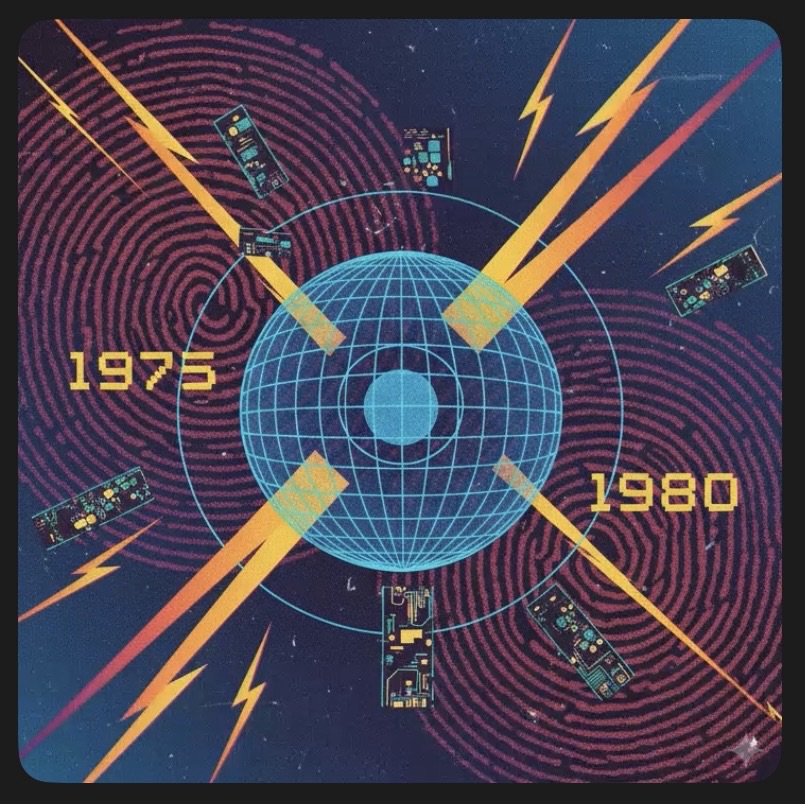
Last June I created a still for a fictional TV show called “The Amazing Computer.” The show described the real life activities of the FBI in computerizing its fingerprint system.
Now I’m giving it the Lyria treatment.
Vertical Taxonomies: the UK Home Office Data Standards

I’ve talked about taxonomies ad nauseum, but they apply in multiple cases, including how police agencies talk to each other.
The United Kingdom’s Home Office has published the National Police Chiefs’ Council Minimum POLE Data Standards Dictionary. As the capitalization, I mean capitalisation, suggests, POLE is an acronym standing for Person, Object, Location, Event. The dictionary provides a common method for police agencies to talk to each other about…well, about people, objects, locations, and events.
Some of the comments in the dictionary seem unnecessary, but I guess it’s better to be too specific than not specific at all. Example:
If a telephone number is unknown – do not make one up.
In truth, this ties to a related notation:
A blank field is preferable to a known error…
Because, as anyone who has ever been a teenager will know, things that happen can be added to your permanent record.
Speaking of which, PERSON records may include offenders, suspects, victims, witnesses, and multiple other living, dead, or not-yet-born parties.
Very few specific OBJECT types are called out, but those that do include vehicles, land, and buildings. The OBJECT types also include identifying numbers such as passport numbers and telephone numbers.
A LOCATION may be an address, a geolocation, or another location designator. Or “no fixed abode.”
An EVENT may be a crime, an incident, a “custody,” a stop search, a safeguarding, and a case of “anti-social behaviour.”

So if a Welsh police officer runs into a person trashing a vehicle a a particular geolocation, the officer has all the tools to record what has happened and what will happen.
Many Ways To Conceptualize Stories, and Tell Them
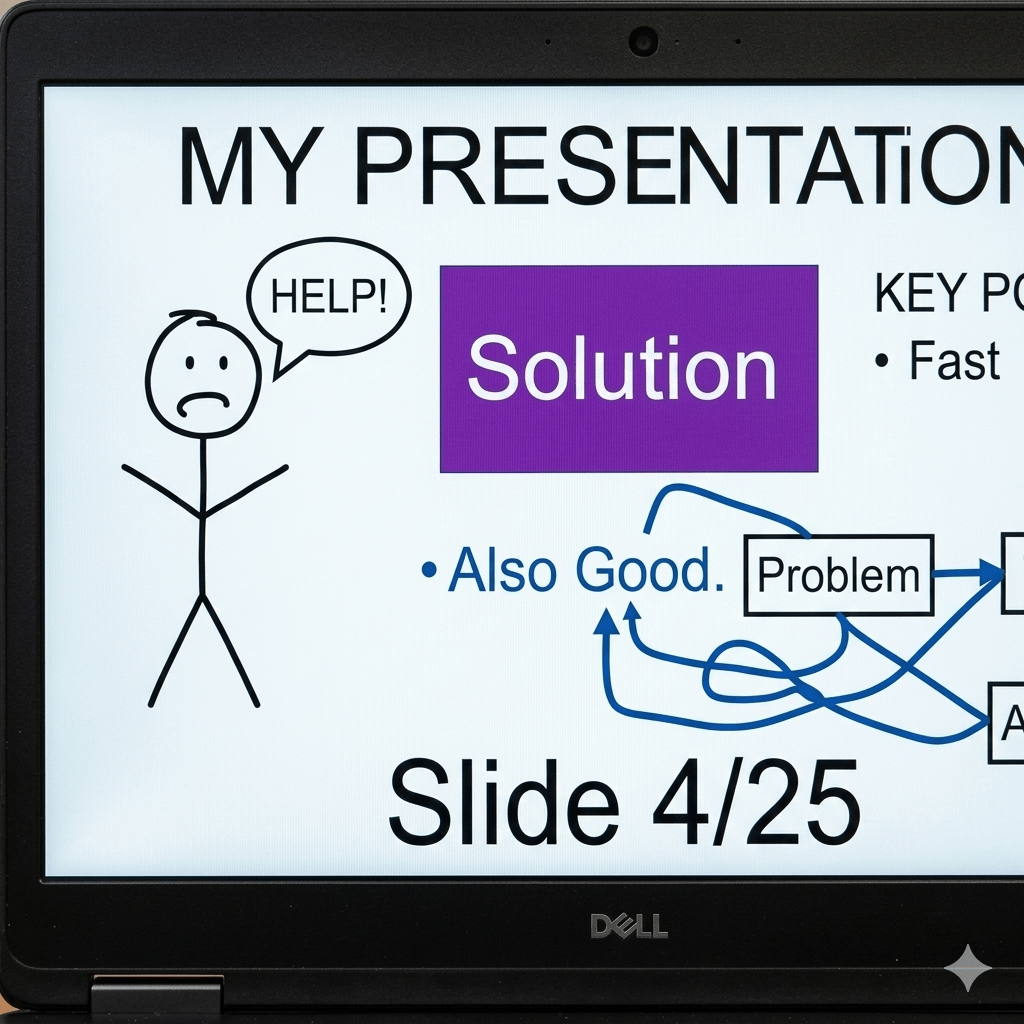
Depending upon your talents and resources, your company may choose different ways to tell critically important stories to your prospects. But how do you get there?
Early this week, one of Bredemarket’s clients expressed an urgent need for a story. My job was to figure out the concept and pass it on to a talented person inside the company who would use my concept to create the final version.
Now I had no idea what format the final story would take. An infographic? A video? Something else?

But my concept didn’t need to be in the final format. It just had to contain the concept.
For all the client cared, I could have sketched the concept out in Microsoft Excel. Which works great for storyboards, especially when the story is fluid and needs to be re-sorted.
In the end, I used a different Microsoft product—PowerPoint. Not that it mattered.

When working with creative talent, you have to give them enough of your intent without constraining them. And I definitely did not constrain.
- My PowerPoint used unformatted slides and default fonts.
- The graphic concept that was central to the entire story consisted, in my concept, of three boxes with words in them. Later it became four boxes.
- I used Google Gemini to create two subordinate concept images, but added indicators to show they should NOT be used. Even if the images were spectacular (they weren’t), we all know that my client couldn’t copyright them.
- After I was supposedly done, I took one last pass through the slides and removed every unnecessary word.
I can’t share what happened after I completed the concept, but the creative talent had enough information to move forward.
And I saved my client a lot of time by performing the initial conceptual work so the client could execute immediately.
And that’s what matters.
“We Use AI.” And We Use YOUR (Non-copyrighted) AI.
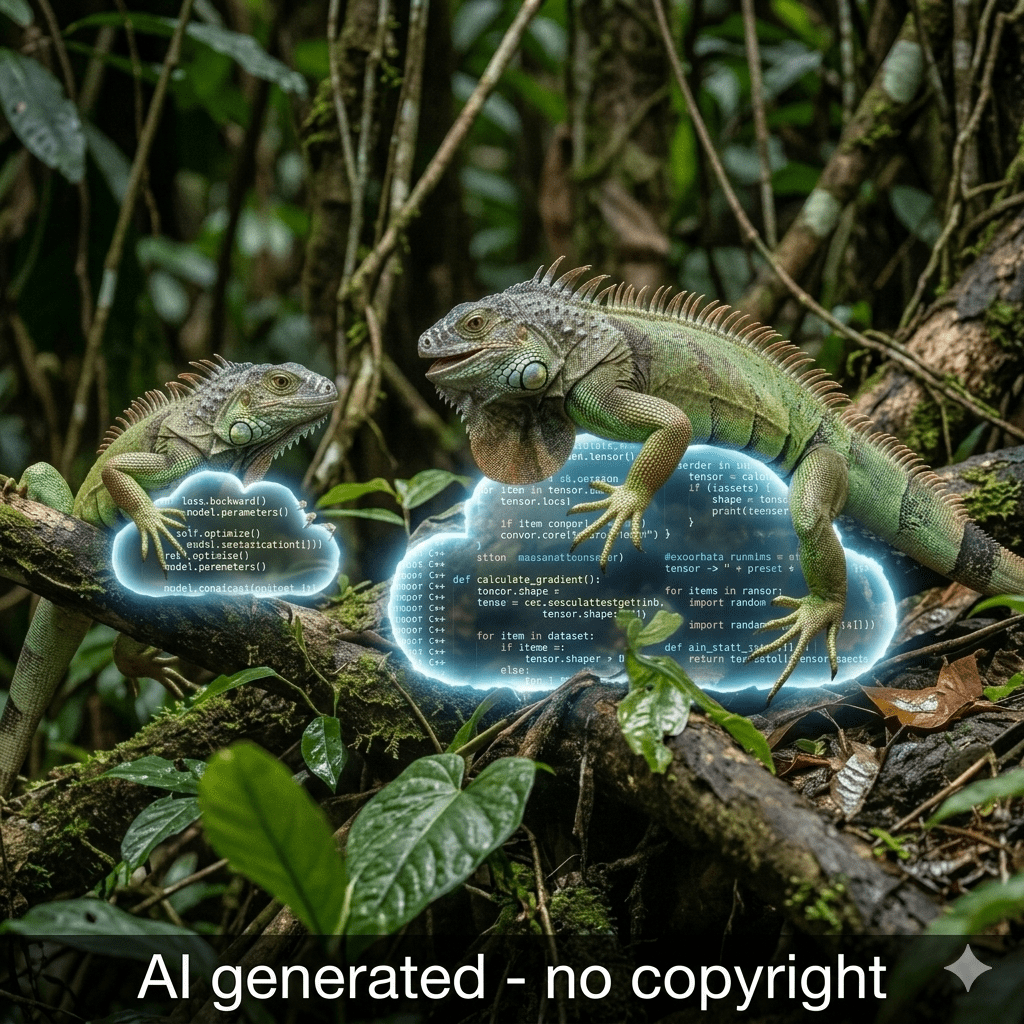
A private social media comment got me thinking. I will gladly credit the author, with their permission.
“If a U.S. federal court says that you can’t copyright AI generated content, an appellate court upholds that ruling, and the SCOTUS refuses to hear the case, what are the implications for software generated by LLMs?”
Think about that the next time Company X publishes its marketing message “we use AI.”
What if Company X’s code and prompts were themselves written with AI?
Couldn’t Company Y take Company X’s non-copyrightable code and run it without penalty, like open source code?
Now Company X would be forced to prove that it does NOT use AI. For its code, anyway.
 Bredemarket