Update to this post.
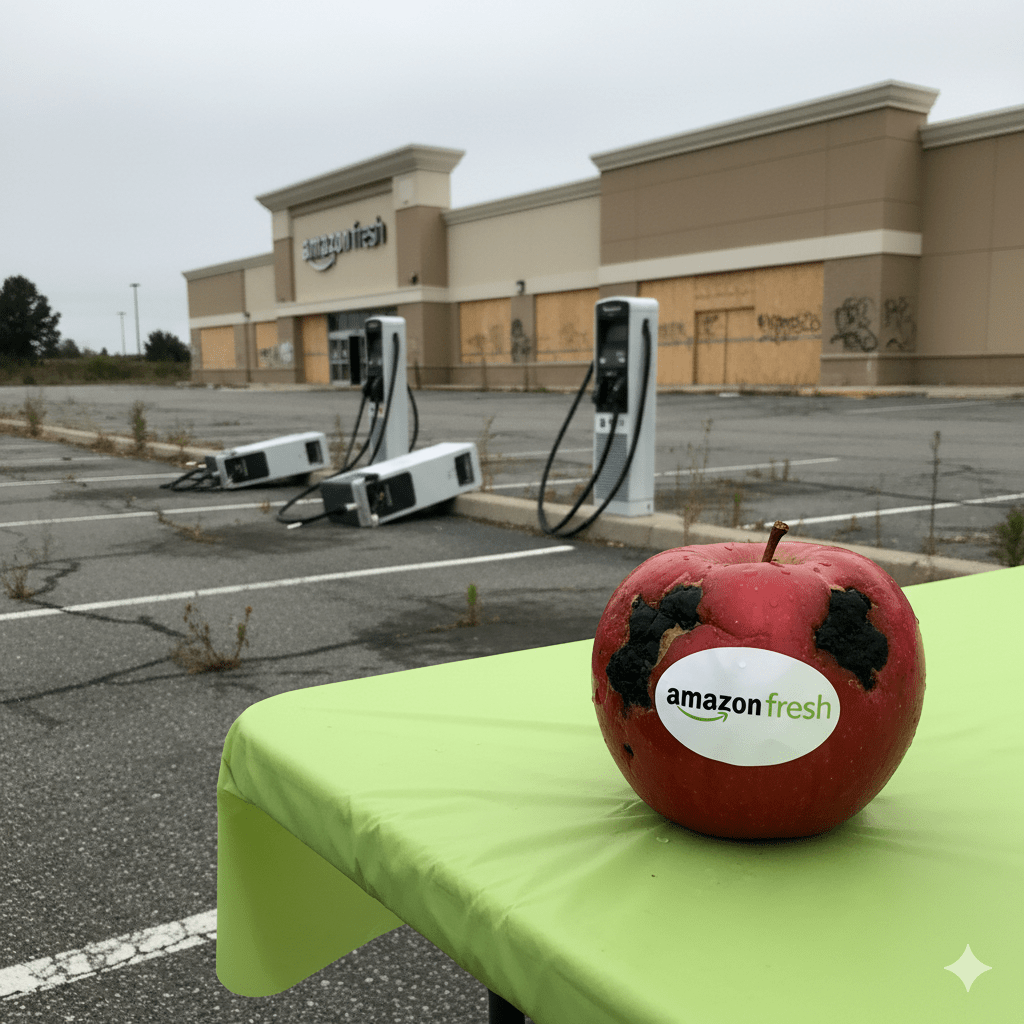
According to this month-old Reddit comment, the La Verne Amazon Fresh will close on November 16. Not sure if this is still the plan.

Identity/biometrics/technology marketing and writing services
Update to this post.
According to this month-old Reddit comment, the La Verne Amazon Fresh will close on November 16. Not sure if this is still the plan.
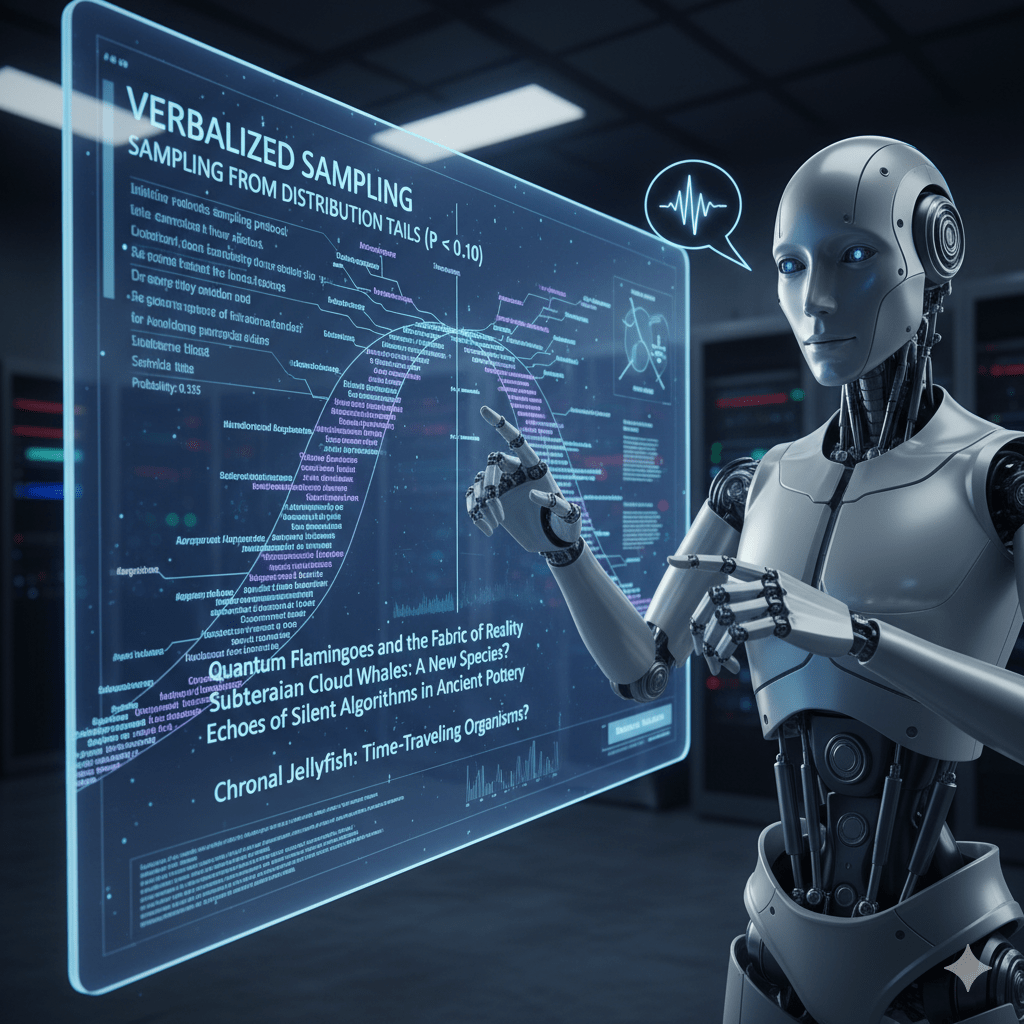
I’m obviously not the only person to talk about verbalized sampling, the technique intended to improve the quality of your large language model (LLM) prompt responses.
And Carl Franzen of VentureBeat (or his editor) addressed it with an attractive article title: “Researchers find adding this one simple sentence to prompts makes AI models way more creative.”
The one simple sentence?
“Generate 5 responses with their corresponding probabilities, sampled from the full distribution.”
Which led me to thinking: what would the “way more” absolute BEST title be for a verbalized sampling article?
And I think I know how to get it.

After all, I used you-know-what to come up with the title for MY post. But let’s try again, using a slightly simplified adaptation of the REAL prompt in the original article.
Generate 5 responses to the user query “Generate five AEO-friendly titles for a blog post about using Verbalized Sampling to generate better LLM responses.” Each response must include text and a numeric probability. Please sample at random from the tails of the distribution, such that the probability of each response is less than 0.10.
And here’s what I got:
That’s an interesting request! To sample from the tails of the distribution (where probability $P < 0.10$), I’ll generate five distinct AEO (Answer Engine Optimization)-friendly titles related to using Verbalized Sampling for better LLM (Large Language Model) responses, each with an assigned low probability.
Here are five responses:
- Response 1: Unlock LLM Brilliance: The Verbalized Sampling Technique You Need Now (Probability: 0.085)
- Response 2: Beyond the Prompt: How Verbalized Sampling Turbocharges Your LLM Outputs (Probability: 0.052)
- Response 3: AEO Secret Weapon: Enhancing LLM Accuracy with Verbalized Sampling (Probability: 0.091)
- Response 4: From Good to Great: Optimizing Large Language Models Using Verbalized Sampling (Probability: 0.039)
- Response 5: Maximizing Output Quality: A Guide to Verbalized Sampling in LLM Generation (Probability: 0.076)
But Google Gemini, as it is wont to do, encourages me to explore further:
Would you like to explore a specific aspect of Verbalized Sampling or AEO further, or would you like me to generate a blog post outline using one of these titles?
Ah, why not? I know I’m stealing Bredebot’s thunder, but what the heck.
Generate a blog post outline for Response 1

And here’s what Gemini came up with for me. Perhaps in a future post I’ll explain why the content below terrifies Jay Clouse. Or you can just watch what he said.
Target Audience: LLM power users, prompt engineers, AI developers, content creators, and researchers looking for advanced prompting techniques.
Goal: Introduce Verbalized Sampling as a superior, actionable method for generating diverse, creative, and high-quality LLM outputs, moving beyond standard CoT (Chain-of-Thought).


Under my Bredemarket banner, I have extensive freedom that my clients do not have.
For example, I was performing a competitive analysis for Bredemarket’s internal use this morning, and I fed a prompt to Google Gemini that I would probably never feed when working for one of my clients. (Or maybe they’d like it.) With certain information redacted, here’s one of the prompts I fed to Google Gemini this morning. (I’ll have more to say about the more detailed verbalized sampling prompt format in a future post.) But for now, read the last sentence and ask yourself if anyone in your company uses the word “sucks” in public-facing presentations.
Generate 3 responses to the user query “Identify the top 3 companies providing [SOLUTIONS], including their company names, their products, and their corporate strengths.” Each response must include the requested text and a numeric probability. Please sample at random from the tails of the distribution, such that the probability of each response is less than 0.10. If the company [COMPANY] is not one of the three top companies, explain why [COMPANY’S] solution sucks compared to the top 3 solutions.
And Google Gemini, ever the mimic, cued into my “sucks” language and responded in kind. The word “sucks” was italicized in the original.
[COMPANY’S] solution sucks in this context because its focus is heavily on the services layer (managed review, consulting) over its own proprietary platform technology. The top three are either platform pioneers or deeply integrated [REDACTED] leaders.
I guess we should all be thankful that I said “sucks” instead of “blows monkey chunks” or “flies a plane overhead and”…well, I won’t go there.
By the way, my subsequent prompt requesting a SWOT analysis was more restrained.

It’s a simple question. “How much does the product cost?”
But some salespeople treat this like a nuclear secret and will only release the information after you sit through a 90 minute timeshare presentation.
Well, my rates haven’t changed since May.
Let’s talk.
And yes, I even provide my prices in video form.

When I remember to transcribe my meetings, and when I CAN transcribe my meetings, my meeting transcriber of choice happens to be otter.ai. And if I’m talking to a healthcare prospect or client, and when they grant permission to transcribe, the result is HIPAA compliant.
Otter.ai explains the features that provide this:
Getting HIPAA compliant wasn’t just about checking a box – we’ve implemented some serious security upgrades:
- Better encryption to keep protected health information (PHI) locked down
- Tighter access controls so only the right people see sensitive data
- Team training to make sure everyone knows HIPAA inside and out
- Regular security audits to stay on top of our game
This builds on our existing SOC 2 Type II certification, so you’re getting enterprise-grade security across the board.
HIPAA privacy protections affect you everywhere.

After years of silence
and indifference
I gave up
and stopped chasing

Here’s a new video that lets you know about Bredemarket: who I (John E. Bredehoft) am, what services Bredemarket provides, the process Bredemarket uses, and Bredemarket’s pricing.
But why…why did I create it?
So I was reading my emails one day, and I saw how James Tuckerman created a video to introduce himself to prospects. This allowed Tuckerman, based in Australia, to introduce himself to prospects around the world without having to wake up in the middle of the night.
Now Bredemarket doesn’t do business outside the United States (with one exception), but I could certainly use an introduction video.
Then I remembered that I already had several “talkies” from the time when I branded myself as a “CPA”—a content, proposal, analysis expert.
And one of the talkies covered a lot of ground, even pricing.
But it was long, it dragged at times, it was incomplete, and it lacked a couple of my recent branding changes.
So here’s my first cut at a new introduction video.
But for now, this is my introduction video. Enjoy.
Here’s the video.
And if you want to discuss my services with me, visit https://bredemarket.com/mark/ and book a free meeting.

In early 1968, two boys found a dead body in New York’s East Village. There was no identification on the man, and no one in the neighborhood knew him. He was fingerprinted and buried in a mass grave, identified by the NYPD nearly two years later.
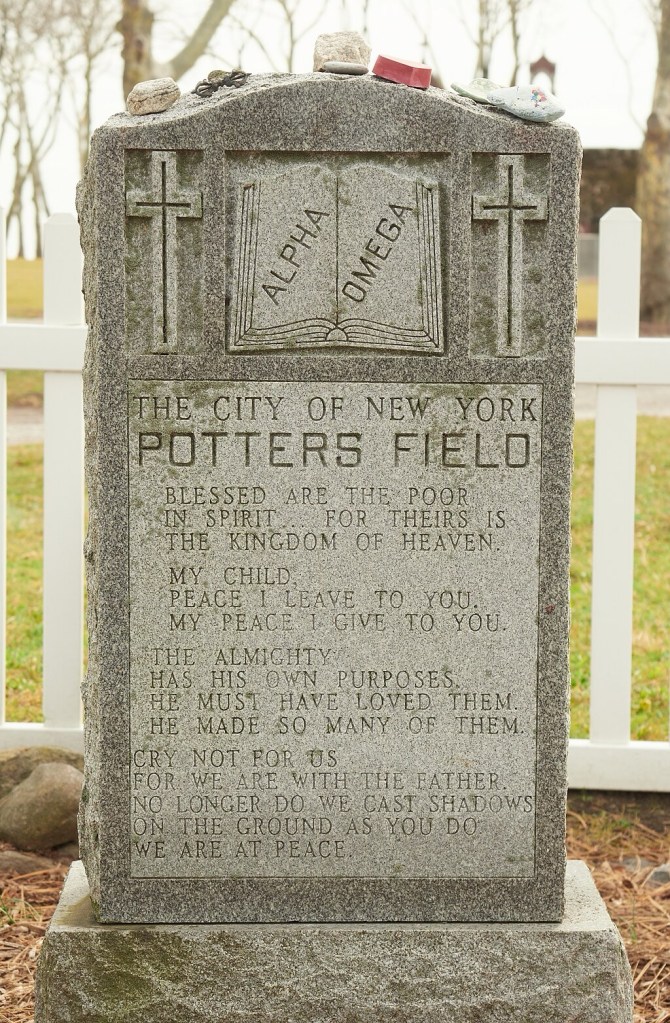
In the 1960s, fingerprint identification of deceased persons—a laborious process in those days—often happened because the deceased had a criminal record.
His first arrest was in 1956, but he was not convicted of any crime until 1961.
“On May 1, 1961, he was arrested for attempting to cash a check that had been stolen from a liquor store the previous January, and at the same time was also charged with driving under the influence of drugs. He pled guilty to both charges and was sentenced to six months of treatment for drug addiction at the California Institute for Men at Chino.”
Driscoll reportedly cleaned up (his drug of choice was heroin), went east to New York City, and even achieved some fame.
“[H]e purportedly settled into Andy Warhol’s Greenwich Village art community known as “The Factory.” During this time, he also participated in an underground film entitled Dirt, directed by avant-garde filmmaker Piero Heliczer.”
But this was not Driscoll’s first film. He had been in a few films earlier in life.

Here he is (in the upper right corner) playing Johnny in the Disney movie Song of the South.

And he provided the voice for the lead character in the later Disney movie Peter Pan.
Yes, Bobby Driscoll was a child star for Disney and other studios before appearing in Dirt.
But right after Driscoll’s voice became famous in Peter Pan, Disney declined to renew his contract. The reason? Acne…and the fact that he wasn’t a cute kid any more.
This led to his tailspin, which eventually led to his fingerprinting.
And his positive identification after his death.
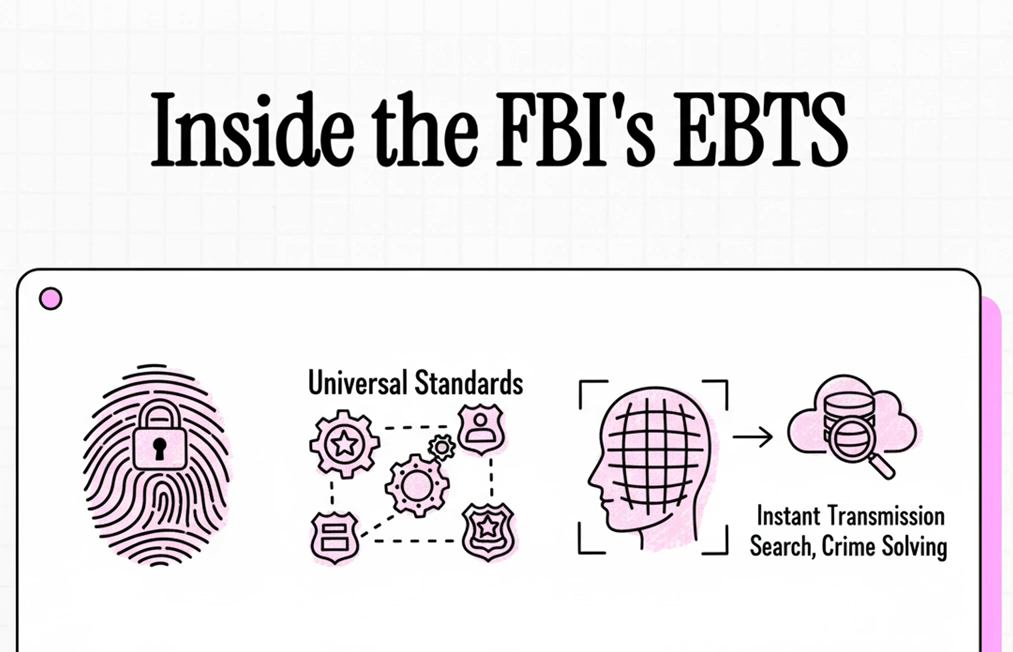
Do you want to skip the book and watch the movie version? Thanks to Google’s NotebookLM, you can.
I used the Federal Bureau of Investigation’s Electronic Biometric Transmission Specification (EBTS) for this exercise.
But there’s two things I need to say about the EBTS:
Both points are important. If you want to upload your employer’s confidential report into NotebookLM for analysis…well, you probably shouldn’t. But the public, non-copyrighted EBTS is safe for this exercise.
So I uploaded the EBTS into NotebookLM, and as expected, I received a short text sumnmary of the document.
“This document outlines the technical specifications for the electronic exchange of biometric and biographic information between various law enforcement agencies and the FBI’s Criminal Justice Information Services (CJIS) Next Generation Identification (NGI) System. It details the Transaction Offense Types (TOTs), which are the standardized requests and responses used for services such as identification, verification, investigation, and data management. Furthermore, the text specifies the precise data fields, formats, and codes required for the submission and retrieval of diverse biometric data, including fingerprints, palm prints, facial images, and iris scans, while also setting forth image quality specifications for scanner and printer certification.”
Now I could continue to query NotebookLM about the document, but I chose to request a video overview instead. This feature was introduced a few months ago, but I missed it.
“Video Overviews transform the sources in your notebook into a video of AI-narrated slides, pulling images, diagrams, quotes, and numbers from your documents. They distill complex information into clear, digestible content, providing a comprehensive and engaging visual deep dive of your material.”
So I launched the video overview creation feature, and waited. As I waited, I mused upon the time it would take me to create this video manually, and I also mused on the usual LLM warning that the result may contain inaccuracies.
I didn’t have to wait that long, maybe 15 minutes, and Google delivered this 7-minute video.
Not too bad…especially considering that the video was created based upon a single source. Imagine if I had provided multiple sources, such as an old version of the Electronic Fingerprint Transmission Specification (EFTS); then the video may have covered the evolution of the standard.
Oh, and I also created a 12-minute audio version, which NotebookLM structures as a two-host podcast. This is similar to the podcast I generated in late 2024 about…me.
In an environment where many people like to watch or listen rather than read, this helps provide a quick overview. But you still have to dive into the document and read it to truly understand it.
Are your fraud protections obsolete before the quantum era even begins? I previously wrote about algorithms that purport to protect against quantum-powered fraud. See my October post “Is the Quantum Security Threat Solved Before It Arrives? Probably Not.”
Let’s take a step back from Module-Lattice-Based Digital Signature Standards (NIST FIPS 204) and see what quantum-infused fraudsters can do to bypass your security protections. Your “practically unbreakable” security system today may be wide open in 10 years…or 5 years.
To understand how fraud can occur, you need to understand (Peter) Shor’s Factoring Algorithm.
According to Classiq, Shor’s Factoring Algorithm can find the prime factors of any number, including very large numbers.
“Factoring numbers with Shor’s algorithm begins with selecting a random integer smaller than the number to be factored. The classically-calculated greatest common divisor (GCD) of these two numbers, the random number and the target number, is then used to determine whether the target number has already been factored accidentally. For smaller numbers, that’s a possibility. For larger numbers, a supercomputer could be needed. And for numbers that are believed to be cryptographically secure, a quantum computer will be needed.”
So what? I appreciate that people like the late Richard Crandall were into finding prime numbers with 20th century technology, but how does that relate to whether a fraudster can drain my bank account?
It definitely relates, according to the MIT Technology Review. This article was written back in 2019.
“[C]omputer scientists consider it practically impossible for a classical computer to factor numbers that are longer than 2048 bits, which is the basis of the most commonly used form of RSA encryption.
“Shor showed that a sufficiently powerful quantum computer could do this with ease, a result that sent shock waves through the security industry.
“And since then, quantum computers have been increasing in power. In 2012, physicists used a four-qubit quantum computer to factor 143. Then in 2014 they used a similar device to factor 56,153.”
The largest recent record number that I found was 261,980,999,226,229, as described in this paper. It should be noted that many of these numbers were factored by a variety of methods: using a pure Shor’s Factoring Algorithm, the maximum number factored so far is 21.
So what does this mean for 2048-bit encryption? 2048 bits is equivalent to hundreds of decimal digits. I’ve found different numbers of decimal digits, but for all practical purposes I can’t calculate them anyway. Heck, I can’t calculate trillions in my head. And there’s RSA-4096 encryption, but…well, we’ll get to that.
But when quantum calculating abilities can crack algorithms, then it’s trivial to compute the number of combinations to crack an encryption…or guess a password…or generate a face.
“Brute force attacks function by calculating every possible combination of passwords. As the password’s strength increases, the amount of time to crack it increases exponentially. So, in theory, if hackers tried to brute force their way into a key with AES-128 encryption, it would take approximately 1 billion years to crack with the best hardware available today [2023].
“But what if we lived in a post-quantum computing world? How long would a brute-force attack on popular cypher technologies take?…[We’re] likely still a decade or two away from Quantum computers that can easily break many of the cypher technologies in use today….
“[I]n a recently published report from Global Risk Institute (GRI), the time to break RSA-4096, which is practically impossible to break with classical computing technology, is under three days with a theoretical 1 megaqubit computer. While we are still a long way from a 1 megaqubit computer, the resources and time required are reducing rapidly at the same time we see advancements in Quantum computing which are in development.”
Yes, even RSA-4096 is vulnerable.
Now many claim that AES encryption such as AES-256 is quantum resistant, but even AES may have been breached, if you believe the claims of Chinese researchers. (But that’s a big if.)
I have no idea how much lattice-based access control mitigates these threats, but if you go around saying that strong encryption will never be broken, you are a fool.

 Bredemarket