Speak Softly? Is Theodore Roosevelt’s Advice Still Relevant?

So I just created a short reel for no purpose other than to illustrate Theodore Roosevelt’s famous saying “Speak softly and carry a big stick.”

But then I began thinking. For product marketers, is “speaking softly” an idea that should be relegated to the early 20th century? The answer to that question partially depends on whether you are marketing in an earlier awareness stage, or a later conversion stage.

But the reel doesn’t get that deep.

Speak softly.

An aside (overly serious product marketers skip this part)

Originally this reel was supposed to be a single image, with no stick, showing President Roosevelt to the audio accompaniment of Paul Simon’s “Loves Me Like a Rock.”

Who do you think you’re fooling?

To be honest, ORIGINALLY the President was supposed to be Nixon, whose mama loved him and was a saint.

But once Roosevelt got behind the Presidential podium, my mind traveled to earlier times in the Dakotas and Cuba, and the stick—softly—inserted itself.

Excluded from the reel but not forgotten: my earlier fictional conception of Roosevelt overseeing the construction of the Panama Canal, previously shared here.

A man, a plan…

And if you haven’t already figured it out, Teddy appears to be safe from the restrictions from Google’s guidelines on depictions of famous figures. As I said before, no picture generation of President Richard Nixon, or President Taylor Swift.

But it doesn’t matter with me now, because this post can’t just be about silly pictures. It has to have a Serious Business Purpose.

For product marketers, does speaking softly work?

So let’s talk about Roosevelt’s phrase that inspired the reel.

First, the full phrase is “Speak softly and carry a big stick; you will go far.”

Second, the phrase was not original to Roosevelt. Well-read people learn from their reading, and Roosevelt picked up the phrase from elsewhere.

“This quote often attributed to Theodore Roosevelt is actually a West African proverb. Roosevelt writes this in a letter to Henry Sprague on January 26, 1900.”

A year and a half later, after Roosevelt’s political enemies had maneuvered him into the then-obscure position of Vice President of the United States (subsequently characterized as a bucket of warm…spit), he expounded upon the phrase at the Minnesota State Fair on September 2, 1901.

Deep fried pizza on a stick. Not historically accurate.

(He and his political enemies had no way of knowing that later that month McKinley would be assassinated and Roosevelt would be President. Oops.)

“”Speak softly and carry a big stick—you will go far.” If a man continually blusters, if he lacks civility, a big stick will not save him from trouble; and neither will speaking softly avail, if back of the softness there does not lie strength, power. In private life there are few things more obnoxious than the man who is always loudly boasting; and if the boaster is not prepared to back up his words his position becomes absolutely contemptible. So it is with the nation. It is both foolish and undignified to indulge in undue self-glorification, and above all, in loose-tongued denunciation of other peoples.”

As Roosevelt noted, the “and” it’s important. A soft speaker without a big stick will not be persuasive.

But is speaking softly all that important?

Speaking loudly: Berliners, Crazy Eddie

There are certainly instances, both in diplomacy/politics and product marketing, in which speaking loudly is extremely effective. Avoiding the 21st century (we really don’t want to go there) and confining myself to the 20th, the masses of people at the Berlin Wall were very loud.

9 November 1989.

As was the radio guy (Jerry Carroll) who played in the Crazy Eddie commercials.

Insane!

Let’s face it; product marketing is often loud to grab your attention. I should know.

Bridge your content gap.

Speaking softly: Theodore Roosevelt, golfers

But sometimes, even in an awareness campaign, speaking softly is an effective differentiator against the loud cacophony of everyone else.

Tell your story.

And by the time you move to the conversion stage, you don’t want to be loud and blustery. I’m prevented by NDA from citing personal examples, so let’s look at Theodore Roosevelt again.

“The Treaty of Portsmouth formally ended the Russo-Japanese War of 1904–05. The negotiations took place in August in Portsmouth, New Hampshire, and were brokered in part by U.S. President Theodore Roosevelt….Although the actual importance of Roosevelt’s mediation and personal pressure on the leadership in Moscow and Tokyo to the final agreement is unclear, he won the Nobel Peace Prize for his efforts in moderating the talks and pushing toward peace.”

Of course, everyone knew that negotiations were taking place in Portsmouth, just like everyone knew that Egypt and Israel were negotiating at Camp David 70+ years later.

But sometimes the negotiating parties speak so softly that no one knows they’re talking. Take this announcement in June 2023:

“The world of golf was left stunned on Tuesday as the PGA Tour, DP World Tour and rival Saudi-backed LIV circuit, who have been involved in a bitter fight that has split the sport, announced a shock agreement to merge and form one unified commercial entity….The bombshell announcement was slammed by many PGA Tour players who were left in the dark about the merger…”

Not historically accurate. I don’t think.

For the moment, ignore the fact that the merger hasn’t happened two years later. The heated war between the PGA and the LIV meant that while a merger made financial sense (see the NFL and the AFL bidding up football player prices in the 1960s), no one expected a PGA-LIV merger to happen.

But the rival parties had spoken…softly.

When Prospects Ask Technical Marketers the Tough Questions

Some technical marketers are expert at spinning soft fluffy stories about how their AI-powered toilet paper can cure cancer…which can be very persuasive as long as the prospects don’t ask any questions.

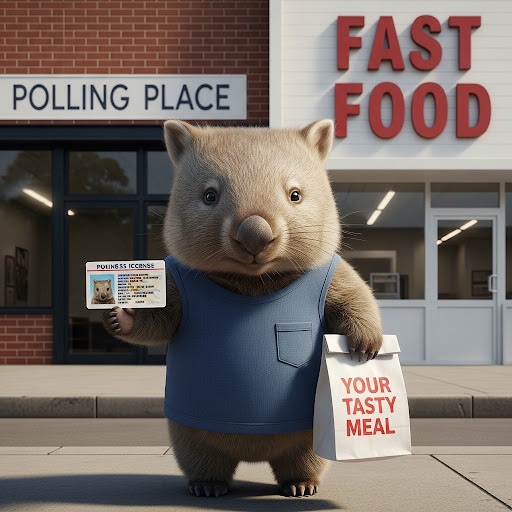
  • For example, let’s say you’re telling a Chick-fil-A in Kettering, Ohio that you’ll keep 17 year olds out of their restaurant. Are you ready when the prospect asks, “How do you KNOW that the person without ID is 17 years and 359 days old, and is not 18?”
  • Or let’s say you’re telling a state voter agency that you’ll enforce voter ID laws. Are you ready when the prospect asks, “How do you KNOW that the voter ID is real and not fake? Or that it is fake and not real?”

Be prepared to answer the tough questions. Expert testimonials. Independent assessments of your product’s accuracy. Customer case studies.

Analyze your product’s weaknesses. (And the threats, if you’re a SWOT groupie.)

And call in the expert help.

How to (Almost) Sell Anything to Anyone

Marketers, have you ever used someone else’s marketing as an opportunity to market your own solution?

I’ll confess that I’m haunting online conversations about the Kettering Chick-fil-A age assurance issue and adding a technical spin to the conversations.

But I’m not the only one doing this.

I admire the effort of this person who recently emailed me:

“Hi John,

“Your recent post about the 22 types of content product marketers create caught my eye. It echoes what we’ve been seeing with global teams – managing diverse content across borders can be as complex as handling cross-border payroll.”

The emailer then launched into a pitch for his cross-border payroll solution.

While I give the emailer an A+ for effort, the emailer didn’t do his research on his prospect. His prospect, me:

  • Focuses his business on the U.S. (with one exception that you may have seen me mention).
  • Is a sole proprietor, and therefore does not handle payroll in any country.

Good effort though, even though I’m not one of the emailer’s hungry people (target audience).

And if you want to know about the 22 types of content product marketers create, NOW ENDORSED BY A CROSS-BORDER PAYROLL EXPERT, read my post here.

LMM vs. LMM vs. LMM (Acronyms Are Delirious With Joy)

I’ve previously noted that the acronym LLM can represent a large multimodal model.

(Not to be confused with large language model. But I digress.)

And I’ve also noted that LMM can mean a large medical model.

But healthcare professionals aren’t the only ones adopting this acronym. Enter the marketers at WPP Media.

Large marketing model

“You might have heard us talking a lot lately about something pretty exciting: Open Intelligence, our new AI-powered data solution.  And along with that, we’ve been dropping the term the world’s first Large Marketing Model (LMM)…”

Large multimodal, medical, and marketing models. Imagen 4.

Although marketers could clearly use large multimodal models. Oh well.

So why do we marketers need our own generative AI model?

“In the context of marketing, this can extend to understanding customers, audiences, channels, and creative.”

Large marketing model. Imagen 4.

Which I guess the general-purpose engines are too generic to handle.

Dedicated

But Open Intelligence (the LMM) apparently can.

“[Open Intelligence] has been trained to understand and predict audience behavior and marketing performance based on patterns derived from real-time data about how people engage with content, brands, platforms, and products.”

It has been trained on “trillions of signals across more than 350 partners in over 75 markets.” Trillions of signals sounds like an impressive feature, but what if there are actually quadrillions of signals?

Are there other LMMs?

And are we going to get more of these special purpose models?

  • Large meteorological model? (We have those already.)
  • Large macroeconomic model? (Those too.)
  • Large microbiological model?
  • Large metaphysical model? (Don’t ask.)
  • Large mythological model? (Really don’t ask.)
Large mythological model. Imagen 4.

Asking For Connections From My Street Team

(Imagen 4)

I’m asking for a connection favor from the people who read this, my street team.

The ask

Here is the ask:

  • If you know a technology Chief Marketing Officer or other leader…
  • …who faces challenges in content, proposals, or analysis…
  • …and can use consulting help:

Ask your marketing leader to visit https://bredemarket.com/mark/ to learn about Bredemarket’s marketing and writing services:

  • The why, how, what, and who about Bredemarket’s ability to drive content results.
  • What I can do for your marketing leader.
  • Who uses my services; I’ve worked in many technology industries.
  • My collaborative process with Bredemarket’s clients.

The connection

If they like what they see, they can connect with me by booking a free 30 minute content needs assessment meeting with me, right from the https://bredemarket.com/mark/ page.

The reward

Thank you, street team. No monetary commission, but I can give you a shout out and  a personal AI-generated wildebeest picture on Bredemarket’s blog and social media empire. Yes, even TikTok (if it’s still legal).

Actually, I already owe a shout out to Roger Morrison, who has supported Bredemarket for years and has supported me personally for decades. Roger offers extensive experience in multiple biometric modalities (finger, face, Iris, voice), identity credentials, and broadband and other technologies. Despite attending the wrong high school in Arlington, Virginia (should have gone to Wakefield), he is very knowledgeable and very supportive. Warning: Roger is NOT bland or generic.

Imagen 4.

Why Products With No Competition Actually Have Competition

(All pictures Imagen 4)

I’ve said this before. If a company says it has no competition, run far away.

There are always alternatives.

I’m revisiting the “we have no competition” topic, because I have another point to make. If you claim your firm’s product has no competition because of its robust unmatched feature set, why are you still broke?

Take this example: the Uneek Combination Oven-Microwave.

A young woman left her family home and moved into her own apartment in the city.

A small studio apartment.

Her apartment was a very tiny studio apartment. Because of the lack of space, the woman equipped the apartment’s small kitchen area with a space-saving appliance that was a combination oven and microwave.

This was truly a product that had no competition, because its feature set was unequaled by most cooking appliances on the market. Everything else was either an oven or a microwave, not both.

The Uneek Combination Oven-Microwave.

So by logic this product should have commanded a 99% market share because of its extensive feature set, right?

Yet it didn’t.

Labor Day sale soon.

Because this product actually had competitors.

  • Stand-alone ovens.
  • Stand-alone microwaves.
  • Takeout food which ensured that you needed neither an oven nor a microwave.
  • And cold food.
No need to cook tonight.

The biggest competitor against ANY product is simply buying nothing at all.

After all, buying nothing at all has by far the lowest price.

At least in the short term.

How Can CMOs Serve Hungry Prospects With Expert Biometric Content?

How can CMOs serve hungry prospects with expert biometric content?

(Imagen 4)

Biometric product companies offer a tasty mixture of fingerprint, face, iris, voice, DNA, and other biometric hardware and software. These companies employ Chief Marketing Officers (CMOs) responsible for their firms’ inbound product marketing. Hungry prospects devour any content the firm can provide, and the CMOs devour any employee or contractor who can provide the necessary content.

The CMO will appreciate this seasoned quote from Lee Densmer:

“Companies are outsourcing the writing at great expense….[I]t is a heavy lift to make sure daily content for the platform is useful, relevant, and align with your business. Outsourcing doesn’t really work unless the writer really knows your business, is in touch with corporate leaders, and stays on top of trends.”

Read Densmer’s article: https://www.linkedin.com/pulse/why-linkedin-b2b-growth-hard-right-now-what-youre-doing-lee-densmer-pqvgc

So if you’re a content-devouring CMO at a biometric company, doesn’t it make sense to contract with Bredemarket’s biometric product marketing expert to serve a delicious dinner of your content needs?

Talk to Bredemarket: https://bredemarket.com/mark/

(And yes, it is almost lunchtime. Why do you ask?)

Painting a Picture: The Content Challenges of a Biometric Chief Marketing Officer

(Imagen 4)

If this reads odd, there’s a reason.

Imagine a Chief Marketing Officer sitting at her desk, wondering how she can overcome her latest challenge within three weeks.

She is a CMO at a biometric software company, and she needs someone to write the first two entries in a projected series of blog posts about the company’s chief software product. The posts need to build awareness, and need to appeal to prospects with some biometric knowledge.

So she contacts the biometric product marketing expert, John E. Bredehoft of Bredemarket, via his meeting request form, and schedules a Google Meet for the following meeting.

At the scheduled time she joins the meeting from her laptop on her office desk and sees John on the screen. John is a middle-aged Caucasian man with graying hair. He is wearing wire-rimmed glasses with a double bridge. He has a broad smile, with visible lines around his eyes and mouth. His eyes are brown  and appear to be looking directly at the camera. He is wearing a dark blue collared shirt. While his background is blurred, he appears to be in a room inside his home, with a bookcase and craft materials in the background.

After some pleasantries and some identity industry chit chat, John started asking some questions. Why? How? What? Goal? Benefits? Target audience (which he called hungry people)? Emotions? Plus some other questions.

They discussed some ideas for the first two blog posts, each of which would be about 500 words long and each of which would cost $500 each. John pledged to provide the first draft of the first post within three calendar days.

After the call, the CMO had a good feeling. John knew biometrics, knew blogging, and had some good ideas about how to raise the company’s awareness. She couldn’t wait to read Bredemarket’s first draft.

If you are in the same situation as the CMO is this story, schedule your own meeting with Bredemarket by visiting the https://bredemarket.com/mark/ URL and filling out the Calendly form.

Remember how I warned you that this post was going to read odd? In case you’re wondering about the unusual phrasing—including a detailed description of what I look like—it’s because I fed the entire text of this blog post to Google Gemini. Preceded by the words “Draw a realistic picture of.” And here’s what I got.

Imagen 4. I’m not on the screen, but I like the content ideas.
Imagen 4. With the bookcases. And I’ve never had a beard.
Imagen 4. But that’s not blurred.

The Source of Bredemarket’s Content Creator Questions 1-3 of 7

(Imagen 4)

Perhaps you’ve seen Bredemarket’s ebook “Seven Questions Your Content Creator Should Ask You.

If you didn’t already know this, I took the first three questions, in order, from Simon Sinek.

Regarding Sinek’s three questions, see the HubSpot post “3 Key Marketing Takeaways from Simon Sinek’s ‘Start With Why.’”

These three questions, as well as others—there are more than seven—form the first part of Bredemarket’s engagement with its clients. I ask, then I act.

I ask, then I act.

If you would like to learn more about Bredemarket’s marketing and writing services, visit my “Content for Tech Marketers” page at bredemarket.com/mark

Is Biometric Authentication Marketing Profitable?

When a company such as Bredemarket promotes itself, often we don’t know who is receiving the marketing messages. Therefore, we have to BROADCAST.

When we do know who is receiving our messaging, we can NARROWCAST.

Hmmm…how could we know this?

Ask TLG Marketing.

“Businesses are rapidly adopting biometric authentication marketing as it serves a dual purpose: enhancing security and providing a customized marketing experience.”

But does it pay? Yes.

“By integrating fingerprint recognition technology, a retail company optimized its app experience, leading to a 20% increase in online sales. In another case, a banking institution used facial recognition for secure and quick authentication, resulting in a customer service rating boost of 25%.”

There are ways other than biometrics to know who your prospects are, but knowledge based authentication (KBA) such as passwords has its weaknesses. With KBA you may not be interacting with your prospects, but with your prospect’s spouse or child.

JOE’S ALCOHOL EMPORIUM: Evelyn, what types of alcohol do you prefer?

EVELYN’S TEENAGE SON WHO KNOWS HER PASSWORD IS HIS BIRTHDATE: 200 proof, man! Let’s get wasted!

Bredemarket has created targeted, segmented content, including individualized content. Let me help you communicate with your individual prospects. Talk to me.

Tech marketers, are you afraid?