The “Biometric Digital Identity Deepfake and Synthetic Identity Prism Report” is Coming

As you may have noticed, I have talked about both deepfakes and synthetic identity ad nauseum.

But perhaps you would prefer to hear from someone who knows what they’re talking about.

On a webcast this morning, C. Maxine Most of The Prism Project reminded us that the “Biometric Digital Identity Deepfake and Synthetic Identity Prism Report” is scheduled for publication in May 2025, just a little over a month from now.

As with all other Prism Project publications, I expect a report that details the identity industry’s solutions to battle deepfakes and synthetic identities, and the vendors who provide them.

And the report is coming from one of the few industry researchers who knows the industry. Max doesn’t write synthetic identity reports one week and refrigerator reports the next, if you know what I mean.

At this point The Prism Project is soliciting sponsorships. Quality work doesn’t come for free, you know. If your company is interested in sponsoring the report, visit this link.

While waiting for Max, here are the Five Tops

And while you’re waiting for Max’s authoritative report on deepfakes and synthetic identity, you may want to take a look at Min’s (my) views, such as they are. Here are my current “five tops” posts on deepfakes and synthetic identity.

Identity Crisis

Identity professionals, what’s in a name?

You cannot uniquely identity someone by name alone.

What’s in a name?

A unique identification relies on multiple factors.

If your firm desires to tell a story about how your identity solution surpasses name-based solutions, Bredemarket can help.

Positioning, Messaging, and Your Facial Recognition Product Marketing

(Part of the biometric product marketing expert series)

By Original: Jack Ver at Dutch Wikipedia Vector: Ponor – Own work based on: Plaatsvector.png by Jack Ver at Dutch Wikipedia, CC BY-SA 4.0, https://commons.wikimedia.org/w/index.php?curid=95477901.

When marketing your facial recognition product (or any product), you need to pay attention to your positioning and messaging. This includes developing the answers to why, how, and what questions. But your positioning and your resulting messaging are deeply influenced by the characteristics of your product.

If facial recognition is your only modality

There are hundreds of facial recognition products on the market that are used for identity verification, authentication, crime solving (but ONLY as an investigative lead), and other purposes.

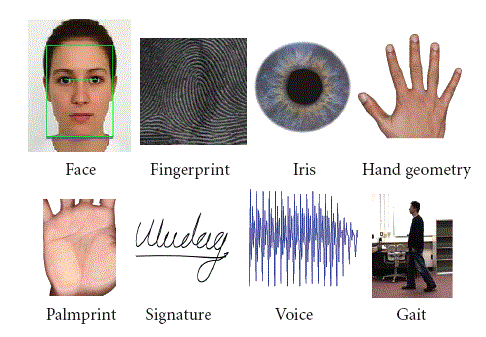
Some of these solutions ONLY use face as a biometric modality. Others use additional biometric modalities.

From Sandeep Kumar, A. Sony, Rahul Hooda, Yashpal Singh, in Journal of Advances and Scholarly Researches in Allied Education | Multidisciplinary Academic Research, “Multimodal Biometric Authentication System for Automatic Certificate Generation.”

Your positioning depends upon whether your solution only uses face, or uses other factors such as voice.

Of course, if you initially only offer a face solution and then offer a second biometric, you’ll have to rewrite all your material. “You know how we said that face is great? Well, face and gait are even greater!”

If biometrics is your only factor

It’s no secret that I am NOT a fan of the “passwords are dead” movement.

Too many of the tombstones are labeled “12345.” By GreatBernard – Own work, CC0, https://commons.wikimedia.org/w/index.php?curid=116933238.

It seems that many of the people that are waiting the long-delayed death of the password think that biometrics is the magic solution that will completely replace passwords.

For this reason, your company might have decided to use biometrics as your sole factor of identity verification and authentication.

Or perhaps your company took a different approach, and believes that multiple factors—perhaps all five factors—are required to truly verify and/or authenticate an individual. Use some combination of biometrics, secure documents such as driver’s licenses, geolocation, “something you do” such as a particular swiping pattern, and even (horrors!) knowledge-based authentication such as passwords or PINs.

This naturally shapes your positioning and messaging.

  • The single factor companies will argue that their approach is very fast, very secure, and completely frictionless. (Sound familiar?) No need to drag out your passport or your key fob, or to turn off your VPN to accurately indicate your location. Biometrics does it all!
  • The multiple factor companies will argue that ANY single factor can be spoofed, but that it is much, much harder to spoof multiple factors at once. (Sound familiar?)

So position yourself however you need to position yourself. Again, be prepared to change if your single factor solution adopts a second factor.

A final thought

Every company has its own way of approaching a problem, and your company is no different. As you prepare to market your products, survey your product, your customers, and your prospects and choose the correct positioning (and messaging) for your own circumstances.

And if you need help with biometric positioning and messaging, feel free to contact the biometric product marketing expert, John E. Bredehoft. (Full-time employment opportunities via LinkedIn, consulting opportunities via Bredemarket.)

In the meantime, take care of yourself, and each other.

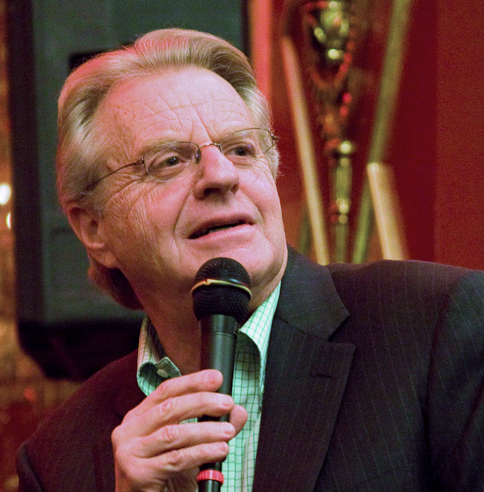
Jerry Springer. By Justin Hoch, CC BY 2.0, https://commons.wikimedia.org/w/index.php?curid=16673259.

Authenticator Assurance Levels (AALs) and Digital Identity

(Part of the biometric product marketing expert series)

Back in December 2020, I dove into identity assurance levels (IALs) and digital identity, subsequently specifying the difference between identity assurance levels 2 and 3. These IALs are defined in section 4 of NIST Special Publication 800-63A, Digital Identity Guidelines, Enrollment and Identity Proofing Requirements.

It’s past time for me to move ahead to authenticator assurance levels (AALs).

Where are authenticator assurance levels defined?

Authenticator assurance levels are defined in section 4 of NIST Special Publication 800-63B, Digital Identity Guidelines, Authentication and Lifecycle Management. As with IALs, the AALs progress to higher levels of assurance.

  • AAL1 (some confidence). AAL1, in the words of NIST, “provides some assurance.” Single-factor authentication is OK, but multi-factor authentication can be used also. All sorts of authentication methods, including knowledge-based authentication, satisfy the requirements of AAL1. In short, AAL1 isn’t exactly a “nothingburger” as I characterized IAL1, but AAL1 doesn’t provide a ton of assurance.
  • AAL2 (high confidence). AAL2 increases the assurance by requiring “two distinct authentication factors,” not just one. There are specific requirements regarding the authentication factors you can use. And the security must conform to the “moderate” security level, such as the moderate security level in FedRAMP. So AAL2 is satisfactory for a lot of organizations…but not all of them.
  • AAL3 (very high confidence). AAL3 is the highest authenticator assurance level. It “is based on proof of possession of a key through a cryptographic protocol.” Of course, two distinct authentication factors are required, including “a hardware-based authenticator and an authenticator that provides verifier impersonation resistance — the same device MAY fulfill both these requirements.”

This is of course a very high overview, and there are a lot of…um…minutiae that go into each of these definitions. If you’re interested in that further detail, please read section 4 of NIST Special Publication 800-63B for yourself.

Which authenticator assurance level should you use?

NIST has provided a handy dandy AAL decision flowchart in section 6.2 of NIST Special Publication 800-63-3, similar to the IAL decision flowchart in section 6.1 that I reproduced earlier. If you go through the flowchart, you can decide whether you need AAL1, AAL2, or the very high AAL3.

One of the key questions is the question flagged as 2, “Are you making personal data accessible?” The answer to this question in the flowchart moves you between AAL2 (if personal data is made accessible) and AAL1 (if it isn’t).

So what?

Do the different authenticator assurance levels provide any true benefits, or are they just items in a government agency’s technical check-off list?

Perhaps the better question to ask is this: what happens if the WRONG person obtains access to the data?

  • Could the fraudster cause financial loss to a government agency?
  • Threaten personal safety?
  • Commit civil or criminal violations?
  • Or, most frightening to agency heads who could be fired at any time, could the fraudster damage an agency’s reputation?

If some or all of these are true, then a high authenticator assurance level is VERY beneficial.

Why Knowledge-Based Authentication Fails at Authentication

In a recent project for a Bredemarket client, I researched how a particular group of organizations identified their online customers. Their authentication methods fell into two categories. One of these methods was much better than the other.

Multifactor authentication

Some of the organizations employed robust authentication procedures that included more than one of the five authentication factors—something you know, something you have, something you are, something you do, and/or somewhere you are.

For example, an organization may require you to authenticate with biometric data, a government-issued identification document, and sometimes some additional textual or location data.

Knowledge-based authentication

Other organizations employed only one of the factors, something you know.

  • Not something as easy to crack as a password.
  • Instead they used the supposedly robust authentication method of “knowledge-based authentication,” or KBA.

The theory behind KBA is that if you ask multiple questions of a person based upon data from various authoritative databases, the chance of a fraudster knowing ALL of this data is minimal.

From Alloy, “Why knowledge-based authentication (KBA) is not effective,” https://www.alloy.com/blog/answering-my-own-authentication-questions-prove-that-theyre-useless.

Steve Craig found out the hard way that KBA is not infallible.

The hotel loyalty hack

Steve Craig is the Founder and CEO of PEAK IDV, a company dedicated to educating individuals on identity verification and fraud prevention.

From PEAK IDV, https://www.peakidv.com/.

Sadly, Craig himself was recently a victim of fraud, and it took him several hours to resolve the issue.

I’m not going to repeat all of Craig’s story, which you can read in his LinkedIn post. But I do want to highlight one detail.

  • When the fraudster took over Craig’s travel-related account, the hotel used KBA to confirm that the fraudster truly was Steve Craig, specifically asking “when and where was your last hotel stay?”
  • Only one problem: the “last hotel stay” was one from the fraudster, NOT from Craig. The scammer fraudulently associated their hotel stay with Craig’s account.
  • This spurious “last hotel stay” allowed the fraudster to not only answer the “last hotel stay” question correctly, but also to take over Craig’s entire account, including all of Craig’s loyalty points.

And with that one piece of knowledge, Craig’s account was breached.

The “knowledge” used by knowledge based authentication

Craig isn’t the only one who can confirm that KBA by itself doesn’t work. I’ve already shared an image from an Alloy article demonstrating the failures of KBA, and there are many similar articles out there.

The biggest drawback of KBA is the assumption that ONLY the person can answer all the knowledge corrections correctly is false. All you have to do is participate in one of those never-ending Facebook memes that tell you something based on your birthday, or your favorite pet. Don’t do it.

Why do organizations use KBA?

So why do organizations continue to use KBA as their preferred authentication method? Fraud.com lists several attractive, um, factors:

  • Ease of implementation. It’s easier to implement KBA than it is to implement biometric authentication and/or ID card-based authentication.
  • Ease of use. It’s easier to click on answers to multiple choice questions than it is to capture an ID card, fingerprint, or face. (Especially if active liveness detection is used.)
  • Ease of remembrance. As many of us can testify, it’s hard to remember which password is associated with a particular website. With KBA, you merely have to answer a multiple choice quiz, using information that you already know (at least in theory).

Let me add one more:

  • Presumed protection of personally identifiable information (PII). Uploading your face, fingerprint, or driver’s license to a mysterious system seems scary. It APPEARS to be a lot safer to just answer some questions.

But in my view, the risks that someone else can get all this information (or create spurious information) and use it to access your account outweigh the benefits listed above. Even Fraud.com, which lists the advantages of KBA, warns about the risks and recommend coupling KBA with some other authentication method.

But KBA isn’t the only risky authentication factor out there

We already know that passwords can be hacked. And by now we should realize that KBA could be hacked.

But frankly, ANY single authentication can be hacked.

  • After Steve Craig resolved his fraud issue, he asked the hotel how it would prevent fraud in the future. The hotel responded that it would use caller ID on phone calls made to the hotel. Wrong answer.
  • While the biometric vendors are improving their algorithms to detect deepfakes, no one can offer 100% assurance that even the best biometric algorithms can prevent all deepfake attempts. And people don’t even bother to use biometric algorithms if the people on the Zoom call LOOK real.
  • While the ID card analysis vendors (and the ID card manufacturers themselves) are constantly improving their ability to detect fraudulent documents, no one can offer 100% assurance that a presented driver’s license is truly a driver’s license.
  • Geolocation has been touted as a solution by some. But geolocation can be hacked also.

In my view, the best way to minimize (not eliminate) fraudulent authentication is to employ multiple factors. While someone could create a fake face, or a fake driver’s license, or a fake location, the chances of someone faking ALL these factors are much lower than the chances of someone faking a single factor.

You knew the pitch was coming, didn’t you?

If your company has a story to tell about how your authentication processes beat all others, I can help.