But I provided external samples of what I do anyway: two client short data sheets, three client long data sheets, three Bredemarket data sheets, two client landing pages, one Bredemarket landing page, and two other samples.
So I will share one of the landing pages with you, but not a client one. This is one of mine, for Bredemarket’s identity/biometric prospects.
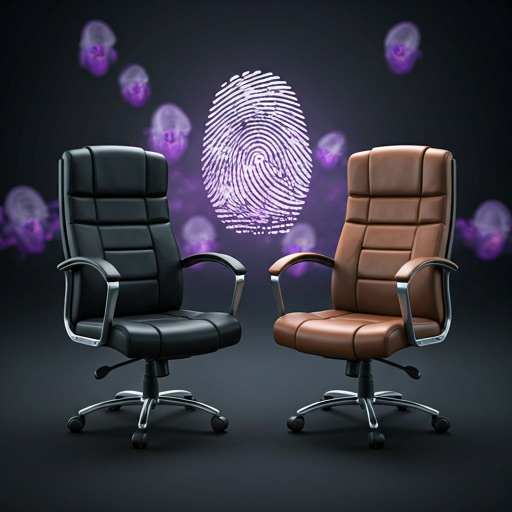
News about iProov. According to Metropoler, the company discovered a dark web group in Latin America.
The group is
“amassing a substantial collection of identity documents and corresponding facial images, specifically designed to defeat Know Your Customer (KYC) verification processes. Rather than traditional theft, these identities may have been obtained through compensated participation, with individuals willingly providing their image and documentation in exchange for payment.”
To uncover such fraudulent activity, a mere government ID to selfie comparison is not enough, since both are from a real person. You need more sophisticated checks such as liveness detection, which iProov offers. You can find iProov’s ISO 30107-3 Presentation Attack Detection Level 2 confirmation letters on iBeta’s page.
But why?
Why would anyone sell their identity, either legitimately (to the World ex Worldcoin folks) or illegitimately (to this dark web outfit)?
Sadly, desperation. If you have a basic need to eat, who cares who is using your ID and what they’re doing with it?
From the early 1990s to 2019, the majority of my identity/biometric proposal work was with U.S. state and local agencies, with some work with foreign agencies (such as Canada’s RCMP), private entities, and a few proposals to U.S. federal agencies.
I had no idea what was going to happen in 2020, and one of the surprises is that the majority of my identity/biometric proposal work since 2020 has been with U.S. federal agencies. Many requests for information (RFIs) as well as other responses.
The L & N, not M, but close enough for government work.
I’ve worked on client proposals (and Bredemarket’s own responses) to the Departments of Defense, Homeland Security, Justice, and perhaps some others along the way.
And no, there’s no uniformity
Same department, different requirements.
Coincidentally, the two most recent identity/biometric proposals I managed for Bredemarket clients went to the same government department. But that’s where the similarities ended.
The first required an e-mail submission of a PDF (10 pages maximum) to two email addresses. A relative piece of cake.
Mmm…cake. Always reward your proposal people.
The last required an online submission. No, not a simple upload of a PDF to a government website. While my client did have to upload 2 PDFs, the majority of the submission required my client to complete a bunch of online screens.
And there were two separate sets of instructions regarding how to complete these online screens…which contradicted each other. So I had to ask a clarification question…and you know how THAT can go.
Oh, and as the consulting proposal expert, I could not complete the online screens on behalf of the client. The client’s company had a single login, which was assigned to a single person (a company executive) and could NOT be used by anybody else.
So on the day of proposal submission the executive and I videoconferenced, and I watched as the executive answered the responses, in part using a document in which I had drafted responses.
And of course things were not perfect. The executive pasted one of my responses into the space provided, and only THEN did we discover that the response had an unadvertised character limit. So I rewrote it…at the same time that I resized a required image with unadvertised dimension restrictions.
But there’s some uniformity
Perhaps if I had written more federal proposals at Printrak, Motorola, MorphoTrak, IDEMIA, and Incode, I would have known these things. Perhaps not; as late as 2014 I was still printing proposals on paper and submitting 10 or more volumes of binders (yes, binders) along with CDs that had to be virus-checked.
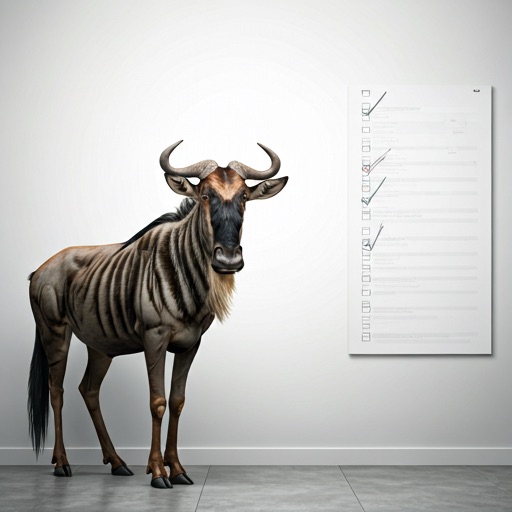
Some Requests for Proposal (RFPs) provide helpful checklists.
But regardless of whether you submit proposals online, via CD, or in paper volumes, some things remain constant.
Follow the instructions.
Answer the questions.
Emphasize the benefits.
And don’t misspell the name of the Contracting Officer.
I am VERY familiar with questions regarding the nationality of a company. There are three questions:
Where is it incorporated?
Where is it headquartered?
Who owns it?
IDEMIA
For my former employer IDEMIA, the answers are France, France, and primarily a U.S. investor (Advent International).
(So depending upon your needs, you can argue that IDEMIA is a French company or a U.S. company.)
ByteDance
For ByteDance, the answers are the Cayman Islands, China (Beijing), and primarily global investors (Blackrock, General Atlantic, Susquehanna International Group, etc.).
(So depending upon your needs, you can argue that ByteDance is a Chinese company, a mostly American company, or a British company off the coast of Cuba.)
Your company
Not that I create TikTok videos (at least not for paying clients), but I provide other services.
More information on Bredemarket’s Content-Proposal-Analysis marketing and writing services:
In my country, the issuance of driver’s licenses is performed at the state level, not the national level. This has two ramifications.
REAL ID
The U.S. government wanted to tighten down on identification cards to stop terrorists from hijacking planes and crashing them into buildings.
But it couldn’t.
When it told the states to issue “REAL ID” cards by 2008, the states said they wouldn’t be told what to do.
Today all of them support REAL ID cards as an option, but use of REAL IDs for federal functions such as plane travel won’t be enforced until 2027…if then.
mDLs
For years there has been a move to replace physical driver’s licenses with mobile driver’s licenses, or mDLs.
Again, in my country this has been pursued in a piecemeal basis on the state level. Louisiana has its own mDL, with a separate one in Oklahoma, one in California, others in other states, and none in other states. And one state (Florida) that had one, then didn’t have one.
Some mDLs are in custom wallets, while others are or are not in wallets from Apple, Google, and Samsung.
Oh, and don’t try using your Louisiana mDL to buy a beer in Arkansas.
Meanwhile, in the UK
Things are different in other countries. Amit Alagh shared a BBC article with me.
“Digital driving licences are to be introduced in the UK as the government looks to use technology to ‘transform public services’…. The new digital licences will be introduced later this year….”
Throughout the entire United Kingdom, including Scotland and Northern Ireland, apparently.
I’ve discussed identity and privacy regarding people.
I’ve discussed identity and privacy regarding non-person entities.
But I missed something in between.
Earlier this week I was discussing a particular veterinary software use case with an undisclosed person when I found myself asking how the data processing aspects of the use case complied with HIPAA, the U.S. Health Insurance Portability and Accountability Act.
Then I caught myself, realizing that HIPAA (previously discussed here) does not apply to dogs, cats, cows, or other animals. They are considered property, and we all know how U.S. laws have treated property in the past.
So you can violate an animal’s privacy all you want and not run afoul of HIPAA.
But you could run afoul of some other law. As Barb Rand noted back in 2013, 35 states (at the time) had “statutes that address the confidentiality of veterinary patient records.”
And when animal records are commingled with human records—for example, for emotional support animals—protected health information rules do kick in.
Unless the animal is intelligent enough to manage their own prescriptions without human assistance.
Back in July 2023, I wrote a post about financial remote onboarding which included a section entitled “Three changes in banking over the last fifty years.” The first change I addressed was locational change.
The first crack in the whole idea of “going to the bank” was the ability to bank without entering the door of the bank…and being able to bank on Sunday at midnight if you felt like it. Yes, I’m talking about Automated Teller Machines (ATMs), where the “teller,” instead of being a person, was a bunch of metal and a TV screen.
But when I was recently reading a Bluesky post from mclevin that stated (correctly) that the decline in tellers didn’t start with artificial intelligence, but automated teller machines, it occurred to me that even the once-revolutionary ATM is itself outdated in financial terms.
Think about it.
What are the two most important functions of an ATM?
To deposit paper checks.
To obtain physical cash.
I think you see where this is going.
While the ATM still fulfills these functions today, how often do we receive paper checks? And even if we do, why go to a distant ATM to deposit the check when you can often perform the same function using your mobile phone?
And how often do we use cash to pay for things? Often we use a card…or a mobile phone.










 Bredemarket