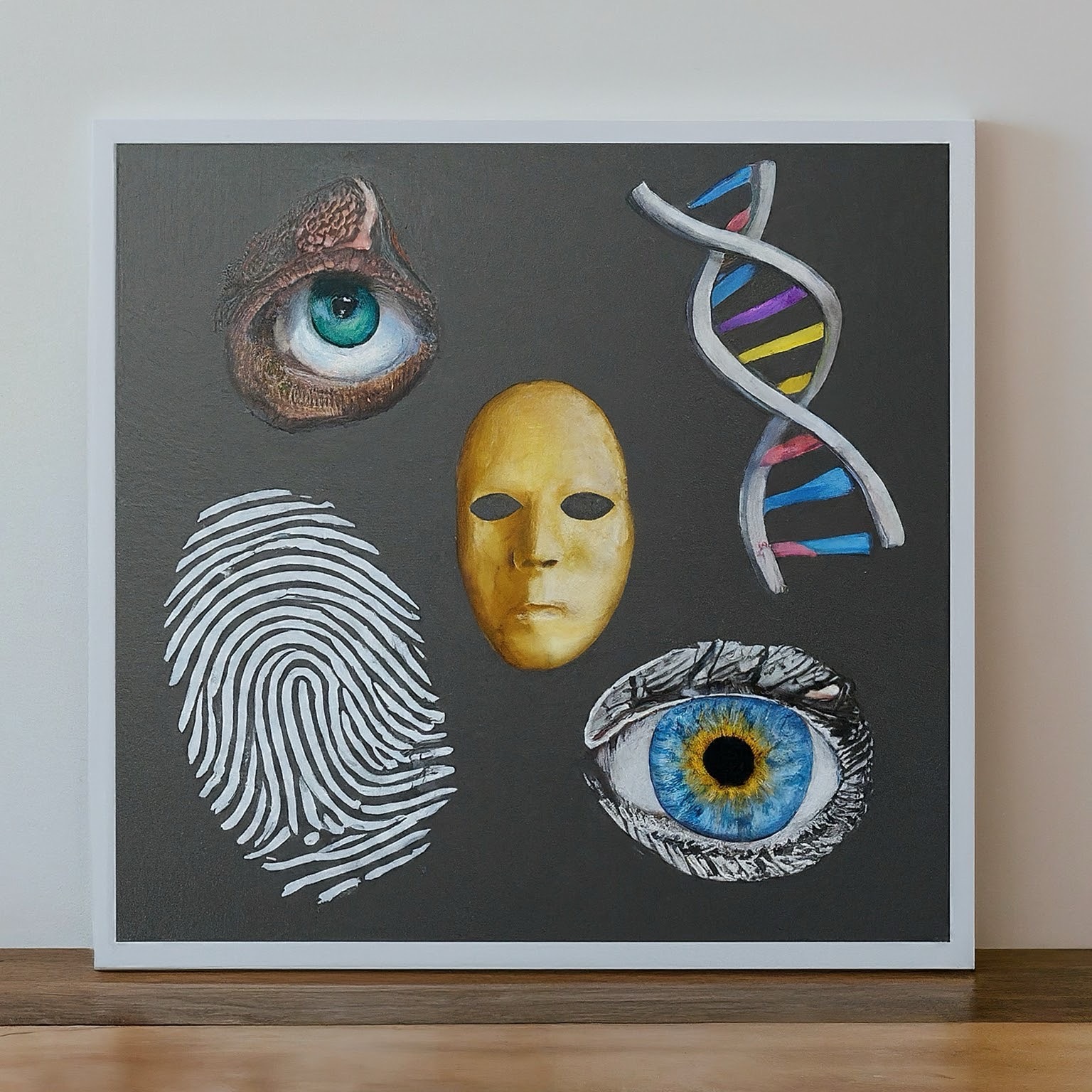
My professional experience spans DNA, face, friction ridge, iris, and voice.
But I’ve looked at many other modalities.
See the full list here.

Identity/biometrics/technology marketing and writing services
My professional experience spans DNA, face, friction ridge, iris, and voice.
But I’ve looked at many other modalities.
See the full list here.

Someone who is a biometric product marketing expert.
Someone who has three decades of expertise in biometrics.
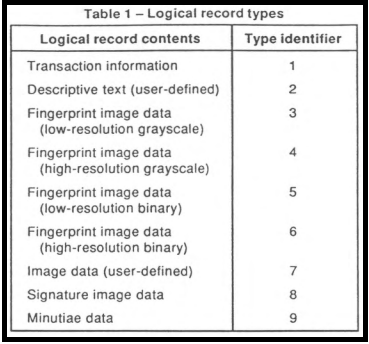
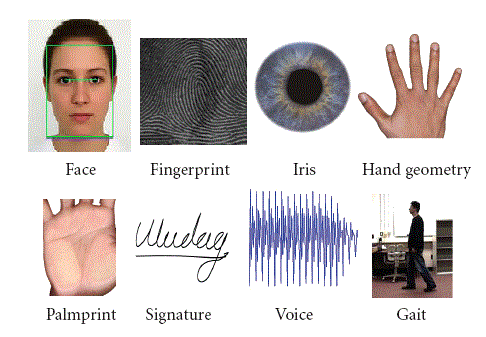
Someone who has worked with fingerprints, faces, irises, voices, DNA, and other biometric modalities.
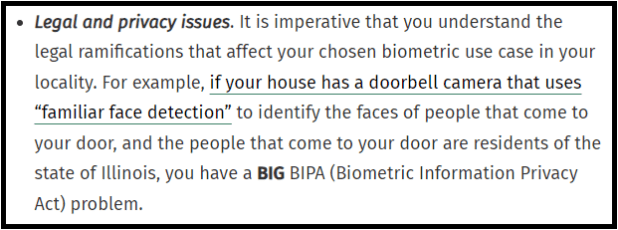
Someone who understands the privacy landscape in Europe (GDPR), Illinois (BIPA), California, and elsewhere.
Oh…and someone who can write.

I know someone. Bredemarket.

Bredemarket works with a number of technologies, but it’s no secret that my primary focus is biometrics. After all, I call myself the “biometric product marketing expert,” having worked with friction ridge (fingerprint, palm print), face, iris, voice, and rapid DNA.
If I can help your biometric firm with your content, proposal, or analysis needs, schedule a free meeting with me to discuss how I can help.

Facial recognition and DNA can’t tell identical twins apart. (Well, not unless you can detect somatic mutations.) Even Santa can’t tell.
And fingerprints don’t work because everyone at the North Pole wears gloves.

The Las Vegas Review-Journal reported this in September 2020:
“The Fontana Police Department in San Bernardino County, California, said it arrested Leonard Nash, 66, of Las Vegas on a warrant charging him with murder in the July 5, 1980, slaying of Michelle “Missy” Jones. The young woman was found slain in a grapefruit grove in Fontana.”
So why did it take 40 years to arrest Nash?
“Police said forensic evidence was collected during Jones’ autopsy, but technology at the time did not allow it to be connected to an offender.”
In 2020, the Riverside/San Bernardino CAL-DNA Laboratory successfully obtained a profile, but it did not match the DNA profile of any known offender. Nash, a person of interest, was matched to the profile via “discarded DNA.”
Anyway, Nash was convicted this month, but the news stories that described his conviction are inaccessible to you and me.

It’s challenging enough to identify a unknown deceased body found in the person’s home city.
It’s more challenging to identify one somewhere else in the person’s home country.
And when the body is found outside the person’s home country…that’s when organizations such as INTERPOL step in.
“Identify Me is a public appeal to identify women whose bodies were found in six European countries, many of whom are believed to have been murdered.
“Most are cold cases; women who died 10, 20, 30 or even 40 years ago. They were found in Belgium, France, Germany, Italy, the Netherlands, or Spain.
“Despite extensive police investigations, these women were never identified, and evidence suggests that some of them could have come from other countries. Who they are, where they are from and why they were in these countries is unknown.”
INTERPOL issues a variety of colored notices to its member countries, including the “Black Notice” to seek information on unidentified bodies. The “Identify Me” program is a public appeal for a small subset of these people.
Here’s one of INTERPOL’s success stories, “The woman in pink“:
“On 3 July 2005, the body of a woman was found at the 84 km mark on the Vila road in the town of Viladecans (province of Barcelona). The woman had been dead for less than 24 hours; the cause of death was suspicious….
“A breakthrough came in 2025 when police in Türkiye ran the fingerprints associated with ‘The woman in pink’ through a national biometric database, resulting in a match with Russian national Liudmila Zavada, aged 31 at the time of her death. The match was subsequently confirmed through kinship DNA analysis using the DNA of one of Liudmila Zavada’s close relatives.”
So follow the trail:
A true case of cross-national collaboration.
The Jerusalem Post recently published a story about Israel’s Institute of Forensic Medicine and how it identifies deceased bodies.
“From the moment the remains arrive at the institute, identification is conducted through three methods: dental records, CT scans, and DNA testing.
“Even if we identify the remains using one method, it’s not enough until we have definitive identification. In most cases, whenever possible, we perform all three methods to get a final result.” According to Kugel, this is because the “findings” often arrive in an unorganized manner, and no one knows to whom they belong.”
Oh, and there’s one additional complication. Some of the bodies died as long as two years ago. Some of these remains were returned from Gaza after the latest cease fire. I don’t know how many of these people died after October 7, 2023, but it’s possible that some of them may have.
“It’s important to understand that our daily work is to examine bodies that arrive within hours or a few days in rare cases. Here, we’re dealing with a two-year period, and that makes a significant difference in how the remains were preserved, under what conditions, and how that affects the identification process.”
But they aren’t just identifying Israelis.
“Identifying former Hamas leader Yahya Sinwar was a defining moment for Kugel.
“‘Once you’re with the body and examining it, you don’t think at that moment that you’re examining someone very significant. We also had to understand what caused his death. Obviously, he had a head injury, but we tried to understand what preceded what.’
“When we finished, a colleague said to me: ‘Do you understand who you’ve examined now? The man who is responsible for the massacre of thousands of people.’ You don’t think about it while working, just as with the good people who were killed in the war, you just check and identify. After that, at home, you continue to read about him and his family; it goes with you, and then you process what you go through at the institute.”
This is a common challenge in forensics. Identification of a particular person may result in a number of emotional responses, whether it is a criminal or a victim. But the forensic professional’s job is to simply examine the evidence. The grief comes later.

Rosalind Franklin was one of a quartet of people who were researching DNA in the 1950s. And she is popularly known…sort of.
“Since her early death at the age of 37, Rosalind Franklin has become mythologised as the victim of male prejudice, the unsung heroine who took the crucial X-ray photograph enabling James Watson and Francis Crick to build their double helix model of DNA, and was unjustly deprived of a Nobel Prize.”
A powerful story…but just a story.
“She would neither have recognised nor endorsed this soundbite description. Franklin regarded herself first and foremost not as a woman, but as a scientist, and her DNA research occupied a relatively brief period in her successful career working on a variety of topics. In particular, on top of her famous investigations into DNA, she also made foundational contributions to modern understandings of coal, graphite and viruses.”
Read about Franklin here.
(Picture from Wikipedia, MRC Laboratory of Molecular Biology • CC BY-SA 4.0)

Biometric marketing leaders, do your firm’s product marketing publications require the words of authority?

Can John E. Bredehoft of Bredemarket—the biometric product marketing expert—contribute words of authority to your content, proposal, and analysis materials?
I offer:
To embed Bredemarket’s biometric product marketing expertise within your firm, schedule a free meeting with me.

(Part of the biometric product marketing expert series)
There are certain assumptions that you make in biometrics.
Namely, that certain biometrics are unable to differentiate twins: facial recognition, and DNA analysis.
Now as facial recognition algorithms get bettter and better, perhaps they will be able to tell twins apart: even identical twins.
But DNA is DNA, right?
Mike Bowers (CSIDDS) links to an article in Forensic Magazine which suggests that twins’ DNA can be differentiated.
For the first time in the U.S., an identical twin has been convicted of a crime based on DNA analysis.
The breakthrough came from Parabon Nanolabs, who’s scientists used deep whole genome sequencing to identify extremely rare “somatic mutations” that differentiated Russell Marubbio and his twin, John. The results were admitted as evidence in court, making last week’s conviction of Russell in the 1987 rape of a 50-year-old woman a landmark case.
Parabon Nanolabs (whom I briefly mentioned in 2024) applied somatic mutations as follows:
Somatic mutations are DNA changes that happen after conception and can cause genetic differences between otherwise identical twins. These mutations can arise during the earliest stages of embryonic development, affecting the split of the zygote, and accumulate throughout life due to errors in cell division. Somatic mutations can be present in only one twin, a subset of cells, or both, potentially leading to differences in health and even developmental disorders—and in this case, DNA.
The science behind somatic mutations is not new, and is well-researched, understood and accepted. It’s just uncommon for DNA to lead to twins, and even more uncommon for somatic mutations to be able to distinguish between twins.
Note that “well-researched, understood and accepted” part (even though it lacks an Oxford comma). Because this isn’t the only recent story that touches upon whole genome sequencing.
Bowers also links to a CNN article which references Daubert/Frye-like questions about whether evidence is admissable.
Evidence derived from cutting-edge DNA technology that prosecutors say points directly at Rex Heuermann being the Gilgo Beach serial killer will be admissible at his trial, a Suffolk County judge ruled Wednesday….
Heuermann’s defense attorney Michael Brown had argued the DNA technology, known as whole genome sequencing, has not yet been widely accepted by the scientific community and therefore shouldn’t be permitted. He said he plans to argue the validity of the technology before a jury.
Meanwhile, prosecutors have argued this type of DNA extraction has been used by local law enforcement, the FBI and even defense attorneys elsewhere in the country, according to court records.
Let me point out one important detail: the fact that police agencies are using a particular technology doesn’t mean that said technology is “widely accepted by the scientific community.” I suspect that this same question will be raised in other courts, and other judges may hold a different decision.
And after checking my blog, I realize that I have never written an article about Daubert/Frye. Another assignment for Bredebot, I guess…
Your identity/biometric product marketing needs to assert the facts rather than old lies,

 Bredemarket
 .jpg#mw-jump-to-license)