Bredemarket creates content.
If you want me to create yours, talk to me. https://bredemarket.com/mark/
(Grok)

Identity/biometrics/technology marketing and writing services

Bredemarket creates content.
If you want me to create yours, talk to me. https://bredemarket.com/mark/
(Grok)

It’s time for my (usually) once-a-month edition of Bredemarket’s LinkedIn newsletter, “The Wildebeest Speaks.”
And I revisited a topic that I originally visited in December 2023, but hopefully with a new perspective.
Go to LinkedIn and read the latest edition of my newsletter, “Who Are Your Hungry People?” It is at https://www.linkedin.com/pulse/who-your-hungry-people-bredemarket-xiafc/


“It’s OK. The competitor isn’t talking, so we can say anything we want.”
But what if “the competitor”…is YOU?
Get in the content conversation: https://bredemarket.com/cpa/
(Imagen 3)

It’s not enough for your company’s prospects to know who you are, but it helps. But you can do more than that…with Bredemarket’s help.

I just searched for the leading software providers in a particular category. This isn’t unusual. If someone wants to purchase software, they will often conduct their own research before letting themselves be pestered by salespeople.
My category search turned up several software packages.
It DIDN’T turn up numerous others in that category.
So a whole bunch of companies are already at a disadvantage, and there’s a good chance that their competitors are going to take their money because the software buyer won’t even think of purchasing from them.
The software buyer has no AWARENESS of these other software packages.
The Bredemarket website has an entire page on awareness, in which I make the following point:
“Two discussions of this three-step sales funnel are provided by Venn Marketing and Walker Sands (the latter of whom throws in things that happen AFTER the purchase, engagement and advocacy).
“Both sources define awareness as the first step in the funnel, and its purpose is to (drumroll) simply make prospects, um, aware that you and your product/service exist.”
Obviously there are other things you need to do to end up with a happy customer, but you’ll never get a happy customer if it doesn’t even know about you during the prospect stage.

Now there are all sorts of ways to raise awareness, but some are better than others.
It’s not enough for your company’s prospects to have awareness about you. They need to have awareness about how you can solve their problems.
Only then will you make an impact.

Perhaps your company needs to raise awareness of your solutions to your prospects’ problems.
Bredemarket can work with you on this, asking questions and even engaging in…um…WOMBAT to produce impactful content for your company and its products and services.
So that your prospects know about you.
Then we can work on the next steps, consideration and conversation.
Book a free appointment to talk to me: https://bredemarket.com/cpa/
(All pictures from Imagen 3)

I’m a member of a local Facebook “news” group, and the group just emphatically stated that expression of opinions is NOT allowed in that group.
Because facts are free of bias. (Supposedly. I should address that topic in another post.)
Because this post includes two contentious opinions, it’s no surprise that I will NEVER share this post in that local news group. Their loss.
Actually the post is off-topic for the news group anyway. But as you will see, it is entirely on-topic for Bredemarket. I’ll explain, after I discuss a couple of songs and their singers.
“Girl from the North Country” is a Bob Dylan song, which he started writing in 1962 while in England. The song was recorded in New York in 1963 and released that same year on the album “The Freewheelin’ Bob Dylan.”
But I don’t care about THAT version of the song.
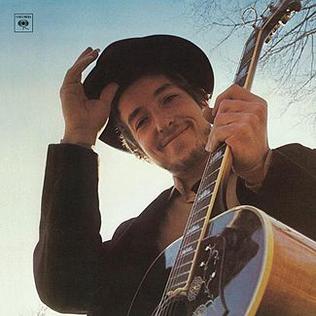
I care about Dylan’s cover of his own song, released several years later on the 1969 album “Nashville Skyline.” But Dylan had a special guest on this album: Johnny Cash.
Here are two facts about the 1969 version:
These are facts, not opinions, since I am not casting a value judgement on whether they are any good at singing. For the record, I love Bob Dylan’s solo songs, and I love Johnny Cash’s solo songs.
Now my opinion: the 1969 version of “Girl from the North Country” is an unmitigated disaster, because the distinctive voices do not blend at all.
If you’ve never heard this version of the song, let me provide a play-by-play account.
Then (again, in my opinion) all hell breaks loose at the 1:52 mark in the song, because now the two sing together.
Sort of.
Cash starts singing the fourth verse, Dylan joins in a second later, and then they kinda sorta sing the words of the fourth and fifth verses at kinda sorta the same time, with some harmonizing—some intentional, some unintentional when they couldn’t hit the notes. Hear the result on YouTube.
Now I will admit that my negative opinion of the Dylan-Cash duet on “Girl of the North Country” is not universal. A high school friend who shall remain anonymous (just call her “Editor Extraordinaire” and old school Rick Dees fan) thinks this version is charming. I find it amusing in a not-so-good way.
As far as I’m concerned, this collaboration didn’t work.
Which brings us to Christina Aguilera.
In 2010 Aguilera released her sixth album, “Bionic,” a massive 18-track album featuring a more electronic sound and numerous collaborations with Nicki Minaj, Sia, Linda Perry, and others.

But I don’t care about THAT version of the album.
I care about the Deluxe edition, with an even more massive total of 23 tracks.
One of which was co-written and produced by the (then) four members of the UK band Ladytron. As OC Weekly (R.I.P.) documented at the time, Aguilera was a fan of the quartet:
Ladytron followers were startled to learn that Christina Aguilera was not only a fan, but had also already worked with the band on a variety of songs to be released in the near future.
“We went in with no expectations; the whole thing was a massive surprise,” explains Wu. “But it was incredible. She was so musically talented, a vocalist who really knows her voice. The first takes sounded really amazing, and while we’d made demos, it was only when her voice was on them that it all came to life.
One of the songs was “Birds of Prey.” Not to be confused with “Bird of Prey” or “Sunset (Bird of Prey),” the Aguilera-Ladytron version builds upon the usual Ladytron vocal delivery from Helen Marine and Mira Aroyo by adding Christina Aguilera to the mix.
Which brings me to my three facts about this song:
In my opinion, this vocal collaboration—unlike the Dylan-Cash one mentioned earlier—works out beautifully. Aguilera naturally opens the song (it’s her album after all), but as the song progresses you hear Marnie lightly chiming in and Aroyo whispering, building up to the closing of the song. Hear it here.
Again, this opinion is not universal—Aroyo in particular is an acquired taste—but the combination seems to work.
But what do “Girl from the North Country” and “Birds of Prey” have to do with B2B sales—whoops, I mean collaboration? And Bredemarket?
Bredemarket’s services are built upon the principle that I work together with my clients. My process includes a lot of references to “Bredemarket and you,” because we are both involved in every step, from the seven questions I address at the beginning to the iterative drafts and reviews that occur throughout.
In effect, we both co-pilot the content.

But that isn’t the only way to manage a project, as I noted in June 2023. There are two others.
The first approach is to yield all control to the expert. You sit back, relax, and tell your content marketing consultant to do whatever they want. They provide the text, and you pay the consultant with no questions asked. The content marketing consultant is the pilot here.
The second approach is to retain all control yourself. You tell the content marketing consultant exactly what you want, and exactly what words to say to describe your best-of-breed, game-changing, paradigm-shifting, outcome-optimizing solution. (That last sentence was painful to write, but I did it for you.) The content marketing consultant follows your exact commands and produces the copy with the exact words you want. You are the pilot here.
So which of these two methods is the best way to create content?
As far as I’m concerned, neither of them.
So if you are ready to collaborate on content, learn about Bredemarket’s “CPA” (content-proposal-analysis) services.
You can be Christina if you like.


The wildebeest speaks all over the place.
Repurpose intelligently.
If you need help generating content for your company’s blog and social channels, Bredemarket can help.

(Imagen 3)
I’m not the only one who grips my keyboard. On Saturday, Justin Welsh wrote “The hidden power of being boring.” Excerpt:
If you ask me, success isn’t about unlocking secrets — it’s about doing the boring stuff, day in and day out….
I write. I write every single day. Even when I don’t feel inspired. Even when nobody seems to care. And even when it feels like I’m talking to an empty room. I’ve now written for over 2,100 consecutive days without missing.
But of course, that’s not what people want to hear.
Bredemarket offers marketing and writing services to firms who need help, or who don’t have the time to craft their own content.
Talk to Bredemarket…today! Visit https://bredemarket.com/contact/ or https://calendly.com/bredemarket.

When your company attends events, you’ll want to maximize your event return on investment (ROI) by creating marketing content that you publish before, during, and after the event.
This is how you do it.
Including:
And I’ll spill a couple of secrets along the way.
I’m going to share two secrets in this post. OK, maybe they’re not that secret, but you’d think they ARE secrets because no one acknowledges them.
The first one has to do with event attendance. You personally might be awed and amazed when you’re in the middle of an event and surrounded by hundreds, or thousands, or tens of thousands of people. All of whom are admiring your exhibit booth or listening to your CEO speak.

But guess what?
Many, many more people are NOT at the event.
They can’t see your exhibit booth, and can’t hear your speaker. They’re on the outside, TRYING to look in.

And all the money you spent on booth space and travel and light-up pens does NOTHING for the people who aren’t there…
Unless you bring the event to them. Your online content can bring the event to people who were never there.
But you need to plan, create, and approve your content before, during, and after the event. Here’s how you do that.
Yes, you can just show up at an event, take some pictures, and call it a day. But if you want to maximize your event return on investment, you’ll be a bit more deliberate in executive your event content. Ideally you should be:
Before the event begins, you need to plan your content. While you can certainly create some content on a whim as opportunity strikes, you need to have a basic idea of what content you plan to create.
Once you have planned what you want to do, you need to do it. Before, during, and after the event, you may want to create the following types of content:
Make sure that your content approval process is geared for the fast-paced nature of events. I can’t share details, but:
So how are you going to generate all this content? This brings us to my proposed solution…and the second secret.

The rest of this post talks about one of Bredemarket’s services, the Bredemarket 2800 Medium Writing Service. For those who haven’t heard about it, it’s a service where I provide between 2,800 and 3,200 words of written text.
“But John,” you’re asking. “How is a single block of 3,200 words of text going to help me with my event marketing?”
Time to reveal the second secret…
You can break up those 3,200 words any way you like.
For example, let’s say that you’re planning on attending an event. You could break the text up as follows:
For $2,000 (as of June 2024), you can benefit from written text for complete event coverage, arranged in any way you need.
So how can you and your company receive these benefits?
First, read the data sheet for the Bredemarket 2800 Medium Writing Service so you understand the offer and process.
Second, contact Bredemarket to get the content process started well BEFORE your event. Book a meeting with me at calendly.com/bredemarket. Be sure to fill out the information form so I can best help you.
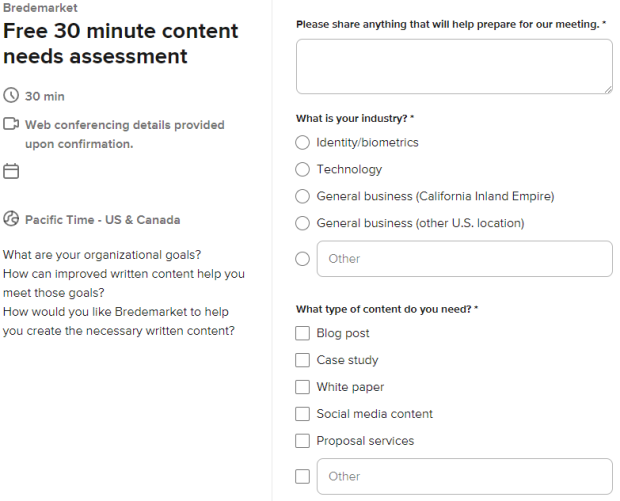
Alternatively, you can
But don’t wait. If your event is in September…don’t contact me in October.

 Bredemarket