From https://www.amazon.com/gp/help/customer/display.html?nodeId=TmiOy81L4MrbZTHOJU
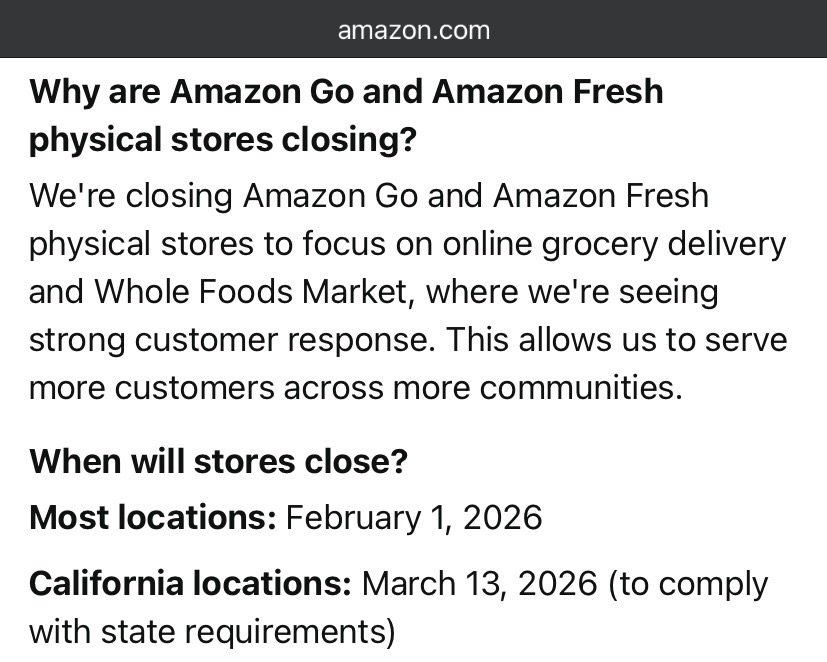
“When will stores close?
“Most locations: February 1, 2026
“California locations: March 13, 2026 (to comply with state requirements)”

Identity/biometrics/technology marketing and writing services
From https://www.amazon.com/gp/help/customer/display.html?nodeId=TmiOy81L4MrbZTHOJU
“When will stores close?
“Most locations: February 1, 2026
“California locations: March 13, 2026 (to comply with state requirements)”
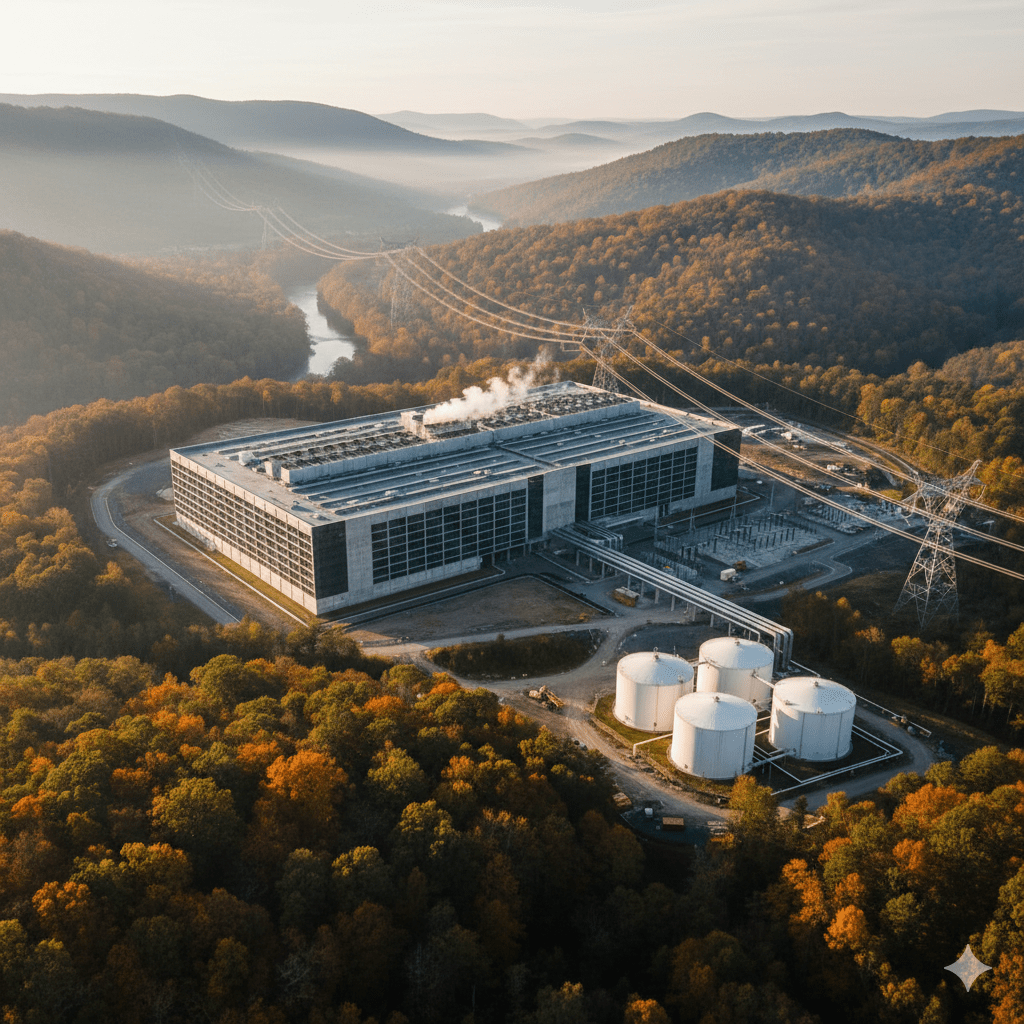
There are many controversial uses of land, one of which is data centers. And most of us use them.
When I use SaaS resources or generative AI tools, I’m making use of a data center…somewhere. For example, when I created the image at the top of this post with Google Gemini…and when I uploaded this post to WordPress so you could read it.
But what if the data center was next door to ME? Would I feel differently about data center use?
Warren County, Virginia (Front Royal) is more rural than other counties in the state, such as Fairfax County. And someone is proposing a data center in Warren County.
This prompted a letter to the editor from Cara Aldridge Young, a former high school classmate of mine. (And a talented editor herself, if your company needs one.) Young examined the negatives surrounding data centers:
“Data centers are not quiet, invisible neighbors. They are warehouse-scale buildings surrounded by substations, transmission lines, backup generators, cooling systems, security fencing, and 24-hour lighting. They require enormous amounts of electricity and millions of gallons of water for cooling. In a county that has already experienced drought restrictions and ongoing grid concerns, it’s fair to question whether we are equipped to support that scale of development without long-term environmental and infrastructure consequences.”
I don’t have a feel how Warren County will respond to this request; I haven’t visited Front Royal in decades. But Young presumably isn’t the only resident with concerns about power, water, and the environment.
But I’m sure there are counties that would welcome the economic development, the tax revenue, and the jobs. (Well, not that many jobs.)
On my side of the country, the big infrastructure concern is warehouses, such as the Amazon distribution center in Eastvale, California.

But at least warehouses employ people.

I haven’t talked about vein biometrics in a while, so it’s good to catch up on an old Biometric Update article about Saint Deem.
“China has its first factory dedicated to manufacturing vein biometrics hardware, which will produce up to 2 million vein modules and devices a year. The factory is built by biometric technology firm Saint Deem, which develops vein recognition algorithms, software and hardware.”
I’m surprised that we haven’t seen a vein biometrics factory before now. Vein identification has been around forever. And if Amazon isn’t getting its devices from China, who is supplying them?
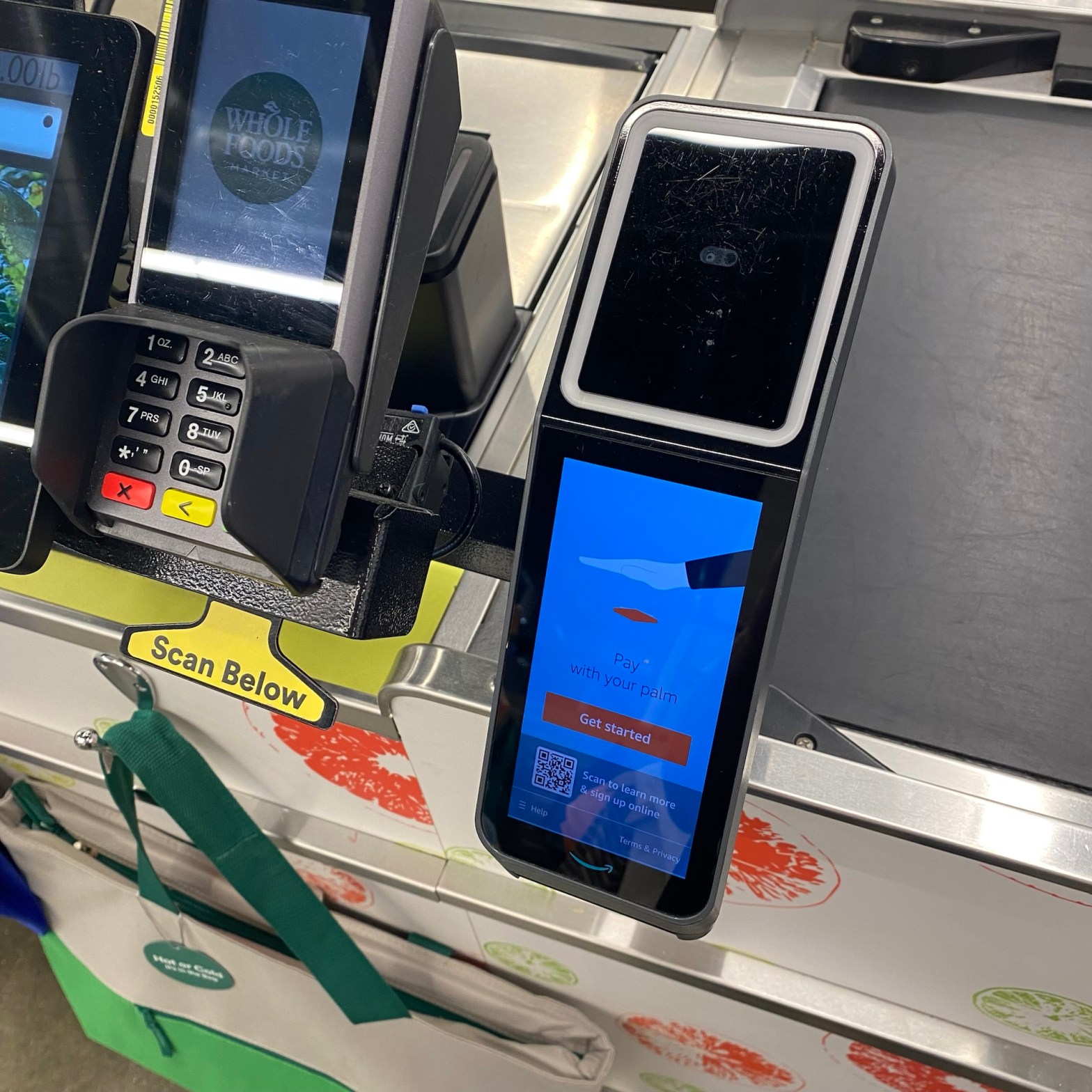
With all the news about Amazon Fresh closing and more Amazon layoffs taking place, I missed a bit of news about the Amazon One palm-vein technology. But first a bit of history.
I believe I first wrote about Amazon One back in 2021, in a “biometrics is evil” post.

In that year, TechCrunch loudly proclaimed:
“While the idea of contactlessly scanning your palm print to pay for goods during a pandemic might seem like a novel idea, it’s one to be met with caution and skepticism given Amazon’s past efforts in developing biometric technology. Amazon’s controversial facial recognition technology, which it historically sold to police and law enforcement, was the subject of lawsuits that allege the company violated state laws that bar the use of personal biometric data without permission.”
Yes, Amazon was regarded as part of the evil fascist regime even when Donald Trump WASN’T in office.
Which brings us to 2025, when Trump had returned to office and I enrolled in Amazon One myself to better buy things at the Upland, California Amazon Fresh. But the line was too long so I went to Whole Foods, where my palm and vein may or may not have worked.
And pretty soon we’ll ALL be going to Whole Foods since Amazon Fresh is rebranding or closing all its locations.
And when we get there, we won’t be using Amazon One.
“Amazon One palm authentication services will be discontinued at retail businesses on June 3, 2026. Amazon One user data, including palm data, will be deleted after this date.”
You know the question I asked. Why?
“In response to limited customer adoption…”
Of course, in Amazon’s case, “limited” may merely mean that billions and billions of people didn’t sign up, so it jettisoned the technology in the same way it jettisoned dozens of stores and thousands of employees.
The June date may or may not apply to healthcare, but who knows how long that will last.
In my 2021 post I mentioned three other systems that used biometrics for purchases.
There was the notorious Pay By Touch (not notorious because of its technology, but the way the business was run).
There was the niche MorphoWave.
But the third system dwarfs them all.
“But the most common example that everyone uses is Apple Pay, Google Pay, Samsung Pay, or whatever ‘pay’ system is supported on your smartphone. Again, you don’t have to pull out a credit card or ID card. You just have to look at your phone or swipe your finger on the phone, and payment happens.”
And they’re so entrenched that even Amazon can’t beat them.
Or as I said after the latest round of Amazon layoffs:
“This, combined with its rebranding or closure of all Amazon Fresh stores, clearly indicates that Amazon is in deep financial trouble.
“Bezos did say that Amazon would fail some day, but I didn’t expect the company to fall apart this quickly.”
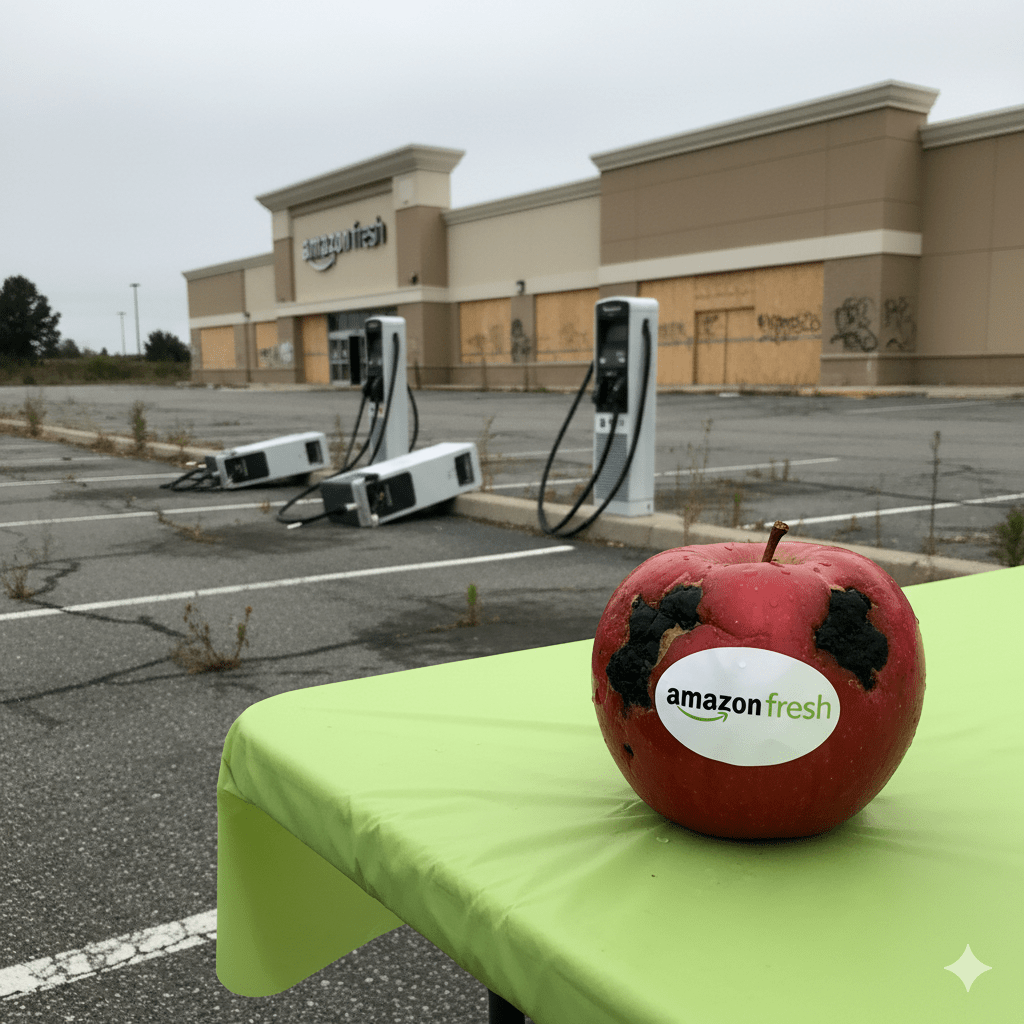
The Amazon Fresh store in La Verne only lasted a few years.
The Amazon Fresh in Upland, just opened last May, won’t last that long. Amazon:
“After a careful evaluation of the business and how we can best serve customers, we’ve made the difficult decision to close our Amazon Go and Amazon Fresh physical stores, converting various locations into Whole Foods Market stores.”
Not sure how long it will take to decide on the fate of each store, but Whole Foods already has an Upland presence.
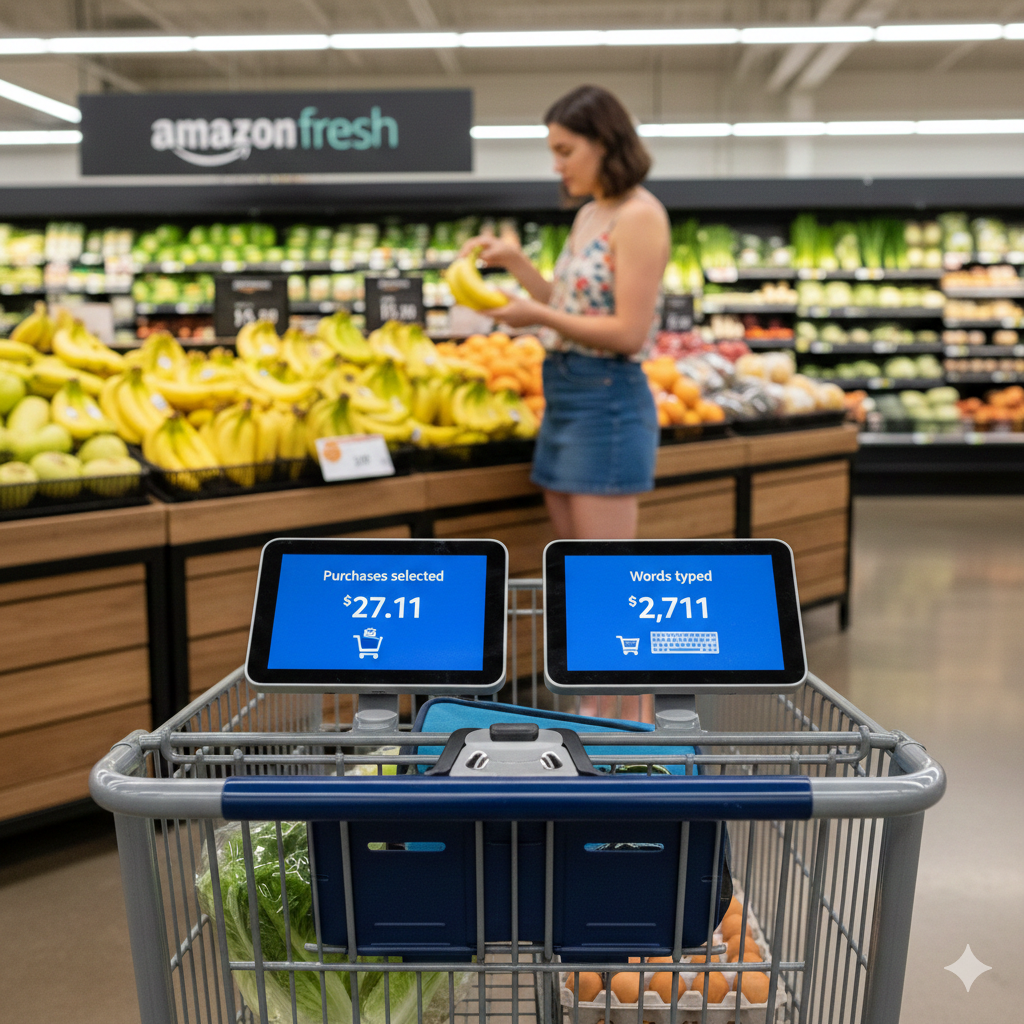
We want information and we want it now. Grocery bill balance? Document word count? Tell me!
Last spring I discussed the demise of Amazon’s Just Walk Out in favor of Dash Carts.
Even though the Just Walk Out system was a model of zero friction, it was also a model of zero information.
“It’s masterful, really. You just throw your purchases into your cart, and a battery of cameras record and price everything automatically.
“In reality, a battery of cameras and third world workers record and price everything semi-automatically. But I digress.
“Anyway, all your purchases are recorded and totaled, and your payment method is charged as you just walk out.
“THEN you find out how much you just spent.”
Too late?
In contrast, the lower tech Dash Cart solution—shopping carts with scanners—allows customers to “scan items as they shop, view their basket total in real time, and pay using contactless payment at the end.”
High friction because the shopper has to scan every item instead of letting “AI”—either cameras or low-paid remote employees—do the work.
But the shopper has immediate information.
And I need immediate information while performing Bredemarket work.
Two of my packages are based on word count. The Bredemarket 400 Short Writing Service delivers between 400 and 600 words, the Bredemarket 2800 Medium Writing Service between 2,800 and 3,200.
Approximately. I don’t get bent out of shape if the final work product has 3,317 words. And as you know if you saw one of my recent videos…
…I currently charge $500 for the short service and $2.000 for the other. And if a particular work product falls between these two word counts, I charge accordingly.
The upshot is that I have a vested interest in knowing the number of words in my Microsoft Word documents.
There’s only one problem with using fields: NumWords is static and requires me to manually refresh the field to update the current word count.
But Microsoft Word lets you do things several different ways.
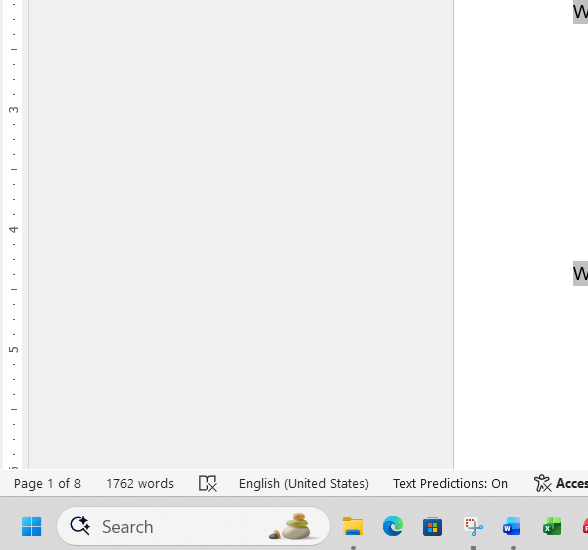
Sometimes the answer is right in front of you.
Frictionless.
If you need content of varying word lengths, talk to Bredemarket.

Long-time Bredemarket fans may recall when Bredemarket established and publicized annual goals. I haven’t publicized my overall goals since 2022, but I am publicizing these two tactical goals for 2026 to (1) hold myself accountable, and to (2) enlist your help. Both are awareness goals, designed to bring Bredemarket to the attention of the identity, biometric, and technology marketing leaders who are my hungry people.
In calendar year 2026, achieve 100 WordPress views (as measured by “Most Viewed,” not “Most Downloaded”) for each of the three “essentials” videos:
For your convenience, you can find and view all three videos at a single Bredemarket blog post “Bredemarket Essentials November 2025.”
In calendar year 2026, achieve 1,000 YouTube views for each of the same three “essentials” videos.
Again for your convenience, you can find all three videos in this YouTube playlist: https://youtube.com/playlist?list=PLDHu4DNJv1KYQaR9Pvo0z4KzaZZweM02C
You can help me realize my goals by doing one or both of the following (I ask, then YOU act):
For me, 100 or 1,000 annual views of a video is a stretch goal. Even looking at lifetime statistics, my most popular WordPress video, my discovery of the Amazon Fresh Upland opening, has less than 100 views, and my most popular YouTube short, the metal strips that protect palm trees from squirrels, has less than 3,100 views. (I believe my most popular video ever was my Instagram reel of the San Antonio Avenue bridge: over 6,800 views.)
Maybe I should ditch the wildebeests, wombats, and iguanas (and koalas) and concentrate on squirrels. On a bridge. Eating Amazon Fresh groceries.
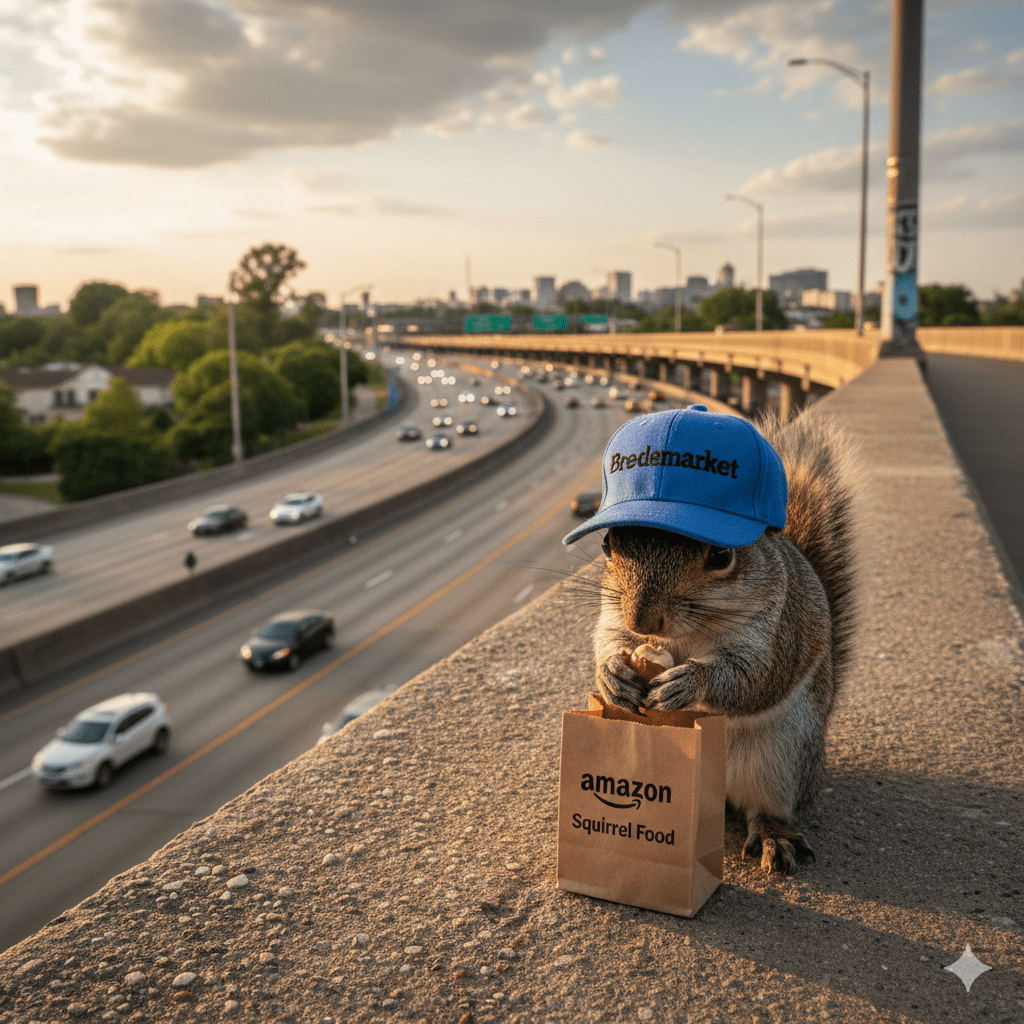

I’ve talked at length about the new Amazon Fresh store in Upland, even before it opened. Now that it’s been open for over a half year, I was wondering how others felt about the store.
The average Yelp review, based upon 51 reviews as of December 18, is about a 3.5, which is good. But what’s interesting is the polarity of the reviews, with 28 5-star reviews and 12 1-star reviews.
You can’t please everybody, but some of the 1-star reviews are interesting.
“very, very few employees at this location are incompetent and have no customer service skills. also no manners or decency.”
I think the reviewer meant “competent,” but hey.
“No matter what time of day I go there, there are always workers blocking the isles with large carts. That makes it impossible to shop.”
Again, “aisles.” But the reviewer noted a common complaint: the store appears to prioritize delivery orders over people coming in-store to shop, and multiple reviewers have noted the rudeness of the workers fulfilling delivery orders.
And apparently the rudeness does not coincide with speed.
“The order wasn’t ready for pickup hours after scheduled”
However, this particular review was written just a few days after the store opened, so some hiccups are expected.
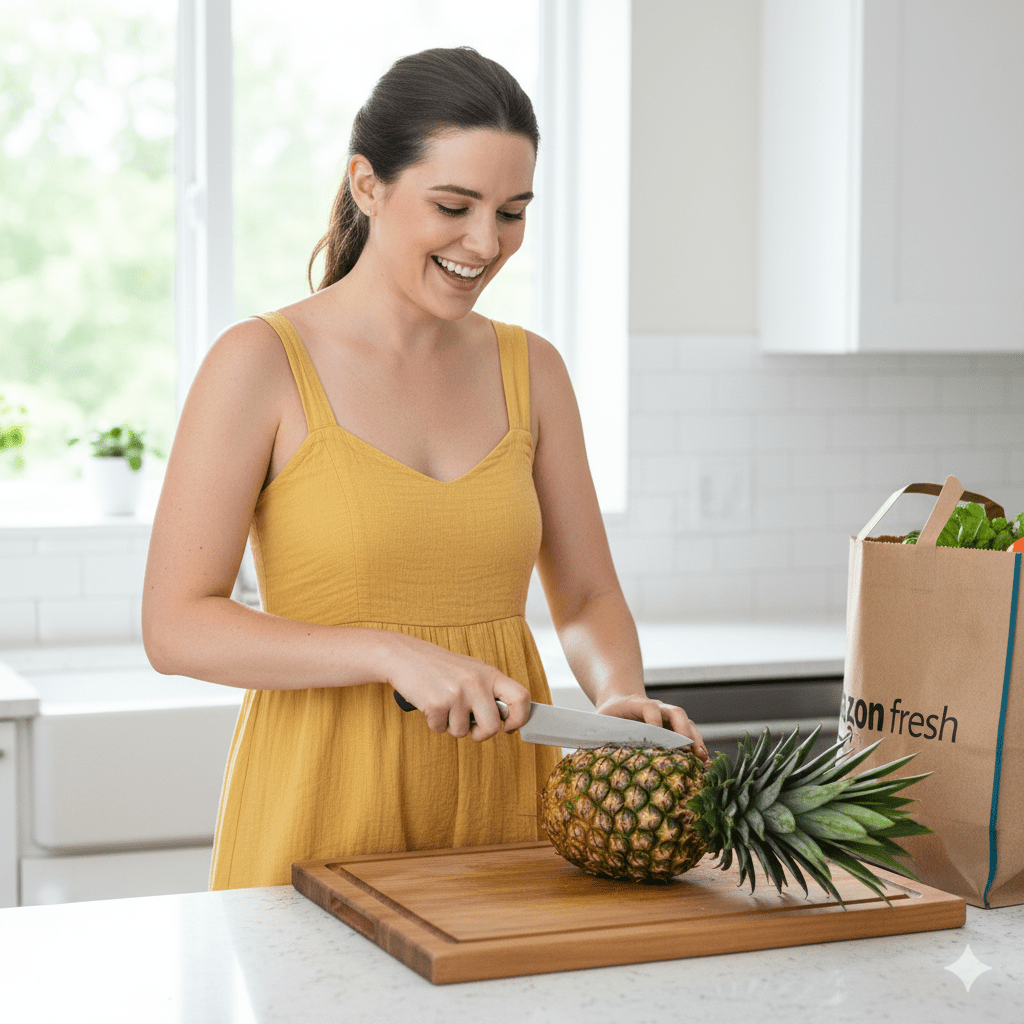
And those who love the store LOVE it.
“Nice clean store. Cheap prices. The dash cart is awesome. Very helpful employees.”
And
“The store is clean, spacious, and very easy to navigate. Shopping here is simple and enjoyable. The staff is friendly and ready to help, which made the experience even better.”
So it appears that experiences can vary anywhere. Hopefully this store will last longer than the La Verne one.
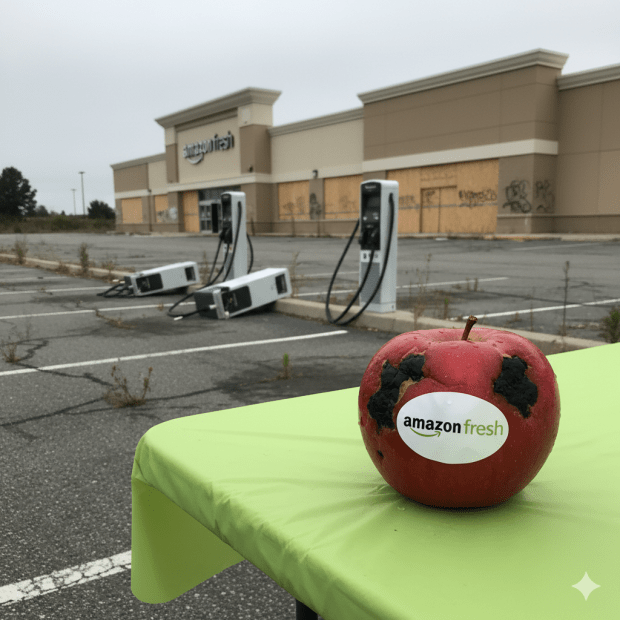
Update to this post.
According to this month-old Reddit comment, the La Verne Amazon Fresh will close on November 16. Not sure if this is still the plan.

If you authenticate a person at the beginning of a session and never authenticate them again, you have a huge security hole.
For example, you may authenticate an adult delivery person and then find a kid illegally making your delivery. 31,000 Brazilians already know how to do this.
That’s why more secure firms practice continuous authentication for high-risk transactions.
But continuous authentication can be intrusive.
How would you feel if you had to press your finger on a fingerprint reader every six seconds?
Enough of that and you’ll start using the middle finger to authenticate.
Even face authentication is intrusive, if it’s 3 am and you don’t feel like being on camera.
Now I’ve already said that Amazon doesn’t want to over-authenticate everything.
But Amazon does want to authenticate the critical transactions. Identity Week:
“Amazon treats authentication as a continuous process, not a one-time event. It starts with verifying who a user is at login, but risk is assessed throughout the entire session, watching for unusual behaviours or signals to ensure ongoing confidence in the user’s identity.”
That’s right: Amazon uses “somewhat you why” as an authentication factor.
I say they’re smart.

 Bredemarket