“State-to-State (S2S) Verification Service is a means for a state to electronically check with all other participating states to determine if the applicant currently holds a driver license or identification card in another state. The platform that supports S2S, the State Pointer Exchange Services (SPEXS) was successfully implemented in July 2015. Participation in S2S does not commit a state to be in compliance with the federal REAL ID Act. However, if a state chooses to be REAL ID compliant, the Department of Homeland Security generally looks for S2S to be part of their compliance plan.”
Not all states participate. As it turns out, neither California nor Oklahoma are part of S2S. Oklahoma is slated to join, but this may not happen.
“Oklahoma lawmakers have asked the state Supreme Court to immediately block the transfer of driver’s license and identification card data to a national interstate data exchange run by the American Association of Motor Vehicle Administrators (AAMVA).
“The lawmakers argue that the planned transmission exceeds statutory authority, violates state privacy protections, and collapses a key distinction that Oklahoma law makes between REAL ID-compliant and noncompliant credentials.”
Based upon past history, it’s no surprise that some in Oklahoma oppose big guvmint and AAMVA S2S participation.
(As an aside, take a moment to think about how a state in enforcing the privacy of Social Security Numbers, which are assigned at the federal level. And also think about how Social Security Numbers are NOT supposed to be a national ID number. The mind boggles.)
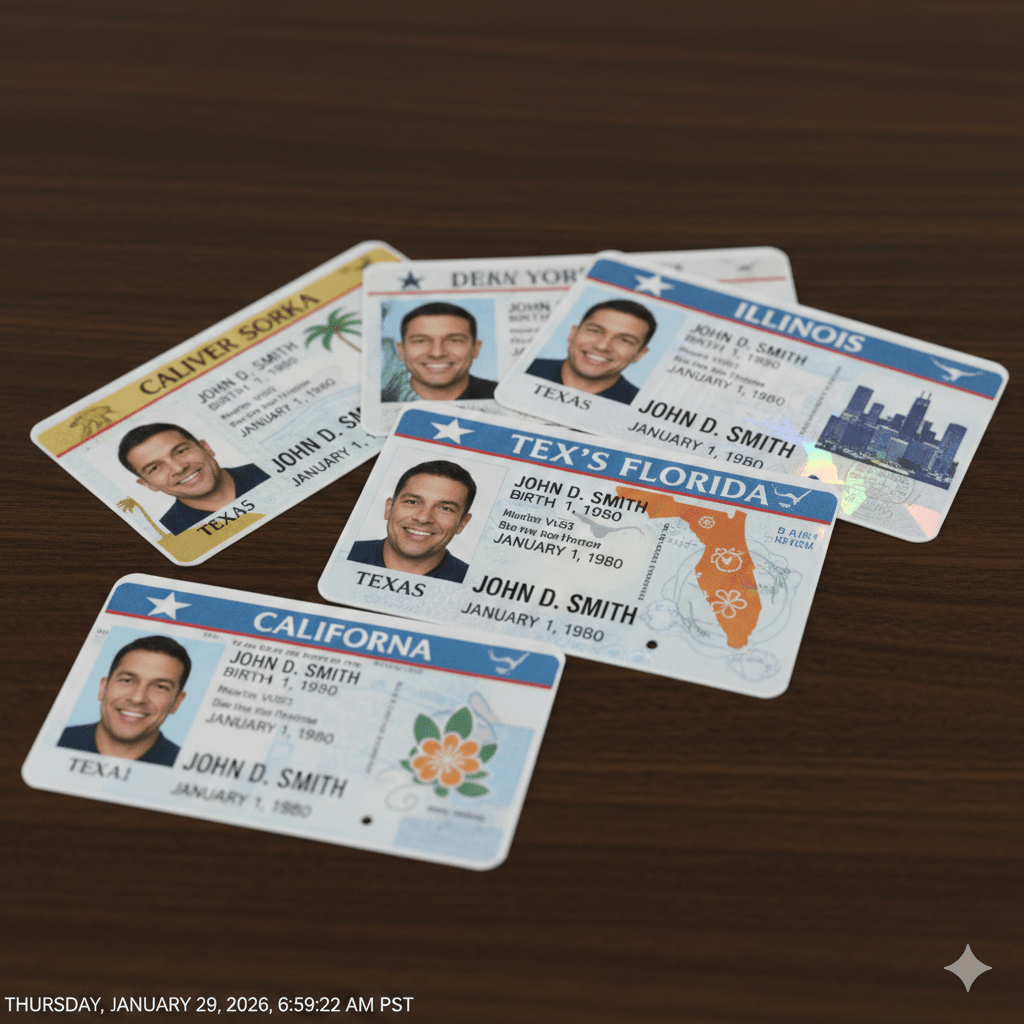
So what do the other states do if someone claims to have a California driver’s license, but California won’t confirm this because of privacy concerns? Here’s what Tennessee does.
“All states and jurisdictions in the United States participate in S2S, except for California, Connecticut, Illinois, Kentucky, Nevada, Oklahoma, and West Virginia. New or returning Tennessee residents transferring from these nine states must obtain a Motor Vehicle Record (MVR) from their former state. The MVR be issued within 30 days of applying for a Tennessee license or ID.”
My own post referenced the Auriemma Group estimate of a $6 billion cost to U.S. lenders.
McKinsey preferred to use a percentage estimate of “10–15% of charge offs in a typical unsecured lending portfolio.” However, this may not be restricted to synthetic identity fraud, but may include other types of fraud.
Thomson Reuters quoted Socure’s Johnny Ayers, who estimated that “20% of credit losses stem from synthetic identity fraud.”
Oh, and a later post that I wrote quoted a $20 billion figure for synthetic identity fraud losses in 2020. Plus this is where I learned the cool acronym “SIF” to refer to synthetic identity fraud. As far as I know, there is no government agency with the acronym SIF, which would of course cause confusion. (There was a Social Innovation Fund, but that may no longer exist in 2025.)
Never Search Alone, not National Security Agency. AI image from Imagen 3.
Back to synthetic identity fraud, which reportedly resulted in between $6 billion and $20 billion in losses in 2020.
The financial toll of AI-driven fraud is staggering, with projected global losses reaching $40 billion by 2027 up from US12.3 billion in 2023 (CAGR 32%)., driven by sophisticated fraud techniques and automation, such as synthetic identities created with AI tools.
Again this includes non-synthetic fraud, but it’s a good number for the high end. While my FTC fraud post didn’t break out synthetic identity fraud figures, Plaid cited a 2023 $1.8 billion figure for the auto industry alone, and Mastercard cited a $5 billion figure.
But everyone agrees on a figure of billions and billions.
The real Carl Sagan.
The deepfake Carl Sagan.
(I had to stop writing this post for a minute because I received a phone call from “JP Morgan Chase,” but the person didn’t know who they were talking to, merely asking for the owner of the phone number. Back to fraud.)
Reducing SIF in 2025
In a 2023 post, I cataloged four ways to fight synthetic identity fraud:
Private databases.
Government documents.
Government databases.
A “who you are” test with facial recognition and liveness detection (presentation attack detection).
Ideally an identity verification solution should use multiple methods, and not just one. It doesn’t do you any good to forge a driver’s license if AAMVA doesn’t know about the license in any state or provincial database.
Does your firm fight crooks who try to fraudulently use synthetic identities? If so, how do you communicate your solution?
This post explains what synthetic identities are (with examples), tells four ways to detect synthetic identities, and closes by providing an answer to the communication question.
While this post is primarily intended for identity firms who can use Bredemarket’s marketing and writing services, anyone else who is interested in synthetic identities can read along.
What are synthetic identities?
To explain what synthetic identities are, let me start by telling you about Jason Brown.
Jason Brown wasn’t Jason Brown
You may not have heard of him unless you lived in Atlanta, Georgia in 2019 and lived near the apartment he rented.
Jason Brown’s renting of an apartment isn’t all that unusual.
If you were to visit Brown’s apartment in February 2019, you would find credit cards and financial information for Adam M. Lopez and Carlos Rivera.
Now that’s a little unusual, especially since Lopez and Rivera never existed.
For that matter, Jason Brown never existed either.
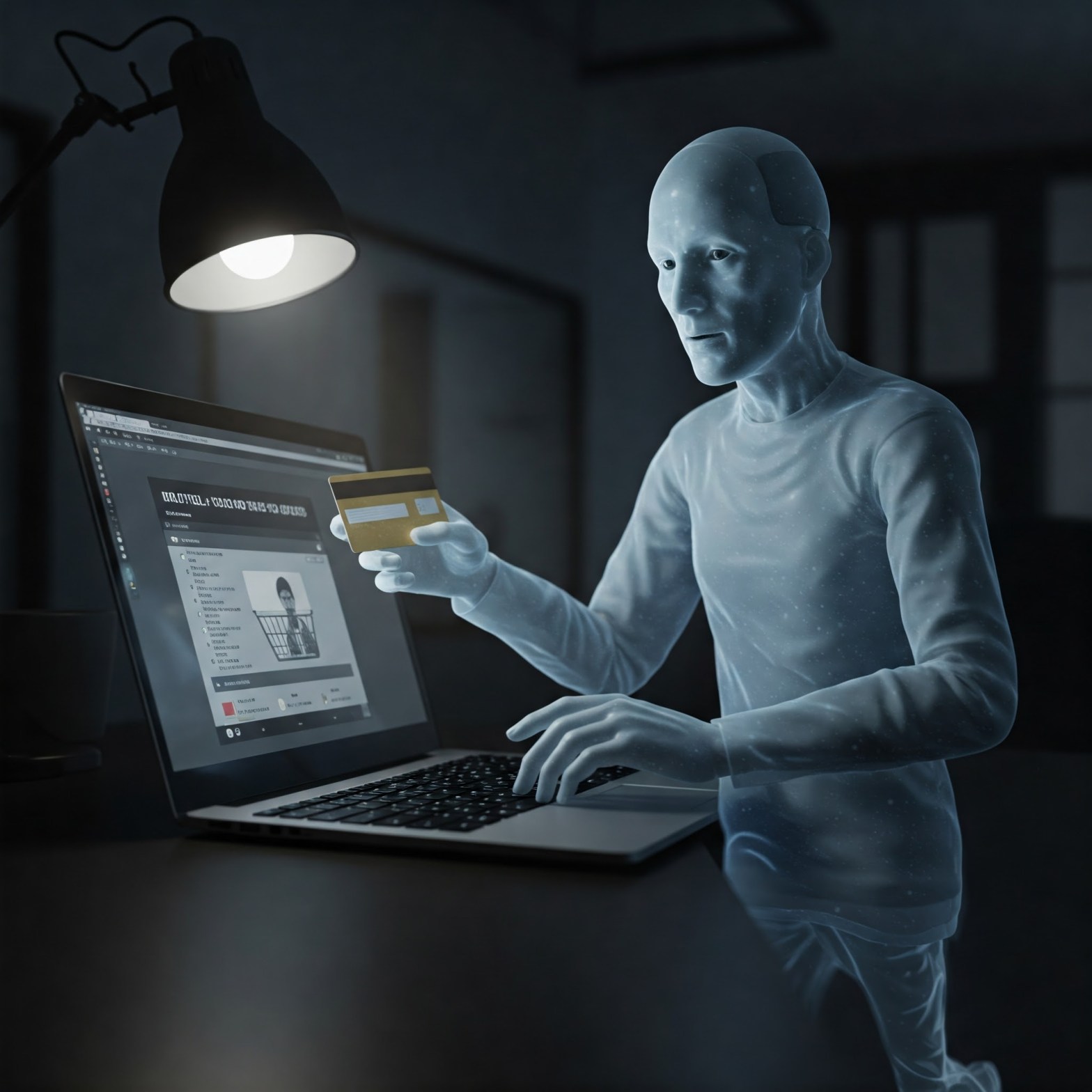
A Georgia man was sentenced Sept. 1 (2022) to more than seven years in federal prison for participating in a nationwide fraud ring that used stolen social security numbers, including those belonging to children, to create synthetic identities used to open lines of credit, create shell companies, and steal nearly $2 million from financial institutions….
Cato joined conspiracies to defraud banks and illegally possess credit cards. Cato and his co-conspirators created “synthetic identities” by combining false personal information such as fake names and dates of birth with the information of real people, such as their social security numbers. Cato and others then used the synthetic identities and fake ID documents to open bank and credit card accounts at financial institutions. Cato and his co-conspirators used the unlawfully obtained credit cards to fund their lifestyles.
Talking about synthetic identity at Victoria Gardens
Here’s a video that I created on Saturday that describes, at a very high level, how synthetic identities can be used fraudulently. People who live near Rancho Cucamonga, California will recognize the Victoria Gardens shopping center, proof that synthetic identity theft can occur far away from Georgia.
Note that synthetic identity theft different from stealing someone else’s existing identity. In this case, a new identity is created.
So how do you catch these fraudsters?
Catching the identity synthesizers
If you’re renting out an apartment, and Jason Brown shows you his driver’s license and provides his Social Security Number, how can you detect if Brown is a crook? There are four methods to verify that Jason Brown exists, and that he’s the person renting your apartment.
Method One: Private Databases
One way to check Jason Brown’s story is to perform credit checks and other data investigations using financial databases.
Did Jason Brown just spring into existence within the past year, with no earlier credit record? That seems suspicious.
Does Jason Brown’s credit record appear TOO clean? That seems suspicious.
Does Jason Brown share information such as a common social security number with other people? Are any of those other identities also fraudulent? That is DEFINITELY suspicious.
This is one way that many firms detect synthetic identities, and for some firms it is the ONLY way they detect synthetic identities. And these firms have to tell their story to their prospects.
If your firm offers a tool to verify identities via private databases, how do you let your prospects know the benefits of your tool, and why your solution is better than all other solutions?
Method Two: Check That Driver’s License (or other government document)
What about that driver’s license that Brown presented? There are a wide variety of software tools that can check the authenticity of driver’s licenses, passports, and other government-issued documents. Some of these tools existed back in 2019 when “Brown” was renting his apartment, and a number of them exist today.
Maybe your firm has created such a tool, or uses a tool from a third party.
If your firm offers this capability, how can your prospects learn about its benefits, and why your solution excels?
Method Three: Check Government Databases
Checking the authenticity of a government-issued document may not be enough, since the document itself may be legitimate, but the implied credentials may no longer be legitimate. For example, if my California driver’s license expires in 2025, but I move to Minnesota in 2023 and get a new license, my California driver’s license is no longer valid, even though I have it in my possession.
Why not check the database of the Department of Motor Vehicles (or the equivalent in your state) to see if there is still an active driver’s license for that person?
The American Association of Motor Vehicle Administrators (AAMVA) maintains a Driver’s License Data Verification (DLDV) Service in which participating jurisdictions allow other entities to verify the license data for individuals. Your firm may be able to access the DLDV data for selected jurisdictions, providing an extra identity verification tool.
If your firm offers this capability, how can your prospects learn where it is available, what its benefits are, and why it is an important part of your solution?
Method Four: Conduct the “Who You Are” Test
There is one more way to confirm that a person is real, and that is to check the person. Literally.
If someone on a smartphone or videoconference says that they are Jason Brown, how do you know that it’s the real Jason Brown and not Jim Smith, or a previous recording or simulation of Jason Brown?
This is where tools such as facial recognition and liveness detection come to play.
You can ensure that the live face matches any face on record.
You can also confirm that the face is truly a live face.
In addition to these two tests, you can compare the face against the face on the presented driver’s license or passport to offer additional confirmation of true identity.
Now some companies offer facial recognition, others offer liveness detection, others match the live face to a face on a government ID, and many companies offer two or three of these capabilities.
One more time: if your firm offers these capabilities—either your own or someone else’s—what are the benefits of your algorithms? (For example, are they more accurate than competing algorithms? And under what conditions?) And why is your solution better than the others?
This is for the firms who fight synthetic identities
While most of this post is of general interest to anyone dealing with synthetic identities, this part of this post is specifically addressed to identity and biometric firms who provide synthetic identity-fighting solutions.
When you communicate about your solutions, your communicator needs to have certain types of experience.
Industry experience. Perhaps you sell your identity solution to financial institutions, or educational institutions , or a host of other industries (gambling/gaming, healthcare, hospitality, retailers, or sport/concert venues, or others). You need someone with this industry experience.
Solution experience. Perhaps your communications require someone with 29 years of experience in identity, biometrics, and technology marketing, including experience with all five factors of authentication (and verification).
Communication experience. Perhaps you need to effectively communicate with your prospects in a customer focused, benefits-oriented way. (Content that is all about you and your features won’t win business.)
If you haven’t read a Bredemarket blog post before, or even if you have, you may not realize that this post is jam-packed with additional information well beyond the post itself. This post alone links to the following Bredemarket posts and other content. You may want to follow one or more of the 13 links below if you need additional information on a particular topic:
Here’s my latest brochure for the Bredemarket 400 Short Writing Service, my standard package to create your 400 to 600 word blog posts and LinkedIn articles. Be sure to check the Bredemarket 400 Short Writing Service page for updates.



 Bredemarket