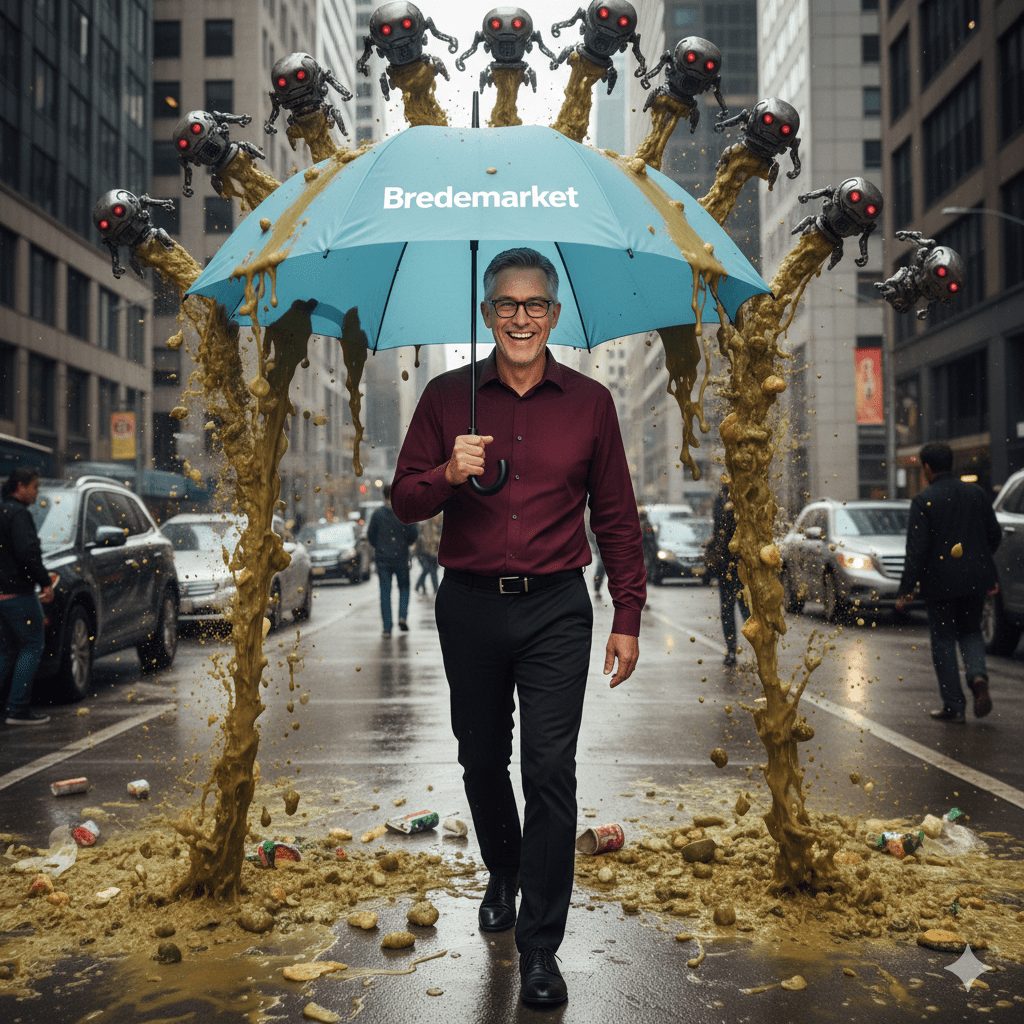
Bredemarket is not expert in anti-human trafficking campaigns, but several of Bredemarket’s clients and former clients have used biometrics to combat human trafficking and rescue the victims.
“The country of Uzbekistan will lift visa requirements for U.S. travelers starting Jan. 1, 2026, offering Americans another country to visit visa-free. The police change, which was recently confirmed by the government, will allow U.S. citizens to enter visa-free for up to 30 days.”
Just don’t bring your surfboards. Uzbekistan is double-landlocked.
These results show that identical twins and same-sex fraternal twins give outcomes that are inconsistent with the intended or expected behaviour from a face recognition algorithm.
Some of you have heard the Tom Petty song “Runnin’ Down A Dream,” a guitar-heavy tribute to Del Shannon with an excellent closing solo by Mike Campbell.
Tom Petty (technically a solo song, but…).
Petty of course is no longer with us, but the song lives on in covers, including this cover by Mike Campbell himself, with his band the Dirty Knobs.
Mike Campbell and the Dirty Knobs.
And this one by Marty Stuart, with acoustic stringed instruments.
Marty Stuart.
Well, it’s been covered again; recorded a few years ago, and released on an album in 2025.
Without any stringed instruments at all.
Gary Brolsma.
If you don’t recognize the artist name Gary Brolsma, I only have to say two words. One is “Numa.” And you can figure out the other one.
If you like electronic music, you’ll love this. And Brolsma has a pleasant singing voice.
And Petty’s estate, co-author Campbell, and additional co-author the ever-present Jeff Lynne make money off every one of these covers.
Speaking of Jeff, here’s an early live performance of his. He’s the guitarist in the gown. The lyrics were subsequently reworked for album release.
Electric Light Orchestra.
As far as I know, Brolsma hasn’t covered this song…yet.
Long-time Bredemarket fans may recall when Bredemarket established and publicized annual goals. I haven’t publicized my overall goals since 2022, but I am publicizing these two tactical goals for 2026 to (1) hold myself accountable, and to (2) enlist your help. Both are awareness goals, designed to bring Bredemarket to the attention of the identity, biometric, and technology marketing leaders who are my hungry people.
Tactical Goal 1
In calendar year 2026, achieve 100 WordPress views (as measured by “Most Viewed,” not “Most Downloaded”) for each of the three “essentials” videos:
You can help me realize my goals by doing one or both of the following (I ask, then YOU act):
If you have not seen all three of these videos yourself, visit either the Bredemarket blog post or the YouTube playlist and view the ones you haven’t seen. No need to view the ones you’ve already seen; I’m interested in meaningful views, not statistical inflation.
Share the videos with identity, biometric, and technology marketing leaders who can use Bredemarket’s services.
For me, 100 or 1,000 annual views of a video is a stretch goal. Even looking at lifetime statistics, my most popular WordPress video, my discovery of the Amazon Fresh Upland opening, has less than 100 views, and my most popular YouTube short, the metal strips that protect palm trees from squirrels, has less than 3,100 views. (I believe my most popular video ever was my Instagram reel of the San Antonio Avenue bridge: over 6,800 views.)
No, you don’t have to be a citizen to get a REAL ID.
But your REAL ID is tied to your authorization to be in the United States, and expires on the same date as your authorization to be here.
Well, that’s how it’s supposed to work.
In California, the date calculations (based upon 2006 legacy code) were screwed up for 300,000 legal residents.
“The error overrode the correct expiration date, which should have matched the end of the cardholder’s authorized stay in the United States. Under federal rules, immigrants with legal status — including permanent residents, green card holders and visa holders — are eligible for REAL IDs, but the cards’ expiration dates must align with the length of their authorized stay.”
Except when they don’t.
And for those who believe that granting REAL IDs to non-citizens is an example of California breaking the law:
The DHS approved California’s REAL IDs in April 2019 under President Trump.
“If you’re not a U.S. citizen, you must apply in person at a state driver exam station and provide a U.S. Citizenship and Immigration document proving your lawful status in the U.S.”
Francesco Fabbrocino of Dunmor presented at today’s SoCal Tech Forum at FoundrSpace in Rancho Cucamonga, California. His topic? Technology in FinTech/Fraud Detection. I covered his entire presentation in a running LinkedIn post, but I’d like to focus on one portion here—and my caveat to one of his five rules of fraud detection. (Four-letter word warning.)
The five rules
In the style of Fight Club, Fabbrocino listed his five rules of fraud detection:
1. Nearly all fraud is based on impersonation.
2. Never expose your fraud prevention techniques.
3. Preventing fraud usually increases friction.
4. Fraud prevention is a business strategy.
5. Whatever you do, fraudsters will adapt to it.
All good points. But I want to dig into rule 2, which is valid…to a point.
Rule 2
If the fraudster presents three different identity verification or authentication factors, and one of them fails, there’s no need to tell the fraudster which one failed. Bad password? Don’t volunteer that information.
In fact, under certain circumstances you may not have to reveal the failure at all. If you are certain this is a fraud attempt, let the fraudster believe that the transaction (such as a wire transfer) was successful. The fraudster will learn the truth soon enough: if not in this fraud attempt, perhaps in the next one.
But “never” is a strong word, and there are some times when you MUST expose your fraud prevention techniques. Let me provide an example.
Biometric time cards
One common type of fraud is time card fraud, in which an employee claims to start work at 8:00, even though he didn’t show up for work until 8:15. How do you fool the time clock? By buddy punching, where your friend inserts your time card into the time clock precisely at 8, even though you’re not present.
Enter biometric time clocks, in which a worker must use their finger, palm, face, iris, or voice to punch in and out. It’s very hard for your buddy to have your biometric, so this decreases time clock fraud significantly.
And you fail to inform the employees of the purpose for collecting biometrics, and obtain the employees’ explicit consent to collect biometrics for this purpose.
In a case like this, or a case in a jurisdiction governed by some other privacy law, you HAVE to “expose” that you are using an individual’s biometrics as a fraud prevention techniques.
But if there’s no law to the contrary, obfuscate at will.
Communicating your anti-fraud solution
Now there are a number of companies that fight the many types of fraud that Fabbrocino mentioned. But these companies need to ensure that their prospects and clients understand the benefits of their anti-fraud solutions.
That’s where Bredemarket can help.
As a product marketing consultant, I help identity, biometric, and technology firms market their products to their end clients.
And I can help your firm also.
Read about Bredemarket’s content for tech marketers and book a free meeting with me to discuss your needs.