Iris Recognition, Apple, and Worldcoin

(Part of the biometric product marketing expert series)

Iris recognition continues to make the news. Let’s review what iris recognition is and its benefits (and drawbacks), why Apple made the news last month, and why Worldcoin is making the news this month.

What is iris recognition?

There are a number of biometric modalities that can identify individuals by “who they are” (one of the five factors of authentication). A few examples include fingerprints, faces, voices, and DNA. All of these modalities purport to uniquely (or nearly uniquely) identify an individual.

One other way to identify individuals is via the irises in their eyes. I’m not a doctor, but presumably the Cleveland Clinic employs medical professionals who are qualified to define what the iris is.

The iris is the colored part of your eye. Muscles in your iris control your pupil — the small black opening that lets light into your eye.

From https://my.clevelandclinic.org/health/body/22502-iris
From Cleveland Clinic. (Link)

And here’s what else the Cleveland Clinic says about irises.

The color of your iris is like your fingerprint. It’s unique to you, and nobody else in the world has the exact same colored eye.

From https://my.clevelandclinic.org/health/body/22502-iris

John Daugman and irises

But why use irises rather than, say, fingerprints and faces? The best person to answer this is John Daugman. (At this point several of you are intoning, “John Daugman.” With reason. He’s the inventor of iris recognition.)

Here’s an excerpt from John Daugman’s 2004 paper on iris recognition:

(I)ris patterns become interesting as an alternative approach to reliable visual recognition of persons when imaging can be done at distances of less than a meter, and especially when there is a need to search very large databases without incurring any false matches despite a huge number of possibilities. Although small (11 mm) and sometimes problematic to image, the iris has the great mathematical advantage that its pattern variability among different persons is enormous.

Daugman, John, “How Iris Recognition Works.” IEEE TRANSACTIONS ON CIRCUITS AND SYSTEMS FOR VIDEO TECHNOLOGY, VOL. 14, NO. 1, JANUARY 2004. Quoted from page 21. (PDF)

Or in non-scientific speak, one benefit of iris recognition is that you know it is accurate, even when submitting a pair of irises in a one-to-many search against a huge database. How huge? We’ll discuss later.

Brandon Mayfield and fingerprints

Remember that Daugman’s paper was released roughly two months before Brandon Mayfield was misidentified in a fingerprint comparison. (Everyone now intone “Brandon Mayfield.”)

If you want to know the details of that episode, the Department of Justice Office of the Inspector General issued a 330 page report (PDF) on it. If you don’t have time to read 330 pages, here’s Al Jazeera’s shorter version of Brandon Mayfield’s story.

While some of the issues associated with Mayfield’s misidentification had nothing to do with forensic science (Al Jazeera spends some time discussing bias, and Itiel Dror also looked at bias post-Mayfield), this still shows that fingerprints are remarkably similar and that it takes care to properly identify people.

Police agencies, witnesses, and faces

And of course there are recent examples of facial misidentifications (both by police agencies and witnesses), again not necessarily forensic science related, and again showing the similarity of faces from two different people.

Iris “data richness” and independent testing

Why are irises more accurate than fingerprints and faces? Here’s what one vendor, Iris ID, claims about irises vs. other modalities:

At the root of iris recognition’s accuracy is the data-richness of the iris itself. The IrisAccess system captures over 240 degrees of freedom or unique characteristics in formulating its algorithmic template. Fingerprints, facial recognition and hand geometry have far less detailed input in template construction.

Iris ID, “How It Compares.” (Link)

Enough about claims. What about real results? The IREX 10 test, independently administered by the U.S. National Institute of Standards and Technology, measures the identification (one-to-many) accuracy of submitted algorithms. At the time I am writing this, the ten most accurate algorithms provide false negative identification rates (FNIR) between 0.0022 ± 0.0004 and 0.0037 ± 0.0005 when two eyes are used. (Single eye accuracy is lower.) By the time you see this, the top ten algorithms may have changed, because the vendors are always improving.

IREX10 two-eye accuracy, top ten algorithms as of July 28, 2023. (Link)

While the IREX10 one-to-many tests are conducted against databases of less than a million records, it is estimated that iris one-to-many accuracy remains high even with databases of a billion people—something we will return to later in this post.

Iris drawbacks

OK, so if irises are so accurate, why aren’t we dumping our fingerprint readers and face readers and just using irises?

In short, because of the high friction in capturing irises. You can use high-resolution cameras to capture fingerprints and faces from far away, but as of now iris capture usually requires you to get very close to the capture device.

Iris image capture circa 2020 from the U.S. Federal Bureau of Investigation. (Link)

Which I guess is better than the old days when you had to put your eye right up against the capture device, but it’s still not as friendly (or intrusive) as face capture, which can be achieved as you’re walking down a passageway in an airport or sports stadium.

Irises and Apple Vision Pro

So how are irises being used today? You may or may not have hard last month’s hoopla about the Apple Vision Pro, which uses irises for one-to-one authetication.

I’m not going to spend a ton of time delving into this, because I just discussed Apple Vision Pro in June. In fact, I’m just going to quote from what I already said.

And when all of us heard about Vision Pro, one of the things that Apple shared about it was its verification technique. Not Touch ID or Face ID, but Optic ID. (I like naming consistency.)

From https://bredemarket.com/2023/06/12/vision-pro-not-revolutionary-biometrics-event/
From Apple, https://www.apple.com/105/media/us/apple-vision-pro/2023/7e268c13-eb22-493d-a860-f0637bacb569/anim/drawer-privacy-optic-id/large.mp4

In short, as you wear the headset (which by definition is right on your head, not far away), the headset captures your iris images and uses them to authenticate you.

It’s a one-to-one comparison, not the one-to-many comparison that I discussed earlier in this post, but it is used to uniquely identify an individual.

But iris recognition doesn’t have to be used for identification.

Irises and Worldcoin

“But wait a minute, John,” you’re saying. “If you’re not using irises to determine if a person is who they say they are, then why would anyone use irises?”

Enter Worldcoin, which I mentioned in passing in my early July age estimation post.

Over the past several years, I’ve analyzed a variety of identity firms. Earlier this year I took a look at Worldcoin….Worldcoin’s World ID emphasizes privacy so much that it does not conclusively prove a person’s identity (it only proves a person’s uniqueness)…

From https://bredemarket.com/2023/07/03/age-estimation/

That’s the only thing that I’ve said about Worldcoin, at least publicly. (I looked at Worldcoin privately earlier in 2023, but that report is not publicly accessible and even I don’t have it any more.)

Worldcoin’s July 24 announcement

I guess it’s time for me to revisit Worldcoin, since the company made a super-big splashy announcement on Monday, July 24.

The Worldcoin Foundation today announced that Worldcoin, a project co-founded by Sam Altman, Alex Blania and Max Novendstern, is now live and in a production-grade state. 

The launch includes the release of the World ID SDK and plans to scale Orb operations to 35+ cities across 20+ countries around the world. In tandem, the Foundation’s subsidiary, World Assets Ltd., minted and released the Worldcoin token (WLD) to the millions of eligible people who participated in the beta; WLD is now transactable on the blockchain….

“In the age of AI, the need for proof of personhood is no longer a topic of serious debate; instead, the critical question is whether or not the proof of personhood solutions we have can be  privacy-first, decentralized and maximally inclusive,” said Worldcoin co-founder and Tools for Humanity CEO Alex Blania. “Through its unique technology, Worldcoin aims to provide anyone in the world, regardless of background, geography or income, access to the growing digital and global economy in a privacy preserving and decentralized way.”

From https://worldcoin.org/blog/announcements/worldcoin-project-launches

Worldcoin does NOT positively identify people…but it can still pay you

A very important note: Worldcoin’s purpose is not to determine identity (that a person is who they say they are). Worldcoin’s purpose is to determine uniqueness: namely, that a person (whoever they are) is unique among all the billions of people in the world. Once uniqueness is determined, the person can get money money money with an assurance that the same person won’t get money twice.

OK, so how are you going to determine the uniqueness of a person among all of the billions of people in the world?

Using the Orb to capture irises

As far as Worldcoin is concerned, irises are the best way to determine uniqueness, echoing what others have said.

Iris biometrics outperform other biometric modalities and already achieved false match rates beyond 1.2× ⁣10−141.2×10⁻¹⁴ (one false match in one trillion[9]) two decades ago[10]—even without recent advancements in AI. This is several orders of magnitude more accurate than the current state of the art in face recognition.

From https://worldcoin.org/blog/engineering/humanness-in-the-age-of-ai

So how is Worldcoin going to capture millions, and eventually billions, of iris pairs?

By using the Orb. (You may intone “the Orb” now.)

To complete your Worldcoin registration, you need to find an Orb that will capture your irises and verify your uniqueness.

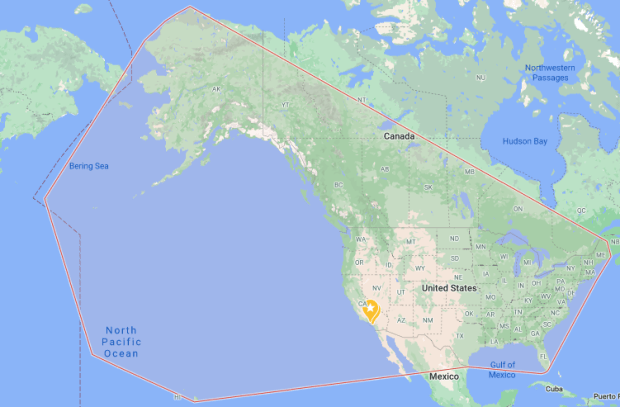
Now you probably won’t find an Orb at your nearby 7 Eleven; as I write this, there are only a little over 100 listed locations in the entire world where Orbs are deployed. I happen to live within 50 miles of Santa Monica, where an Orb was recently deployed (by appointment only, unavailable on weekends, and you know how I feel about driving on Southern California freeways on a weekday).

But now that you can get crypto for enrolling at an Orb, people are getting more excited about the process, and there will be wider adoption.

Whether this will make a difference in the world or just be a fad remains to be seen.

Is the Funnel Consideration Phase Quantitative or Qualitative?

From Venn Marketing, “Awareness, Consideration, Conversion: A 4 Minute Intro To Marketing 101.” (Link)

The picture above shows a simple sales funnel example. The second of the three items in the funnel is the “consideration” phase.

  • In that phase, those people who are aware of you can then consider your products and services.
  • If they like what they see, they move on to conversion and hopefully buy your products and services.

But how do prospects in the funnel consideration phase evaluate your offering as opposed to competitor offerings? Is it truly a quantitative and logical process, or is it in reality qualitative and emotional?

Quantitative consideration

For purposes of this post, let’s assume that there are two competing companies, Bredemarket and Debamarket, who are fighting each other for business.

OK, maybe not literally. I have never boxed in my life. By Royal Navy official photographer – http://media.iwm.org.uk/iwm/mediaLib//31/media-31189/large.jpg This photograph A 29806 comes from the collections of the Imperial War Museums., Public Domain, https://commons.wikimedia.org/w/index.php?curid=25124750

Second, let’s assume that Bredemarket and Debamarket offer similar services to their prospects and customers:

  • Blog posts
  • Case studies
  • White papers

Finally, let’s assume that a big government agency (the BGA) has issued a Request for Proposal (RFP) for blog/case study/white paper services, and Bredemarket and Debamarket are the two companies competing for the award.

Source selection

Now I’m not a big-time pre-acquisition consultant like Applied Forensic Services, but I’ve been around long enough to know how pre-acquisition consultants work—especially when working with big government agencies like BGA.

A pre-acquisition consultant will develop a Source Selection Plan (SSP). In competitive procurements such as the one in this example, the SSP will state exactly how proposals will be evaluated, and how the best proposal will be selected.

Here is the U.S. Government’s guidance on Source Selection Plans. (link)

SSPs can be very complex for certain opportunities, and not so complex for others. In all cases, the SSP dictates the evaluation criteria used to select the best vendor.

Michael Ropp of RFP360 has published a very simple example of how a particular group of proposal responses may be evaluated.

The weighted scoring approach breaks down your RFP evaluation criteria and assigns a value to each question or section. For example, your RFP criteria may consider questions of technical expertise, capabilities, data security, HR policies and diversity and sustainability. Weighted scoring prioritizes the criteria that are most important to your business by assigning them a point or percentage value. So your weighted scoring criteria may look like this: 

  • Technical expertise – 25%
  • Capabilities – 40%
  • Data security – 10%
  • HR policies – 10%
  • Diversity and sustainability – 15%
RFP360, “A guide to RFP evaluation criteria: Basics, tips and examples.” (Link)

Individual question evaluation

In most cases the evaluator doesn’t look at the entire technical expertise section and give it a single score. In large RFPs, the technical expertise section may consist of 96 questions (or even 960 questions), each of which is evaluated and fed into the total technical expertise score.

For example, the RFP may include a question such as this one, and the responses from the bidders (Bredemarket and Debamarket) are evaluated.

QuestionBredemarketDebamarket
96. The completed blog post shall include no references to 1960s songs.0.8 points awarded.

While many Bredemarket blog posts comply, “How Remote Work Preserves Your Brain” does not.
1.0 points awarded.

Debamarket fully complies.
Example evaluation of a proposal response to an individual RFP question.

Final quantitative recommendation for award

Now repeat this evaluation method for every RFP question in every RFP category and you end up with a report in which one of the vendors receives more points than the other and is clearly the preferred bidder. Here’s an example from a U.S. Nuclear Regulatory Commission proposal source selection process. (And you can bet that a nuclear agency doesn’t use an evaluation method that is, um, haphazard.)

From U.S. Nuclear Regulatory Commission, “FINAL EVALUATION RECOMMENDATION REPORT FOR
PROPOSALS SUBMITTED UNDER RFP NO. RQ-CIO-01-0290
ENTITLED, “INFRASTRUCTURE SERVICES AND SUPPORT
CONTRACT (ISSC).”” (link)

So what does this example show us? It shows that L-3 Communications/EER received a total score of 83.8, while its closest competitor Logicon only received a score of 80. So EER is the preferred bidder.

So in our example, BGA would evaluate Bredemarket and Debamarket, come up with a number for each bidder, and award the contract to the bidder with the highest evaluation score.

Quantitative recommendation for the little guys

Perhaps people who aren’t big government agencies don’t go to this level of detail, but many prospects who reach the consideration phase use some type of quantitative method.

For example, if the (non-weighted) pros for an item under consideration outnumber the cons, go for it.

“What are Pro and Con Lists?” (link)

Five pros and only three cons. Do it!

All quantative, objective, and straightforward.

If people really evaluate that way.

But is consideration quantitative?

Now of course the discussion above assumes that everyone is a logical being who solely evaluates based on objective criteria.

But even Sages such as myself may deviate from the objective norm. Here’s a story of one time when I did just that.

As I previously mentioned, I had never written a proposal response before I started consulting for Printrak. But I had written a Request for Proposal before I joined Printrak. For a prior employer (located in Monterey Park), I worked with an outside consultant to develop an RFP to help my employer select a vendor for a computer system. The questions posed to the bidders were not complex. Frankly, it was a simple checklist. Does your computer system perform function A? Does it perform function B?

The outside consultant and I sent the final RFP to several computer system providers, and received several proposals in response.

  • A few of the proposals checked every box, saying that they could do anything and everything. We threw those proposals out, because we knew that no one could meet every one of our demanding requirements. (“I can’t trust that response.”)
  • We focused on the proposals that included more realistic responses. (“That respondent really thought about the questions.”)

As you can see, we introduced a qualitative, emotional element into our consideration phase.

According to Kaye Putnam, this is not uncommon.

Qualitative consideration

Humans think that we are very logical when we consider alternatives, and that our consideration processes are logical and quantitative. Putnam has looked into this assertion and says that it’s hogwash. Take a look at this excerpt from Putnam’s first brand psychology secret:

Your brand has to meet people at that emotional level – if you want them to buy. (And I know you do!)  

Findings from several studies support this, but one of the most seminal was outlined in Harvard professor Gerald Zellman’s 2003 book, The Subconscious Mind of the Consumer. Zellman’s research and learnings prompted him to come to the industry-rocking conclusion that, “95 percent of our purchase decision making takes place in the subconscious mind.”

From Kaye Putnam, “7 Brand Psychology Secrets – Revealed!” (link)

But how can the subconscious mind affect quantitative evaluations?

While logic still has to play SOME role in a purchase decision (as Putnam further explains in her first and second brand psychology secrets), a positive or negative predisposition toward a bidder can influence the quantitative scores.

Imagine if the evaluators got together and discussed the Bredmarket and Debamarket responses to question 96, above. The back and forth between the evaluators may sound like this:

  • “OK, we’re up to question 96. That’s a no brainer, because no one would ever put song references in a BGA blog post.”
  • “Yeah, but did you see Bredemarket’s own post that has multiple references to the song ‘Dead Man’s Curve’?”
  • “So what? Bredemarket would never do that when writing for a government agency. That piece was solely for Bredemarket.”
  • “How do you KNOW that Bredemarket would never slip a song reference into a BGA post? You know, I really don’t trust that guy. He wore two different colored shoes to the orals presentation, a brown one and a black one. Someone as slopy as that could do anything, with huge consequences for BGA communications. I’m deducting points from Bredemarket for question 96.”
  • “OK. I think you’re being ridiculous, but if you say so.”

And just like that, your quantitative logical consideration process is exposed as a bunch of subconscious emotional feelings.

How does qualitative consideration affect you?

As you develop your collateral for the consideration phase, you need to go beyond logic (even if you have a Sage predisposition) and speak to the needs and pain points of your prospects.

Yes, pain.

Spock is behaving illogically. Jayenkai, “Pain – Star Trek Remix.” (link)

Here’s a example from my law enforcement automated fingerprint identificaiton system (AFIS) days.

  • If your prospect is a police chief who is sick and tired of burglars ransacking homes and causing problems for the police department, don’t tell your prospect about your AFIS image detail or independent accuracy testing results. After all, 1000 ppi and 99.967 accuracy are only numbers.
  • Provide the police chief with customer-focused benefit statements about how quickly your AFIS will clean up the burglary problem in the town, giving residents peace of mind and the police department less stress.

If you can appeal to those emotions, that police chief will consider you more highly and move on to conversion (purchase).

Can I help?

If your messaging concentrates on things your prospects don’t care about, most of them will ignore you and not shower you with money. Using the wrong words with your customers impacts your livelihood, and may leave you poor and destitute with few possessions.

Remember what I said about pain points? By Unknown author – Library of Congress[1], Public Domain, https://commons.wikimedia.org/w/index.php?curid=6237178

If you need a writer to work with you to ensure that your written content includes the right words that speak directly to your prospects, hire…Debamarket!

Oh wait. Debamarket is fictional.

OK, talk to Bredemarket then.

How Remote Work Preserves Your Brain

I remember the day that my car skidded down Monterey Pass Road in Monterey Park, California, upside down, my seatbelt saving my brain from…um…very bad things. (I promised myself that I’d make this post NON-gory.)

Monterey Pass Road and South Fremont Avenue, Monterey Park, California. https://www.google.com/maps/@34.0586679,-118.1445677,19z?entry=ttu

I was returning from lunch to my employer farther south on Monterey Pass Road when a car hit me from the side, flipping my car over so that it skidded down Monterey Pass Road, upside down. Only my seat belt saved my from certain death.

(Mini-call to action: wear seat belts.)

By The cover art can be obtained from Liberty Records., Fair use, https://en.wikipedia.org/w/index.php?curid=25328218

Now some of you who know me are asking, “John, you’ve lived in Ontario and Upland for the past several decades. Why were you 30 miles away, in Monterey Park?”

Well, back in 1991, after working for Rancho Cucamonga companies for several years, I ended up commuting to a company in Monterey Park, California, at least an hour’s drive one way from my home. Driving toward downtown Los Angeles in the morning, and away from downtown Los Angeles in the afternoon. If you know, you know.

After I left the Monterey Park company, I consulted or worked for companies in Pomona, Brea, Anaheim, Irvine, and other cities. But for most of the next three decades, I was still driving at least an hour one-way every day to get from home to work.

And it’s not just a problem in Southern California. By B137 – Own work, CC BY-SA 4.0, https://commons.wikimedia.org/w/index.php?curid=48998674

As I’ll note later in this post, some people are still commuting today. And for all I know I may commute again also.

I learn the acronym WFH

That all stopped in March 2020 when a worldwide pandemic sent all non-essential personnel at IDEMIA’s Anaheim office to work from home (WFH). Now there were some IDEMIA employees, such as salespeople, who had been working from home for years, but this was the first time that a whole bunch of us were doing it.

Some of us had to upgrade our home equipment: mesh networks, special face illumination lighting, and other things. And now, instead of having a couple of people participating in meetings remotely, ALL of us were doing so. (Before 2020, the two words “Zoom background” would be incomprehensible to me. After 2020, I understood those words intimately.)

This new work practice continued after I left IDEMIA, as I started Bredemarket, joined Incode Technologies for a little over a year, and returned (for now) to Bredemarket again.

The U.S. Marine Corps supported WFH (for certain positions) in 2010, long before COVID. This image was released by the United States Marine Corps with the ID 100324-M-6847A-001 (next). This tag does not indicate the copyright status of the attached work. A normal copyright tag is still required. See Commons:Licensing.العربية ∙ বাংলা ∙ Deutsch ∙ Deutsch (Sie-Form) ∙ English ∙ español ∙ euskara ∙ فارسی ∙ français ∙ italiano ∙ 日本語 ∙ 한국어 ∙ македонски ∙ മലയാളം ∙ Plattdüütsch ∙ Nederlands ∙ polski ∙ پښتو ∙ português ∙ slovenščina ∙ svenska ∙ Türkçe ∙ українська ∙ 简体中文 ∙ 繁體中文 ∙ +/−, Public Domain, https://commons.wikimedia.org/w/index.php?curid=23181833

WFH benefits

There are two benefits to working from home:

  • First, it preserves your brain. Not just from the horrible results of a commuting automobile accident. For the last three-plus years, I’ve gotten more rest and sleep since I’m not waking up before 6am and getting home after 6pm. And I’m not sitting in traffic on the 57, waiting for an accident to clear.
  • Second, it provides the best talent to your employer. Why? Because it can hire you. I just spent over a year working for a company headquartered in San Francisco, and I didn’t have to move to San Francisco to do it. In fact, when my product marketing team reached its apex, we had two people in Southern California, one in England, and one in Sweden. None of us had to move to San Francisco to work there, and my company was not restricted to hiring people who could get to San Francisco every day.

But that doesn’t stop some companies from insisting on office work

In-office presence controversy predates COVID (remember Marissa Mayer and Yahoo?), and now that COVID has receded, the “return to office” drumbeat has gotten louder.

Laith Masarweh shared the story of a woman who, like me, is tiring of the L.A. freeway grind.

So she asked her boss for help–

And he told her to change her mindset.

“That’s just life,“ he said. “Everyone has to commute.”…

All she asked for was some flexibility, and he shut her down.

So he’s going to lose her.

Laith Masarweh, LinkedIn. (link)

Now I’m not saying I’ll never work on-site again. Maybe someday I’ll even accept an on-site position in Monterey Park.

But I’m not that thrilled about going down Monterey Pass Road again.

In the meantime…

…since I’m NOT full-time employed, and since my home office is well equipped (I have Nespresso!), I have the time to make YOUR company’s messaging better.

If you can use Bredemarket’s expertise for your biometric, identity, technology, or general blog posts, case studies, white papers, or other written content, contact me.

From https://open.spotify.com/track/2BPEPkeifa5LoOg2Cq9bkx

Awareness Calls to Action

Blog posts are transitory things, reflecting the views of the author at a particular point in time. Those views can change as the world evolves, or as the author evolves.

Take the author who wrote the following statement in late 2022: “Posts for awareness don’t need CTAs (calls to action).”

The author who wrote that statement was…um, it was me.

Can I get a re-do on that one?

What I said in December 2022

The quoted statement above is from a section in the December 2022 blog post “Does Every Blog Post Need a Call to Action?

Incidentally, I still believe that you don’t need a call to action in EVERY blog post.

Some will argue, “Well then why did you write it?”

To answer that, here’s some of what I said in that December 2022 blog post.

Candy Street Market, 110 W Holt, Ontario, California

Take my post from last Saturday, “Candy Street Market is coming.”

This post simply talked about a new candy store in Ontario, California, but never talked about Bredemarket’s content creation or proposal writing services.

So why did I write a post that doesn’t directly lead to business?

For the awareness….

(I) am concentrating more on serving local firms in California’s Inland Empire….But the locals need to know that I’m here.

From https://bredemarket.com/2022/12/04/does-every-blog-post-need-a-call-to-action/

What I’m saying in July 2023

While perhaps it’s valid to say that the Candy Street Market blog post didn’t need a CTA (although some would dispute that), I myself have written other “awareness” blog posts and content that DID need a CTA.

(UPDATE OCTOBER 23, 2023: “SIX QUESTIONS YOUR CONTENT CREATOR SHOULD ASK YOU IS SO 2022. DOWNLOAD THE NEWER “SEVEN QUESTIONS YOUR CONTENT CREATOR SHOULD ASK YOU” HERE.)

For example, take another blog post that I wrote in December 2022, “Six Questions Your Content Creator Should Ask You: the e-book version.” It didn’t end with a request to contact me. It didn’t attempt to move the reader down the funnel from awareness to consideration. The blog post merely said that there are six questions.

But it did have a “download” CTA.

While the CTA didn’t in and of itself move the reader to consideration (and hopefully to conversion), it did make them, um, more aware. For those who followed my CTA and downloaded the e-book, they learned why their content creator should ask “why” and other questions. And by the time they got to page 13 14, they saw this:

For some of you, this e-book has helped you to decide on the questions that you will ask your preferred content creator, or the questions that you will ask yourself before you create your own content.

But for others, you might be asking how Bredemarket can help you create content. As I said earlier, you’re probably not ready to contract with me yet. We have to talk first.

If you’re interested in Bredemarket’s services, contact me via one of the methods listed at the https://bredemarket.com/contact/ URL.

From “Six Questions Your Content Creator Should Ask You.” Go here to download.

So THAT’S where I moved the reader on to the consideration phase—AFTER they had read the blog post AND the e-book.

But while they were still on the blog post, I assumed they were still in the awareness phase.

By Steve simple – Own work, CC BY 3.0, https://commons.wikimedia.org/w/index.php?curid=7749648

Summing up

Here’s the TL;DR version:

  • The Candy Street blog post was an awareness blog post that didn’t need a Bredemarket-focused CTA, because it only alerted people of Bredemarket’s existence.
  • The Six Questions e-book blog post was an awareness blog post that DID need a Bredemarket-focused CTA, because I wanted them to download and read the e-book and THEN move on to consideration.
  • I’m going to update the old blog/CTA blog post to refer to THIS one.
  • I may change my mind again.

As for the CTA to THIS blog post, there isn’t one—yet. This post was written for a purpose that I will reveal shortly.

Three Tips When Hiring a Professional Writer

I’ve been a professional writer for 29 years now—actually, more than 29 years—and have worked both as an employee and as an independent consultant.

Whether you’re hiring an employee to write for you, or contracting with a content marketing expert to create content for you, I have some views on the things that your firm can do to ensure that your writer does great things for you. There are many things your firm can do, but three critical things are:

  1. Set expectations up front.
  2. Ask if your professional writer can do what you need.
  3. Communicate clear and realistic deadlines.

Set expectations up front

Most employer job descriptions are nothingburgers. They have to be vetted and standardized to fit the needs of the entire company. And because they’re so onerous to produce, they aren’t updated all that often.

And when you get to the work instructions, they often are too generic. “Write about our facial recognition solution,” in and of itself, could yield a bunch of different outputs, most of which you won’t like.

So when you approach your potential employee or contractor, provide details that go beyond the written word.

What is the measure of success (or failure) for this position or contract?

Why is your firm doing what you are doing?

What do you REALLY need your employee/contractor to do?

Ask if your professional writer can do what you need

Note that I didn’t say “ask if your professional writer is experienced in doing what you need.” Sometimes professional writers are perfectly capable of doing things they have never done before.

  • Before I started writing software user manuals for Logic eXtension Resources, I had never written a software user manual.
  • Before I contracted with Printrak, I had never written a proposal before.
  • Before I became a product manager at Printrak (and Motorola), I had never written a marketing requirements document.
  • Before I handled U.S. social media for MorphoTrak, I had never tweeted or written other social media content professionally.
  • Before I wrote a dozen case studies for a confidential Bredemarket client, I had never written a single one.
  • Before I managed the creation of over 80 battlecards for Incode Technologies, my battlecard experience was limited.

So why did these companies trust me to work on these tasks?

Because they determined that experience I did have was transferable to the tasks at hand.

For example, I got the job at Logic eXtension Resources because the owner knew that I had graduated from Reed College, which had an undergraduate thesis requirement. The owner figured that if I could write at length about the efficiency and equity of the Land and Water Conservation Fund Act of 1965, I could write at length about the operation of the multiCALC software program.

Now there’s always a risk when trying a writer on something new. But frankly, there’s always a risk when trying a writer on something old. Maybe my battlecard experience won’t help you if you need battlecards for Russian nuclear submarine manufacturers. (NIST does not compile comparative performance information for Russian nuclear submarines.)

But whatever you do, you need to ensure that the work you need aligns with the professional writer’s potential capabilities.

Communicate clear and realistic deadlines

Usually, some piece of work is due by a certain date.

Note that I didn’t say that work is always due by a certain date. In some cases, the work is needed “whenever,” which may mean next year.

Sometimes firms say that a piece of work is needed “ASAP.” Frankly, this isn’t a due date. If something is needed ASAP, am I supposed to stop all other work and all other bodily functions including eating and sleeping until it is done?

Now I understand that dates may slip as priorities change, and that in most cases the work that I am performing is not the most important work that the firm needs to complete. Plus, things change.

  • Perhaps Project X is very critical one week, but during the next week external factors mean that Project Y has become more critical. Hey, that happens—as long as the priorities aren’t constantly changing on a weekly basis.
  • Or maybe Project Y is due, but something that is necessary for Project Y isn’t ready yet so the due date for Project Y has to change out of necessity.

So when you communicate a completion date for a project:

  1. Make sure it’s a date, not “ASAP” or “whenever.”
  2. Communicate any necessary dependencies, such as “we need this by Friday the 28th, but that assumes that we receive the material from the third party by Friday the 21st.”
  3. Update as situations change.

Which Content Should You Create First?

So you’ve decided that you are going to create some content for your business. But which content type should you create first? Audio? Blog post? Case study? Social media post? White paper? Video? Something else?

Designed by Freepik.

Now I could charge you $96.96 and present a really complex 96-step way to choose the appropriate content to create for your specific needs.

(A few of you see what I did there. That probably doesn’t help my so-called problem.)

But coming up with a complex content creation matrix is silly, because selecting a content type isn’t that hard. (This post does have a content creation matrix, but it’s easy to understand and pretty straightforward.)

The first question

What is the first question you have to answer before deciding which content to create?

First, you need to look at your online presence and see which outlets you have, and which ones you don’t have.

  • Do you have a website?
  • Do you have a blog?
  • Do you have social media accounts? If so, which ones, and which types of content do they support? (Threads, for example, supports text, image, audio, and video content.)

If you don’t have a certain outlet, then that makes your decision a lot easier.

  • For example, if you have social media outlets but don’t have a blog, then don’t worry about creating blog posts (unless you have LinkedIn and want to create LinkedIn articles). You’re not going to create blog posts on Instagram or Threads or Twitter (unless you’re a blue check person).
  • Similarly, if you’re not on YouTube, TikTok, or Instagram, videos are less important. (Although a lot of services support video.)

Create content for your outlet(s)

So now that you know which content outlets you have, and which you don’t, you can create content that is supported by your outlets.

Here’s a handy-dandy table that suggests the content types you can create, depending upon your online presence. These are suggestions, not hard and fast rules.

Content TypeWebsiteBlogSocial Media With AudioSocial Media With ImagesSocial Media With TextSocial Media With Video
AudioYes
BlogYes
Case StudyDownload
Social Media PostYesYesYesYes
VideoYes
White PaperDownload

Some of these are fairly obvious (yes, if you have a blog you can create blog posts), but it helps to say them.

Don’t worry about the content outlets that you don’t have. If you don’t have a blog today, don’t worry about creating one just so you can write blogs. Go with what you have.

(And if you don’t have ANYTHING right now to promote your business, then the easiest thing to do is to create some type of social media account: Facebook, LinkedIn, whatever. They’re free, and it’s easy to create content for them.)

As I said above, these are suggestions, not hard and fast rules. For example, the table above says that case studies and white papers are best if you have a website from which prospects can download documents. But some social media services allow you to embed documents (such as case studies or white papers) into your social media posts.

Think about what you’ve got, and create for it.

Repurpose

And once you’ve created the content, don’t be afraid to distribute it on other channels, or even to repurpose it on other channels.

  • Have you uploaded a great video to YouTube? Embed the video in a blog post.
  • Did you write a great blog post? Repurpose it as a downloadable document. (That’s what I did.)

You may choose to only issue a specific piece of content using a single content type. But if you feel like repurposing the material for other content types, go for it.

Don’t be afraid to fail

Finally, don’t be afraid to create content, even if it’s not perfect. I’ve (re)committed myself to video, and spent yesterday creating multiple videos for multiple outlets. Two of the videos that I created ended up having problems…but I left them up anyway, and learned in the process.

I figure that the more content that I create, the better that I will get at it.

You will find that the same holds true for you.

Do you need help with textual content?

Now when you are ready to create content, do you need someone to help you create it?

I can help you with certain types of content.

(Not video. If you need a video pro, contact Loren Feldman at 1938 Media.)

But if you need help with the text for blog posts, case studies, white papers, and the like, I can help you. Especially if your text involves biometrics, identity, or technology. Contact me!

Which Content Should You Create First? (the video version)

A Video About the Bredemarket 400 Short Writing Service

In case you like to consume your information in video form, here’s a video about my Bredemarket 400 Short Writing Service, for text of between 400 and 600 words.

About the Bredemarket 400 Short Writing Service.

If you prefer to read your information rather than watch it, you can do that also.

In either case, if you are interested in the Bredemarket 400 Short Writing Service:

When the “Wrong” Content Goes Viral

Have you ever had a piece of content go viral, but wish that ANOTHER piece of content had gone viral instead? Join the club.

Three examples of unintentional viral content

Here are three examples in which the “wrong” content went viral. Two of the examples are personal, but the first example has nothing to do with me, the Internet, or even the 21st century.

Example 1: Steam behind the wrong song

Back in the 1960s, a singer named Gary DeCarlo was working under the pseudonym Garrett Scott. “Garrett Scott” needed a single, so he was slotted to record a song called “Sweet Laura Lee.”

Because it was a 1960s single, it needed to have a B-side. You couldn’t let all that vinyl on the back of the record go to waste. Any song would do, since it was just filler for “Sweet Laura Lee.”

So DeCarlo and two of his friends resurrected a 1961 song called “Kiss Him Goodbye,” went to the studio, added a silly chant because the 1961 song lacked a chorus, and cranked out the B-side in an evening session. They did it so quickly that the chorus didn’t even have any real words, just “na na.” Actually, the B-side was SUPPOSED to be bad so that disc jockeys would play the A-side:

B-sides in the ’60s were often ad-hoc affairs designed to be clearly inferior to the A-side so that disc jockeys wouldn’t flip the record. The three musicians who recorded this had that in mind for this song, and kept it simple: there is no bass or guitar on the track….

From https://www.songfacts.com/facts/steam/na-na-hey-hey-kiss-him-goodbye

The song “Sweet Laura Lee” went nowhere, but who cares? The record company liked the B-side, invented a fake band name Steam, and the song “Na Na Hey Hey Kiss Him Goodbye” went to the number 1 position on the Billboard charts. A real band named Steam was formed and went on tour…without Gary DeCarlo (although DeCarlo received songwriting royalties).

From https://open.spotify.com/track/5xMLcSEstX1jN4arpNXqtX

Example 2: Becoming the unintentional Shipley expert

Fast forward to the 21st century and my creation of blog content for Bredemarket.

I needed to populate my blog with both content marketing-related content and proposal-related content, so in December 2021 I wrote a post entitled “96 Smiles: All about the Shipley Business Development Lifecycle.” I’ve been familiar with the Shipley lifecycle for decades, but probably not as familiar as hundreds if not thousands of proposal practitioners.

But I’m the one who wrote the blog post about it.

And it kinda sorta became popular. I went to Google on Friday morning and searched for the words shipley 96 step, and these are the results:

So now, right behind Shipley Associates itself, the next leading authority on the Shipley Business Development Lifecycle is…ME.

So now the bredemarket.com website is getting all sorts of traffic related to Shipley, and my Ubersuggest account is, um, suggesting that I optimize the website to capture even more Shipley traffic.

Except that I’m not really doing much with the Shipley process itself; I just talked about it.

Of course, the traffic may have nothing to do with capture and proposal management, since the post makes several explicit and implicit references to the ? and the Mysterians song “96 Tears.”

From https://open.spotify.com/track/4PEeZ2U4UfP2Jo8EtIOjus

You may detect a music theme in these examples. It gets better.

Example 3: When neglected music becomes more popular than my current gig

Bredemarket started in August 2020, but it isn’t my first foray into Internet money-making.

I’ve been creating instrumental music for decades, and in 2017 I started creating and selling music on Bandcamp under the name “Ontario Emperor.” While I haven’t created any new music there since 2019, and while I haven’t done any promotion in years, I did do a little bit of promotion back in 2017, going so far as to set up a Facebook page called “ontarioemperor,” which I’ve mostly ignored.

What I HAVEN’T ignored is the slew of social media channels for Bredemarket. Some of you are aware of this, since you’ve recently received invitations from me to follow Bredemarket on LinkedIn, Facebook, Instagram, Threads, TikTok, and YouTube. If you haven’t, feel free to click on the appropriate links and subscribe now.

So as I’ve been building up my Bredemarket social/content presence and spending a lot of time on this, I received a notification from Facebook this week that, with no effort on my own, my neglected ontarioemperor Facebook page now has over 600 followers.

So as long as you’re following me everywhere else, go ahead and follow me there also.

Now I’m not sure how much Ontario Emperor’s Facebook popularity can benefit Bredemarket, since there’s little or no discernable overlap between synthetic music fans and people requiring marketing and writing services. But who knows? I could be wrong there also.

Sadly there is no Spotify link here since Ontario Emperor’s music has never been uploaded to Spotify, but you can listen to the song “For a Meaningful Apocryphal Animation” on Bandcamp. Coincidentally, I recently posted a free version (with no listening restrictions) on one of the Bredemarket web pages. Or you can listen to it below.

“For a Meaningful Apocryphal Animation.” Recorded May 15, 2017 in Ontario, California. Composed by John E. Bredehoft. © All rights reserved.

A final thought

Jerry Springer. By Justin Hoch, CC BY 2.0, https://commons.wikimedia.org/w/index.php?curid=16673259

So sometimes things you want to promote don’t get popular, and things you don’t necessary want to promote get popular.

Rather than being disappointed, just go with the flow, say “na na” to the naysayers, and speak about Shipley with soothing instrumental music behind you.

Take care of yourself, and each other.

There Are Just Five Factors of Authentication. (I want the job.)

As some of you know, I’m seeking full-time employment after my former employer let me go in late May. As part of my job search, I was recently invited to a second interview for a company in my industry. Before that interview, I made an important decision about how I was going to present myself.

If you’ve read any of Bredemarket’s content, there are times when it takes a light tone, in which wildebeests roam the earth while engaging in marketing activities such as elaborating the benefits of crossing the stream.

By Danijel Mihajlovic – https://thenextcrossing.com/wildebeest-migration-kenya, CC BY-SA 4.0, https://commons.wikimedia.org/w/index.php?curid=96024366

Some of that DOES NOT fly in the corporate world. (For most companies, anyway.) If you analyze a wide selection of corporate blogs, you won’t see the word “nothingburger.” But you do here.

So as I prepared for this important job interview, I made sure that I was ready to discuss the five factors of authentication, and my deep experience as an identity content marketing expert with many of those factors.

The five factors of authentication, of course, are:

  • Something you know.
  • Something you have.
  • Something you are.
  • Something you do.
  • Somewhere you are.

“But wait a minute,” some of you are saying. “Didn’t you just say that there is a sixth factor of authentication, ‘Somewhat you why?'”

For the purposes of this job interview, there isn’t! I confined myself to the five factors only during the discussion, using examples such as passwords, driver’s licenses, faces, actions, and smartphone geolocation information.

But in the end, my caution was of no avail. I DIDN’T make it to the next stage of interviews.

Maybe I SHOULD have mentioned “Somewhat you why” after all.