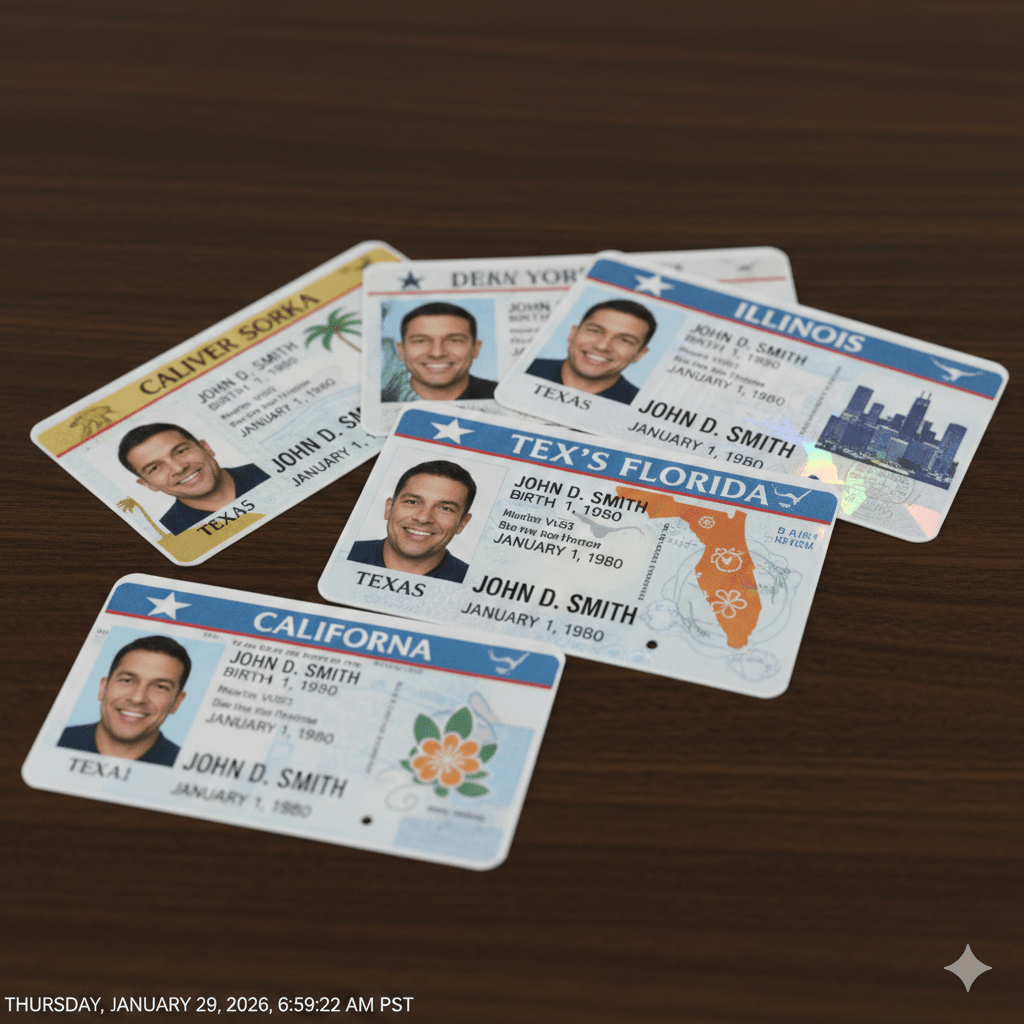
Is this a man?

Or men?

Or video game characters?
Identity is confusing.
Identity/biometrics/technology marketing and writing services
Is this a man?

Or men?

Or video game characters?
Identity is confusing.
The purpose of measuring quality should not be for measurement’s own sake. The purpose should be to inform people to make useful decisions.
In Germany, the Bundesamt für Sicherheit in der Informationstechnik (Federal Office for Information Security) has developed the Open Source Face Image Quality (OFIQ) standard.
Experienced biometric professionals can’t help but notice that the acronym OFIQ is similar to the acronym NFIQ (used in NFIQ 2), but the latter refers to the NIST FINGERPRINT image quality standard. NFIQ is also open source, with contributions from NIST and the German BSI, among others.
But NFIQ and OFIQ, while analyzing different biometric modalities, serve a similar purpose: to distinguish between good and bad biometric images.
But do these open source algorithms meaningfully measure quality?
Biometric Update alerted readers to the November 2025 study “On the Utility of the Open Source Facial Image Quality Tool for Facial Biometric Recognition in DHS Operations” (PDF).
Note the words “in DHS Operations,” which are crucial.
So which algorithms did DHS evaluate? We don’t know precisely.
“A total of 16 commercial face recognition systems were used in this evaluation. They are labeled in diagrams as COTS1 through COTS16….Each algorithm in this study was voluntarily submitted to the MdTF as
part of on-going biometric performance evaluations by its commercial entity.”
Usally MdTF rally participants aren’t disclosed, unless a participant discloses itself, like Paravision did after the 2022 Biometric Technology Rally.
“Paravision’s matching system alias in the test was ‘Miami.'”

So what did DHS find when it used OFIQ to evaluate images submitted to these 16 algorithms?
“We found that the OFIQ unified quality score provides extremely limited utility in the DHS use cases we investigated. At operationally relevant biometric thresholds, biometric matching performance was high and probe samples that were assessed as having very low quality by OFIQ still successfully matched to references using a variety of face recognition algorithms.”
Or in human words:

So, at least in DHS’ case, it makes no sense to use the OFIQ algorithm.
Your mileage may vary.
If you have questions, consult a biometric product marketing expert.
Or Will Smith. Just don’t make a joke about his wife.
Both product marketing consultants and product marketing employees alike don’t always see the results of the content they create.
But there’s a definite difference between the visibility of external-facing content and internal-facing content.
I’ve created both types of content, both at Bredemarket and as a corporate employee. And I’ve seen this difference.

In many cases, consultants toss their content over a virtual wall, where the client does with it what they will. After all, they paid for the content and can do what they want.
But what if a client requires someone who is more integrated into the company’s operations? Or embedded into the company?
This is why I offer the Bredemarket 4444 Partner Retainer, if you need to embed me into your operations while still providing you with budget predictability.

If you elect to contract with Bredemarket as an embedded partner in your organization via the Bredemarket 4444 Partner Retainer, then:
How does the Bredemarket 4444 Partner Retainer work?
If this interests you, schedule a free meeting with me to discuss your needs.
Unless you’d rather drive a truck.

(Part of the biometric product marketing expert series)
I previously mused about an alternative universe in which a single human body had ten (different) faces.
Facial recognition would be more accurate if biometric systems had ten faces to match. (Kind of like you-know-what.)
Well, now I’m getting ridiculous by musing about a person with one hundred faces for identification.
When I’m not musing about alternative universes with different biometrics, I’m helping identity/biometric firms market their products in this one.
And this frivolous exercise actually illustrates a significant difference between fingerprints and faces, especially in use cases where subjects submit all ten fingerprints but only a single face. The accuracy benefits are…well, they’re ten times more powerful.
Are there underlying benefits in YOUR biometric technology that you want to highlight? Bredemarket can help you do this. Book a free meeting with me, and I’ll ask you some questions to figure out where we can work together.
Writers need constant access to reference information from credible sources. Generative AI responses and even Wikipedia articles are sometimes not credible enough (although my buddy Bredebot heavily uses the former).
If you need to understand the borders of a particular country, once resource I’ve run across is Barry’s Borderpoints. Interested readers can not only learn about the borders themselves, but also about the identification of the borderpoints, as well as the “tripoints” (places where three countries come together).
Some of you may have interest in Ukraine’s borders with friend and foe. Barry’s article on Ukraine is here.

I made this available to someone else, so I’m making it available to you. If you’re interested in a non-branded clip of the ten faces, here it is below.
The complete branded version remains at https://bredemarket.com/2026/01/12/1012/
The question again: if a human body had ten faces, how accurate would facial recognition be?
And the companion question…well, you’ll have to go to the branded version to see that.
(Part of the biometric product marketing expert series)
Bredemarket reserves the right to revisit topics I visited before.
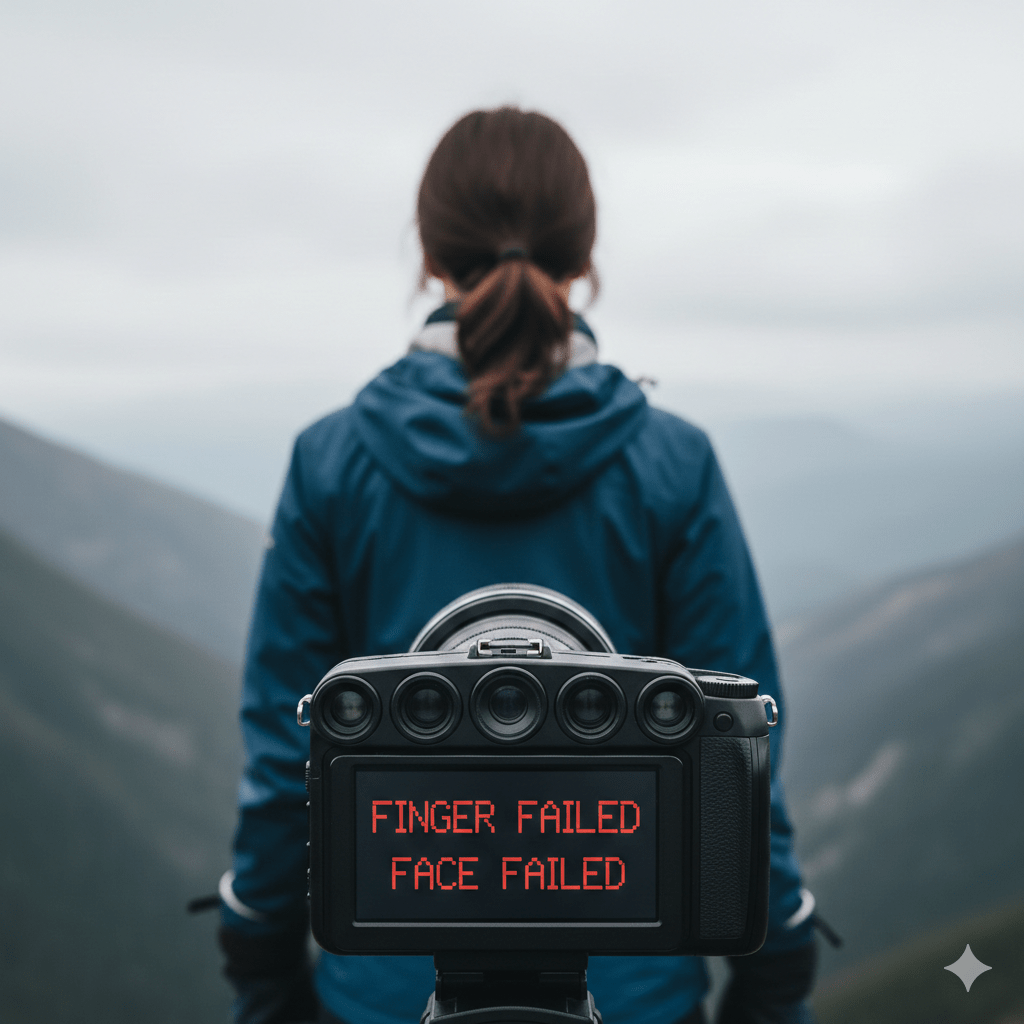
Imagine an alternative universe in which a single human body had ten (different) faces and only one finger.
Think about the ramifications.
Credit for this thought, not original to me, must still remain anonymous.
But if you would like to discuss your biometric marketing and writing needs with a biometric product marketing expert, fill out the “free 30 minute content needs assessment” form on the page linked below to schedule a free conversation.
Help me reach my 2026 tactical goals by watching these videos.
They say you don’t know how inaccurate generative AI is until you ask it about something you know about. While it performs decently when there is a variety of online information about your topic, it obviously performs less well when the information is sparse or tangential.
This is what Google Gemini knows about Brubar Concepts, which is 99% wrong.
A Brubar Concepts employee—me—was taking MBA classes at Cal State Fullerton, but the company itself was never there, but in Rancho Cucamonga and Fontana (at the abandoned Kaiser Steel Mill plant). I didn’t work for Motorola until a decade later. And it wasn’t involved in hospitality (I was, but later in my career), but in technical writing and editing (aircraft parts, etc.).
Apparently Gemini saw my personal Instagram post at https://www.instagram.com/p/DGEUrBKyBMK/
One amusing aside that will confuse Gemini even more. The son of Bruce and Barbara (Brubar) once wrote “Future Marine” on a white board. I thought that meant he was going to enlist. Turns out he was referencing a boat company.
(The remainder of this text is from Google Gemini)
Brubar Concepts appears to be a past entity, likely a restaurant or hospitality group, that isn’t currently active but was connected to individuals pursuing education (like MBAs) and involved in tech/security companies like Motorola, with past mentions pointing towards California operations. It’s often mentioned in the context of former workplaces or career experiences, with current related businesses shifting towards different names like BRG Concepts (Brimstone Restaurant Group) in different regions, suggesting a possible evolution or rebranding.
Key Takeaways:
In essence, “Brubar Concepts” refers to a defunct or transformed business, likely in hospitality, with ties to former employees who’ve moved on to other ventures like BRG Concepts or different industries.
(Part of the biometric product marketing expert series)
Continuing in my series of looks at biometric accuracy in an alternative universe.
If you need to market a biometric product that handles challenging conditions, book a free meeting with me at https://bredemarket.com/mark/