There are many controversial uses of land, one of which is data centers. And most of us use them.
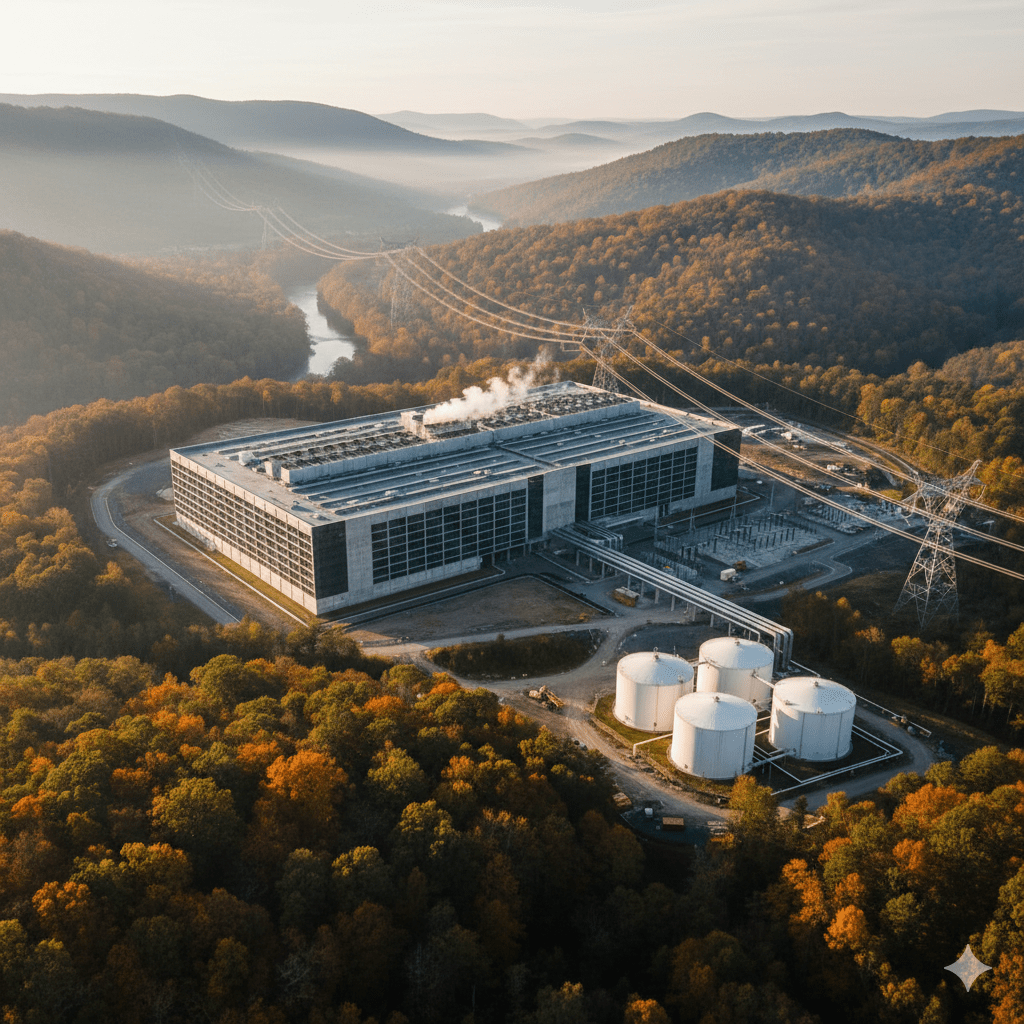
When I use SaaS resources or generative AI tools, I’m making use of a data center…somewhere. For example, when I created the image at the top of this post with Google Gemini…and when I uploaded this post to WordPress so you could read it.
But what if the data center was next door to ME? Would I feel differently about data center use?
Warren County, Virginia (Front Royal) is more rural than other counties in the state, such as Fairfax County. And someone is proposing a data center in Warren County.
This prompted a letter to the editor from Cara Aldridge Young, a former high school classmate of mine. (And a talented editor herself, if your company needs one.) Young examined the negatives surrounding data centers:
“Data centers are not quiet, invisible neighbors. They are warehouse-scale buildings surrounded by substations, transmission lines, backup generators, cooling systems, security fencing, and 24-hour lighting. They require enormous amounts of electricity and millions of gallons of water for cooling. In a county that has already experienced drought restrictions and ongoing grid concerns, it’s fair to question whether we are equipped to support that scale of development without long-term environmental and infrastructure consequences.”
I don’t have a feel how Warren County will respond to this request; I haven’t visited Front Royal in decades. But Young presumably isn’t the only resident with concerns about power, water, and the environment.
But I’m sure there are counties that would welcome the economic development, the tax revenue, and the jobs. (Well, not that many jobs.)
On my side of the country, the big infrastructure concern is warehouses, such as the Amazon distribution center in Eastvale, California.
One of Amazon’s buildings in Eastvale, California.
Update to my prior post: Google Analytics shows lower numbers for February 5.
Why?
Google Gemini suggests bots may be to blame.
The internet is full of “bots” (automated scripts from search engines or malicious actors).
Google Analytics has an industry-leading database of known bots and filters them out very aggressively to give you “human” data.
Jetpack also filters bots, but its list is different. Jetpack often catches fewer bots than Google, which usually results in Jetpack showing higher traffic numbers than GA.
Still unanswered: why did the bots swarm on that particular day?
Looks like disregarding the traffic is the correct choice.
Even with thousands of pages of blog posts, the Bredemarket website doesn’t get a ton of traffic.
But once a month or so, traffic jumps up dramatically for a single day.
For example:
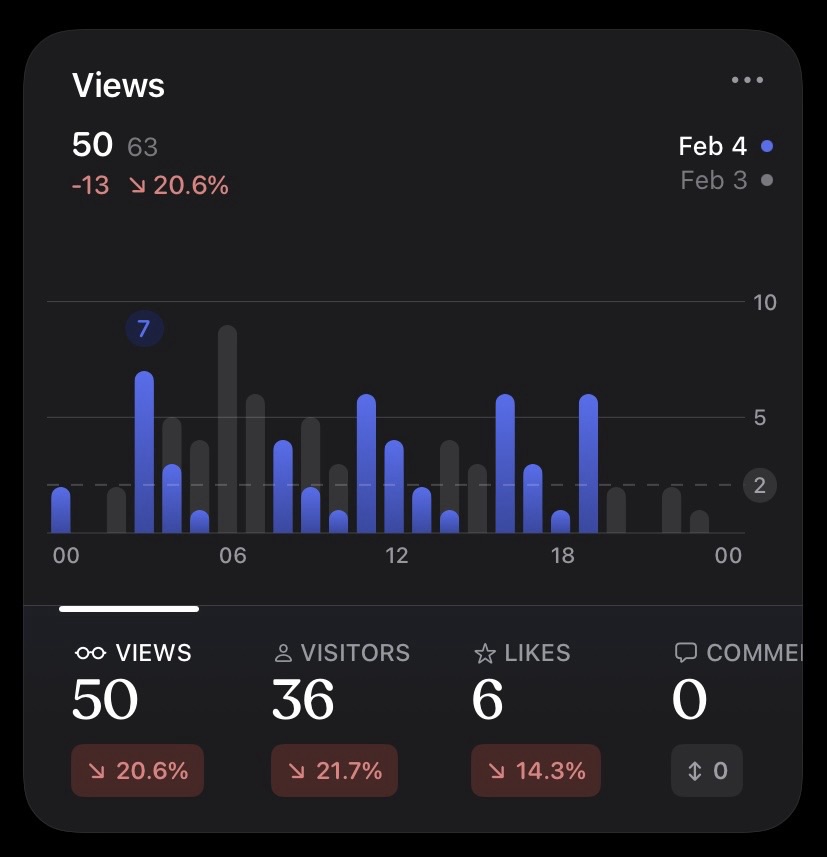
On February 4, the site had 36 visitors and 50 views of 24 posts/pages.
February 4 statistics for bredemarket.com.
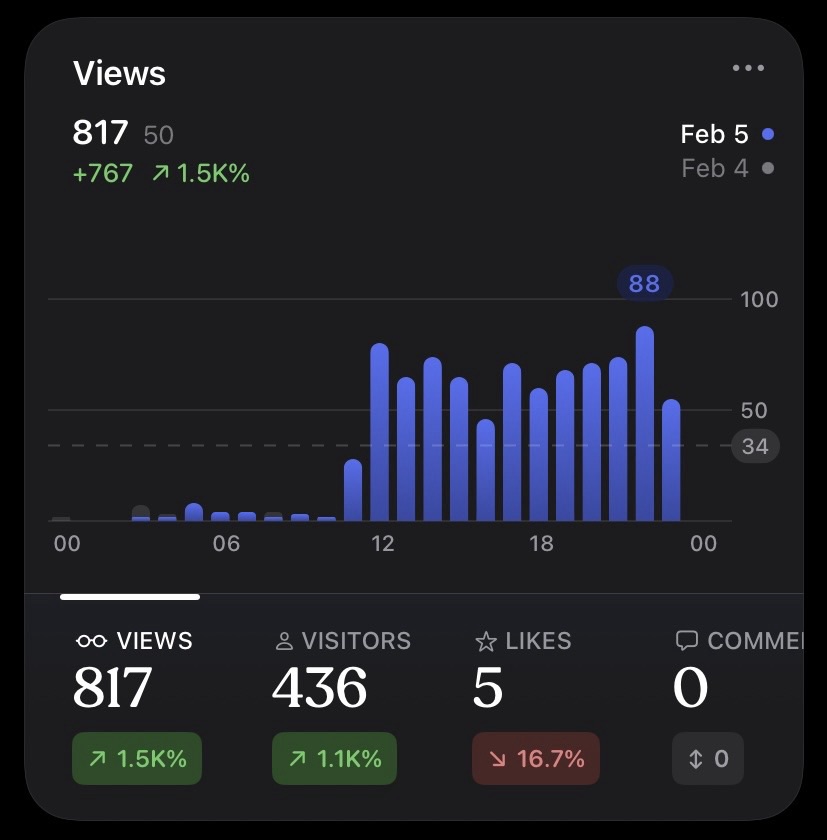
The next day, February 5, site stats zoomed up to 436 visitors and 817 views of hundreds of posts/pages.
February 5 statistics for bredemarket.com.
No idea why. Unlike April-May 2025, it wasn’t any individual post/page. No individual page had more than 16 views. And no identified source (Facebook, search engines, etc.) accounts for the jump.
If I knew why these surges happened, I’d try to make it happen more than once a month.
Inspired by the Constant Contact session I attended at the Small Business Expo, I wanted to conceptualize the Bredemarket online presence, and decided to adopt a “planet with rings” model.
Think of Bredemarket as a planet. Like Saturn, Uranus, Neptune, and Jupiter, the planet Bredemarket is surrounded by rings.
A variety of social platforms, including Bluesky, Instagram, Substack, and Threads.
Additional social platforms, including TikTok, WhatsApp, and YouTube.
While this conceptualization is really only useful to me, I thought a few of you may be interested in some of the “inner rings.”
And if you’re wondering why your favorite way cool platform is banished to the outer edges…well, that’s because it doesn’t make Bredemarket any money. I’ve got a business to run here, and TikTok doesn’t help me pay the bills…
Bredemarket hasn’t used paid advertising in years, but I recently ran a small ad for 4 days using Blaze, as offered by WordPress.
Even though Blaze was too broad for me to accurately specify my target audience.
Because most U.S. viewers in the categories “Technology, Science & Education, [and] Business & Careers” on WordPress and Tumblr are NOT interested in learning about a biometric product marketing expert.








 Bredemarket