ArcGIS StoryMaps: Every story has a place, and every place has a story

B2B content creators often find themselves telling stories to drive their readers to take action. Usually the desired action is to do business with the company telling the story. But as Redlands-headquartered company ESRI demonstrates with ArcGIS StoryMaps, there are many ways to tell a story.

Why tell stories?

Now you could easily adopt a “just the facts” approach to sharing the necessary information, but your potential customers’ eyes may glaze over.

Joe “The Facts” Friday was not a content marketer. By NBC Television – eBayfrontback, Public Domain, https://commons.wikimedia.org/w/index.php?curid=33340402

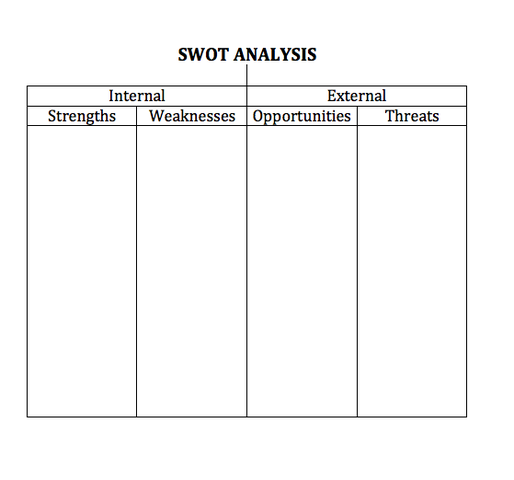
About a year ago, when I was selling Bredemarket’s services to a potential biometric client (obviously before I announced Bredemarket’s change in business scope and stopped providing services to finger/face clients), I started off by presenting a SWOT analysis. For those not familiar with the term, “SWOT” stands for strengths, weaknesses, opportunities, and threats.

By Syassine – Own work, CC BY-SA 3.0, https://commons.wikimedia.org/w/index.php?curid=31368987

For the topic of discussion with my potential client, I went through my independent analysis of all four of these items, engaging the people in the meeting who suggested some improvements. This SWOT analysis led into a presentation of the services that I could provide to the firm—services that addressed the weaknesses and threats that we had mutually identified.

What happened? I signed a contract with the company and worked on multiple projects to successfully address those weaknesses/threats.

Do you see what I did there?

As you probably noticed, I just told a story that had a conflict, actions, and a final resolution. “And they all sold biometric products happily ever after.”

Now SWOT analyses may not be your preferred type of storytelling, and frankly I usually don’t use SWOT analyses to tell stories. Stories can be of the “what happened to a company” or “what happened to me” form. For example, I recently told a “what happened to a company” story when talking about Conductor’s use of Calendly.

And some stories emphasize the “where.” No, not as one of the six factors of authentication, but as a setting for the story.

Enter ESRI and its ArcGIS StoryMaps product.

What does ArcGIS StoryMaps do?

On April 20, 2022, ESRI announced its introduction of ArcGIS StoryMaps, saying that “StoryMaps Allows Content Creators to Unify Digital Experiences in One Place Furthering Esri’s Mission to Bring the Geographic Approach to All.” In its announcement, ESRI started by presenting the problem:

Capturing and sharing life’s experiences today often requires multiple platforms and tools, which can result in disjointed storytelling.

From https://www.esri.com/about/newsroom/announcements/esri-brings-powerful-mapping-technology-to-everyone-with-new-storytelling-tool/

ArcGIS StoryMaps seeks to allow marketers and other content creators to use a single easy-to-use tool to tell their stories. As ESRI’s video on ArcGIS StoryMaps states, “Every story has a place, and every place has a story.” StoryMaps helps people tell place stories.

From https://www.youtube.com/watch?v=Kl-J9GjieYM

For an example of a StoryMap, go to https://storymaps.arcgis.com/stories/42b1a6fe6a524b578becd12c0bee4b4c to view “Sounds of the Wild West: An audio tour of Montana’s four major ecosystems.” Be sure to unmute the sound! (It’s an audio tour.)

What about YOUR story?

Now ESRI hasn’t asked me to tell stories for them (yet), but perhaps your Redlands-based company might want a storyteller. Consider the Redlands, California content marketing expert, Bredemarket. I provide marketing and writing services in the Inland Empire and throughout the United States.

Here are just a few examples of what Bredemarket can do for your firm:

I can provide many more B2B services; a complete list can be found here.

Before I create a single word, I start by asking you some questions about your content:

  • Why, how, and what do you do?
  • What is the topic of the content?
  • What is the goal that you want to achieve with the content?
  • What are the benefits (not features, but benefits) that your end customers can realize by using your product or service?
  • What is the target audience for the content?

After you’ve provided the relevant information to me, I’ll create the first iteration of the content, and we’ll work together to create your final content. The specifics of how we will work together depend upon whether you have elected the Bredemarket 400 Short Writing Service, the Bredemarket 2800 Medium Writing Service, or something else.

When we’re done, that final content is yours (a “work for hire” arrangement).

If I can help your business, or if you have further questions about Bredemarket’s B2B content creation services, please contact me.

Simon Sinek’s Golden Circle: When Your Goal, Benefits, and Target Audience aren’t Enough

Via Bredemarket, I work with a number of clients who ask me to create content for them. Since last September, I have used an internal “kickoff guide” form to start my conversations with these clients.

Header of September 2021 Bredemarket Kickoff Guide

While I thought that this kickoff guide was pretty good, I just revised it to make it even better.

The September 2021 iteration of the Bredemarket kickoff guide

I developed the Bredemarket kickoff guide to address a number of issues, including the style limitations of Google Docs. But the primary issue that prompted the kickoff guide was the need to capture as much information about a client project in the early stages, to reduce later rework.

The primary set of questions that I asked was a set of questions that I’ve talked about ad nauseum (literally). Before getting into the nuts and bolts of the content itself, there were three critical questions that I asked the client:

  • What is the goal that you want to achieve with the content?
  • What are the benefits (not features, but benefits) that your end customers can realize by using your product or service?
  • What is the target audience for the content?

There were two reasons that I asked these questions. First, I believed that the client’s final collateral would benefit if I asked these questions. Second, I believed that Bredemarket would benefit by differentiating itself from other writers who just launched into “the facts” questions about the content.

Jack Webb as Sgt. Joe Friday.
Joe “The Facts” Friday was not a content marketer. By NBC Television – eBayfrontback, Public Domain, https://commons.wikimedia.org/w/index.php?curid=33340402

If I may pat myself on the back, these are pretty good questions.

But is there anything else that I should be asking?

Simon Sinek’s “Golden Circle”

I’m currently taking a course from HubSpot Academy, and one of the instructors mentioned Simon Sinek’s “Golden Circle.”

This goes beyond a particular product or service, and addresses a company’s reason for being. Here’s what HubSpot says about the need for the “Golden Circle”:

…what Sinek found is that most companies do their marketing backwards. They start with their “what” and then move to the “how.” Most of these companies neglect to even mention “why.” More alarmingly, many of them don’t even know why they do what they do!

From https://blog.hubspot.com/customers/3-takeaways-from-start-with-why

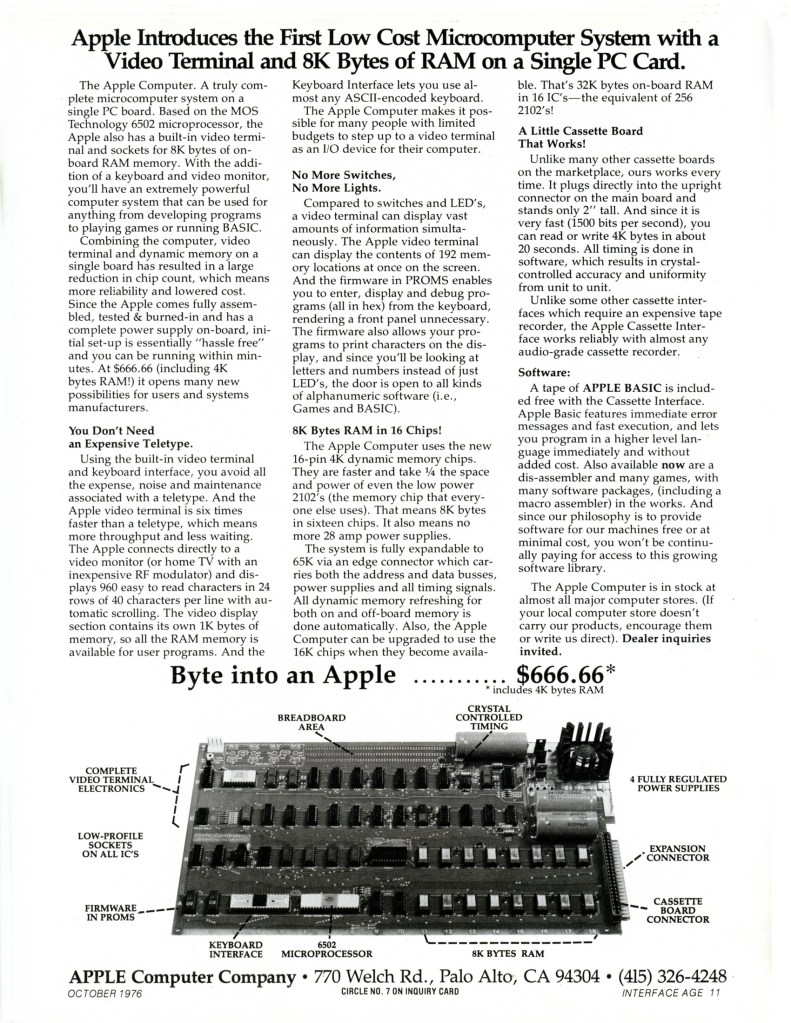
Contrast this with companies (Apple is an oft-cited example) that know why they do what they do, and effectively communicate this. It may be hard to believe this, but for Apple, the “why” question is even more important than the latest color of its products (current iteration: “it’s green”).

So can Simon Sinek’s Golden Circle help my clients receive better marketing collateral, and can it help me (and Bredemarket) differentiate myself from other writers? And if so, what do I have do to achieve these benefits for my clients and myself?

The April 2022 iteration of the Bredemarket kickoff guide

One part of the answer was to revise my kickoff guide. In the latest iteration, I precede my goal/benefits/target audience questions with three questions derived from Sinek’s “Golden Circle,” starting with the all-important “why” question.

(“Why”: it’s not just for multi factor authentication!)

Of course, I still have to use the revised kickoff guide with a client, but I hope to do this shortly in one way or another. If you could like me to use this kickoff guide with your firm to help create meaningful, relevant content:

Postscript: an example of repurposing

This post was repurposed from a comment that I made in the HubSpot Community in response to the course that I’m taking.

Communicating benefits (not features) to identity customers (Part 2 of 3)

[Link to part 1] | [Link to part 3] | [Link to part 4]

(Updated 4/16/2022 with additional information on benefits.)

This is a continuation of a previous post, in which I explained the difference between benefits and features, and why you sometimes have to act like an irritating two-year old to convert a feature into a benefit (the “so what?” test).

As I promised in that previous post, I plan to dive into issues more specific to identity customers, such as when a two hour response time matters, when a one minute response time matters, and when a one second response time matters.

Who are identity customers?

Before I dive into response times, let’s explain who identity customers are, because not all identity customers are alike.

When I use the term “identity” at Bredemarket, I am referring to any technology that can be used to identify an individual. This does not just relate to biometrics (fingerprint identification, facial recognition, etc.), but to any of the five factors of authentication that can identify an individual. A physical or digital driver’s license. A fob. A secret handshake. A geographic location. Even a password.

Obviously there are a ton of customers that use identification technologies, and they care about a ton of things.

Well, what if we focus our discussion and talk about a SINGLE product, such as automated biometric identification systems (ABIS)? We can market to all ABIS customers with a single set of benefit statements, right?

Um, no.

ABIS can be sold to all sorts of different customers, ranging from local police agencies to state welfare benefit administrators to national passport issuing agencies.

Well, what if we focus our discussion and talk about a SINGLE type of customer for a single product, such as the local law enforcement agencies that buy ABIS? We can market to all local law enforcement ABIS customers with a single set of benefit statements, right?

Um, no.

If I am going to sell an ABIS to the city of Ontario, California (sorry Thales), these are the types of customers (or target audiences) that I have to cover with separate benefit statements:

By FBI – http://www.fbi.gov/news/photos, Public Domain, https://commons.wikimedia.org/w/index.php?curid=18500900
  • The field investigators who run across biometric evidence at the scene of a crime, such as a knife with a fingerprint on it or a video feed showing someone breaking into a liquor store.
  • The examiners who look at crime scene evidence and use it to identify individuals.
  • The people who capture biometrics from arrested individuals at livescan stations.
  • The information technologies (IT) people who are responsible for ensuring that Ontario, California’s biometric data is sent to San Bernardino County, the state of California, perhaps other systems such as the Western Identification Network, and the Federal Bureau of Investigation.
  • The purchasing agent who has to make sure that all of Ontario’s purchases comply with purchasing laws and regulations.
  • The privacy advocate who needs to ensure that the biometric data complies with state and national privacy laws.
  • The mayor (Paul Leon as I write this), who has to deal with angry citizens asking why their catalytic converters are being stolen from their vehicles, and demanding to know what the mayor is doing about it.
  • Probably a dozen other stakeholders that I haven’t talked about yet, but who are influenced by the city’s purchasing decision.

As you can see, there are a ton of people who are going to read a proposal to provide an ABIS to a city, and they all have differing needs that need to be addressed…and different benefits that have to be emphasized.

Benefits of a feature are customer-dependent

Now let’s take one of my feature statements from my first post and try to convert it to a benefit for one or more of these stakeholders. I’m going to choose this one:

  • This product captures latent fingerprints at 1000 pixels per inch.

Right off the bat, I’ll tell you that 1000 ppi latent fingerprint capture doesn’t make a bit of difference to the majority of the stakeholders. Paul Leon isn’t going to care. The purchasing agent SHOULD care (1000 ppi data requires more storage than 500 ppi data, which translates to more cost), but probably isn’t going to know that he/she should care.

With the possible exception of the IT personnel, the only people that care about 1000 ppi capture are the examiners who use crime scene evidence and use it to identify individuals. And needless to say, the examiners that concentrate on face or iris or voice or DNA data aren’t going to care about a fingerprint capture specification.

So if I’m writing a proposal to the city of Ontario, California, I’m going to make sure that the latent fingerprint capture section of the proposal discusses my product’s ability to capture latent fingerprints at 1000 ppi.

Wait for it…

SO WHAT?

Absent the benefit of standards compliance that ensures that Ontario data can be processed by state and national systems, the chief benefit of 1000 ppi latent fingerprint capture is that it provides a higher probability that examiners can positively identify criminals and solve more crimes.

An explanation: because latent fingerprints are often of poor quality – the criminals don’t usually take the time to ensure that the fingerprint evidence they leave at crime scenes is readable – latent examiners often benefit from having higher-resolution 1000 ppi latent fingerprint images, rather than the lower-resolution 500 ppi latent fingerprint images that were common in 20th century fingerprint systems. This higher resolution can make it easier for a latent fingerprint examiner to match a latent to a criminal’s tenprint fingerprint from a previous arrest, leading to the “solve more crimes” benefit.

So you’re going to come up with separate benefit statements for examiners, separate ones for livescan operators, and separate benefit statements for each of the stakeholders. And each of these benefits will be enumerated in the section of the proposal that the individual stakeholder will read. (News flash: hardly anyone reads the entire proposal; they only read the section that pertains to them.)

(4/16/2022: For additional information on benefits, click here.)

What’s next?

Well, I never got around to my two hour vs. one minute vs. one second question, and this post is getting long, so I guess I’ll address that topic in a third post.

In the meantime, if you’re an identity product/service provider that needs help in communicating customer benefits in proposals, case studies, white papers, blog posts, and similar written output, Bredemarket can help. Contact me.