To let you know how this braggart can help you with your identity, cybersecurity, and technology proposals.
First, the bragging
Let’s start the bragging by announcing that one of Bredemarket’s consulting clients was recently notified of an award by a federal agency.
I won’t name the client or the agency, other than to clarify that the agency is NOT the U.S. Department of Education, the Agency for International Development, the Voice of America, or similar agencies that have taken a beating over the last 2 1/2 months. So the award is fairly safe.
So what do I have to brag about?
To be honest, not much.
Second, the reality
Yes, I made sure that the proposal was compliant and persuasive, that it addressed all the required points, that it went to the correct person, that it stayed within the mandated page and word limits, and that it was delivered before the due date and time.
But if the client had proposed an inferior solution, questionable implementation plan, or unqualified personnel, there would NOT have been an award regardless of whether the text was in 12-point Times New Roman with the appropriate margins.
Like all Bredemarket projects, I collaborated with the client to submit the proposal, which in the end was a winning proposal.
Third, how did I get here?
I’ve told the story before, but I kind of fell into the proposals world in October 1994 when I began consulting for the Proposals Department at a company called Printrak International. After several acquisitions, the company became part of IDEMIA 23 years later.
During my time at Printrak, Motorola, MorphoTrak, and IDEMIA I spent two separate stints in Proposals, primarily focusing on state and local opportunities with various international opportunities thrown in.
Things changed in 2020 when Bredemarket started offering proposal services. With one exception (a State of California healthcare-related proposal), all my proposal work has been at the federal level.
I’ve worked at various proposal maturity levels, ranging from working via SMA in a mature proposal development process, to cases in which I was the sole proposal expert. But the keys always remain the same: work with the client, do great work, and turn the thing in on time.
Fourth, how will YOU get THERE?
If your organization has the need to submit a technology software proposal, perhaps I can help. I can plug into your existing proposals organization, or if necessary I can BE your proposals organization.
If you’d like to talk about it, schedule a free consultation via my “CPA” page (the “P” stands for Proposal) and check the “Proposal services” check box.
The infamous content calendar says that today is proposal day, but I’m going to ignore the infamous content calendar and talk about a bunch of things other than proposals. (Well, I’ll mention proposals once, I guess.)
First, I’ll talk about the new glasses that I received yesterday.
In addition to a new frame style, this new set has the transition sunglass tint but WITHOUT the computer tint. (The Costco optical person said that I didn’t need a separate computer tint these days. I don’t know if he was right, but I trusted him.) My last set of glasses had both the transition sunglass tint AND the computer tint, which meant that they had a purple color at times. Now my tint in the sun will be brown rather than purple.
But enough about that.
Let’s get to the meat of this post, in which I’ll talk about the communities that I’ve joined since starting Bredemarket, what led me to purchase something from one of those communities, and one of two actionable items (and an action) that I took from that purchase.
Communities
Before I became a free agent, I was an employee of a multinational firm with thousands of employees throughout North America and thousands of additional employees throughout the rest of the world. One of the company’s VPs established an online community to support her nationwide organization of people, including myself in California, my direct supervisor in Massachusetts, and a bunch of people in those states, Minnesota, Tennessee, and everywhere else under the sun. I was able to participate in that online community even after I moved out of that VP’s group due to a corporate reorganization. (Thanks Teresa.)
With free agency and sole proprietorship came the loss of that community. (No, the VP obviously wouldn’t let me engage with that community when I was no longer an employee.) But over the next several months I joined three other communities. As it turns out, I interacted with all three of these communities over the course of the last two days.
On Thursday at 10:00 am, I joined the weekly “town hall” for the employees and associates of SMA, Inc. I am officially an associate of SMA, albeit with a very specialized skill set (more on that later). To support its people, SMA convenes a weekly “town hall” that addresses company issues and also addresses the interests of SMA’s leadership. Every week, for example, there is an “art talk” that delves into a particular artist or artistic topic.
On Thursday at 6:00 pm, I joined the monthly meeting of the Orange County, California chapter (“SPARK OC”: Facebook, Instagram) of the Freelancers Union. This monthly gathering happened to be a “happy hour,” although I disregarded the injunction to bring my favorite cocktail.
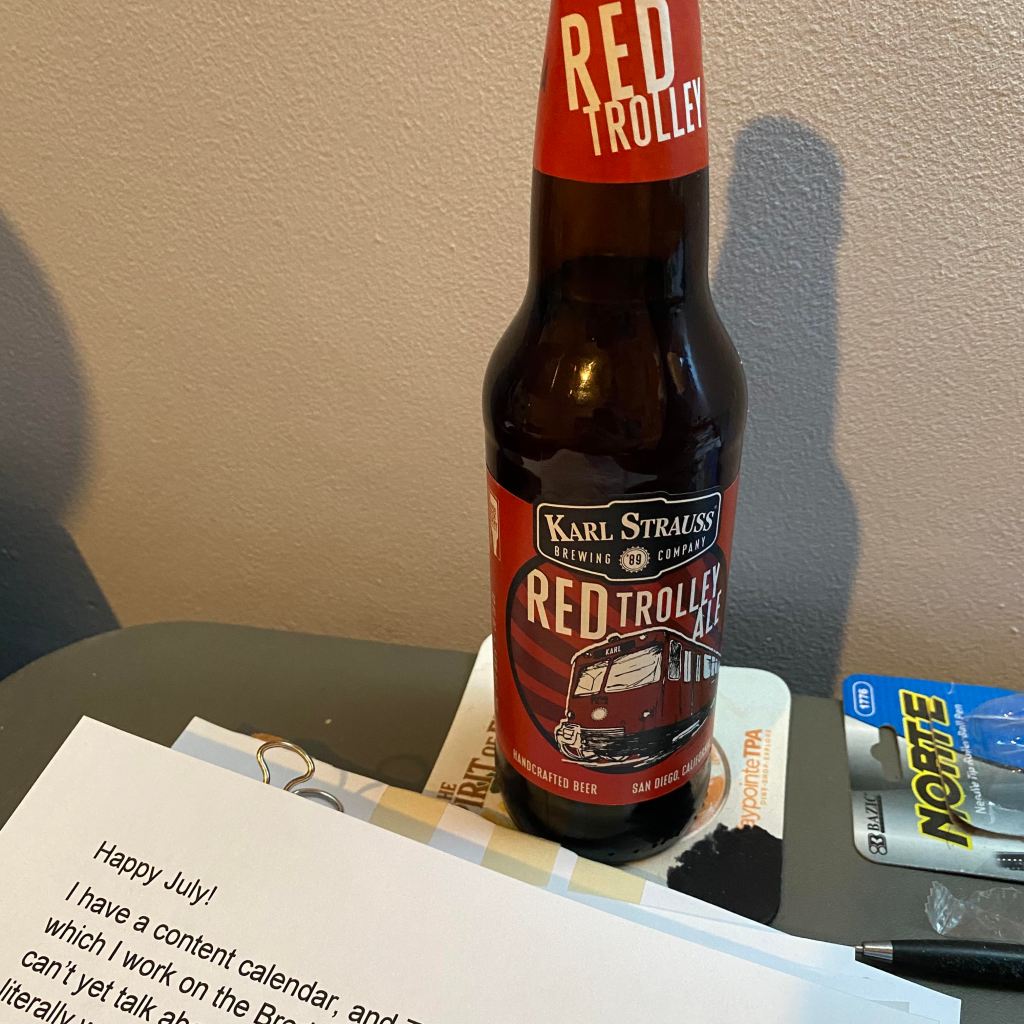
Finally, today at 8:00 am, I joined a paid workshop hosted by Jay Clouse of the Jay Clouse empire of entities. The topic? “Invisible Selling.” Due to early hour, I didn’t have a beer, but had a Nespresso instead. The rest of this post deals with that workshop and the results from that workshop.
The invisible selling of “Invisible Selling”
I’m not going to recount that Clouse covered in his one-hour workshop. After all, I paid for the course, and (most of) you didn’t. But perhaps it would be helpful if I described how I was invisibly sold on “Invisible Selling.”
I first encountered Jay Clouse via LinkedIn Learning. (Another thing that I lost when I was no longer an employee was access to my employer’s online courses from Udemy and others, but LinkedIn Learning has filled the gap.) I had long since forgotten which Clouse course I took and when I took it, but I checked my LinkedIn profile and found that I had taken his “Freelancing Foundations” course back in September 2020.
After taking the course, I ended up joining his “Freelancing School” community, participating in various online meetups, and engaging with Clouse’s offerings in other ways.
All for free.
Then I received a couple of emails from him about his (then) upcoming “Invisible Selling” course.
I deduced from the description that it would meet my needs, and figured that $40 was a reasonable price. Plus, I trusted Clouse based upon my interactions with him and his community over the last several months.
The first task, which could potentially be worth between five dollars and tens of thousands of dollars to me, was to make sure that I am anticipating potential client objections up front, and addressing them. I’m going to devote some time to that in the future. And as you can see below, I started to address one objection even before I heard of Clouse’s workshop.
The second task is one that I cannot discuss publicly at this time. However, it could potentially be worth more than tens of thousands of dollars to me. Maybe I’ll talk about it someday.
Service Offerings
One potential client objection that I’m already addressing is that my offerings do not fit my potential clients’ needs. I’m addressing this by broadening my offerings.
But much of my business today doesn’t derive from these prepackaged services. Well, technically it does, if you read the description of my Bredemarket 4000 Long Writing Service:
The long writing service does not have a “standard” offering per se, because of the variability of what may be needed. Work is billed at an hourly rate.
Some of Bredemarket’s more lucrative work comes from ongoing hourly relationships that I have established with several clients. They use me as needed, sometimes more frequently, sometimes less so, but I’ve kept them happy.
“I just wanted to truly say thank you for putting these templates together. I worked on this…last week and it was extremely simple to use and I thought really provided a professional advantage and tool to give the customer….TRULY THANK YOU!”
Why do these customers work with me? Well, while I have a number of customers employing various technologies, the vast majority of my customers are focused on biometrics. And I am the biometric content marketing expert and the biometric proposal writing expert, because I said I am. (The other John Bredehoft, the one who owns Total Plumbing Services, taught me the importance of self-promotion.)
But what if a client wants to pick my biometric brain and not pay hundreds or thousands or tens of thousands of dollars to do so?
Well, for the past month I’ve been addressing that price point also via Bredemarket Premium. Certain posts on this Bredemarket blog delve deeply into my quarter century-plus of biometrics knowledge. These posts are only available to subscribers, at the cost of $5 per month. Here’s an excerpt from the public view of one of these posts:
So to my mind I’ve covered the “Bredemarket doesn’t address my price point” objection. (Prove me wrong. Please.)
As I said before, I need to do a better job of anticipating and addressing other potential objections to using Bredemarket to help you communicate your firm’s benefits. And I’ll work on that.
But if your objection is that you don’t like my glasses, I can’t help you. You can’t please everyone.
And a reminder that if I’ve brilliantly addressed all of your potential objections, or even if I haven’t, and if you’re ready to talk about how I can help you:
You may recall that I previously announced a desire to repurpose and extend my content by revisiting some of my five (plus one) goals that I set for Bredemarket in 2021.
Today I’m ready to revisit my “pursue multiple income streams” goal, with a specific WAY in which I plan to pursue multiple income streams. Because multiple income streams can potentially merge into a large income stream.
Goal 2: Pursue multiple income streams. This is really an internal goal for Bredemarket, but it affects my approach.
While I know WHAT I want to do—I’m not going to quit marketing and writing and start selling nutritional supplements—I’m exploring HOW I want to do it. In some cases I’m approaching potential clients directly, while in others I’m using one of several intermediaries to do it.
There are advantages and disadvantages to direct vs. intermediary solicitation, but it’s wise to have multiple options. Some options may perform better at some times, while others perform better at other times. We’ll see what happens.
Which brings me to a conversation that I had a few months ago.
At about the same time that I became a free agent last July, one of my coworkers also became a free agent. Jenna Beck, in addition to managing proposals for biometric systems, has also consulted and written in many other disciplines.
One day, Jenna reminded me of Wordman.
Wordman? Who is Wordman?
Now there are a number of superheroes that are saving the galaxy, but those of us who know our APMP from our STC are well aware of the super powers of Wordman. While other superheroes can leap tall buildings in a single bound, Wordman can optimize your use of Microsoft Word via supplementary software, consulting, and training. This is a super task indeed.
When he is not wielding macros and styles, Wordman goes by the identity of Richard (Dick) Eassom, Vice President of Corporate Support at SMA Inc.
Jenna knew that I was already set up as an independent contractor, and suggested that I consider signing up as an associate with SMA.
SMA? What is SMA?
SMA is a consulting firm, originally established as Stephen Myers & Associates (SM&A) in 1982. It started as a proposal assistance firm (Fun fact: many proposal assistance firms incorporate “wins” either in their corporate name or in their web URL, and SMA at smawins.com is no exception.) Over the years, and after several acquisitions and pivots, SMA has grown from a proposal assistance firm and now helps clients with all aspects of a program lifecycle, from pursuit through performance. A complete list of SMA’s capabilities can be found here.
To fulfill this, SMA needs associates (independent contractors) with experience in a variety of disciplines. Figuring that SMA could possibly use an identity professional with strategy, marketing, proposal (primary state and local) and product management position, I put my name into consideration.
This required an evaluation of my experience in a format consistent with SMA’s Talent on Demand® system. As part of this process, I identified approximately 40 specific projects that I have worked on in the last 25 years. Yes, it’s a thorough process.
After completing this evaluation as well as two interviews, I was officially accepted as an associate with SMA late last year. Now that the paperwork has been completed, I am officially on board as an associate, available to serve SMA’s clients as a market / competitive strategist.
Thanks to Jenna, Wordman, and everyone else who helped me to onboard with SMA. I will still be consulting with clients directly—in fact, SMA assumes that its associates have income streams outside of SMA—but now am also available to clients via SMA’s TOD system.








 Bredemarket