My professional experience spans DNA, face, friction ridge, iris, and voice.
But I’ve looked at many other modalities.
See the full list here.

Identity/biometrics/technology marketing and writing services
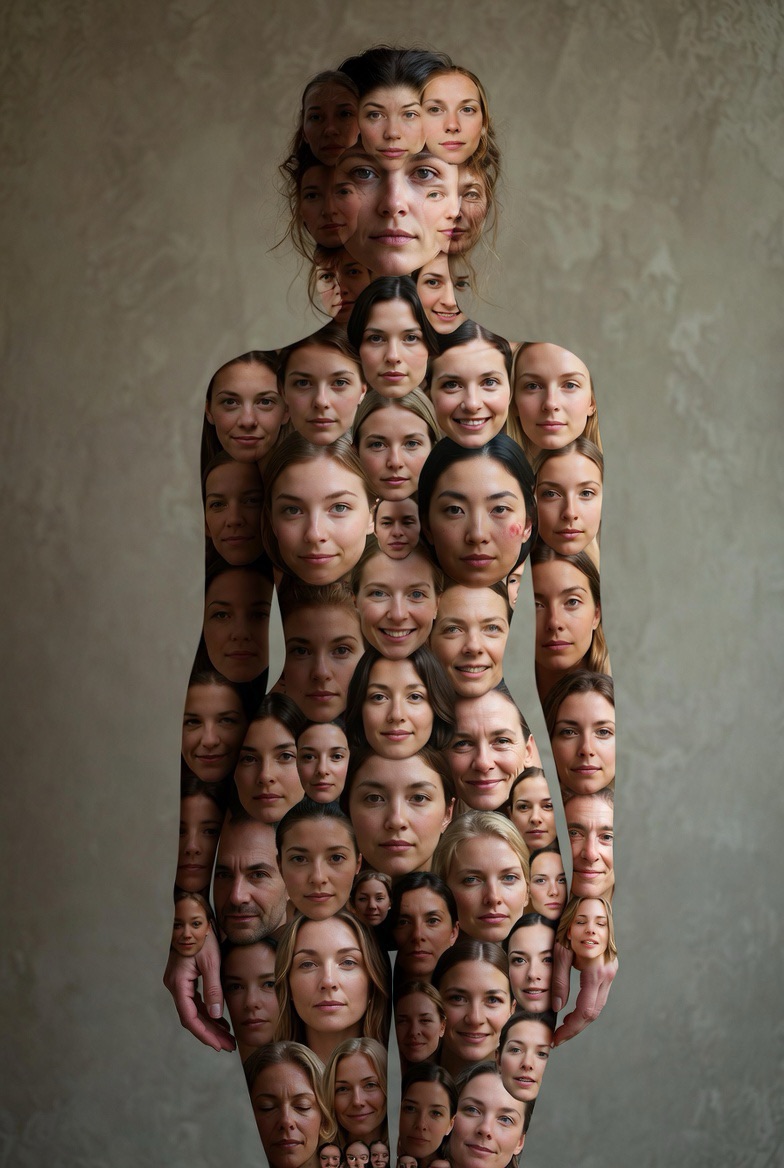
My professional experience spans DNA, face, friction ridge, iris, and voice.
But I’ve looked at many other modalities.
See the full list here.
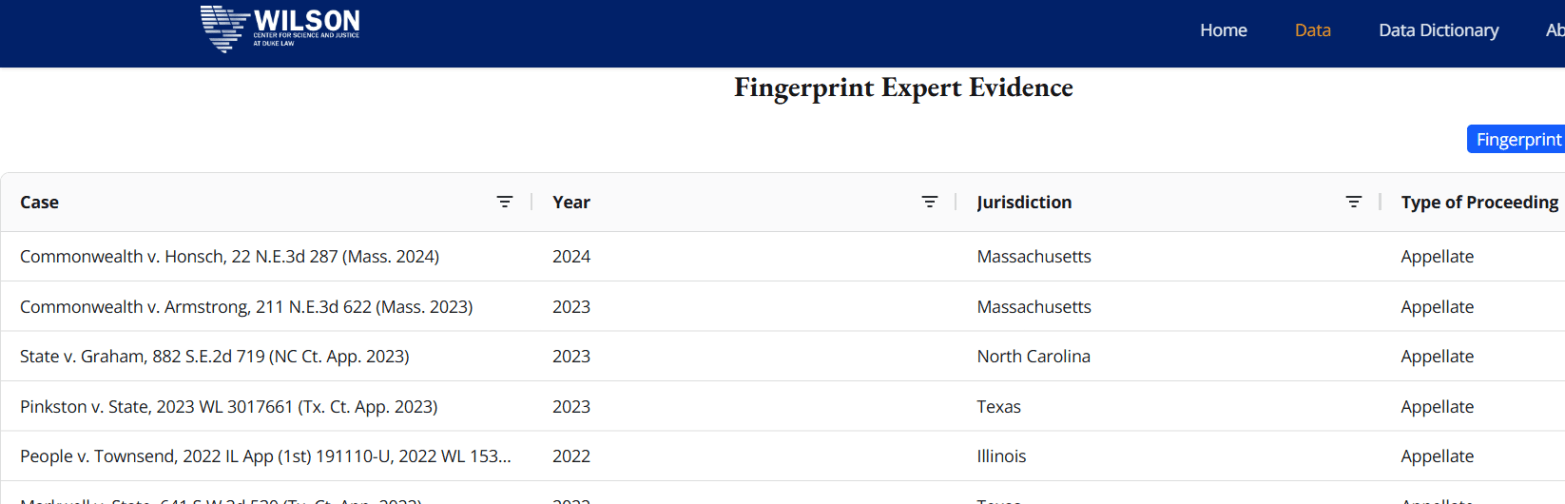
For…a long time I’ve been talking about whether fingerprint evidence is accepted in court. But until now I never had access to an easy-to-use database of court cases.
Mike Bowers shared a release from the Wilson Center for Science and Justice at Duke Law, “New Database Documents a Century of Court Decisions on Forensic Expert Evidence Testimony.”
The fingerprint database can be accessed here.
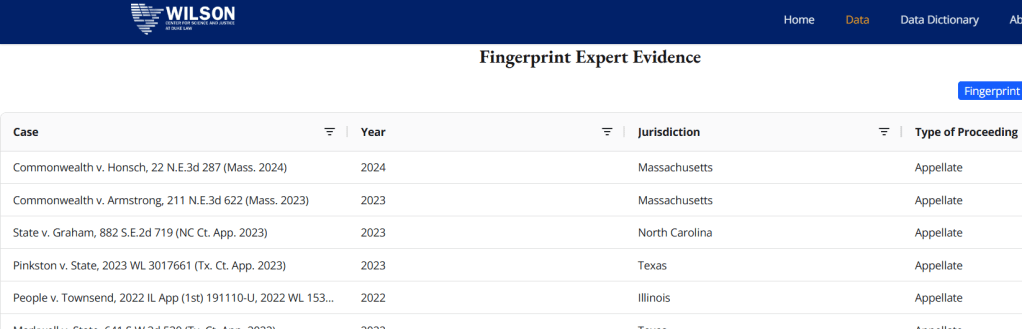
Here’s an example of the case details for the (current) most recent record:
Case
Commonwealth v. Honsch, 22 N.E.3d 287 (Mass. 2024)
Year
2024
Jurisdiction
Massachusetts
Type of Proceeding
Appellate
Other fields
CourtSupreme Judicial Court of Massachusetts, Hampden
Expert Evidence Ruling Reversing or Affirming on AppealAdmitted
RulingCorrect to admit
Type of EvidenceFingerprint
Defense or Prosecution ExpertProsecution
Summary of Reasons for Ruling
The Commonwealth here presented two latent print analysts as experts. One multiple times that it was his “scientific opinion” that there were three latent prints that were “identified to” the palms of the defendant. The term “scientific” to describe his opinion “arguably verged on suggesting that the ACE-V process is more scientific than warranted,” and there was one instance in which Dolan testified without using the term “opinion.” The court concludes that there was no error because, “viewed as a whole,” his testimony was largely expressed in terms of an “opinion” and his testimony did not claim that the ACE-V process was infallible or absolutely certain.
On the other hand, Pivovar testified that she (i) “identified [a palm print from one of the garbage bags and the print of the defendant’s left palm] as originating from the same source”; (ii) “identif[ied] [another latent print] and the right palm print of [the defendant] as being the same, they originated from the same source”; and (iii) “identif[ied] the [third latent print] as originating from the same source as the right palm of [the defendant] that [she] compared it to.” Pivovar did not frame her testimony in terms of an “opinion” and expressed the identification of the defendant with certainty. This was error. However, the court concluded that Pivovar’s testimony did not likely influence the jury’s conclusion. Defense counsel countered the notion that individualization under the ACE-V methodology is infallible by cross-examining Pivovar on the subjectivity of latent print analysis, the fact that two prints are never identical, and a recent incident in which the Federal Bureau of Investigation erroneously identified a suspect based on an incorrect latent print analysis. The defendant also presented an expert detailing the risks of cognitive bias in latent print analysis. Additionally, the Commonwealth’s other latent print examiner, Dolan, testified as to the same findings as Pivovar. If Pivovar’s testimony had been properly framed as an opinion, there still would have been strong evidence that the prints found at Elizabeth’s crime scene originated from the defendant. Thus, even though we determine that Pivovar’s testimony was erroneously presented as fact, the error did not create a substantial likelihood of a miscarriage of justice.
Admissibility StandardLanigan-Daubert
Lower Court HearingN
Discussion of 2009 NAS ReportY
Discussion of Error Rates or ReliabilityN
Frye RulingN
Limiting Testimony RulingN
Language Imposed by Court to Limit TestimonyN
Ruling Based in Prior PrecedentY
Daubert FactorsN
Ruling on Qualifications of ExpertN
Ruling on 702(a)N
Ruling on 702(b)N
Ruling on 702(c)N
Ruling on 702(d)N
Notes—
Good resource to keep in mind.
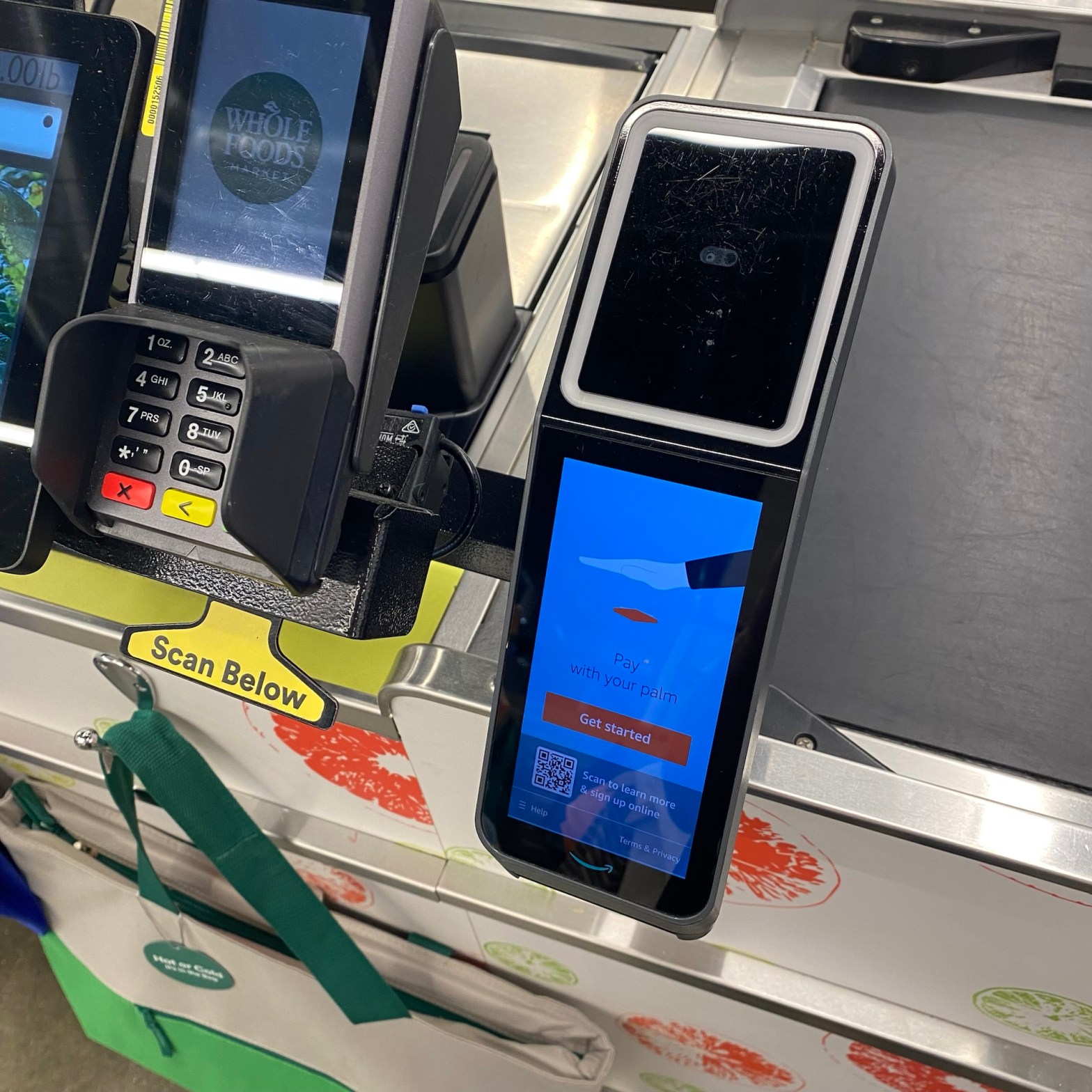
With all the news about Amazon Fresh closing and more Amazon layoffs taking place, I missed a bit of news about the Amazon One palm-vein technology. But first a bit of history.
I believe I first wrote about Amazon One back in 2021, in a “biometrics is evil” post.

In that year, TechCrunch loudly proclaimed:
“While the idea of contactlessly scanning your palm print to pay for goods during a pandemic might seem like a novel idea, it’s one to be met with caution and skepticism given Amazon’s past efforts in developing biometric technology. Amazon’s controversial facial recognition technology, which it historically sold to police and law enforcement, was the subject of lawsuits that allege the company violated state laws that bar the use of personal biometric data without permission.”
Yes, Amazon was regarded as part of the evil fascist regime even when Donald Trump WASN’T in office.
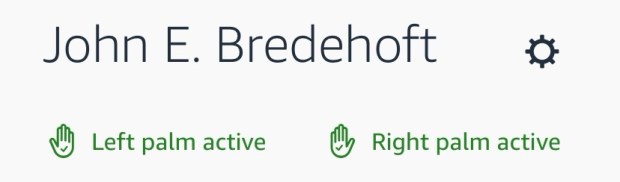
Which brings us to 2025, when Trump had returned to office and I enrolled in Amazon One myself to better buy things at the Upland, California Amazon Fresh. But the line was too long so I went to Whole Foods, where my palm and vein may or may not have worked.
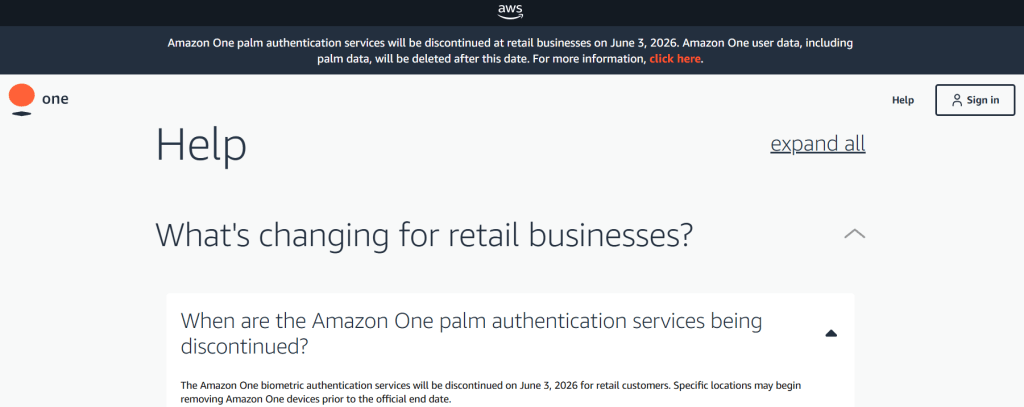
And pretty soon we’ll ALL be going to Whole Foods since Amazon Fresh is rebranding or closing all its locations.
And when we get there, we won’t be using Amazon One.
“Amazon One palm authentication services will be discontinued at retail businesses on June 3, 2026. Amazon One user data, including palm data, will be deleted after this date.”
You know the question I asked. Why?
“In response to limited customer adoption…”
Of course, in Amazon’s case, “limited” may merely mean that billions and billions of people didn’t sign up, so it jettisoned the technology in the same way it jettisoned dozens of stores and thousands of employees.
The June date may or may not apply to healthcare, but who knows how long that will last.
In my 2021 post I mentioned three other systems that used biometrics for purchases.
There was the notorious Pay By Touch (not notorious because of its technology, but the way the business was run).
There was the niche MorphoWave.
But the third system dwarfs them all.
“But the most common example that everyone uses is Apple Pay, Google Pay, Samsung Pay, or whatever ‘pay’ system is supported on your smartphone. Again, you don’t have to pull out a credit card or ID card. You just have to look at your phone or swipe your finger on the phone, and payment happens.”
And they’re so entrenched that even Amazon can’t beat them.
Or as I said after the latest round of Amazon layoffs:
“This, combined with its rebranding or closure of all Amazon Fresh stores, clearly indicates that Amazon is in deep financial trouble.
“Bezos did say that Amazon would fail some day, but I didn’t expect the company to fall apart this quickly.”
An interesting item popped up in SAM.gov. According to a Request for Information (RFI) due February 20, the FBI may have interest in a system for secret biometric searches.
“The FBI intends to identify available software solutions to store and search subjects at the classified level. This solution is not intended to replace the Next Generation Identification System Functionality, which was developed and implemented in collaboration with the FBI’s federal, state, local, tribal, and territorial partners. The solution shall reside at the Secret and/or Top-Secret/SCI level with the ability to support data feeds from external systems. The solution must allow the ability to enroll and search face, fingerprint, palmprint, iris, and latent fingerprints, and associated biographic information with a given set of biometrics.”
Now remember that the Next Generation Identification (NGI) system is protected from public access by requiring all users to adhere to the CJIS Security Requirements. But the CJIS Security Requirements aren’t Secret or Top Secret. These biometric searches, whatever they are, must REALLY be kept from prying eyes.
The RFI itself is 8 pages long, and is mysteriously numbered as RFI 01302025. I would have expected an RFI number 01152026. I believe this was an editing error, since FBI RFI 01302025 was issued in 2025 for a completely different purpose.
Whatever the real number is, the RFI is labeled “Classified Identity-Based Biometric System.” No acronym was specified, so I’m self-acronyming it as CIBS. Perhaps the system has a real acronym…but it’s secret.
If your company can support such a system from a business, technical, and security perspective, the due date is February 20 and questions are due by February 2. See SAM.gov for details.

Bredemarket works with a number of technologies, but it’s no secret that my primary focus is biometrics. After all, I call myself the “biometric product marketing expert,” having worked with friction ridge (fingerprint, palm print), face, iris, voice, and rapid DNA.
If I can help your biometric firm with your content, proposal, or analysis needs, schedule a free meeting with me to discuss how I can help.

Biometric marketing leaders, do your firm’s product marketing publications require the words of authority?

Can John E. Bredehoft of Bredemarket—the biometric product marketing expert—contribute words of authority to your content, proposal, and analysis materials?
I offer:
To embed Bredemarket’s biometric product marketing expertise within your firm, schedule a free meeting with me.

(Imagen 4)
(Part of the biometric product marketing expert series)
Due to renewed interest in my blog post on “Friction Ridge,” and its related Substack post, I’ve ventured back to the ridge.
If you missed my May writings, the friction ridges on fingerprints, palm prints, and elsewhere are used for everything from solving crimes to protecting smartphones.
If your biometric company offers a product that harnesses the power of friction ridges to identify people…do your prospects know about how your solution benefits them?
If your company is keeping quiet about your friction ridge solutions, let Bredemarket help you find your voice and spill your secrets to your buying prospects.
(Imagen 4)
Posted on my free Substack account: https://open.substack.com/pub/johnebredehoft/p/friction-ridge-isnt-a-western-movie
I wanted to write a list of the biometric modalities for which I provide experience.
So I started my usual list from memory: fingerprint, face, iris, voice, and DNA.
Then I stopped myself.
My experience with skin goes way beyond fingerprints, since I’ve spent over two decades working with palm prints.
(Can you say “Cambridgeshire method”? I knew you could. It was a 1990s method to use the 10 standard rolled fingerprint boxes to input palm prints into an automated fingerprint identification system. Because Cambridgeshire had a bias to action and didn’t want to wait for the standards folks to figure out how to enter palm prints. But I digress.)
So instead of saying fingerprints, I thought about saying friction ridges.
But there are two problems with this.
First, many people don’t know what “friction ridges” are. They’re the ridges that form on a person’s fingers, palms, toes, and feet, all of which can conceivably identify individuals.
But there’s a second problem. The word “friction” has two meanings: the one mentioned above, and a meaning that describes how biometric data is captured.
No, there is not a friction method to capture faces. Squishing
More and more people capture friction ridges with frictionless methods. I did this years ago using MorphoWAVE at MorphoTrak facilities, and I did it today at Whole Foods Market.
So I could list my biometric modalities as friction ridge (fingerprint and palm print via both friction and frictionless capture methods), face, iris, voice, and DNA.
But I won’t.
Anyway, if you need content, proposal, or analysis assistance with any of these modalities, Bredemarket can help you. Book a meeting at https://bredemarket.com/cpa/
Because of the long line at the Upland Amazon Fresh, I didn’t want to wait around to activate my new Amazon One account. So I went to the Whole Foods on the other side of town. Then the fun began.
I had previously designated a payment card to use with Amazon One (Card #1). When I went to check out and provided my palm, I was asked to insert this card.
The reader said there was a problem with this card, so I inserted a different card (Card #2) and the payment processed on that card.
After my purchase I went back to my Amazon One app…which still showed Card #1 as my purchase card.
Not sure what’s going on.

 Bredemarket