California Knows How to Party (California mDL)

Well, it took long enough.

In part because when I first tried to get a mobile driver’s license (mDL), I used my OLD physical driver’s license AFTER I had renewed my driver’s license online (but before I received the new physical license). Data mismatch. Rejected.

And in part because I kept on forgetting to perform the additional steps to confirm my identity.

And in part because I didn’t truly NEED the mDL—I haven’t flown anywhere since April 2023, and for some strange reason no vendor of age-controlled products has insisted on carding me.

California mobile driver’s license (mDL).

But I now have a California mDL. After talking about mDLs for years as a former IDEMIA employee.

I’ve previously espoused the benefits of mDLs. For example, when a retailer DOES check my age before I buy a beer, the retailer doesn’t learn my address or my (claimed) height and weight. The retailer only needs to confirm that I am old enough to buy a beer.

Oddly enough, I had to block out certain information on my displayed mDL in the image above. Because MY privacy requirements obviously don’t conform to California’s privacy requirements.

Don’t Miss the Boat

Bredemarket helps identity/biometric firms.

  • Finger, face, iris, voice, DNA, ID documents, geolocation, and even knowledge.
  • Content-Proposal-Analysis. (Bredemarket’s “CPA.”)

Don’t miss the boat.

Augment your team with Bredemarket.

Find out more.

Don’t miss the boat.

Knowledge Ain’t Dead

Do you believe in intentional ignorance, stupidity, and idiocy?

Let me put it another way:

Do you believe in the “death of passwords”?

The rationale behind the decades-long death of passwords movement is that passwords do not provide 99.99999% security, therefore NO ONE should EVER EVER EVER use a password, or ANY other form of knowledge (PIN, first pet, what a traffic light looks like, college GPA, favorite RGB value).

I have a different view.

Knowledge CAN be part of a robust multi-factor identity verification or authentication solution.

Just like biometrics CAN be part of a robust multi-factor identity verification or authentication solution. Oh, you think biometrics should be the SOLE (geddit?) factor? I hate to break this to you, but biometrics do not provide 99.99999% security either.

And for the simpler use cases (such as garage sale money boxes), knowledge-based authentication such as a combination lock is a viable security system.

Don’t rely on passwords alone…

…but don’t completely ban them either. Knowledge ain’t dead.

Because advocating for the death of the password is as stupid as advocating for the death of the bicycle.

Make sure your bicycle has a wheel, spokes, seat, and drink holder, and don’t use any of the last six bicycles you previously used. By Havang(nl) – Public Domain, https://commons.wikimedia.org/w/index.php?curid=2327525

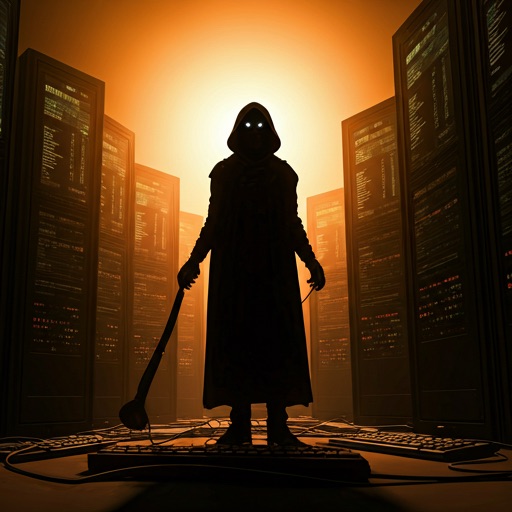
(Executioner image CC BY-SA 3.0)

Zip Code: The Factor of Disqualification

Not enough attention is paid to the critical importance of zip codes for U.S. tech product marketing job applicants. Identity experts know that geolocation can serve as one of the five factors of authentication. But geolocation (via zip code) can also serve as a factor of disqualification.

This video doesn’t directly have to do with Bredemarket—my clients ARE remote-friendly—but since it involves my status as a biometric product marketing expert I thought I’d share it here.

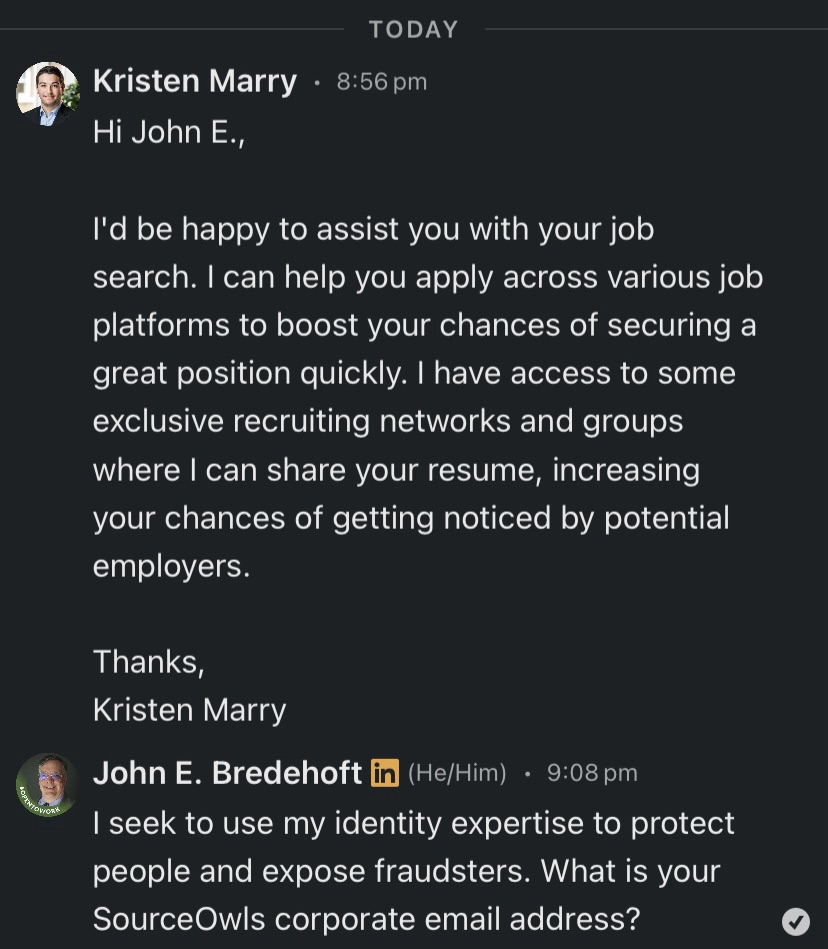
For more detail, see my LinkedIn post from earlier this morning.

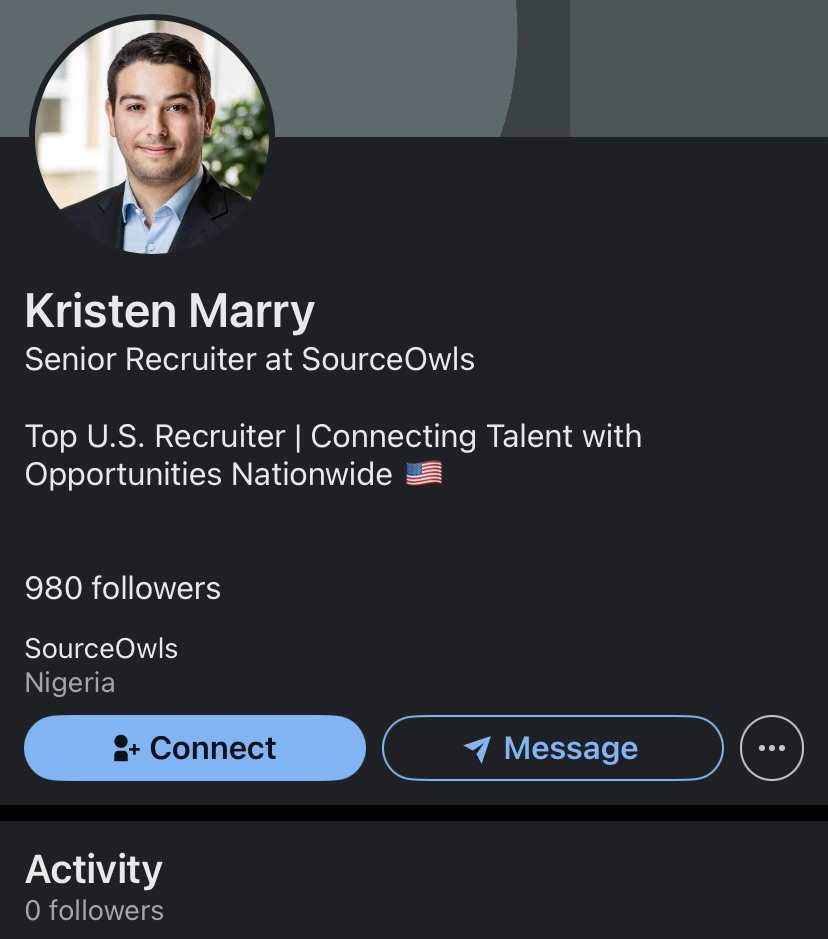
Zip code (from a “91” person).

Do You Know Your Identity/Biometric Competitors…And Yourself?

Do you need identity/biometric analysis from an informed analyst with 30 years of identity/biometric experience?

Do you need:

  • Competitor and competitor product analysis?
  • Industry analysis?
  • Use case analysis?
  • Analysis of your own company?

Book a free meeting with Bredemarket and discuss your needs. Click the image below to drive informed analysis with Bredemarket Identity Firm Services.

Drive informed analysis with Bredemarket Identity Firm Services

Do All 5 Identity Factors Apply to Non-Human Identities?

I’ve talked ad nauseam about the five factors of identity verification and authentication. In case you’ve forgotten, these factors are:

  • Something you know.
  • Something you have.
  • Something you are.
  • Something you do.
  • Somewhere you are.

I’ll leave “somewhat you why” out of the discussion for now, but perhaps I’ll bring it back later.

These five (or six) factors are traditionally used to identify people.

Identifying “Non-Person Entities”

But what happens when the entity you want to identify is not a person? I’ll give two examples:

Kwebbelkop AI? https://www.youtube.com/watch?v=3l4KCbTyXQ4.
  • Kwebbelkop AI, discussed in “Human Cloning Via Artificial Intelligence: It’s Starting,” is not a human. But is there a way to identify the “real” Kwebbelkop AI from a “fake” one?
  • In “On Attribute-Based Access Control,” I noted that NIST defined a subject as “a human user or NPE (Non-Person Entity), such as a device that issues access requests to perform operations on objects.” Again, there’s a need to determine that the NPE has the right attributes, and is not a fake, deep or shallow.

There’s clearly a need to identify non-person entities. If I work for IBM and have a computer issued by IBM, the internal network needs to know that this is my computer, and not the computer of a North Korean hacker.

But I was curious. Can the five (or six) factors identify non-person entities?

Let’s consider factor applicability, going from the easiest to the hardest.

The easy factors

  • Somewhere you are. Not only is this extremely applicable to non-person entities, but in truth this factor doesn’t identify persons, but non-person entities. Think about it: a standard geolocation application doesn’t identify where YOU are. It identities where YOUR SMARTPHONE is. Unless you have a chip implant, there is nothing on your body that can identify your location. So obviously “somewhere you are” applies to NPEs.
  • Something you have. Another no brainer. If a person has “something,” that something is by definition an NPE. So “something you have” applies to NPEs.
  • Something you do. NPEs can do things. My favorite example is Kraftwerk’s pocket calculator. You will recall that “by pressing down this special key it plays a little melody.” I actually had a Casio pocket calculator that did exactly that, playing a tune that is associated with Casio. Later, Brian Eno composed a startup sound for Windows 95. So “something you do” applies to NPEs. (Although I’m forced to admit that an illegal clone computer and operating system could reproduce the Eno sound.)
Something you do, 1980s version. Advance to 1:49 to hear the little melody. https://www.youtube.com/watch?v=6ozWOe9WEU8.
Something you do, 1990s version. https://www.youtube.com/watch?v=miZHa7ZC6Z0.

Those three were easy. Now it gets harder.

The hard factors

Something you know. This one is a conceptual challenge. What does an NPE “know”? For artificial intelligence creations such as Kwebbelkop AI, you can look at the training data used to create it and maintain it. For a German musician’s (or an Oregon college student’s) pocket calculator, you can look at the code used in the device, from the little melody itself to the action to take when the user enters a 1, a plus sign, and another 1. But is this knowledge? I lean toward saying yes—I can teach a bot my mother’s maiden name just as easily as I can teach myself my maiden name. But perhaps some would disagree.

Something you are. For simplicity’s sake, I’ll stick to physical objects here, ranging from pocket calculators to hand-made ceramic plates. The major reason that we like to use “something you are” as a factor is the promise of uniqueness. We believe that fingerprints are unique (well, most of us), and that irises are unique, and that DNA is unique except for identical twins. But is a pocket calculator truly unique, given that the same assembly line manufactures many pocket calculators? Perhaps ceramic plates exhibit uniqueness, perhaps not.

That’s all five factors, right?

Well, let’s look at the sixth one.

Somewhat you why

You know that I like the “why” question, and some time ago I tried to apply it to identity.

  • Why is a person using a credit card at a McDonald’s in Atlantic City? (Link) Or, was the credit card stolen, or was it being used legitimately?
  • Why is a person boarding a bus? (Link) Or, was the bus pass stolen, or was it being used legitimately?
  • Why is a person standing outside a corporate office with a laptop and monitor? (Link) Or, is there a legitimate reason for an ex-employee to gain access to the corporate office?

The first example is fundamental from an identity standpoint. It’s taken from real life, because I had never used any credit card in Atlantic City before. However, there was data that indicated that someone with my name (but not my REAL ID; they didn’t exist yet) flew to Atlantic City, so a reasonable person (or identity verification system) could conclude that I might want to eat while I was there.

But can you measure intent for an NPE?

  • Does Kwebbelkop AI have a reason to perform a particular activity?
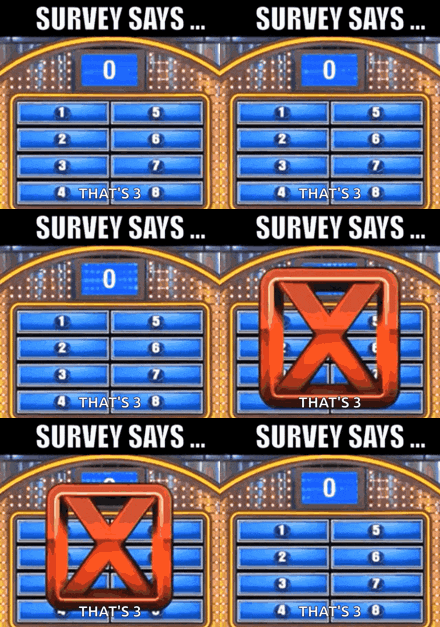
  • Does my pocket calculator have a reason to tell me that 1 plus 1 equals 3?
  • Does my ceramic plate have a reason to stay intact when I drop it ten meters?

I’m not sure.

By Bundesarchiv, Bild 102-13018 / CC-BY-SA 3.0, CC BY-SA 3.0 de, https://commons.wikimedia.org/w/index.php?curid=5480820.