“But if I could offer a marketing word of advice to TPRM firms, the “we are better than legacy TPRM firms” message has jumped the shark. EVERYONE is better than legacy TPRM firms these days; you are nothing new. No one is completely manual any more. It’s like comparing a Tesla to a bicycle. Or any basketball team to the Washington Generals.”
But has my own messaging jumped the shark?
Such as my oft-repeated claim that some firms aren’t creating current content…and therefore need my help?
Who are these mythical companies?
Certainly not SAFE, which definitely has current content, including (as I write this) a July 16 blog post.
Tech CMOs want to move their prospects to act and buy world-changing offerings (products or services) from their firms…and I want to move my tech CMO prospects to act and buy marketing and writing services from Bredemarket. So tech CMOs, I definitely feel your pain. But how can you move your prospects…and how can I move you?
Because my client had a specific problem. The client needed its prospects to understand how its offering could solve nagging prospect problems. Riots. Car thefts. Robberies.
And my client had a specific solution. I can’t reveal the solution without giving the client away, but let’s just say the the solution simultaneously addressed the end customers’ dual needs of speed and accuracy, as well as other end customer concerns.
As for specific results, I confess I don’t know. In this case my client never got back to me and said, “John, case study 3 attracted a prospect that ended up buying an annual contract.” And my primary contact at the client subsequently moved to another firm. But the fact that the client stuck with me for a dozen case studies and some subsequent NIST FRTE analysis work indicates that I did something right.
You see what I did there. Well, as much as I could while preserving my ghostwriter status and my client’s anonymity.
What is your specific problem?
This section of the blog post is specifically addressed to tech CMOs and other marketers. The rest of you can skip this part and watch this entertaining video instead.
Bredemarket has specific solutions depending on whether your needs are short, medium, long, or ongoing. As part of my solution, I begin by asking questions and then iterate the deliverable with you.
The specific results you need? Let’s talk about them.
Now I know I’ve loaded this post with links to previous Bredemarket content that addresses the…um…specific topics in much more detail. Maybe you clicked on the links, or maybe you didn’t. I will find out.
But if you are ready to move forward, this is the one link you need to click. (“Now you tell me, John!”) It lets you set up a meeting with Bredemarket to discuss your specific needs.
Unless you’re in the surveillance industry, surveillance sounds like a dirty word. I once knew an identity/biometric CEO who forcefully declared that HIS company would NEVER work in the surveillance industry.
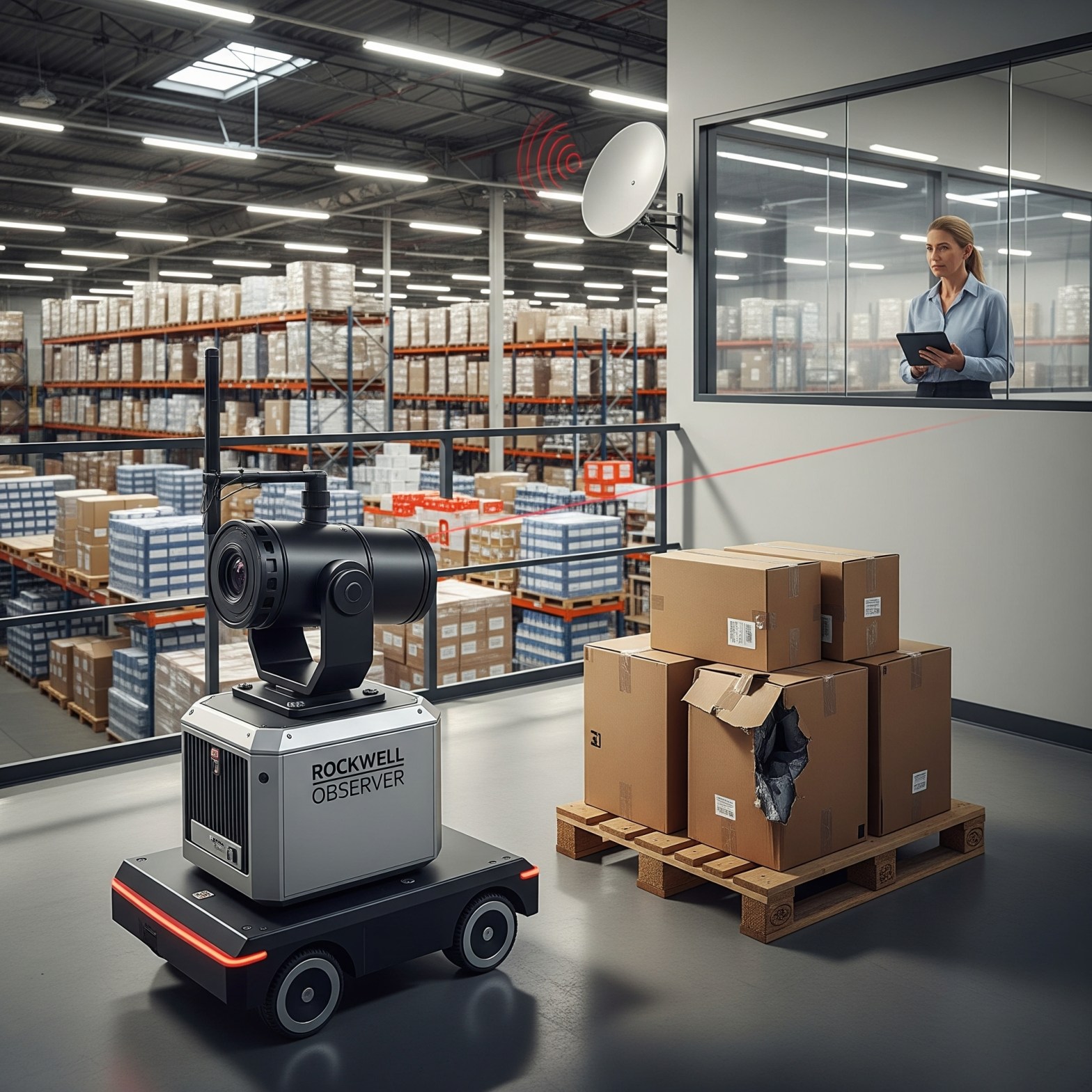
Imagen 4.
But as Goddard Technologies notes, surveillance can be useful even if you’re NOT chasing bad people.
But before I describe how, I’m going to reveal my age.
Kennedy (John) William (Smokey) Gordy
Let’s talk about a singer who went by the name Rockwell. This was supposedly to conceal the fact that his last name was Gordy (he is Berry’s son). But he didn’t really conceal the fact that one of the uncredited backup vocalists on his wonderful one hit was a man named Michael Jackson. This was in the 1980s, when Michael Jackson was kinda sorta popular. OK, now do you remember the song?
“Somebody’s Watching Me” by Rockwell.
This excerpt from the lyrics provides the sinister tone of the song:
People call me on the phone, I’m trying to avoid But can the people on TV see me, or am I just paranoid?
But that was the 1980s, when there was always a person in the surveillance loop. Even if there was a video camera hidden in Rockwell’s shower, some person was looking at the feed.
Things have changed.
Goddard Technologies’ “The Rise of Robotic Observers”
Now non-person entities (NPEs) are no longer the stuff of science fiction, and they can do things that only humans could do 40 years ago.
“While much of the attention has gone to robots that do something (cleaning, welding, lifting), there’s a quieter, equally important shift happening: the rise of robots that observe.”
But what do they observe?
“These robots navigate environments, gather data, and report back. Think of them as mobile sensors with wheels, legs or propellers that identify open doors, check for damage, verify inventory, or confirm environmental conditions.”
Kaplan then notes that there are human beings that perform similar tasks, and that therefore these observer bots “align with how many industrial jobs actually work.” After the observations are collected, then humans—or perhaps other bots—can act upon the observations.
Does this affect how you perceive non-person entities? How do you feel about non-person entities that merely collect data for others to act? This is technically “surveillance,” but it could potentially reduce costs, increase profits, or even save lives.
Do you sell robotic observers, or something equally important?
Jon Kaplan used a LinkedIn article to tell his story about Goddard Technologies’ activities with observing robots.
But maybe your firm has your own story to tell.
Imagen 4. And I have to give credit where credit is due. I asked Google Gemini to create a picture with a wildebeest-authored LinkedIn article, but the article title, “The Grass Ceiling: Overcoming Obstacles in the Corporate Savana” (sic), didn’t come from me but from Google.
Why haven’t you written a LinkedIn article about your product? This lets you reach B2B prospects who are more likely on LinkedIn than on TikTok. In fact, I wrote a LinkedIn article about LinkedIn articles. (I wrote it so long ago that I only asked my clients six questions rather than seven questions.) And I’ve also written LinkedIn articles for Bredemarket clients.
Do you need help in writing that LinkedIn article that tells the world about your product? Maybe you could become one of my clients, since I help create content for tech marketers. Contact me.
If you can use my services in any of these areas, book a free 30 minute content needs assessment and talk to Bredemarket. https://bredemarket.com/mark/
Odd, I thought. Not sure why a fingerprint device company would write stuff like this:
“AI Agent based automation could be the key to overcoming the bottlenecks in content creation and distribution. As a CEO, I am constantly seeking ways to optimize our operations, and this seemed like a promising avenue. The idea of automating content amplification intrigued me, especially considering the potential time savings and efficiency gains.”
Then I saw the author: “MIA.” (All caps.)
“MIA is CloudApper’s sales and solutions assistant, designed to help professionals and business leaders explore the future of workforce technology. MIA shares insights from real-world conversations with customers and CloudApper experts-bridging the gap between AI innovation and practical enterprise solutions.”
I subsequently discovered that CloudApper was co-founded by the same person who co-founded M2SYS.
So apparently CloudApper is publishing its posts on the M2SYS website.
Which led me to question: is M2SYS still a biometric concern?
I checked news articles, and the most recent mentions of the company are from so-called research reports of dubious value. Here’s the blurb for a 2021 report.
“The Key Players of the Global AFIS Market are 3M Cogent, Inc. (U.S.), Safran Identity & Security (U.S.), NEC Corporation (Japan), M2SYS Technology (U.S.), Afix Technologies Inc (U.S.), Biometrics4ALL (U.S.), Fujitsu (Japan), Cross Match Technologies, Inc. (U.S.), HID Global Corporation (U.S.), M2SYS Technology (U.S.).”
“American Green’s new AGM Beverage Vendor is an age-restricted vending machine to dispense beer and spirits, powered by finger vein biometric technology from M2SYS.”
And the aforementioned M2SYS blog has not used the “biometric” tag since March 2023.
But hey…they sure do have a lot of blog content.
But is it relevant?
If your identity/biometric company needs RELEVANT blog content…contact me by visiting https://bredemarket.com/cpa/.
June 2025 is almost over, so I can evaluate my performance against my goal.
Did I focus? Somewhat, both in my professional and my personal life.
Did I achieve ubiquity? Nope. But the blog has enjoyed record impressions and visitors. And would have achieved more if I hadn’t run afoul of the search engine gatekeepers.
Did I improve Bredemarket’s “capabilities to serve you”? Yes.









 Bredemarket