The Transitive Property, Technology, Biometrics, Content, and Product

Follow along.

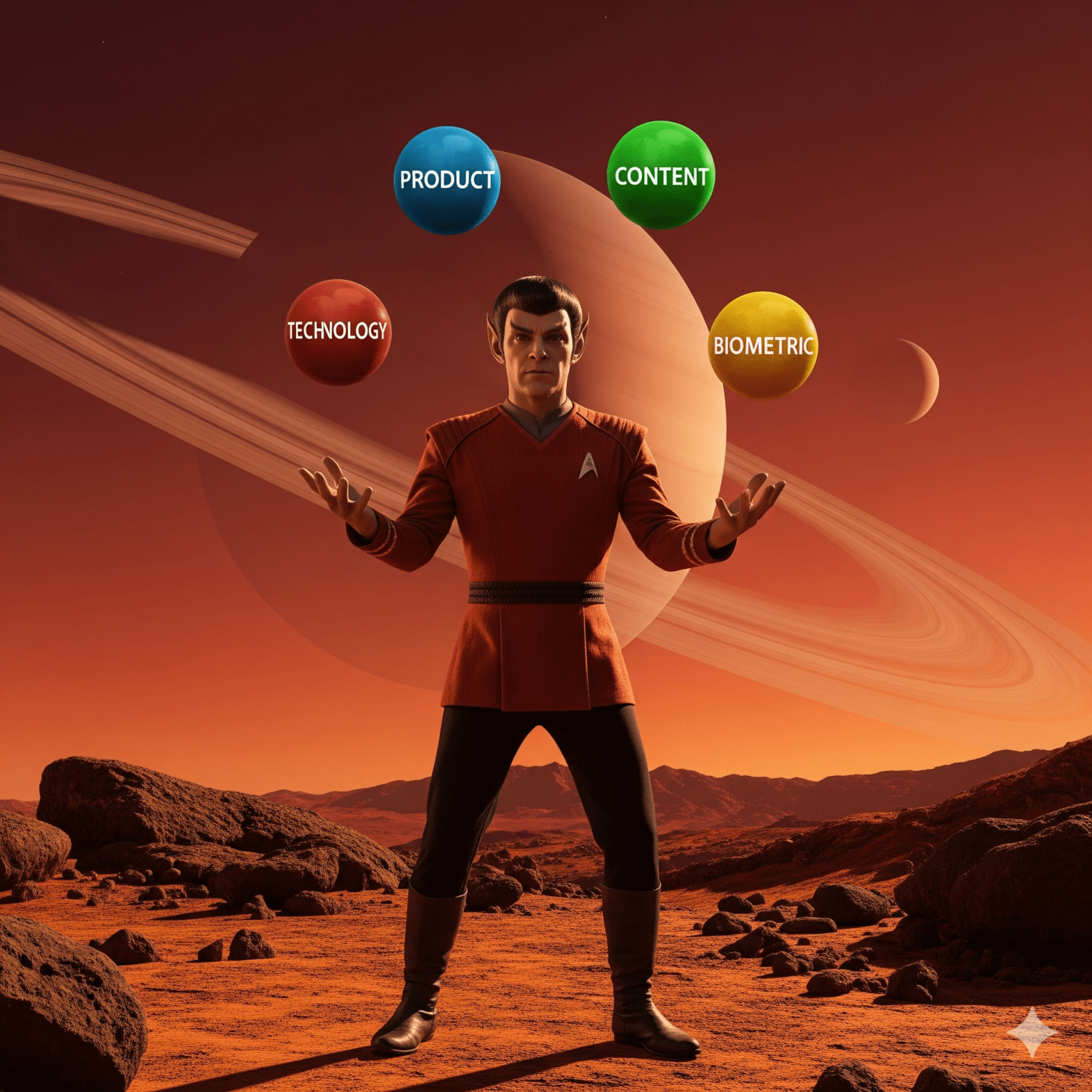
If I am the technology product marketing expert

…and if I am the biometric product marketing expert

…and if content marketing and product marketing significantly overlap

…then I am not only the biometric content marketing expert…

…but am also the technology content marketing expert.

I’m claiming it all.

The Silent Type

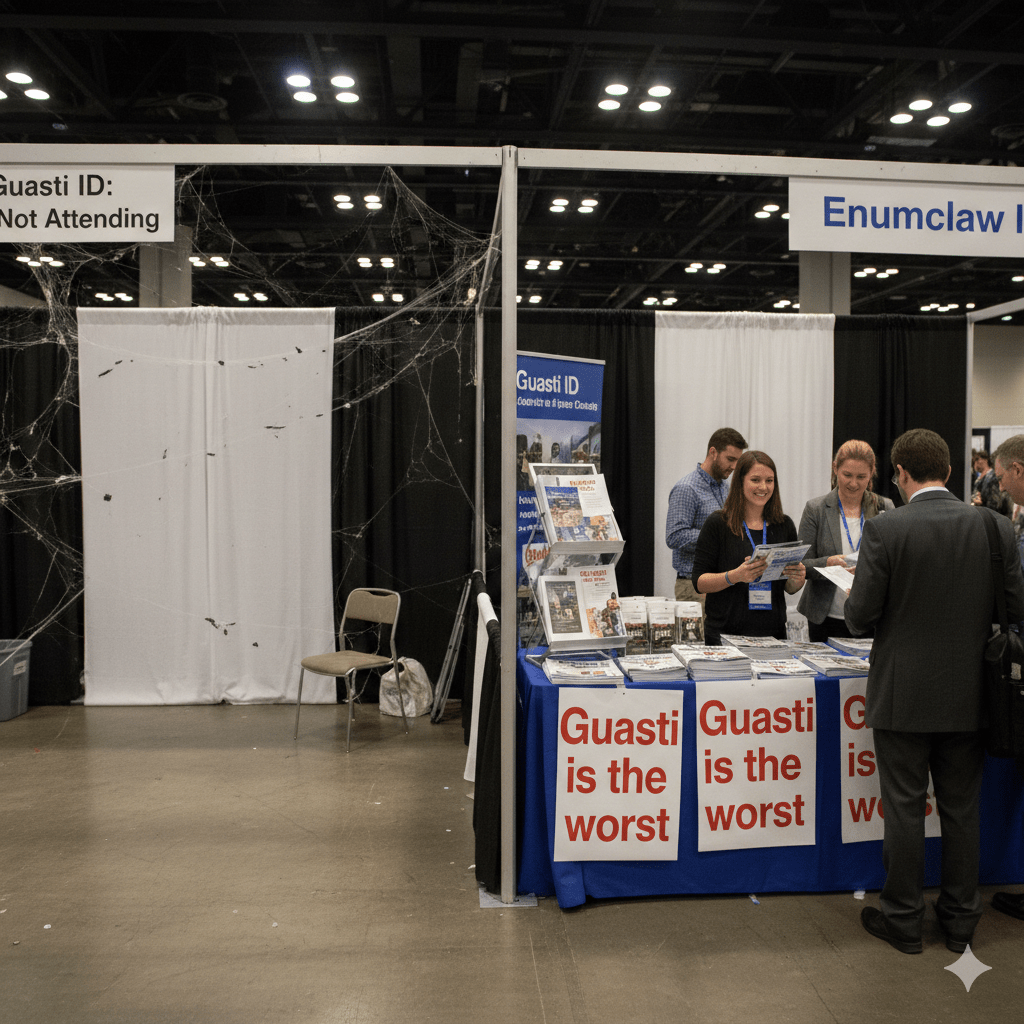
“It’s OK. The competitor isn’t talking, so we can say anything we want.”

But what if “the competitor”…is YOU?

Get in the content conversation: https://bredemarket.com/cpa/

(Imagen 3)

Writing Samples I (Mostly) Can’t Share Publicly

So a Bredemarket prospect requested samples of my internal and external sales enablement content, so they could evaluate my writing style.

There were only two problems with the request.

  • First, I can’t provide samples of internal content for other clients. Even privately. Because they’re…internal.
  • Second, reviewing samples of my external content gives no hint of my writing style, since I adjust my writing style to my clients.

But I provided external samples of what I do anyway: two client short data sheets, three client long data sheets, three Bredemarket data sheets, two client landing pages, one Bredemarket landing page, and two other samples.

So I will share one of the landing pages with you, but not a client one. This is one of mine, for Bredemarket’s identity/biometric prospects.

Featuring the Proper Second Video, Biometrics and Bredemarket

My “Biometrics and Bredemarket” video is buried in the middle of my “Ready, Fire, Aim” post, but people are finding it anyway.

(They’re skipping the short video and watching the long one.)

So it’s time to feature “Biometrics and Bredemarket” on its own.

Biometrics and Bredemarket.

If you don’t feel like watching a 2 minute and 20 second video, here are the bullets:

  • Marketing and writing deliverables
  • Provided by a biometric product marketing expert 
  • With industry knowledge
  • Of multiple biometric modalities
  • Who delivers content
  • And proposals
  • And analyses.

Learn more in the video, or at my “CPA” page.

Not that type of CPA.

The Problem With Ready, Fire, Aim

(Ready, fire, aim wildebeest via Imagen 3/Google Gemini)

If I had to choose between acting too quickly and acting too slowly, I would choose the former. You already know I don’t like it when things never get done. But the ready, fire, aim method introduces problems of its own. Let’s look at how ready, fire, aim can adversely affect both external and internal content.

External content

If you haven’t figured it out already, I create a lot of external prospect/customer facing content. Not only for Bredemarket’s clients, but also for Bredemarket itself so I can get more clients. This blog post is an example.

Sometimes I meticulously plan a full campaign via a myriad of Asana tasks covering multiple blog and social media posts. Sometimes the entire project appears in a day or two, sometimes it takes a week, and one recent project took 3 weeks including teaser content, the main content, and follow-up content.

Yes, sometimes I meticulously plan. And other times I just do stuff.

Last Saturday I was struck with an idea for a 2 minute and 20 second landscape video about biometrics and Bredemarket. I knew it was long and many who encountered it wouldn’t watch the whole thing, but I wanted to make my statement and reserve it for bottom of funnel activities.

Only AFTER I posted the video did I realize that this was the logical second part to a 30 second video that I had previously created for biometric clients

If I had thought this through, I  could have started with the 30 second video, THEN introduced the longer video as the logical next step. Like a funnel, if you believe in funnels.

The proper first video

Well, better late than never.

The 30 second edition.

Watch this 30 second video that I made for Bredemarket’s biometric prospects and clients.

For Biometric Clients.

The proper second video

Hey, did you like that video? Would you like to learn more?

The 140 second edition.

Watch this 140 second video that I made for Bredemarket’s extra special biometric prospects and clients.

Biometrics and Bredemarket.

Hey, did you like that video? Learn more on my “CPA” page.

Bredemarket’s “CPA.”

Well, that’s what I should have done in the first place so I wouldn’t have to make this clumsy fix later.

But there’s still time to fix a future internal campaign before it happens.

Internal content

Because this content is internal I can’t really talk about it, but I anticipate that Bredemarket will be invited to a future event…and I am already planning NOT to attend.

There are a number of stakeholders associated with this event, and in a TLOI kind of way they will have different reactions to my non-attendance. Some of them probably don’t give a you-know-what whether I attend or not. But perhaps there are those who do care, ranging from mild curiosity about why I’m not going, to the other extreme of demanding to know how I could bypass this important event.

So I drafted three messages in case I was asked about my non-attendance: (1) a brief two-paragraph message, (2) a longer message, and (3) a detailed message which delved into my concerns.

But what if I don’t know which message to send? What if I unloaded my deepest darkest fears via the long message, when the stakeholder merely wanted to know if I had other commitments at the time of the event?

So I rewrote the messages so that they build on one another.

  • Let’s say Bob asks why I’m not attending. I would simply send Bob the first, brief message. If this satisfies Bob’s curiosity, we’re done.
  • If Bob asks more, then I will send those portions of the second message that weren’t part of the first one—namely, the 3rd and 4th paragraphs of the second message. (The first 2 paragraphs of the second message are identical to the entire first message.
  • If Bob still questions, I will unload parts of the third message on him—namely the stuff absent from the second (and first) message.

There’s my funnel. And if needed I can skip directly to the third message with certain stakeholders.

And if no one asks why I’m skipping the event, I don’t send ANY communication—and know that my decision to skip the event was the right one.

Future content

So in the future, whether creating external or internal content, I need to pause and think about how it fits into the tons of content I’ve already created.

So that I can tell the best stories.

And so I will achieve ready, aim, fire rather than ready, fire, aim.

Lack of Differentiation Limits Your Available Talent

I’ve talked about differentiation ad nauseam, and even created a video about it last spring.

And I’ve provided some examples of lack of differentiation from my own industry:

  • (Company I) “Reimagine trust.”
  • (Company J) “To protect against fraud and financial crime, businesses online need to know and trust that their customers are who they claim to be — and that these customers continue to be trustworthy.”
  • (Company M) “Trust is the core of any successful business relationship. As the digital revolution continues to push businesses and financial industries towards digital-first services, gaining digital trust with consumers will be of utmost importance for survival.”
  • (Company O) “Create trust at onboarding and beyond with a complete, AI-powered digital identity solution built to help you know your customers online.”
  • (Company P) “Trust that users are who they say they are, and gain their trust by humanizing the identity experience.”
  • (Company V) “Stop fraud. Build trust. Identity verification made simple.”

This isn’t effective. Trust me.

But prospective customers aren’t the only ones who are turned off by “me-too” messaging.

Further ramifications of lack of differentiation

What about prospective employees who don’t want to apply to your company because they see no compelling reason to do so?

I’ll grant that the tech job market is so out of balance right now that people are applying to ANYTHING.

But the more choosy ones are…more choosy in their applications. Just like choosy mothers choose…you know.

I recently received this message from a product marketer after I shared a particular identity/biometric job description with them.

Not so sure that company is well positioned for evolving identity landscape.

From a selfish perspective, this benefits me, because I DID apply for this position while they DIDN’T. Reducing the competition increases my chances of getting the job.

But the company (which I’m not naming) doesn’t benefit, because at least one experienced identity verification product marketer doesn’t want to work for them.

So be sure to differentiate…as long as the differentiation resonates with your hungry people (target audience). If your audience is repelled by your differentiation, then that’s a problem with your customer focus.

From the Gary Fly / Brooks Group article “7 Tips for Implementing a Customer-Centric Strategy,” at https://brooksgroup.com/sales-training-blog/7-tips-implementing-customer-centric-strategy/.

Now Bredemarket can’t help you with your job search, because I’m certainly not an expert in that. But I can ask you questions that help you create content that conveys that your product is great and your competitors’ products…are not so good.

Visit Bredemarket’s “CPA” page to learn how I can help your firm’s content (and analysis, and proposals), and to schedule a meeting.

Bredemarket’s “CPA.”

Friction is Bad

Some time ago I read a story (which may or may not have been true) about an employer who called multiple job applicants to the office for a morning interview. As time passed and the employer didn’t interview anyone, some of the applicants got tired of waiting and left. At the end of the day, only one applicant remained. That applicant got the job.

  • The person who told the story thought that it demonstrated that perseverance pays off.
  • Most of the readers thought that it demonstrated that the employer was a jerk and that the work environment was probably toxic.

If this were to happen in real life, the employer would paradoxically lose out on the BEST candidates who had better things to do than sit around an office all day.

Why?

Because people avoid friction. If job applicants can obtain jobs without playing silly games, they will.

Friction is bad.

Waiting room in an airport.
Waiting room image by User:Mattes – Own work, Public Domain, https://commons.wikimedia.org/w/index.php?curid=1732601.

The evolution of fingerprint capture

When I started in the biometric industry 30 years ago, many police agencies were capturing fingerprints by putting ink on a person’s fingers and rolling/slapping the prints on a card.

That was messy and time-consuming, so companies like Digital Biometrics and Identix developed “livescan” devices, which did not require ANY ink and which let police agencies capture fingerprints by rolling/slapping the prints on a glass platen. This process could require a minute or two for the livescan operator to capture all fourteen images.

That’s a long time.

As I’ve previously noted, it was TOO long for some people in the federal government, who began asking in 2004 if technology could capture a complete set of fingerprints in 15 seconds.

20 years later, we can capture fingerprints (at least 8 of them) in a couple of seconds.

How?

By avoiding friction. Rather than forcing people to place their fingerprints on a card or a platen, “contactless” technology lets the “wave” (or “fly”) their fingers over a capture device, or hold their fingerprints in front of a smartphone camera.

Friction is bad.

The sound of silence

Despite what lyricists say, silence is NOT your old friend.

When a prospect wants to find out about your biometric solution, how does silence help you?

Let’s say that a prospect hears that MegaCorp offers a biometric solution, but MegaCorp’s blog and social media haven’t posted anything lately.

What are the chances that the prospect will search far and wide to find out about MegaCorp’s biometric solution?

Actually, the chances are better that the prospect won’t search at all, and will turn to the competitors who are NOT silent.

Blogging benefits: 55% more website visitors, 67% more leads, 13x more likely to enjoy positive ROI, 92% acquire customers.

Are you going to look for the information that is easily available, or the information that is hard to obtain?

Friction is bad.

Eating my own wildebeest food

I’m trying to reduce friction in Bredemarket’s own practices.

While I still use landing pages for some thing that require further explanation for some prospects, I’m trying to avoid them in some instances.

I’m working on a marketing campaign for a client, and my first “draft 0.5” of the campaign was loaded with friction.

  • The prospect had to open an email.
  • In the email, the prospect had to click on a landing page.
  • On the landing page, the prospect had to fill out a form to book a meeting.

Huge numbers of people drop out of the process at every step. So why not eliminate a step, and let the prospect book a meeting in a form embedded in the email?

Friction is bad.

And I’m applying this same principle to this post.

If your identity/biometric firm is desperate for content to convert prospects into paying customers, why don’t you schedule a free 30-minute meeting with Bredemarket to discuss your needs and what I can offer?

Incidentally, while I often repurpose blog content on Bredemarket’s social media channels, this post WON’T be one of them. I can’t embed a Calendly form into an Instagram or LinkedIn post.

And I can’t embed YouTube videos either.

From https://www.youtube.com/watch?v=nkUOACGtGfA.

Educating the Fake Abbott Salesperson

A salesperson from Abbott just contacted me via LinkedIn InMail.

Well, she CLAIMED to be from Abbott. I’m not sure.

Anyway, she said she wanted to “get to know each other” because we are “in the same industry.”

Rather than dismissing the InMail out of hand as a #fraud #scam attempt with a #fakefakefake identity, I embraced the opportunity of a teachable moment and shared Bredemarket’s 2021 post on the difference between biometrics and biometrics. Excerpt:

In my circles, people generally understand ‘biometrics’ to refer to one of several ways to identify an individual.

But for the folks at Merriam-Webster, this is only a secondary definition of the word “biometrics.” From their perspective, biometrics is primarily biometry, which can refer to “the statistical analysis of biological observations and phenomena” or to “measurement (as by ultrasound or MRI) of living tissue or bodily structures.” In other words, someone’s health, not someone’s identity.

Fun fact: if you go to the International Biometric Society and ask it for its opinion on the most recent FRVT 1:N tests, it won’t have an answer for you.

Yeah, “FRVT.” Told you I wrote it in 2021, before the great renaming.

So Abbott salespeople, real or imagined, won’t be interested in what I’ve been doing for the last 30 years. ‘Cause you know sometimes words have two meanings.

But those of you who use biometrics (and other factors) for individualization WILL be interested. Click on the image to find out more.

Drive content results with Bredemarket Identity Firm Services.