How Do Privacy Professionals Feel About the SECURE Data Act?

How should businesses, governments, and individuals treat private data? In the United States, the answer varies from state to state, and even from city to city.

A proposed national solution to the hodgepodge of differing state and local privacy regulations is the so-called SECURE Data Act.

Privacy

But how do privacy professionals feel about it?

I knew that CalPrivacy opposed the bill, so I wanted to see how Daniel Solove regarded it.

“Congress’s latest foray is a new bill called the SECURE Data Act, a piece of garbage cooked up by Republicans as a gift to industry in a climate where the public is deeply concerned about privacy, outraged at the harms tech is causing, and yearning for ways to hold Big Tech accountable.

“I can’t stress enough how awful this bill is. On balance, if passed into law, it will do dramatic harm to privacy. It will leave people less protected than if it didn’t exist. I’d call it more of an anti-privacy law than a privacy law.”

Um…I don’t think Solove likes it.

Preemption

One of the huge issues that privacy advocates have is preemption. To ensure uniform privacy across the United States, the proposed SECURE Data Act preempts any state laws that exceed its protections. Therefore the privacy protections in states such as California, Illinois, and Texas could be revoked.

Of course, this is a classic struggle in state-federal relations. The staunchest states’ rights advocate will suddenly switch sides if they agree with a federal regulation, and vice versa. Citing one example, gay marriage began as a states’ rights issue when only a few states supported it, then became a federal rights issue.

Another example is the federal drive to eliminate the U.S. Department of Education. This has not happened yet. And it never will, once the powers that be realize that its elimination will allow blue states to teach whatever they want.

Secure

But let’s go back to the title of the bill, the SECURE Data Act. Upon seeing the title, the average voter would assume that the bill secures our individual privacy rights.

But the privacy advocates believe that the bill actually secures the right of entities to do what they want with our personally identifiable information, with minimal restrictions.

I think the bill’s title may have been written by Eric Arthur Blair.

(Image by Google Gemini. Sorry, Ontario Canada; Gemini may make mistakes.)
Are You Using TI To Its Fullest?

Don’t fall behind.

It should be obvious by now that TI is a transformative paradigm shift that is already affecting the world economy and your own life.

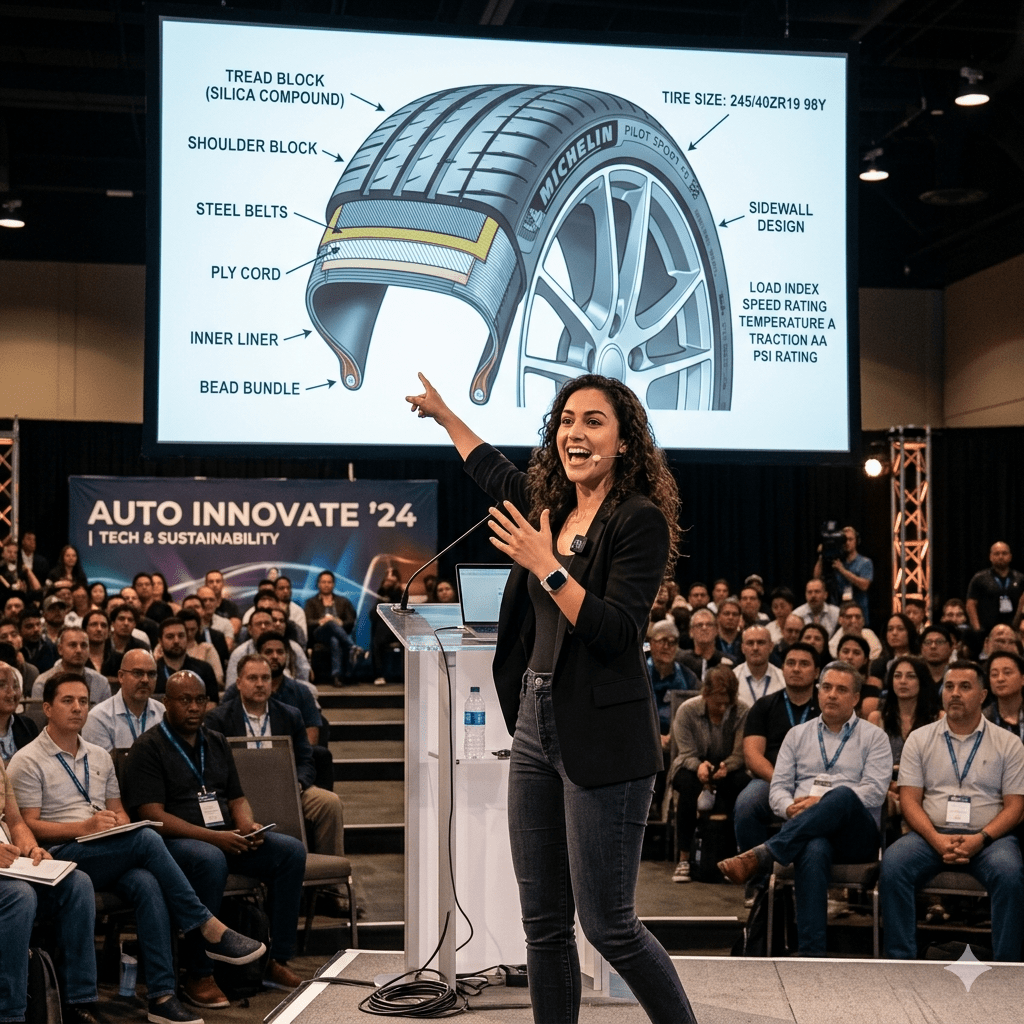
Forward-thinking influencers are reimagining the tire as a sophisticated sensory organ, incorporating real-time structural diagnostics and dynamic adaptation. This is fundamentally redefining our relationship with the road, proving that the future of mobility is being built from the ground up.

But those who remain still will fall behind.

  • Those who purchase expensive TI courses will move ahead.
  • Those who reposition their marketing to always talk about TI will move ahead.
  • Those who right-size their companies to allow maximum investment in TI will move ahead.

Because the tool IS a way of life.

Google Gemini.

Look familiar?

It should.

Don’t fall into the me-too trap. Differentiate.

You’re Doing It Wrong(TM).

https://bredemarket.com/mark/

May 1? It’s Complicated.

A statement of fact: with one exception, Bredemarket’s work is targeted to American audiences.

Which means the content I am publishing and linking to today is going to strike non-Americans as a little odd.

Why?

It’s complicated.

It’s complicated.

Because even though International Workingmen’s Day was celebrated throughout the world on May 1, 1890, the celebration has mostly died out here, except for its adoption by immigrant groups.

See my tymshft post from 2012 (with corrected link), “The American perspective on May Day – or, I am not a Commie.” I revisited the topic here in the Bredemarket blog 10 years later, on the AMERICAN Labor Day.

So if you want to talk about May Day with Americans, even AFL-CIO members (especially AFL-CIO members), play it safe.

Google Gemini.

Is Fun Allowed?

I have been known to tell coworkers that I was going to “play” with something. Some were horrified, but others understood completely.

Regardless of the emotions you want to convey in the final content, it’s OK to let loose while you develop your ideas.

Luckily for me, a client recently requested some “fun” concepts. Obviously I can’t share the text I provided to the client, but here is a altered representation of one small idea I had.

Google Gemini.

So go ahead and have fun. (Even if you can’t tell anyone that you’re having fun.)

Incidentally, one of the seven questions I ask my clients is about emotions.

I ask, then I act.

If you want to me “act” on behalf of your company and develop product marketing content, proposals, and analysis, then click below and schedule a free meeting with me.

Stop losing prospects!

What is Your Q3 Content Focus?

Yes, I know it’s still April, and we’re not even halfway through the second quarter.

But the third quarter is coming.

And I already have some idea of Bredemarket’s own content focus in July, August, and September.

  • Something else that I don’t know yet.

I can’t predict the future and don’t know what wild idea I will dream up by July.

But whatever it is, I will commit to it.

Along with the others.

Video 1.
Video 2.
Video 3.
Four pages from "Proving Humanity: The Six Factors of Identity Verification and Authentication" by John E. Bredehoft, Bredemarket. Click on the image to purchase.
Ebook 1.

And if I can help you with your content focus, book a free meeting with me to discuss your needs.

Book a meeting with Bredemarket.

My Favorite Line I Wrote Today

From my post this morning on Advent International, Amadeus, and IDEMIA Public Security.

“Plan C became to split IDEMIA into three chunks—biometric product marketing experts call this a “trifurcation”—and sell the three chunks individually.”

Now I have never officially written about trifurcations, but if you saw my post on bifurcations you can probably figure out trifurcations also.

From NIST.

Advent International Plans to Sell IDEMIA Public Security

Amadeus’ planned acquisition of IDEMIA Public Security has been years in the making.

Many years ago, Advent International acquired Oberthur with the intent to sell it at a profit.

But Advent wanted to beef it up.

Meanwhile, Safran wanted to sell a chunk of itself to concentrate on its…(long pause)…transportation business.

The resulting combination was initially named OT MORPHO. It was subsequently renamed IDEMIA.

Wow.

Fast forward to 2022, when Reuters speculated that Advent was about to sell IDEMIA. I wrote about this twice at the time (one, two)…but in the end nothing happened.

Then Advent went to plan C.

  • Plan A was to buy Oberthur and sell it.
  • Plan B was to combine Oberthur with Morpho and sell it.
  • Plan C became to split IDEMIA into three chunks—biometric product marketing experts call this a “trifurcation”—and sell the three chunks individually.

The first chunk moved forward in 2024, when IDEMIA entered negotiations to sell IDEMIA Smart Identity to IN Groupe. These negotiations were successful.

This did not include my former part of IDEMIA, IDEMIA Public Security.

Fast forward two years, when a Spanish company made its intentions known.

29 April 2026, 8am CEST: Following a competitive bid process, Amadeus today announces its intention to acquire IDEMIA Public Security (IPS), a leading biometrics and identity services provider headquartered in France….It will follow Amadeus’ 2024 acquisition of Vision-Box.”

Now nothing is signed yet, and government approvals will take some time. (I know.) Amadeus’ current estimate is mid 2027, but this could slip.

So I will spend the time watching music videos.

Ooh!