
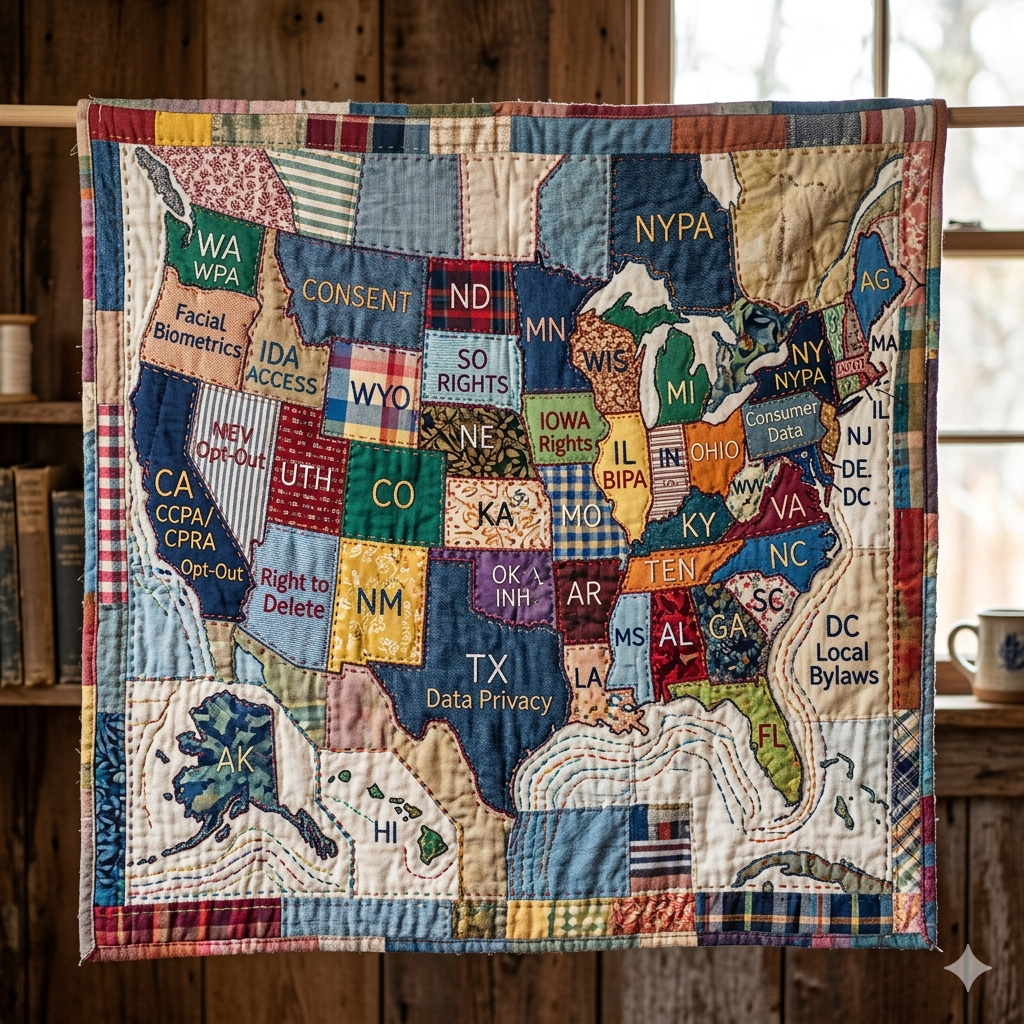
How should businesses, governments, and individuals treat private data? In the United States, the answer varies from state to state, and even from city to city.
A proposed national solution to the hodgepodge of differing state and local privacy regulations is the so-called SECURE Data Act.
Privacy
But how do privacy professionals feel about it?
I knew that CalPrivacy opposed the bill, so I wanted to see how Daniel Solove regarded it.
“Congress’s latest foray is a new bill called the SECURE Data Act, a piece of garbage cooked up by Republicans as a gift to industry in a climate where the public is deeply concerned about privacy, outraged at the harms tech is causing, and yearning for ways to hold Big Tech accountable.
“I can’t stress enough how awful this bill is. On balance, if passed into law, it will do dramatic harm to privacy. It will leave people less protected than if it didn’t exist. I’d call it more of an anti-privacy law than a privacy law.”
Um…I don’t think Solove likes it.
Preemption
One of the huge issues that privacy advocates have is preemption. To ensure uniform privacy across the United States, the proposed SECURE Data Act preempts any state laws that exceed its protections. Therefore the privacy protections in states such as California, Illinois, and Texas could be revoked.
Of course, this is a classic struggle in state-federal relations. The staunchest states’ rights advocate will suddenly switch sides if they agree with a federal regulation, and vice versa. Citing one example, gay marriage began as a states’ rights issue when only a few states supported it, then became a federal rights issue.
Another example is the federal drive to eliminate the U.S. Department of Education. This has not happened yet. And it never will, once the powers that be realize that its elimination will allow blue states to teach whatever they want.
Secure
But let’s go back to the title of the bill, the SECURE Data Act. Upon seeing the title, the average voter would assume that the bill secures our individual privacy rights.
But the privacy advocates believe that the bill actually secures the right of entities to do what they want with our personally identifiable information, with minimal restrictions.
I think the bill’s title may have been written by Eric Arthur Blair.
(Image by Google Gemini. Sorry, Ontario Canada; Gemini may make mistakes.)

 Bredemarket