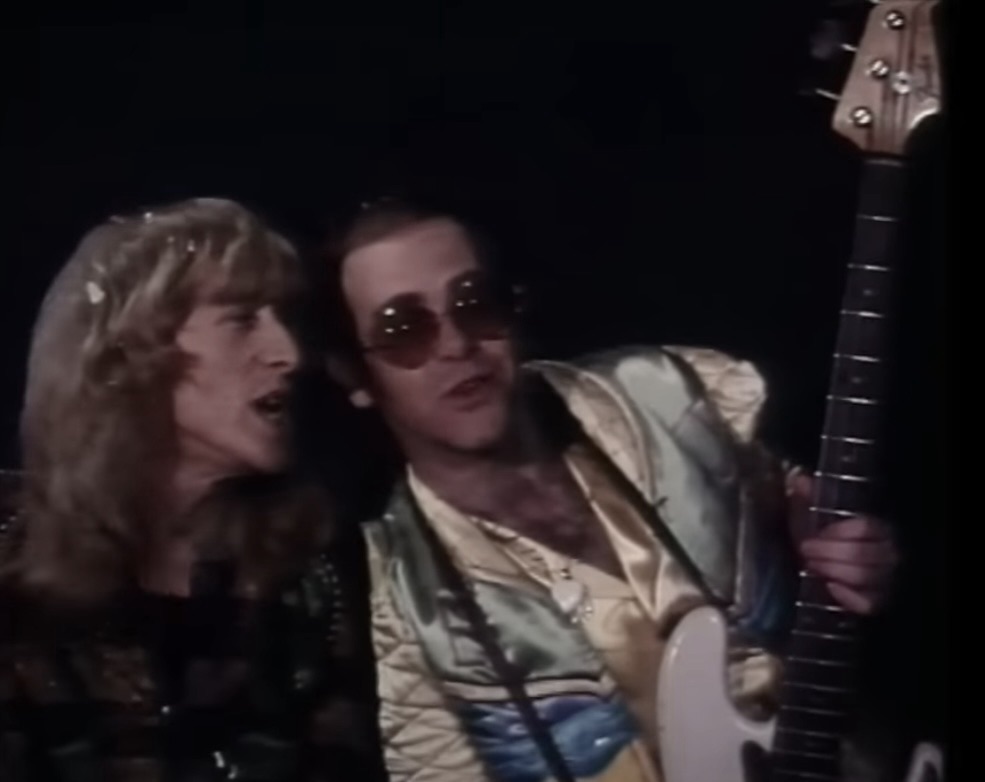
David Hentschel: ARP 2500 synthesizer (uncredited)
The video doesn’t match this list. According to the video, Elton played more than the guitar, and Bernie Taupin performed on the track.
So while we didn’t use the term “deepfake” in 1973, this promotional video meets at least some of the criteria of a deepfake.
And before you protest that everybody knew that Elton John didn’t play guitar…undoubtedly some people saw this video and believed that Elton was a guitarist. After all, they saw it with their own eyes.
Masha Borak of Biometric Update is writing about FaceKom again.
I discussed Borak’s previous article on FaceKom, which noted the alleged ties between FaceKom and the Hungarian government. The whole thing is a classic example of BENEFICIAL ownership, in which someone who is not the legal owner of a company may still benefit from it.
Borak returned to the theme in the current post:
“FaceKom, the identity verification company used by the Hungarian national digital identity program, has been acquired by major local IT and telecom group, 4iG Informatikai (4iG IT). The deal is now attracting attention among media outlets and political watchers due to the companies’ relationship with Prime Minister Viktor Orbán….
“Recent 4iG’s purchases, however, have been raising questions over the company’s reported links to the Hungarian government, which has been accused by critics of enriching political allies, family, and loyalists through state resources and public contracts.”
“4iG chairman and majority investor Gellért Jászai is known for his ties to Orbán and was invited as part of his entourage to Donald Trump’s Mar-a-Lago resort after the 2024 U.S. presidential election.”
“[FaceKom’s] previous owner is Equilor Fund Management, owned by the Central European Opportunity Private Equity Fund (CEOM)….While CEOM has no direct links with Orbán, local media investigations have discovered links with companies owned by the Prime Minister’s son-in-law, István Tiborcz.”
Mere links do not necessarily indicate illegal activity, and Hungarian law may differ from laws in other countries, but FaceKom is being watched.
A company’s “why” story can evoke negative emotions, and for this reason can powerfully resonate with their prospects who are experiencing the same problem, and admire someone who overcame it.
As Davison tells it, her 1:1s with businesspeople often turn into confessionals. Not that I picture the lovebug-loving Chantelle as a priest, but bear with me.
“Then they tell me something they’ve been carrying around for YEARS.
“Something they’re convinced would make people think less of them.
“Something they’ve buried so deep they’d almost forgotten it was there….
“The messy backstory that shaped exactly WHY they do what they do.”
And that can resonate with prospects.
Take the Keith Puckett failure example that I shared earlier: he had purchased a home security system thinking that it would protect him…and then while he was traveling the security system sent him an alarm with no context.
Now I guess Puckett could have been embarassed by this stupid purchase of something that did no good at all. But Puckett wasn’t embarassed at all. And he tells Ubiety prospects that he spent good money on a bad system, experienced fear and helplessness…and that he NEVER wants Ubiety customers to experience those same negative emotions.
Share YOUR why story.
Even if it’s a poor tattoo choice.
Google Gemini.
And if you need help writing your why story, talk to me.
I participate in several public and private AI communities, and one fun exercise is to take another creator’s image generation prompt, run it yourself (using the same AI tool or a different tool), and see what happens. But certain tools can yield similar results, for explicable reasons.
On Saturday morning in a private community Zayne Harbison shared his Nano Banana prompt (which I cannot share here) and the resulting output. So I ran his prompt in Nano Banana and other tools, including Microsoft Copilot and OpenAI ChatGPT.
The outputs from those two generative AI engines were remarkably similar.
But Harbison’s prompt was relatively simple. What if I provided a much more detailed prompt to both engines?
Create a realistic photograph of a coworking space in San Francisco in which coffee and hash brownies are available to the guests. A wildebeest, who is only partaking in a green bottle of sparkling water, is sitting at a laptop. A book next to the wildebeest is entitled “AI Image Generation Platforms.” There is a Grateful Dead poster on the brick wall behind the wildebeest, next to the hash brownies.
So here’s what I got from the Copilot and ChatGPT platforms.
Copilot.
ChatGPT.
For comparison, here is Google Gemini’s output for the same prompt.
Gemini.
So while there are more differences when using the more detailed prompt (see ChatGPT’s brownie placement), the Copilot and ChatGPT results still show similarities, most notably in the Grateful Dead logo and the color used in the book.
So what have we learned, Johnny? Not much, since Copilot and ChatGPT can perform many tasks other than image generation. There may be more differentiation when they perform SWOT analyses or other operations. As any good researcher would say, more funding is needed for further research.
But I will hazard two lessons learned:
More detailed prompts are better.
If the answer is critically important, submit your prompts to multiple generative AI tools.
I know it’s late on a Friday night (or perhaps Saturday morning where you are), but we need to speak about reality.
As you may know, I’ve grown tired of the word “trust” because of its overuse in the identity verification industry. When everyone repeatedly uses “trust” as a supposed differentiator, no one is differentiated.
But what happens if the overused word “trust” escapes the tired vision statements and starts to be taken seriously?
Why should my prospects trust Bredemarket?
Let’s bring this VERY close to home, why should Bredemarket’s prospects and clients trust me?
After all, there are many reasons why they shouldn’t trust me at all.
I claim to have worked for about two dozen clients (give or take) since 2000, but the majority of readers of this post cannot name one single Bredemarket client. A few of you can name one of my clients. (Especially if you’re the client in question.) Maybe someone can name two or three. This is by design, since I usually function as a de facto ghostwriter, where my work-for-hire words literally become the property of the client.
But at least in the 20th century you knew that a person was behind any claims. The person may have been lying through their teeth, but there was a person behind the lies. Today there may be no such person. What if Bredebot is NOT my only synthetic identity creation? What if I do not exist, and have never existed?
Ah…I can see the uncertainty entering your consciousness.
And now you’re thinking…that maybe you can’t trust anything I said over the last five years.
But now…
Why should your prospects trust you?
…think about how outsiders look at YOUR company.
And if outsiders have any reason to…um…trust you.
And what strategies and content you need to regain the trust of these outsiders.
Now I am not asking you to immediately trust my claim that Bredemarket can equip you with the content you need.
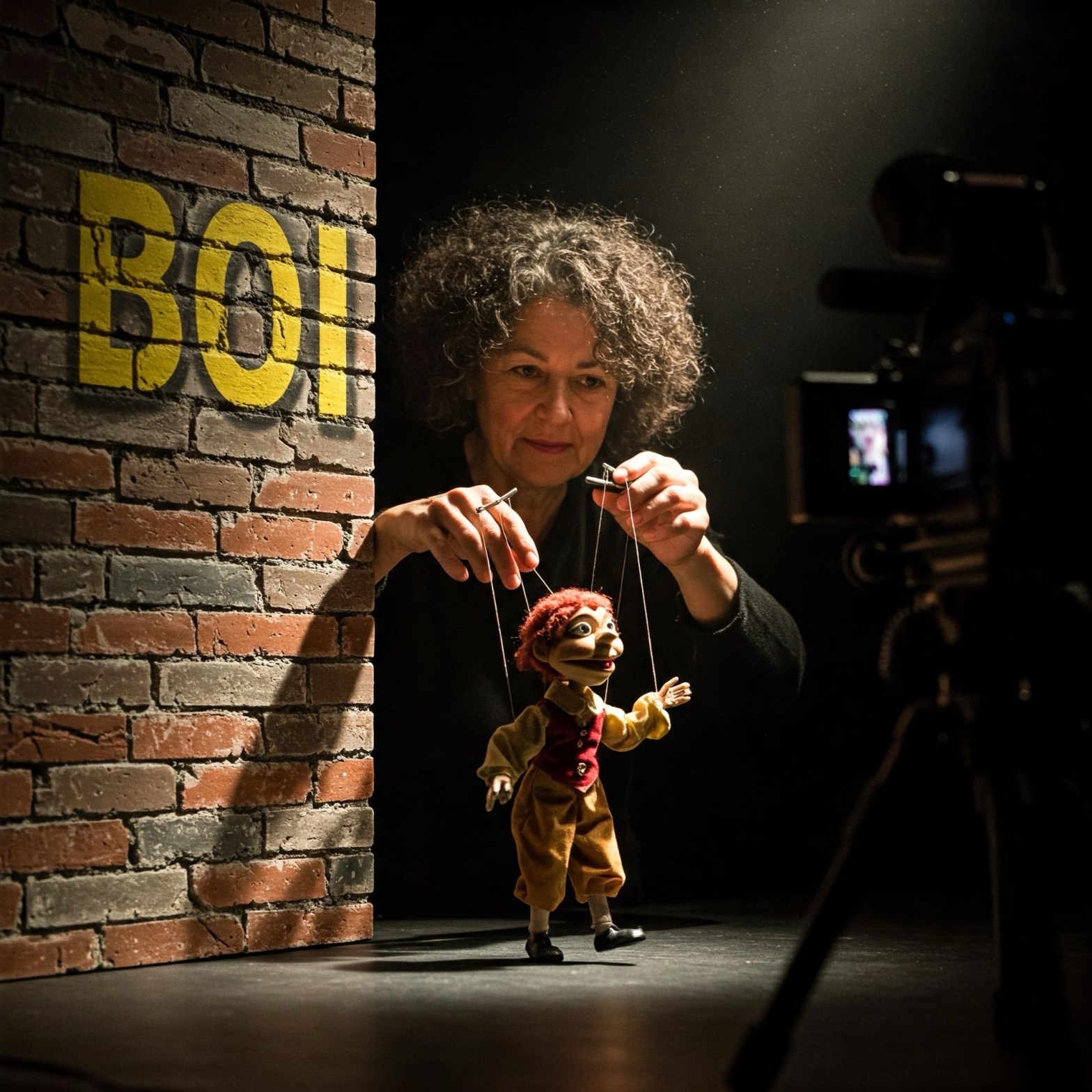
One of the oddest movie song juxtapositions is the pairing of Pops Staples’ “Papa Legba” and John Goodman’s “People Like Us” in the David Byrne movie True Stories. While researching the former I accidentally typed Papa KEGBA. Which resulted in this.
If you’re curious about the Google Gemini (Nano Banana this week) prompt used to create the first picture, I documented it in the Bredemarket Picture Clubhouse Facebook group here.
The U.S. Census Bureau has provided follow-up information that supplements its earlier report on Native American casinos, which I previously discussed. It turns out that the immigrant populations (you know, people of English and other descents) are cashing in also.
“The national total of state sales tax revenue from sports betting soared 382%, from $190 million in the third quarter of 2021 (when data collection began) to $917 million in the second quarter of 2025, according to the U.S. Census Bureau’s Quarterly Summary of State and Local Tax Revenue (QTAX).
“Sports betting became possible in May 2018 when the U.S. Supreme Court struck down the Professional and Amateur Sports Protection Act. Since then, a majority of states have legalized some form of sports betting; including online, mobile, retail sports betting and pari-mutuels (such as wagers made on horse-racing).
“Sports betting is a growing industry, and the tax revenue it generates helps fund public schools, roads, highways, law enforcement and gambling addiction treatment.”












 Bredemarket