Skipping the “leading provider” stuff, we get to this:
“Integrated Biometrics (IB)…formally announced today the launch of IB360, transforming the speed and cost to deploy identity systems. The IB360 platform is a low-code toolset of SDK-based software modules that allows our partners and integrators to more efficiently create biometric identity-based solutions with minimal development cycles.”
Continuing going through the points of my September 4 post and its analysis from Google Gemini. Here’s a small portion of it:
Here is a list of psychographic characteristics of your most likely buyer, the marketing leader at an identity, biometrics, or technology firm. These characteristics go beyond simple demographics and aim to uncover their motivations, challenges, and attitudes….
Driven by Urgency: They are often facing deadlines and a “need it yesterday” mentality. They have projects to complete, campaigns to launch, and are looking for a reliable partner who can jump in and deliver high-quality work quickly and efficiently.
One observation: if you are driven by urgency, then you are a rare breed. Too many of my conversations sound like this:
Me: When do you want this?
CMO: As soon as possible.
Me: Good, can we meet at 7:00 am Pacific tomorrow to set up the parameters?
CMO: Maybe the week after next, if I don’t have any conflicts.
I promise you that I can meet your urgency. As I like to say, I ask, then I act.
I ask, then I act.
Once we’ve “set up the parameters,” I can run with them and create something for you. Short material in three days or less, longer material in seven days or less.
And then you provide your feedback in the same timeframe. Since you’re driven by urgency, I won’t have to wait a month of two for your comments.
Now let’s measure your drive for urgency. Are you going to schedule a free meeting with me this afternoon, or are you going to schedule it right now?
Las Vegas is a destination visited by over 40 million people per year from all over the world. And the casino hotels know that they’re hungry for food, and they hope the hungry people will stay on property.
So do they serve Caesars Burgers?
Um, no. 40 million people don’t eat the same thing.
This becomes very clear if you visit the Bacchanal Buffet at Caesars Palace, with over 250 items prepared in 10 kitchens.
“From Roman-style pizza to Carne Asada Tacos inspired by the food trucks of L. A., there’s something for everyone. Find a world of flavor at our nine live-action cooking stations. Indulge in originals like slow-cooked prime rib, smoked beef brisket, crab, and wood-fired pizza. Or try something different, like whole Ahi Tuna Poke, roasted duck, or Singaporean Blue Crab and seasonal agua frescas.”
(Imagen 4)
There is literally something for everyone. And the hungry person salivating for Ahi Tuna Poke doesn’t care about the beef brisket.
Which brings us to local police automated fingerprint identification system (AFIS) proposals.
Variety for hungry people
If you had asked me in September 1994 (before I started at Printrak in October) the target audience for local police AFIS, I would have replied, “fingerprint people.”
That answer would be incorrect.
Tenprint and latent people
Because, even if you limit things to the criminal AFIS world, there are (at least) two types of fingerprint people: tenprint examiners, and latent examiners. I asked my buddy Bredebot to summarize the stereotypical differences between the two. Here is some of what he said:
“‘Assembly line‘ comparisons: Because tenprint comparisons use high-quality, known impressions taken under controlled conditions, their work can be automated and is often perceived as a high-volume, less complex task. This is in contrast to the specialized analysis required for latent prints.
“Artistic and subjective: Because latent prints are often smudged, distorted, and incomplete, examiners must make subjective judgments about their suitability for comparison. This has led to the criticism that the process is more of an art than a science.”
Bredebot has never attended an International Association for Identification conference, but I have. Many many years ago I attended a session on tenprint examiner certification. Latent examiners had this way cool certification and some people thought that more tenprint examiners should participate in their way cool certification program. As I recall, this meeting way heavily attended…by latent folks. Even today, the number of Certified Latent Print Examiners (CLPEs) is far greater than the number of Certified Tenprint Examiners (CTPEs).
Other people
But you can’t procure an AFIS by talking to tenprint and latent people alone.
As I noted years ago, other people get involved in a local police AFIS procurement, using Ontario, California as an example:
(Imagen 4)
The field investigators who run across biometric evidence at the scene of a crime, such as a knife with a fingerprint on it or a video feed showing someone breaking into a liquor store.
The information technologies (IT) people who are responsible for ensuring that Ontario, California’s biometric data is sent to San Bernardino County, the state of California, perhaps other systems such as the Western Identification Network, and the Federal Bureau of Investigation.
The purchasing agent who has to make sure that all of Ontario’s purchases comply with purchasing laws and regulations.
The privacy advocate who needs to ensure that the biometric data complies with state and national privacy laws.
The mayor (still Paul Leon as I write this), who has to deal with angry citizens asking why their catalytic converters are being stolen from their vehicles, and demanding to know what the mayor is doing about it.
Probably a dozen other stakeholders that I haven’t talked about yet, but who are influenced by the city’s purchasing decision.
Feeding the hungry people
So even a relatively simple B2B product has multiple target audiences.
Should product marketers apply the same one-dimensional messaging to all of them?
Um, no.
If you did that, purchasing agents would fall asleep at mentions of “level 3 detail,” while latent examiners would abandon their usual attention to detail when confronted by privacy references to the California Information Practices Act of 1977. (The CCPA, CPRA, and CPPA apply to private entities.)
So, whether you like it or not, you need separate messaging for each of your categories of hungry people.
(Imagen 4)
One time, as part of an account-based marketing effort, I had to construct a multi-variable messaging matrix…for a product that is arguably simpler than an AFIS.
And yes, I used Microsoft Excel.
And I can use my mad Excel skillz for you also, if your company needs content, proposal, or analysis assistance in your technology product marketing operations. Contact Bredemarket at https://bredemarket.com/mark/.
Continuing going through the points of my September 4 post and its analysis from Google Gemini. Here’s a small portion of it:
Here is a list of psychographic characteristics of your most likely buyer, the marketing leader at an identity, biometrics, or technology firm. These characteristics go beyond simple demographics and aim to uncover their motivations, challenges, and attitudes….
Aspirational: They want to be seen as innovative and forward-thinking within their company and the industry. They are looking for solutions that will help them gain a competitive edge and establish their firm as a leader in its field.
This is critical. Let’s face it, firms end up sounding the same with no differentiation between them. The identity firms all talk about trust, and all the firms talk about AI as if it were a strategy rather than a tool.
If you want to lead the industry, you have to proclaim what sets you apart. To put it bluntly, you have to say WHY (the first of my seven questions) your company is so great, and why every other company sucks.
If you can’t say that, then why should anyone buy your product or service?
If you need help in figuring out what to say, talk to me.
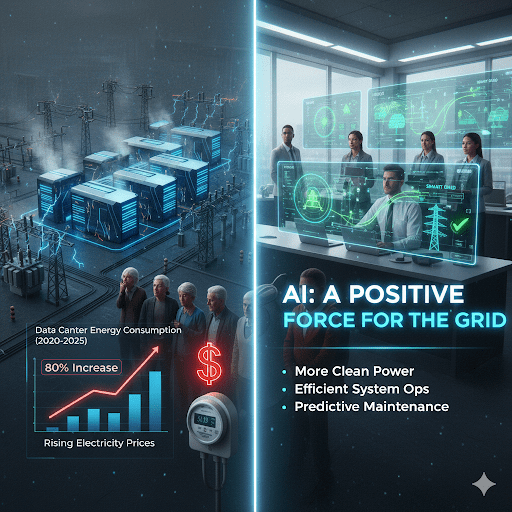
“The rising popularity of AI is driving an increase in electricity demand so significant it has the potential to reshape our grid. Energy consumption by data centers has gone up by 80% from 2020 to 2025 and is likely to keep growing. Electricity prices are already rising, especially in places where data centers are most concentrated.
“Yet many people, especially in Big Tech, argue that AI will be, on balance, a positive force for the grid. They claim that the technology could help get more clean power online faster, run our power system more efficiently, and predict and prevent failures that cause blackouts.”
“More than 80% of the world’s bitcoin ATMs are found in the United States.
“And as noted in a Financial Times opinion piece Friday (Sept. 5), these ATMs appear to be clustered in Black, Latino and lower-income communities, similar to payday lenders and check-cashing operations.
Here is a list of psychographic characteristics of your most likely buyer, the marketing leader at an identity, biometrics, or technology firm. These characteristics go beyond simple demographics and aim to uncover their motivations, challenges, and attitudes.
Career-Driven and Results-Oriented: They are primarily motivated by professional success. They need to demonstrate a positive ROI on their marketing budget and show tangible results in the form of lead generation, increased brand awareness, or successful product launches.
There are many more, but I’ll just deal with this one.
If you’re a marketing leader who needs to show tangible results, then how can Bredemarket help you?
Goals.
Whether you have general goals (“goals” is one of my seven questions) or specific key results, Bredemarket can tailor its services to help you achieve them.
And if you DON’T have specific goals or key results, we can create some meaningful ones together.
How do you measure lead generation?
How do you measure brand awareness?
How do you measure the “success” of a product launch?





 Bredemarket