

Awaiting Constant Contact on “Foundations of Digital Marketing Success.”
Author Archives: bredemarket
Marketing and writing services.
BonfireLA at the Small Business Expo

BonfireLA on “AI, Search, and Your Website: Staying Ahead in a Changing Landscape.”
BonfireLA: https://bonfirela.com/
Pasadena Convention Center

Small Business Expo begins soon.
Upland Metrolink

Ready to commute from Upland to the Small Business Expo in Pasadena.
Your Product is “AI-Powered”? There Are Two Problems With That Marketing Message.

How does this sound?
“State-of-the-art, frontier AI.”
Or this?
“The ultimate creative AI solution.”
There are two problems with these “AI-powered” product marketing messages, and you probably don’t even realize the first one.
The first problem
Because you and your friends are so used to seeing the letters “AI” that you know to pronounce each letter separately, as in A I.
But most people don’t know this. Really, they don’t. So when they see those two capital letters next to each other, they think they’re supposed to emit a high-pitched scream.
Try it yourself. Read the sentence below, but instead of speaking the letters A and I in a normal tone of voice, yell them as a single interjection.
“State-of-the-art, frontier AI.”

Is that how you want your customers to talk about your product?
The second problem is more obvious…I hope.
The second problem
Despite its undeniable impact on all of us, artificial intelligence is just a feature. Like the Pentium, or Corinthian leather.
And it’s a feature that everyone has. Not a differentiator at all.
To say your software is AI-powered is like an automotive company saying their cars have tires.

How many times do you see Ford or Toyota saying their cars have tires?
They don’t waste their time talking about something that everyone has.
And you shouldn’t waste your time talking about your AI feature.
(Also see Pavel Samsonov’s statement that “Powered By AI” is NOT a value proposition.)
Talk about your critically important benefits instead.
And if you need help with this, talk to Bredemarket.
Not because Bredemarket uses AI. My use of AI for client projects is strictly limited.
But because I work with you to speak to your prospects and customers.
Talk to me: https://bredemarket.com/mark/
Amazon’s Take on “Familiar Faces” is Not Available Everywhere
(Part of the biometric product marketing expert series)
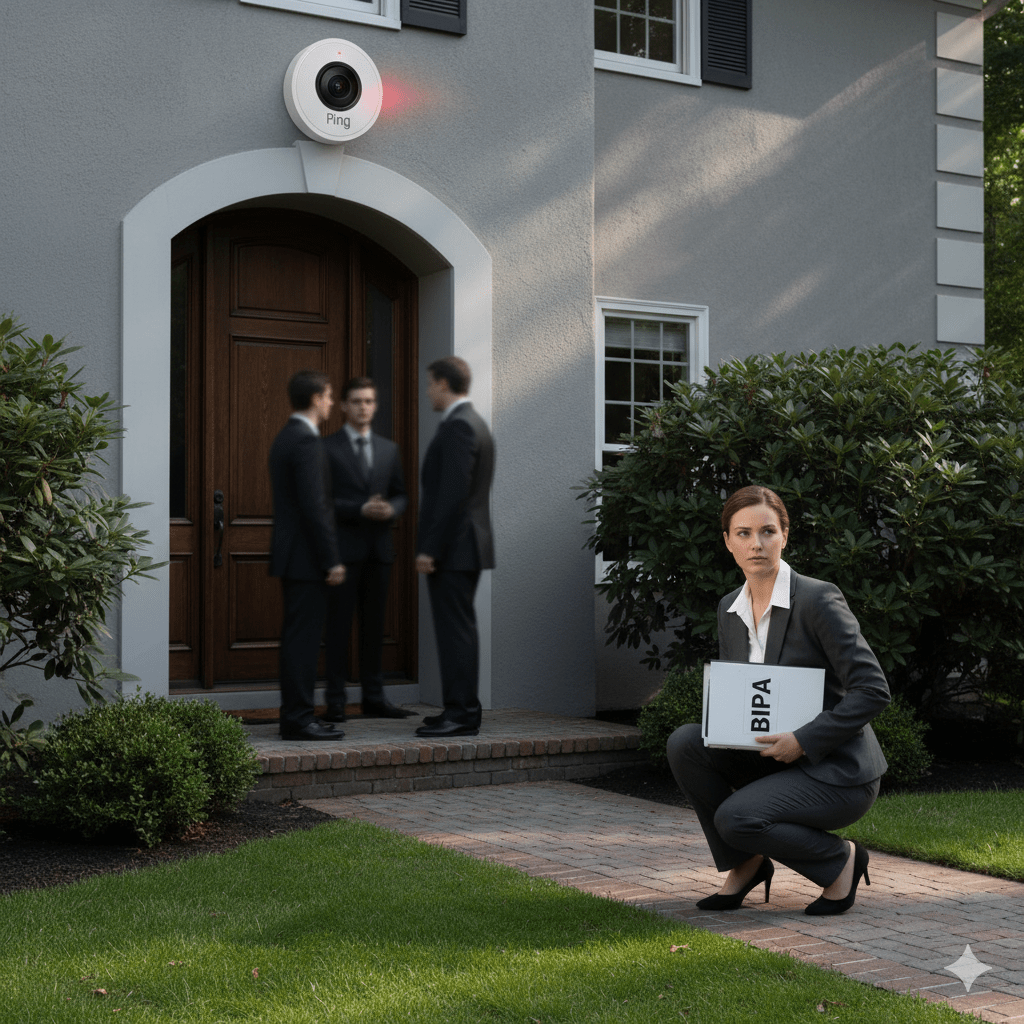
Biometric Update reports that Amazon’s Ring products are offering a feature called “Familiar Faces.”
“In September, Amazon revealed a revamped Ring camera lineup featuring two notable AI features, Familiar Faces and Search Party. Familiar Faces uses facial recognition and lets users tag neighbors or friends so future alerts identify them by name rather than generic motion.”
If this sounds, um, familiar, it’s because Google also has a similar feature, called familiar face alerts, in its Nest offerings.
And like Google, Amazon’s Familiar Faces won’t be available to everyone. If you are, um, familiar withg the acronym BIPA, you will know why.
“The feature is slated for December, though it will be disabled in places with stricter biometric laws such as Illinois, Texas, and Portland.”
In the PLoS One Voice Deepfake Detection Test, the Key Word is “Participants”
(Part of the biometric product marketing expert series)
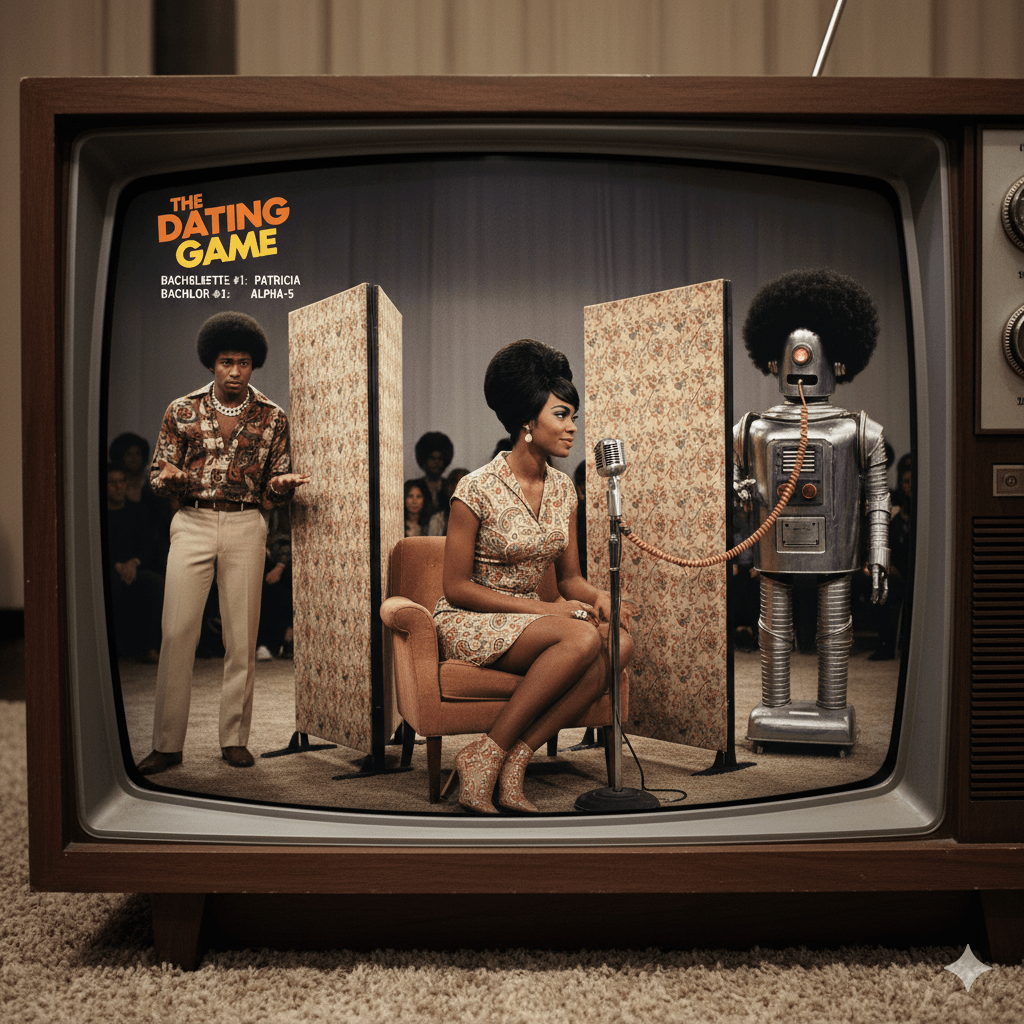
A recent PYMNTS article entitled “AI Voices Are Now Indistinguishable From Humans, Experts Say” includes the following about voice deepfakes:
“A new PLoS One study found that artificial intelligence has reached a point where cloned voices are indistinguishable from genuine ones. In the experiment, participants were asked to tellhuman voices from AI-generated ones across 80 samples. Cloned voices were mistaken for real in 58% of cases, while human voices were correctly identified only 62% of the time.”
What the study didn’t measure
Since you already read the title of this post, you know that I’m concentrating on the word “participants.”
The PLoS One experiment used PEOPLE to try to distinguish real voices from deepfake ones.
And people aren’t all that accurate. Never have been.
Before you decide that people can’t detect fake voices…
…why not have an ALGORITHM give it a try?
What the study did measure
But to be fair, that wasn’t the goal of the PLoS One study, which specifically focused on human perception.
“Recently, an intriguing effect was reported in AI-generated faces, where such face images were perceived as more human than images of real humans – a “hyperrealism effect.” Here, we tested whether a “hyperrealism effect” also exists for AI-generated voices.”
For the record, the researchers did NOT discover a hyperrealism effect in AI-generated voices.
Do you offer a solution?
But if future deepfake voices sound realer than real, then we will REALLY need the algorithms to spot the fakes.
And if your company has a voice deepfake detection solution, I could have talked about it right now in this post.
Or on your website.
Or on your social media.
Where your prospects can see it…and purchase it.
And money in your pocket is realer than real.
Let’s talk. https://bredemarket.com/mark/
When Your Content Bucket is Empty

When your content bucket is empty, Bredemarket can help your identity, biometric, and technology marketing leaders fill it.
Because your prospects want some content from you, or they will go elsewhere.
Schedule a free meeting: https://bredemarket.com/mark/
Some Tiny Edits to My “Content For Tech Marketers” Brochure

I performed some slight edits to my “Content For Tech Marketers” brochure.
For more information, visit this page.
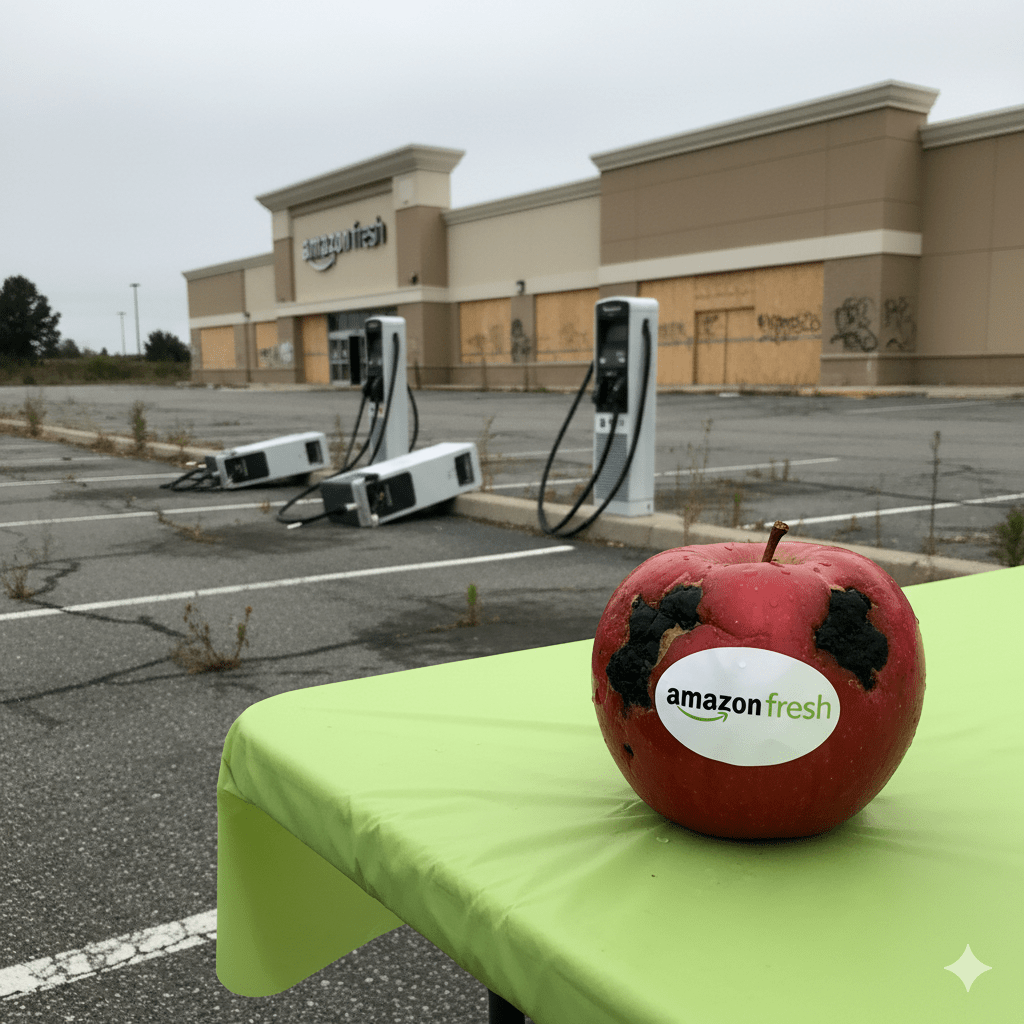
Amazon Stale: Southern California Amazon Fresh Closures in La Verne and Elsewhere
It took years, but the long-planned Amazon Fresh grocery store finally opened in Upland, California in May.

But that doesn’t mean it will STAY open.
Four other Amazon Fresh stores will close next month, including one in nearby La Verne.
“At one Fresh supermarket in La Verne, California, employees were told to gather for an all-hands meeting on Wednesday, according to an internal message viewed by CNBC. They learned at the meeting that the store would close in mid-November….
“The other three stores that are closing are in cities of Mission Viejo, La Habra and Whittier.”
The La Verne Amazon Fresh store only opened in April 2022, and therefore only had a life of 3 1/2 years.
Which serves as a reminder that a business can have a crowded grand opening one day…
…and disappear the next.
What steps are you taking to ensure YOUR business survives for the long term?
So this doesn’t happen to you?
 Bredemarket