Skagit County: No Data to Scrape (For Now)

My Friday post about Sedro-Woolley, Stanwood, and Flock Safety is already out of date.

Original post: Flock Safety data is public record

That post, “Privacy: What Happens When You Data Scrape FROM the Identity Vendors?”, discussed the case involving the two cities above and a private resident, Jose Rodriguez. The resident requested all Flock Safety camera output during particular short time periods. The cities semantically argued they didn’t have the data; Flock Safety did. Meanwhile the requested data was auto-deleted, technically making the request moot.

But not legally.

“IT IS HEREBY ORDERED, ADJUDGED AND DECREED that Plaintiff’s motion for Declaratory Judgment that the Flock camera records are not public records is DENIED.”

So the police attempt to keep the records private failed. Since it’s government material, it’s public record and accessible by anyone.

Update: the cameras are turned off

Now here’s the part I missed in my original post, according to CarScoops:

“[I]t turns out that those pictures are public data, according to a judge’s recent ruling. And almost as soon as the decision landed, local officials scrambled to shut the cameras down….

“Attorneys for the cities said they will review the decision before determining whether to appeal. For now, their Flock cameras aren’t coming back online.”

Because CarScoops didn’t link to the specific decisions by the cities, I investigated further.

Update 2: the cameras were turned off a long time ago

I sought other sources regarding Stanwood, Sedro-Woolley, and Flock Safety, and discovered that CarScoops did not state the truth when it said “almost as soon as the decision landed, local officials scrambled to shut the cameras down.”

Turns out Stanwood shut its cameras off in May, awaiting the judge’s eventual ruling.

“Fourteen Flock cameras were installed in Stanwood this February. Since May, they have been turned off.

“In November 2024, the Stanwood City Council approved a $92,000 contract with Flock Safety to install the cameras….

“The city is seeking a court judgment on whether Flock footage is public record or if it is exempt from the state Public Records Act.”

Moving on to Sedro-Woolley:

“The city of Sedro-Woolley is no longer using cameras that read license plates while it seeks a court ruling on whether images recorded by the cameras are considered public records.

“Police Chief Dan McIlraith said the seven Flock Safety cameras that went live in Sedro-Woolley in March were disabled in June.”

How to turn the cameras on again

From my perspective, the only way I see the Flock Safety cameras being turned on again is if the cities of Stanwood and Sedro-Woolley take the following two actions.

  • First, the cities need to establish or beef up their license plate recognition policies. Specifically, they need to set the rules for how to reply to public records requests. (And no, “stall for 30 days until the records are auto-deleted” doesn’t count.)
  • Second, and only after a policy is established, implement some form of redaction software. Something that protects the privacy of license plates, faces, and other personally identifying information of people who are NOT part of a criminal investigation.

And yes, such software exists. Flock Safety itself does not offer it—apparently it never, um, envisioned that a city would be forced to release all its data. But companies such as Veritone and CaseGuard do offer such software offering automatic redaction.

If you are a police agency capturing video feeds, plan now.

A Frost Radar for the Bots

There appears to be a Frost Radar for everything…including non-person entities, or NPEs (a/k/a non-human identities, or NHIs).

And Descope is talking about the NHI Frost Radar.

Los Altos, CA, November 13, 2025 – Descope, the drag & drop external IAM platform, today announced that it has been recognized as a Leader in the 2025 Frost Radar™ for Non-Human Identity (NHI) Solutions, further validating Descope’s fast growth and innovation in the agentic identity space.”

The product that Frost & Sullivan recognized is Decsope’s Agentic Identity Hub

“…an industry-first platform that helps organizations solve authentication and authorization challenges for AI agents, systems, and workflows. Notable additions include providing apps an easy way to become agent-ready while requiring user consent, providing agents a scalable way to connect with 50+ third-party tools and enterprise systems, and helping developers using the Model Context Protocol (MCP) protect their remote MCP servers with purpose-built authorization APIs and SDKs.”

So how does the Frost Radar work?

“The Frost Radar™ is a robust analytical tool that allows us to evaluate companies across two key indices: their focus on continuous innovation and their ability to translate their innovations into consistent growth.”

It uses four classifications.

Frost classificationWhat it meansWhat it REALLY means
Growth and Innovation LeadersHigh innovation (Y axis) and growth (X axis)Good
Innovation LeadersHigh innovationStagnant growth
Growth LeadersHigh growthStagnant innovation
ChallengersLow growth and innovationStagnant everything

So a “Leader” could lead in some things, but not in others.

Even Descope’s announcement includes a Frost Radar picture that indicates that Descope may be a leader, but others (such as Saviynt and Veza) may be more leaderly.

But I guess it’s better to be some sort of “leader,” or even a “challenger,” then to not be recognized at all.

Google Gemini.

Bredemarket Services (2511b)

This video talks about Bredemarket’s services.

Just the services.

Bredemarket Services.

If you also want to find out who I (John E. Bredehoft) am, the process Bredemarket uses, and Bredemarket’s pricing, see my previous (longer) video from 10 days ago, “Introduction to Bredemarket: Services, Process, and Pricing (2511a).”

And if you want to discuss my services with me, visit https://bredemarket.com/mark/ and book a free meeting.

I See Dead People

I often schedule posts in advance…including this one.

When I wrote this post on Friday morning, I had scheduled posts for the next four days, from Saturday the 15th through Tuesday the 18th.

I just realized that my posts for three of those days discuss deceased victim identification.

In other words, I see dead people.

The Sixth Sense, not the sixth factor of authentication.

And my scheduled post for the fourth day is about non-person identities.

I really need to start writing about the living.

Google Gemini.

Privacy: What Happens When You Data Scrape FROM the Identity Vendors?

There is a lot of discussion about data scraping, an activity in which Company 1 takes the information publicly posted by Company 2 and incorporates it into its own records.

In the identity world, this takes the form of a company “scraping” the facial images that were publicly posted by a second company, such as a social media company.

I think that we all know of one identity company that is well-known (a euphemism for “notorious”) for scraping facial images from multiple sources. These not only include government-posted mugshots, but also content posted by private social media firms.

Needless to say, the social media companies think that data scraping is completely evil and terrible and identity vendors that do this should be fined and put out of businress. The identity vendor is question has a different view, even stating at one point that it had a (U.S.) First Amendment right to scrape data.

But what happens when someone wants to scrape data FROM an identity company?

A Skagit County court case

404 Media links to a Skagit County, Washington court case that addresses this very issue: in this case, data captured by Flock Safety.

The case is CITY OF SEDRO-WOOLLEY and CITY OF STANWOOD, Washington Municipal Corporations vs. JOSE RODRIGUEZ. The following are findings of fact:

“On April 10, 2025, Defendant, Jose Rodriguez made a Public Records Request to the Snohomish Police Department. He requested all of the city’s Flock cameras pictures and data logs between 5 pm and 6 pm on March 30, 2025.”

This particular record does not indicate WHY Rodriguez made this request, but 404 Media provided a clarification from Rodriguez himself.

“I wanted the records to see if they would release them to me, in hopes that if they were public records it would raise awareness to all the communities that have the Flock cameras that they may be public record and could be used by stalkers, or burglars scoping out a house, or other ways someone with bad intentions may use them. My goal was to try getting these cameras taken down by the cities that put them up.”

The City of Stanwood (don’t know its relation to Snohomish) answered Rodriguez in part:

“Stanwood PD is not the holder of the records you’re seeking; you may be able to request the records at FlockSafety.com.”

Incidentally, this is a common issue with identity databases using vendor softwares; who owns the data? I’ve addressed this before regarding the Milwaukee Police Department.

Now some legal talent may be able to parse what the word “holder” means, especially in regard to data hosted in the cloud. Perhaps Stanwood PD was trying to claim that since the records weren’t on site, it wasn’t the “holder.”

Anyway, the defendant subsequently made a similar request to the City of Sedro-Woolley, but for a different date. Sedro-Woolley didn’t provide the images either.

Then it gets weird.

What happened to the data?

“The Flock records sought by Defendant from Stanwood and Sedro-Woolley have been auto-deleted.”

Well how convenient.

And the listed statements of fact also contain the following:

“The contract between Flock and Stanwood sates that all Flock images generated off Flock cameras located in Stanwood are the property of Stanwood.

“The contract between Flock and Sedro-Woolley states that all Flock images generated off Flock cameras located in Sedro-Woolley are the property of Sedro-Woolley.”

The judge’s ruling

Fast forward to November 6, when Judge Elizabeth Neidzwski ruled on the cities’ claim that the Flock camera data was not a public record.

“IT IS HEREBY ORDERED, ADJUDGED AND DECREED that Plaintiff’s motion for Declaratory Judgment that the Flock camera records are not public records is DENIED.”

404 Media noted that the cities argued that they resisted the request to…protect privacy.

“In affidavits filed with the court, police argued that ‘if the public could access the Flock Safety System by making Public Records Act requests, it would allow nefarious actors the ability to track private persons and undermine the effectiveness of the system.’ The judge rejected every single one of these arguments.”

Of course, there are those who argue that the police themselves are the “nefarious actors,” and that they shouldn’t be allowed to track private persons either.

But the parties may take the opposite argument

This is not the only example of conflicting claims over WHO has the right to privacy. In fact, if the police were filming protestors and agitators and wanted the public’s help in identifying them, the police and the protestors would take the opposite arguments in the privacy issue: the police saying the footage SHOULD be released, and the protestors who were filmed saying it SHOULD NOT.

Privacy is in the eye of the beholder.

The Quantum Fraudster: The German Edition

The French and Germans like each other more than they did in past centuries, but they still compete.

A month ago I wrote about the French company Thales and its efforts to develop a quantum-resistant smartcard called the MultiApp 5.2 Premium PQC. (PQC stands for post-quantum cryptography.)

But the Germans are getting into the act.

“In recent months, Bundesdruckerei GmbH and G+D [Giesecke+Devrient] have established a unique technical foundation for this transformation [of the German identity card]. The federal technology company and the international SecurityTech leader jointly initiated the development of a demonstrator together with the German Federal Office for Information Security (BSI), implemented on specialized chips produced by semiconductor manufacturer Infineon.

“Germany’s transition to quantum-secure ID cards will occur in two stages. First, personal data will be protected from forgery using a quantum-resistant digital signature scheme. The second phase will involve a full transition to quantum-secure technology.”

Also see Biometric Update’s coverage.

When You Don’t Use Voter ID, Don’t Use Signatures

I’ve previously commented that the precinct workers in voter ID states have neither the knowledge nor the equipment to tell a fake voter ID from a real one.

But what if you rely on things other than voter ID to determine identity?

This goodie came from a thread from cherielynn89.

“My vote didn’t count against prop 50 because my signature didn’t match ? I voted in person !! With ID that no one asked for !! Make it make sense !! I’m sure I’m not the only vote they didn’t count !!”

So my state of California, which does not require voter ID, uses signature verification. If you view cherielynn69’s original thread, you will see a letter from the Butte County Clerk-Recorder stating “signature does not match.”

I’d like to know who made that determination, and what training they had.

As it turns out, I have never discussed signatures as a biometric in detail. But the Biometrics Institute has, distinguishing between static and dynamic signatures. You obtain more information with the latter:

“The physical actions involved in writing a signature are captured, usually on a screen sensitive device like a tablet, and recorded electronically. Consequently different characteristics are used rather than just those found in the image of the signature. This involves a three dimensional (X, Y & Z axes) evaluation of the time taken, rhythm and varying velocities of forming each letter and the overall signature, pen/stylus pressure and the direction of the strokes, including free strokes, for example crossing a ‘T’ or dotting an ‘I’.”

Which is nice…except that when comparing the signature on a mail-in ballot to the signature on a voter roll, only static signature comparison is available.

And static signatures are not all that accurate.

In 1971, publisher McGraw-Hill scored the rights to Howard Hughes’ life story, accompanied by a letter from Howard Hughes affirming that he had authorized writer Clifford Irving to act on Hughes’ behalf. Experts from McGraw-Hill examined the letter and concluded that Hughes could have written it…until those troublesome postal inspectors noticed something. While the writing in the Hughes letter differed from Irving’s own writing, the two shared telltale similarities.

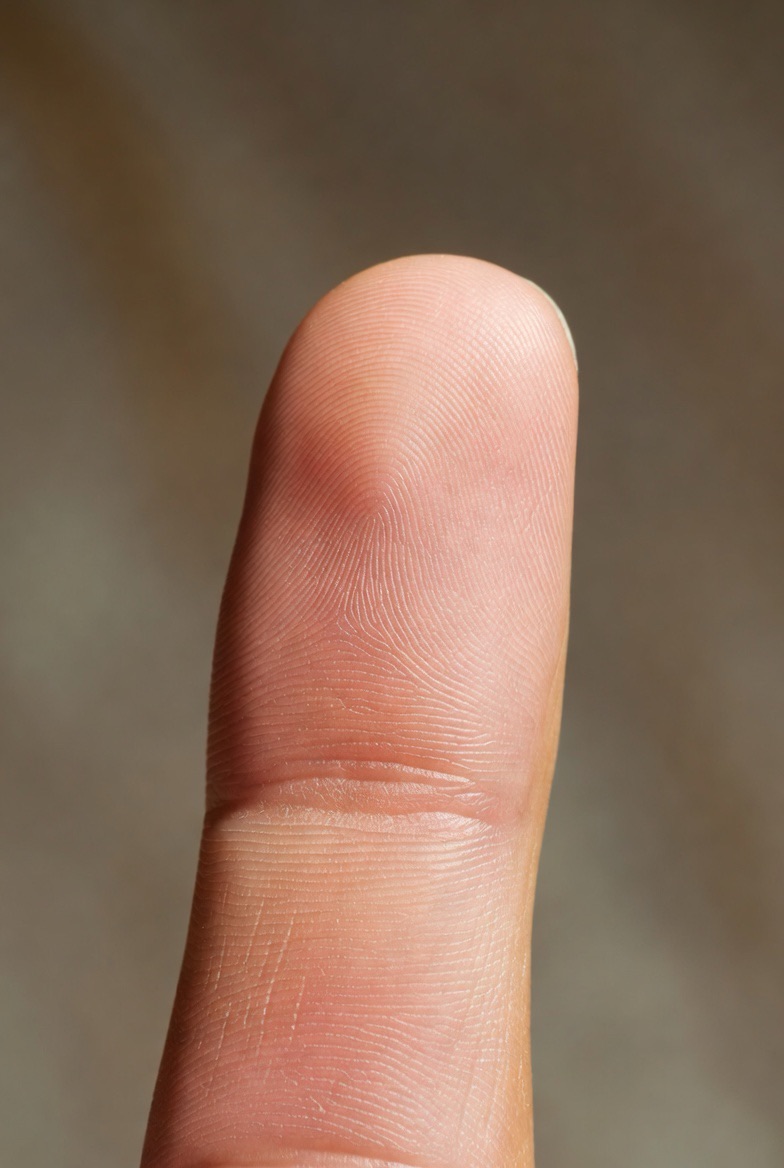
Because while it’s hard to change your face, and very hard to change your finger, it’s much easier to change your signature. But not easy enough, as the postal inspectors showed.

So I don’t know about you, but I wouldn’t rely on signatures as proof of identity.

The California Privacy Folks Have Executed a Cool Rebrand

I previously discussed the alphabet soup that infests California privacy efforts.

“Before launching into these regulatory changes, remember that the CCPA is the California Consumer Privacy Act, while the CPPA is the California Privacy Protection Agency. (There’s also a CPRA, the California Privacy Rights Act.)”

Well, one of the entities, the agency (CPPA), is trying to extricate itself and differentiate and be cool and stuff.

“The California Privacy Protection Agency has chosen the new public-facing name of CalPrivacy. The name underscores the agency’s commitment to operationalizing privacy rights and delivering clear, consumer-friendly guidance to all Californians.”

Like…cool.

John Lennon the Blogger

Some of you have heard of Dave Winer, who started Scripting News…when?

“Scripting News was started in 1997, by me, Dave Winer. 

“Or 1994 or 1996 or whenever you think it actually started. 

“I wrote my first blog posts in 1994, that’s for sure.”

Because of his early interest in immediate and direct sharing of information without intermediaries, Winer is considered as one of the first bloggers. And he has undeniable longevity, still publishing today.

But there is a blogger that preceded Winer, Justin Hall, Jorn Barger, Peter Merholz, and others. 

Going off on a tangent

And me. 

For the record, I didn’t write my first blog post until October 14, 2003.

“Why did synthetica start with fake bluegrass sounds? Why not? This is the Ontario Empoblog, or the blog for Ontario Emperor, which has nothing and everything to do with Canada, New Mexico, and Texas, but also California, which is a location in California. It exists in cyberspace, which is also synthetic.

“The Ontario Empoblog may or may not touch on a variety of subjects, including music, poetry, poker, the supposed familial relationship between Brian Eno and Slim Whitman, the number of licks it takes to get to the center of a Tootsie Pop (1,121 – I checked), various comments about frogs, and the nature of nature.”

So back then I discussed synthetic music and frogs. Today I discuss synthetic identities and wildebeests. Not much has changed.

What were we talking about?

Back to the first blogger

Oh yeah, the first blogger, predating everyone else by decades.

And blogging on a physical medium, seven inch wide circles of vinyl.

Because I maintain that the first blogger was John Lennon.

Although he didn’t start out that way.

Early Lennon couldn’t “blog”

When Lennon and his band signed a recording contract with a subsidiary of EMI in 1962, the four of them became cogs in a monstrous machine. 

They had to report to EMI’s studio, record for an EMI producer, and were almost forced to record someone else’s songs. After they recorded multiple takes (some with a session drummer), their first EMI recording was processed through the EMI sausage system and released in the UK. (EMI’s U.S. subsidiary didn’t want it.)

The September 4, 1962 recording of “Love Me Do” (with Ringo Starr drumming) was released as a single about a month later, on October 5, 1962. 

September 4 version. Andy White would come later.

(Most subsequent releases of the song used the September 11 version with Andy White drumming.)

Of course, some later Beatles releases took longer than a month to travel from the studio to the record shops. For example, “When I’m Sixty-Four” was recorded on December 6, 20, and 21, 1966, but was not released on record until May 26, 1967 (in the U.K.; June 2 in the U.S.).

But the times, they were a’changing.

Later Lennon “blogging”

Within the year, the Beatles would have their own record label. Apple was still distributed by EMI, but the Beatles now had more control over the process, especially for their solo releases.

And John Lennon had things he wanted to say…now.

His first chance to practice immediacy was on a song formally credited to The Beatles, but actually recorded by Lennon with Paul McCartney’s help on piano, bass, and drums. Lennon and Yoko Ono married in March 1969. Lennon (with McCartney) recorded “The Ballad of John and Yoko” on April 14, and Apple released it on May 30. Quickly.

“In his biography, McCartney states that Lennon had a sudden inspiration for the song and had suggested that the two of them should record it immediately, without waiting for the other Beatles to return.”

Then Lennon turned to his solo career, which up to this point had consisted of two solo albums with Yoko Ono. Now Lennon started releasing singles.

  • On June 1, 1969, Lennon recorded “Give Peace a Chance” in Montreal and released it in the U.K. on July 4.
  • “Cold Turkey” was recorded September 30 and released October 20.
  • “Instant Karma!” lived up to its name: recorded January 27, 1970 and released February 6. Even with Phil Spector producing.
A mostly-mimed “Top of the Pops” performance.

Lennon subsequently re-focused on albums rather than singles and didn’t release songs as quickly. But those four singles achieved Lennon’s goal of getting something out quickly.

Like a blogger.

Google Gemini. This is not real.

Lennon died before technology allowed musicians (or pirates) to post music files directly on the World Wide Web for immediate download. You can, um, imagine what Lennon could have done if those capabilities had existed in 1969.

Or in 1962.

June 1962, when Ringo Starr was still playing at Butlins with Rory Storm.

“Love Me Do,” Pete Best version.