When a company runs afoul of regulations, there’s always the chance that they’ll be caught and fined. But what if they’re caught multiple times for different facets of the same offense…because they had never heard of YOUR company’s anti-money laundering (AML) solution?
deepidv on “coordinated enforcement”
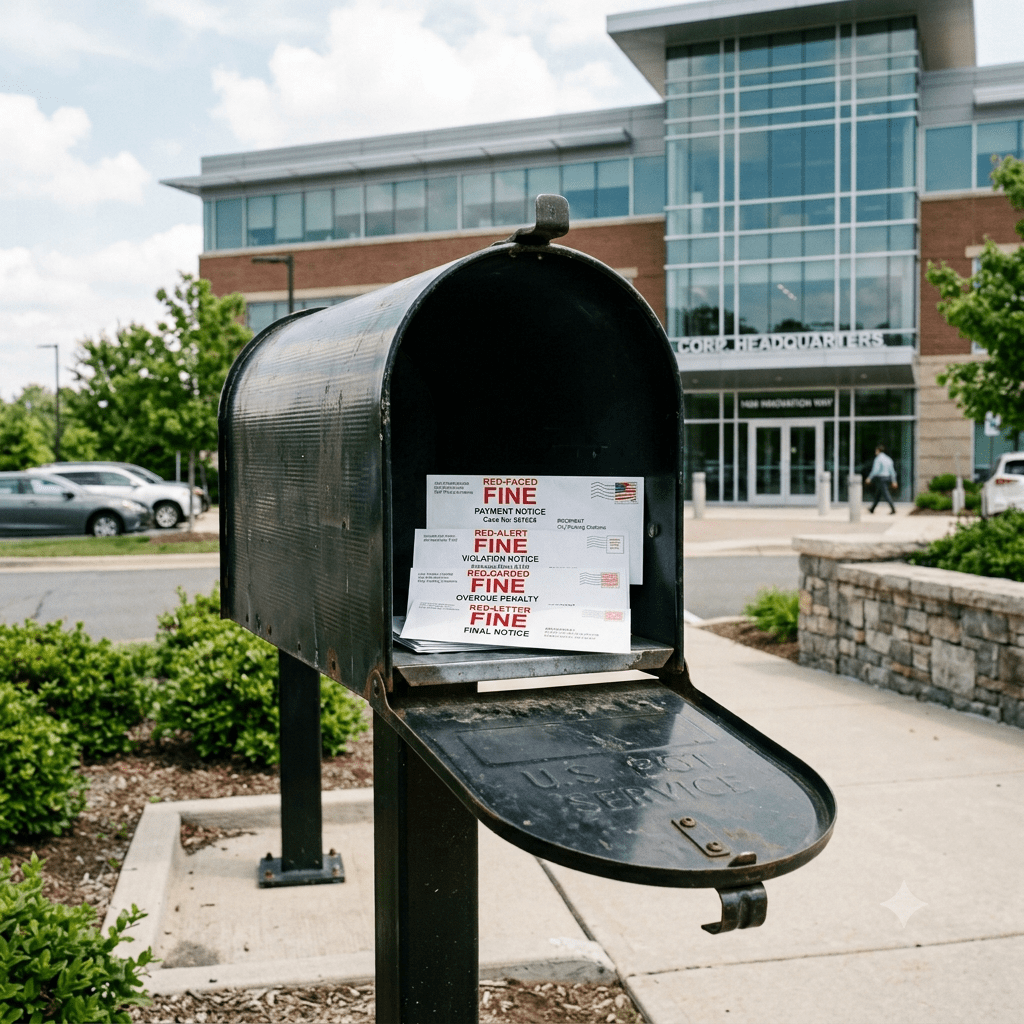
Take the story of UBS Financial Services and FOUR different government and private entities.
“UBS Financial Services Inc faced simultaneous enforcement action from four separate US regulators. FinCEN [Financial Crimes Enforcement Network, part of Treasury] fined the firm $125 million for AML and suspicious transaction reporting failures. The SEC [Securities and Exchange Commission, independent agency] fined UBS $20 million for related AML failures. The CFTC [Commodity Futures Trading Commission, independent agency] fined the firm $8 million for AML monitoring deficiencies. FINRA [Financial Industry Regulatory Authority, private corporation overseen by the SEC] issued its own fine for overlapping AML shortcomings.”
Ouch.
If you don’t check money laundering, you’ll be out of money yourself.
And those are only the fines in the United States. Other countries may pile up and add more fines.
Could your company have solved UBS’ problem?
Now, there’s the chance that a vendor could have helped UBS Financial Services stay in AML compliance.
And perhaps YOU are that vendor.
If your software costs less than $125 million, it’s a win.
So how do prospects learn about your AML solution?
“ROC is an independent American artificial intelligence company redefining the global standard for Vision AI in identity, security, and digital forensics. Our Vision AI platform delivers real-time facial recognition, multimodal biometric verification, video analytics, and AI-powered evidence analysis to mission-critical organizations across both private and public sectors. ROC’s biometric algorithms are routinely ranked by National Institute of Standards and Technology (“NIST”) as among the most accurate and computationally efficient globally. Our solutions outperform legacy foreign-built systems at a fraction of the cost, with faster deployment and stronger trust. As demand for trusted AI accelerates across law enforcement, defense, and regulated commercial sectors, ROC is scaling rapidly through a growing network of integrators and multi-year deals. We are expanding from a foundation of government leadership into high-growth commercial markets such as access control, physical security, and identity verification. Our international pipeline spans the Middle East, Asia–Pacific (“APAC”), and other strategic regions where national AI and identity investments are surging. With sovereign U.S. development, deep technical leadership, a vertically integrated platform, and proven field results, we believe ROC is positioned to become the category-defining leader in operational Vision AI.”
Of course, as ROC enters new markets, its “made in the USA” strength could potentially become a weakness. For example, EU regulators may (or may not) become wary of using algorithms from a non-EU company. And forget about Russia.
Any SEC-governed statement must detail risks to ensure that investors are not misled, and ROC lists the types of risks that one might expect (dependence upon certain types of customers, complex product lines, etc.). But this particular risk caught my eye:
“If we are unable to successfully deploy our marketing and sales organization in a timely manner, or at all, or to successfully hire, retain, train, and motivate our sales personnel, our growth could be adversely impacted.”
Hey Scott…
Also buried in the preliminary prospectus are sales and cost figures from 2023, 2024, and the first 9 months of 2025; a note that two customers accounted for 45% of ROC’s revenue in the first nine months of 2025; the negative consequences of ROC’s mission “to support Western liberal democracy and its strategic allies” (companies with fewer scruples can sell to all sorts of entities that ROC won’t touch); risks related to artificial intelligence (not an issue when Printrak went public in the 1990s); and many, many, many other risks.
Because that’s what you say when you want to go public. You always, always use caution when talking to investors.
So we’ll see what happens. Is this a good time for an IPO?


 Bredemarket