This ad displayed in a smartphone game I was playing and linked to a downloadable app in Apple’s App Store. Possibly Google’s and Samsung’s official stores offer this app also.
You know, the authorized places to get apps—for our own protection.
So what’s the big deal about “no KYC” apps? CoinLedger explains. Note: this post is constantly updated to reflect regulatory changes. The text below was captured this morning.
“KYC stands for Know Your Customer. This refers to a set of standards and regulations that allow financial institutions to verify a customer’s identity. KYC laws were originally put into place to protect against money laundering and terrorist activity.
“Exchanges that abide by KYC policies will ask you for information like your name, address, and a copy of government-issued ID upon signup….
“MexC is a cryptocurrency exchange founded in 2018 and headquartered in Seychelles.
“You can get started using the platform with no KYC. However, MecX does require KYC for certain types of transactions, such as crypto-to-crypto and derivative trades.
“For years, MexC was one of the most popular no KYC exchanges in the United States. However, MexC stopped offering services to US customers in 2023. Trying to get around this restriction with a VPN may lead to you losing access to your crypto.”
Back before Jobs co-founded Apple Computer, typing “71077345” into a dedicated calculator (with an “LCD” style typeface) and flipping it upside down showed a recognizable word. Isn’t that cool?
Now, hardly anyone has dedicated calculators, and the one on my smartphone has a “normal” typeface that ruins the trick.
Perhaps one of the biggest changes over the last several decades is that we no longer possess physical things.
Old and new music
When some of us were younger, we would always go to “the record store” to buy a CD or cassette or vinyl (the “record”) or maybe an 8 track. We would put the physical media on a playback device. And unless the media were damaged or stolen, you always had it. RCA wouldn’t come to your house and take your Elvis record.
Let me be your teddy wildebeest.
Then services from Napster 1.0 to Apple to Spotify started to provide music in digital form. And now your music COULD be taken away. When Neil Young got mad at Spotify, I couldn’t listen to Neil any more. (They subsequently kissed and made up.)
This is true of many other things: TV shows, movies, even computer software.
Which brings us to books.
Old and new books
You could once buy books at your local bookstore, or from an online bookstore called Amazon. But then Amazon developed the Kindle e-reader. And as The Verge points out, something on the Kindle today may not be there tomorrow.
“Amazon has occasionally removed books from its online store and remotely deleted them from Kindles or edited titles and re-uploaded new copies to its e-readers. In 2009, the company removed copies of George Orwell’s Nineteen Eighty-Four and Animal Farm, explaining the books had been mistakenly published. More recently, many of Roald Dahl’s books, including Charlie and the Chocolate Factory, were replaced with updated copies featuring modified language on various ebook platforms. It’s a reminder that you don’t actually own much of the digital content you consume, and without the ability to back up copies of ebooks, you could lose them entirely if they’re banned and removed.”
New and improved edition.
But there is a workaround. If your Kindle has a copy of Mein Kampf or a book about gay hotspots near the Gulf of Mexico and you don’t want to lose it, you can save it outside of the Amazon ecosystem.
“(The feature is) still accessible through Amazon’s website by accessing your “Content Library” while logged into your account. For purchased books you select the “More actions” menu, choose “Download & transfer via USB,” select a Kindle device you have registered, and a copy of the book will be downloaded to your computer.”
A nice feature…especially if you want to make sure you don’t lose your purchased content. And it’s really nice if you want to put your Amazon content on a non-Amazon e-reader. Because the Kindle only has a minuscule 72% share of the e-reader market, this is a gargantuan threat to Amazon’s ability to sell hardware.
You can see where this is going.
Ch-ch-ch-ch-changes
Amazon has made a change, according to The Verge:
“Starting February 26, 2025, the ‘Download & Transfer via USB’ option will no longer be available. You can still send Kindle books to your Wi-Fi enabled devices by selecting the ‘Deliver or Remove from Device’ option.”
February 25.
To clarify, you can still access your books on the Kindle app.
Just not outside of it.
How does this affect your content?
This serves as a reminder about technological change, walled gardens, and obsolescence.
Which ties in with one of Bredemarket’s favorite topics, repurposing.
Now Bredemarket doesn’t create videos for clients, but if you need your identity/biometric or technology text repurposed in another format, I can help.
I just read a post by SentinelOne, but it’s too early to tell if this is just a string of buzzwords or a legitimate endeavor.
The post about a proposed “Autonomous SOC Maturity Model” (ASOCMM?) includes buzzwords such as “autonomous,” “SOC” (system and organizational controls, or security operations center – take your pick), “agentic AI,” and of course “maturity model.”
Having done my maturity model time during my days at Motorola Solutions predecessor Motorola (although our group stuck with CMM rather then moving on to CMMI), I’ve certainly seen the benefits and drawbacks of maturity models for organizations large and small. Or for organizations large: I shudder at the thought of implementing a maturity model at a startup; the learning curve at the Printrak part of Motorola was bad enough. You need to hit the target between no process, and process for process’ sake.
So what of this autonomous SOC maturity model? Perhaps it can be real.
“At SentinelOne, we see the Autonomous SOC through the lens of a maturity model. We welcome debate on where we, as an industry, are on this evolutionary revolution. We hope most will agree that this is a better way to look at Autonomous SOC innovation and adoption – far better than the binary, all-or-nothing debates that have long fueled analyst, vendor, and industry watcher blogs and keynotes.”
If nothing else, a maturity model approach lends (or can lend) itself to continuous improvement, rather than just checking off a box and saying you’re done. A Level 5 (or Level 4 on a 0-4 scale) organization, if it believes what it’s saying, is ALWAYS going to improve.
Marketing leads (and others) like to talk about “eras” and “ages.” But I resisted the urge to refer to an “era” or “age” of uncertainty, preferring to reserve these terms for periods of hundreds or thousands of years. “The dot com ERA”? Come on.
But when we encounter technological or governmental changes that take place in mere days, we need to do things in different ways.
Three tips for dealing with uncertainty
Here are three tips that I am following for dealing with uncertainty. And if you are a marketing lead for your company, the third tip applies especially to you.
Tip 1: De-emphasize long term planning
Note that I didn’t say to stop long-term planning entirely. Heck, Bredemarket has worked on go-to-market processes and plans for three clients over the past couple of months—plans that assume you have months, not days, to execute a launch.
But sadly, the accuracy of any long-term plan is probably not high.
If you assumed that the U.S. management of its nuclear assets would maintain its low level of risk, that changed in a single day when the responsible people were mistakenly fired. We will see how many of them return to work.
Similarly, if you assumed maintenance of the status quo in the generative AI world…what were you smoking?
So while long-term planning is (in TLOI terms) important, short-term planning is very important, and short-term execution is critically important.
Tip 2: Expect the unexpected
This is always a good tip, but especially so today. You and I can name many times when something surprised us, and we had to scramble to adjust.
For example, many of us have received a terse request to meet with our bosses the next day. (Maybe more than one such request over the years.) The next day, after meeting with the boss and an unannounced third person, we adjusted to the new reality that our boss is no longer our boss, and we no longer have a job.
So how can we prepare for the unexpected? By definition we can’t. But we can at least be alert.
Question all your assumptions. (Yes, even that.)
Determine what you will do if the unthinkable happens.
Tip 3: Move quickly
Normally things remain constant for a day or two. So take advantage of the temporary certainty. When you can, execute now.
For marketing leads:
Get that content out. Conceive, draft, review, fix, and publish. Don’t spend months searching for the perfect words; there aren’t any.
Publish before the content goes stale. If you’ve been working on an explanation of a Biden Administration executive order…put that work on hold or kill it entirely.
And if you’re swamped and don’t have the time to generate the content, or write the proposal, or perform the analysis, call on the short-term help here at Bredemarket to bail you out.
To learn more, you can watch Bredemarket’s short, medium, or long videos about my “CPA” marketing and writing services. I can work with you to fill your content, proposal, and/or analysis gaps.
This metal injection attack isn’t from an Ozzy Osbourne video, but from a video made by an expert lock picker in 2019 against a biometric gun safe.
The biometric gun safe is supposed to deny access to a person whose fingerprint biometrics aren’t registered (and who doesn’t have the other two access methods). But as Hackaday explains:
“(T)he back of the front panel (which is inside the safe) has a small button. When this button is pressed, the device will be instructed to register a new fingerprint. The security of that system depends on this button being inaccessible while the safe is closed. Unfortunately it’s placed poorly and all it takes is a thin piece of metal slid through the thin opening between the door and the rest of the safe. One press, and the (closed) safe is instructed to register and trust a new fingerprint.”
Biometric protection is of no use if you can bypass the biometrics.
But was the safe (subsequently withdrawn from Amazon) over promising? The Firearm Blog asserts that we shouldn’t have expected much.
“To be fair, cheap safes like this really are to keep kids, visitors, etc from accessing your guns. Any determined person will be able to break into these budget priced sheet metal safes….”
But still the ease at bypassing the biometric protection is deemed “inexcusable.”
So how can you detect this injection attack? One given suggestion: only allow the new biometric registration control to work when the safe is open (meaning that an authorized user has presumably opened the safe). When the safe is closed, insertion of a thin piece of metal shouldn’t allow biometric registration.
For other discussions of injection attack detection, see these posts: one, two.
By the way, this is why I believe passwords will never die. If you want a cheap way to lock something, just use a combination. No need to take DNA samples or anything.
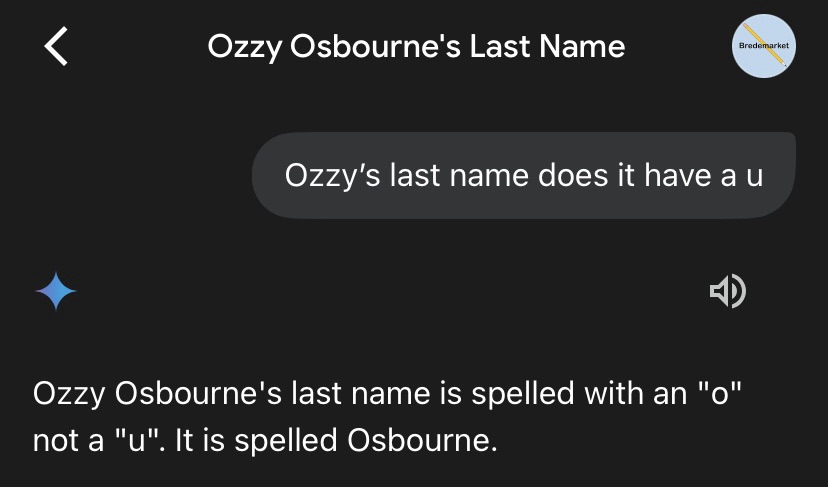
Oh, and a disclosure: I used Google Gemini to research this post. Not that it really helped.
After creating my textual “Customer Focus and Employee Focus,” I used Facebook to repurpose the Imagen 3-created images as a short reel, “Do your prospects believe your claimed employee focus?”
See my original post for the answers to these and following questions:
Do J.P. Morgan Chase’s employees matter to Jamie Dimon?
Do Meta’s employees matter to Mark Zuckerberg?
Do federal employees matter to Elon Musk and Donald Trump?
Do Virgin employees matter to Richard Branson?
The song is Nick Gallant’s “Gonna Need A Little Help.”
Do your prospects believe your claimed employee focus?
When you market to your prospects and customers, will they believe what you say? Or will you be exposed as a liar?
The Bredemarket blog has talked incessantly about customer focus from a marketing perspective, noting that an entity’s marketing materials need to speak to the needs of the customer or the prospect, not the selling entity.
But customer focus alone is not enough. When the customers sign up, they have to deal with someone.
Unless the customer is stuck in answer bot hell (another issue entirely), they will deal with an employee.
The expendables
And some employees are not happy, because they feel they are expendable.
“Every area should be looking to be 10% more efficient. If I was running a department with a hundred people, I guarantee you, if I wanted to, I couldn’t run it with 90 and be more efficient. I guarantee you, I could do it.”
So J.P. Morgan Chase is doing very well, Dimon is doing very well, but he’s implicitly saying that his people suck.
“This is going to be an intense year, and I want to make sure we have the best people on our teams. I’ve decided to raise the bar on performance management and move out low performers faster.”
You may have noticed my intentional use of the word “entity” at the beginning of this post. Because while businesses have attracted much attention in the current culture of “layoffs will continue until morale improves,” these businesses are themselves “low performers” in the shedding people category. Chief DOGE Elon Musk, fresh from reducing X’s headcount, is coordinating layoffs in the public sector.
“Federal agencies were ordered by Donald Trump to fire mostly probationary staff, with as many as 200,000 workers set to be affected and some made to rush off the premises.”
Zuckerberg could only dream of saying “you’re fired” to 200,000 people. That dream would certainly increase his masculine energy, but for now Musk has trumped Zuckerberg on that front.
Do J.P. Morgan Chase’s employees matter to Jamie Dimon?
Do Meta’s employees matter to Mark Zuckerberg?
Do federal employees matter to Elon Musk and Donald Trump?
Regardless of the answer (and one could assert that they like the “good” employees and don’t want them to be harmed by the bad apples), their views are not universal.
The other extreme
Richard Branson (reportedly) does not put his needs first at the Virgin companies he runs.
Nor does he prioritize investors.
Oh, and if you’re one of Virgin’s customers…your happiness isn’t critically important either.
“So, my philosophy has always been, if you can put staff first, your customer second and shareholders third, effectively, in the end, the shareholders do well, the customers do better, and yourself are happy.”
You could argue that this is a means to an end, and that employee focus CAUSES customer focus. What if employee focus is missing?
“If the person who’s working for your company is not given the right tools, is not looked after, is not appreciated, they’re not gonna do things with a smile and therefore the customer will be treated in a way where often they won’t want to come back for more.”
Think about this the next time you have a problem with your Facebook account or at a Chase Bank or with your tax return.
Whether back office issues matter to customers
Of course I may be over reading into this, because I have said that the customer doesn’t care about your company. If you solve their problems, they don’t care if you’re hiring 200,000 people or firing 200,000 people.
If you solve their problems.
I can’t cite the source or the company, but I heard a horror story about an unhappy customer. The company had heavily bought into the “layoffs will continue until morale improves” philosophy, resulting in turnover in the employees who dealt with customers. When the customer raised an issue with the company, it made a point of saying that employee John Jones (not the employee’s real name) could have solved the customer’s problem long ago if the company hadn’t removed Jones from the account.
What about your company’s marketing?
So think about this in your marketing. Before you brag about your best places to work award, make sure that your prospect will see evidence of this in the employees they encounter.
“Our 8th annual LinkedIn Top Companies list highlights the 50 best large workplaces to grow your career in the U.S. right now. Fueled by unique LinkedIn data, the methodology analyzes various facets of career progression like promotion rates, skill development and more among employees at each company.”
Number 1 on LinkedIn’s April 2024 list? J.P. Morgan Chase.
Unlike my other Bredemarket blog posts, this one contains exactly zero images.
For a reason.
My most recent client uses Google Workspace, and I was in the client’s system performing some research for a piece of content I’m writing.
I was using Gemini for the research, and noticed that the implementation was labeled “Gemini Advanced.”
How advanced, I wondered. Bredemarket has a plain old regular version of Gemini with my Google Workspace, so I wondered if Gemini Advanced could do one particular thing that I can’t do.
So I entered one of my “draw a realistic picture” prompts, but did not specify that the entity in the picture had to be a wildebeest of iguana.
I entered my prompt…
…and received a picture that included…
…A PERSON.
(This is the part of the blog post where I should display the image, but the image belongs to my client so I can’t.)
In case you don’t know the history of why Google Gemini images of people are hard to get, it’s because of a brouhaha in 2024 that erupted when Google Gemini made some interesting choices when generating its images of people.
When prompted by CNN on Wednesday to generate an image of a pope, for example, Gemini produced an image of a man and a woman, neither of whom were White. Tech site The Verge also reported that the tool produced images of people of color in response a prompt to generate images of a “1943 German Soldier.”
I mean, when are we going to ever encounter a black Nazi?
Over the coming days, we’ll also start to roll out the generation of images of people, with an early access version for our Gemini Advanced, Business, and Enterprise users, starting in English….We don’t support the generation of photorealistic, identifiable individuals, depictions of minors or excessively gory, violent or sexual scenes.
Not sure whether Gemini Advanced users can generate images of black Popes, black Nazis, non-binary people, or (within the United States) the Gulf of Mexico.
Artificial intelligence is hard.
Incidentally, I have never tried to test guardrail-less Grok to see if it can generate images of black Nazis. And I don’t plan to.













 Bredemarket