The Monk Skin Tone Scale

(Part of the biometric product marketing expert series)

Now that I’ve dispensed with the first paragraph of Google’s page on the Monk Skin Tone Scale, let’s look at the meat of the page.

I believe we all agree on the problem: the need to measure the accuracy of facial analysis and facial recognition algorithms for different populations. For purposes of this post we will concentrate on a proxy for race, a person’s skin tone.

Why skin tone? Because we have hypothesized (I believe correctly) that the performance of facial algorithms is influenced by the skin tone of the person, not by whether or not they are Asian or Latino or whatever. Don’t forget that the designated races have a variety of skin tones within them.

But how many skin tones should one use?

40 point makeup skin tone scale

The beauty industry has identified over 40 different skin tones for makeup, but this granular of an approach would overwhelm a machine learning evaluation:

[L]arger scales like these can be challenging for ML use cases, because of the difficulty of applying that many tones consistently across a wide variety of content, while maintaining statistical significance in evaluations. For example, it can become difficult for human annotators to differentiate subtle variation in skin tone in images captured in poor lighting conditions.

6 point Fitzpatrick skin tone scale

The first attempt at categorizing skin tones was the Fitzpatrick system.

To date, the de-facto tech industry standard for categorizing skin tone has been the 6-point Fitzpatrick Scale. Developed in 1975 by Harvard dermatologist Thomas Fitzpatrick, the Fitzpatrick Scale was originally designed to assess UV sensitivity of different skin types for dermatological purposes.

However, using this skin tone scale led to….(drumroll)…bias.

[T]he scale skews towards lighter tones, which tend to be more UV-sensitive. While this scale may work for dermatological use cases, relying on the Fitzpatrick Scale for ML development has resulted in unintended bias that excludes darker tones.

10 point Monk Skin Tone (MST) Scale

Enter Dr. Ellis Monk, whose biography could be ripped from today’s headlines.

Dr. Ellis Monk—an Associate Professor of Sociology at Harvard University whose research focuses on social inequalities with respect to race and ethnicity—set out to address these biases.

If you’re still reading this and haven’t collapsed in a rage of fury, here’s what Dr. Monk did.

Dr. Monk’s research resulted in the Monk Skin Tone (MST) Scale—a more inclusive 10-tone scale explicitly designed to represent a broader range of communities. The MST Scale is used by the National Institute of Health (NIH) and the University of Chicago’s National Opinion Research Center, and is now available to the entire ML community.

From https://skintone.google/the-scale.

Where is the MST Scale used?

According to Biometric Update, iBeta has developed a demographic bias test based upon ISO/IEC 19795-10, which itself incorporates the Monk Skin Tone Scale.

At least for now. Biometric Update notes that other skin tone measurements are under developoment, including the “Colorimetric Skin Tone (CST)” and INESC TEC/Fraunhofer Institute research that uses “ethnicity labels as a continuous variable instead of a discrete value.”

But will there be enough data for variable 8.675309?
What “Gender Shades” Was Not

Mr. Owl, how many licks does it take to get to the Tootsie Roll center of a Tootsie Pop?

A good question. Let’s find out. One, two, three…(bites) three.

From YouTube.

If you think Mr. Owl’s conclusion was flawed, let’s look at Google.

One, two, three…three

I was researching the Monk Skin Tone Scale for a future Bredemarket blog post, but before I share that post I have to respond to an inaccurate statement from Google.

Google began its page “Developing the Monk Skin Tone Scale” with the following statement:

In 2018, the pioneering Gender Shades study demonstrated that commercial, facial-analysis APIs perform substantially worse on images of people of color and women.

Um…no it didn’t.

I will give Google props for using the phrase “facial-analysis,” which clarifies that Gender Shades was an exercise in categorization, not individualization.

But to say that Gender Shades “demonstrated that commercial, facial-analysis APIs perform substantially worse” in certain situations is an ever-so-slight exaggeration.

Kind of like saying that a bad experience at a Mexican restaurant in Lusk, Wyoming demonstrates that all Mexican restaurants are bad.

How? I’ve said this before:

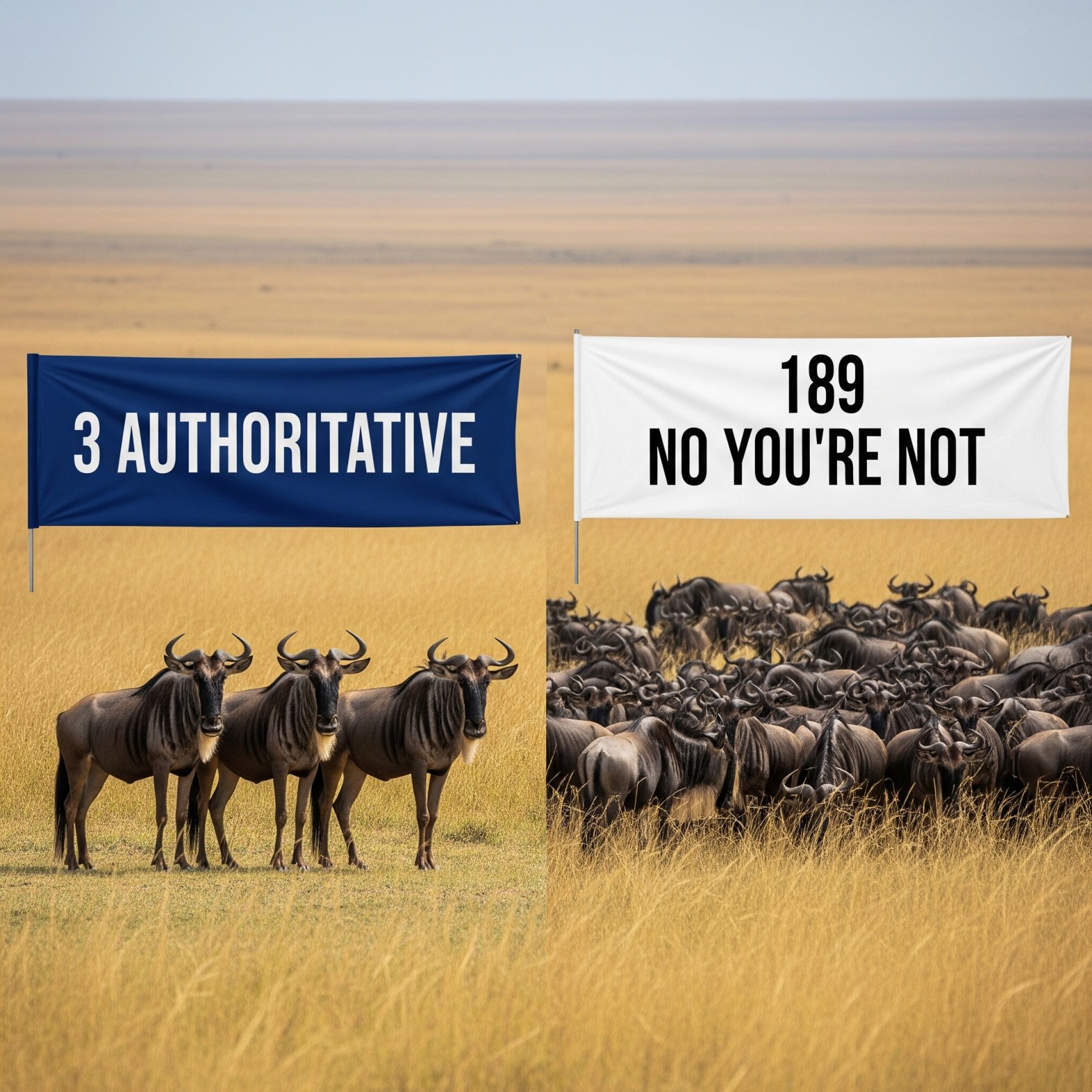
The Gender Shades study evaluated only three algorithms: one from IBM, one from Microsoft, and one from Face++. It did not evaluate the hundreds of other facial recognition algorithms that existed in 2018 when the study was released.

So to conclude that all facial classification algorithms perform substantially worse cannot be supported…because in 2018 the other algorithms weren’t tested.

One, two, three…one hundred and eighty nine

In 2019, NIST tested 189 software algorithms from 99 developers for demographic bias, and has continued to test for demographic bias since.

In these tests, vendors volunteer to have NIST test their algorithms for demographic bias.

Guess which three vendors have NOT submitted their algorithms to NIST for testing?

You guessed it: IBM, Microsoft, and Face++.

Anyway, more on the Monk Skin Tone Scale here, but I had to share this.

Ubiquity Via Focus…On Where?

So Bredemarket’s talking about “ubiquity via focus”?

Focus on where?

On the Bredemarket blog, your source for the latest identity/biometric and technology news.

And your source for the most up-to-date information on Bredemarket’s content-proposal-analysis services.

Be sure to visit https://bredemarket.com/blog/

Or better yet, subscribe at https://bredemarket.com/subscribe-to-bredemarket/

Simeio: Identity is the Perimeter of Cybersecurity

Simeio opened its monthly newsletter with a statement. Here is an excerpt:

“May spotlighted how even the most advanced enterprises are vulnerable when identity systems are fragmented, machine identities go unmanaged, and workflows rely too heavily on manual intervention—creating conditions ripe for risk. Enterprises need to get the message: identity is the perimeter of cybersecurity, and orchestration is the force multiplier. It’s time to learn how to effectively leverage it.”

Read the rest of Simeio’s newsletter on LinkedIn at https://www.linkedin.com/pulse/identity-matters-may-2025-identitywithsimeio-iby0e

Of course, there’s that interesting wrinkle of the identities of non-person entities, which may or may not be bound to human identities. Simeio, with its application onboarding solution, plays in the NPE space.

As for me, I need to start thinking about MY Bredemarket monthly LinkedIn newsletter (The Wildebeest Speaks) soon. June approaches. (Here’s the May edition if you missed it.)

Ubiquity Via Focus

Well, that’s done and over with.

So let’s move forward with the third year of the revived Bredemarket.

In case you missed it, Bredemarket provides content-proposal-analysis services for identity/biometric and technology firms by means of standard writing offerings.

And Bredemarket will improve its capabilities to serve you…by the means of ubiquity via focus.

No, Bredemarket isn’t ready to reveal what “ubiquity via focus” is yet…but I think you’ll figure it out.

Ubiquity Via Focus.

Two Years

On May 30, 2023 I wrote a post in the Bredemarket blog, announcing an increase in Bredemarket’s business hours to full time.

I also announced a change in scope.

“If you need a consultant for marketing or proposal work, and your company is involved in the identification of individuals, Bredemarket can accept the work.”

Because…I learned at 7:30 that morning that my individual identification employer was no longer my employer. Several of us lost our jobs that day.

As it turns out, my view of my employment future was overly optimistic.

“Maybe I’ll find a new full-time position in a couple of weeks, and I’ll again have to reduce hours and scope.”

As it ended up, I didn’t…and I haven’t.

Your credentials are too impressive, so we are moving in a different direction.

And I’m paying full price for my healthcare—no employer subsidy.

Your opportunity remains.

Bredemarket has openings.

(Pictures not from Craiyon, but from Imagen 4.)

Evading State Taxes: Non-Person Automotive Entities and Geolocation

When a person is born in the United States, they obtain identifiers such as a name and a Social Security Number.

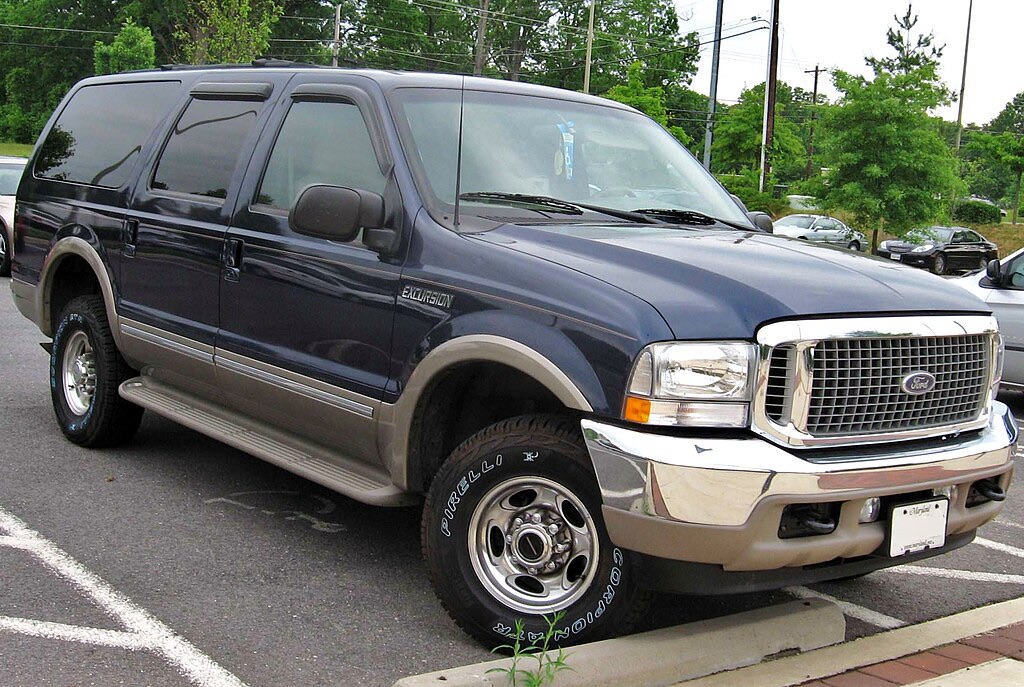
When a non-person entity is “born,” it gets identifiers also. For automobiles, the two most common ones are a Vehicle Identification Number (VIN) and a license plate number. (There is also title, which I’ve discussed before, but that’s not really an identifier.)

In my country license plates and the associated vehicle registrations, like driver’s licenses, are issued at the state level. Montana, for example, has 2.3 million registered vehicles…which is odd, because the state only has 879,000 licensed drivers.

How can this be? Jalopnik explains:

“All that wealthy car owners have to do is spend around $1,000 to open an LLC in Montana, then use the LLC to purchase a car with no sales tax — and said car is not subject to vehicle inspections or emissions testing.”

That explains things. The Montana LLCs need multiple cars for all their LLC-related travel between Billings, Bozeman, and Butte. That’s a ton of miles on the Montana highways.

Um…no.

“According to Bloomberg, former Montana revenue director Dan Bucks said there are likely more than 600,000 vehicles registered in Montana but operated in other states.”

Like California. Where people don’t want to pay the fees associated with vehicle registration here, so they say their vehicles are Montana vehicles. Only problem is, license plate readers on California freeways can identify the movements of a car with Montana plates. And if that “Montana” car is moving in California, expect a visit from the tax authority.

But it’s not just the money hungry loony liberal Commies in California. Jalopnik reports that the money hungry loony liberal Commies in…um…Utah are mad also.

“This is really an abuse of our tax system,” said Utah tax commissioner John Valentine. “They pay nothing to support our state, just a small fee to Montana for the opportunity to evade taxes in Utah.”

Because in the end it doesn’t matter if you’re blue or red. What matters is the green. And the geolocation.

(2002 Ford Excursion image public domain)

Video Analytics is Nothing New or Special

There is nothing new under the sun, despite the MIT Technology Review’s trumpeting of the “new way” to track people. 

The underlying article is gated, but here is what the public summary says:

“Police and federal agencies have found a controversial new way to skirt the growing patchwork of laws that curb how they use facial recognition: an AI model that can track people based on attributes like body size, gender, hair color and style, clothing, and accessories.

“The tool, called Track and built by the video analytics company Veritone, is used by 400 customers….”

Video analytics is nothing new. Viewing a picture of a particular backpack was a critical investigative lead after the Boston Marathon bombing. Two years later, I was adapting Morpho’s video analytics tool (now IDEMIA’s Augmented Vision) to U.S. use.

And it’s important to note that this is not strictly an IDENTIFICATION tool. Just because a tool finds someone with a particular body size, gender, hair color and style, clothing, and accessories means nothing. Hundreds of people may share those same attributes.

But when you combine them with an INDIVIDUALIZATION tool such as facial recognition…only then can you uniquely identify someone. (Augmented Vision can do this.)

And if facial recognition itself is only useful as an investigative lead…then video analytics without facial recognition is also only useful as an investigative lead.

Yawn.

(Imagen 3)

Identity Management Platform Frontegg.ai

From HelpNet Security:

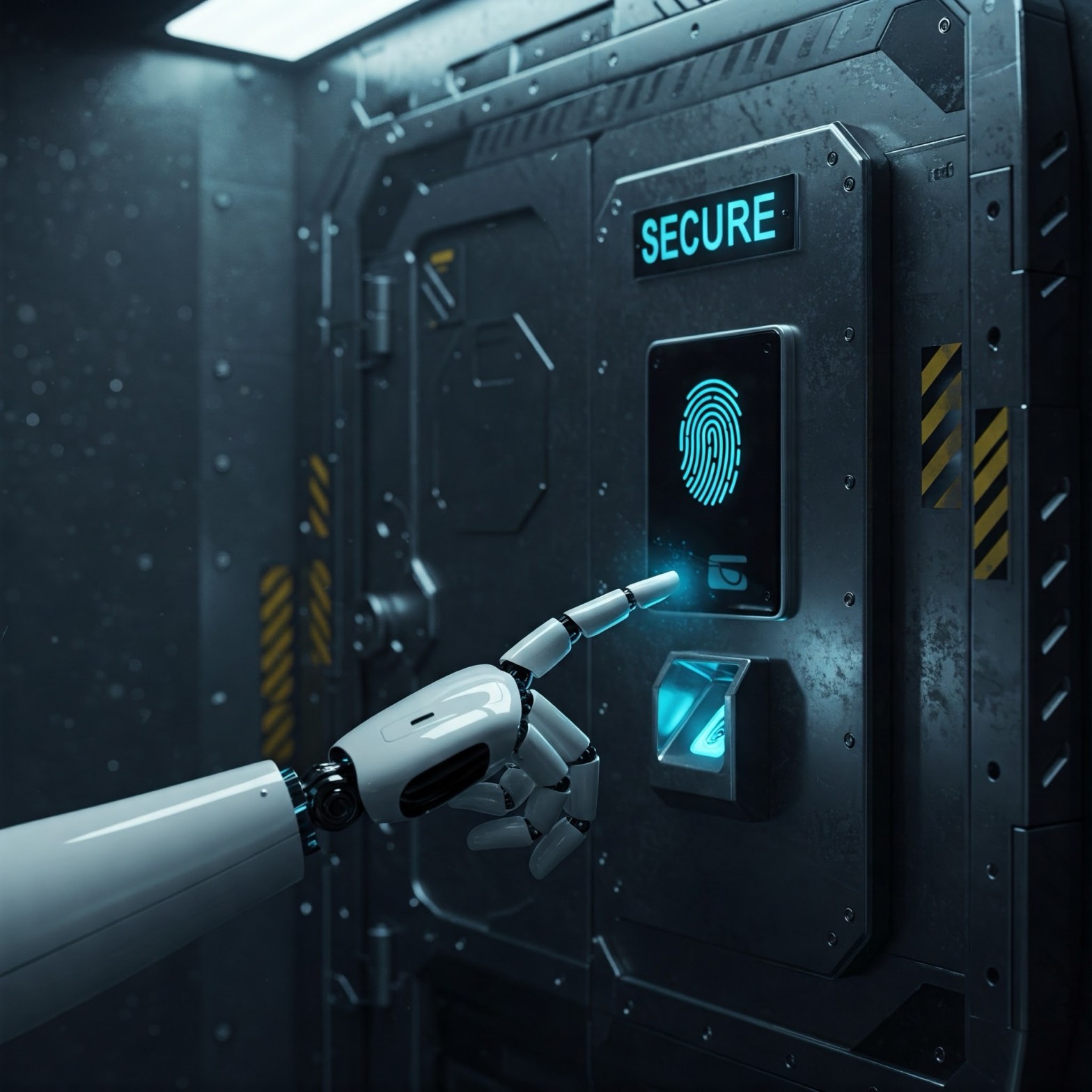
“Frontegg launched Frontegg.ai, an identity management platform purpose-built for developers building AI agents….

“[D]evelopers are running into a major roadblock: a lack of identity standards tailored specifically for AI agents. Existing infrastructure was not designed with autonomous agents in mind. When building an AI agent, developers are forced to waste valuable time stitching together ad-hoc authentication flows, security frameworks, and integration mechanisms….

“In an AI‑first world, identity can’t be retrofitted from traditional web and mobile stacks. It needs to be purpose-built for AI agents. Frontegg.ai provides that layer for agent builders…”

(Imagen 3)