I know that the experts say that “too much knowledge is actually bad in tech.” But based upon what I just saw from an (unnamed) identity verification company, I assert that too little knowledge is much worse.
As a biometric product marketing expert and biometric product marketing writer, I pay a lot of attention to how identity verification companies and other biometric and identity companies market themselves. Many companies know how to speak to their prospects…and many don’t.
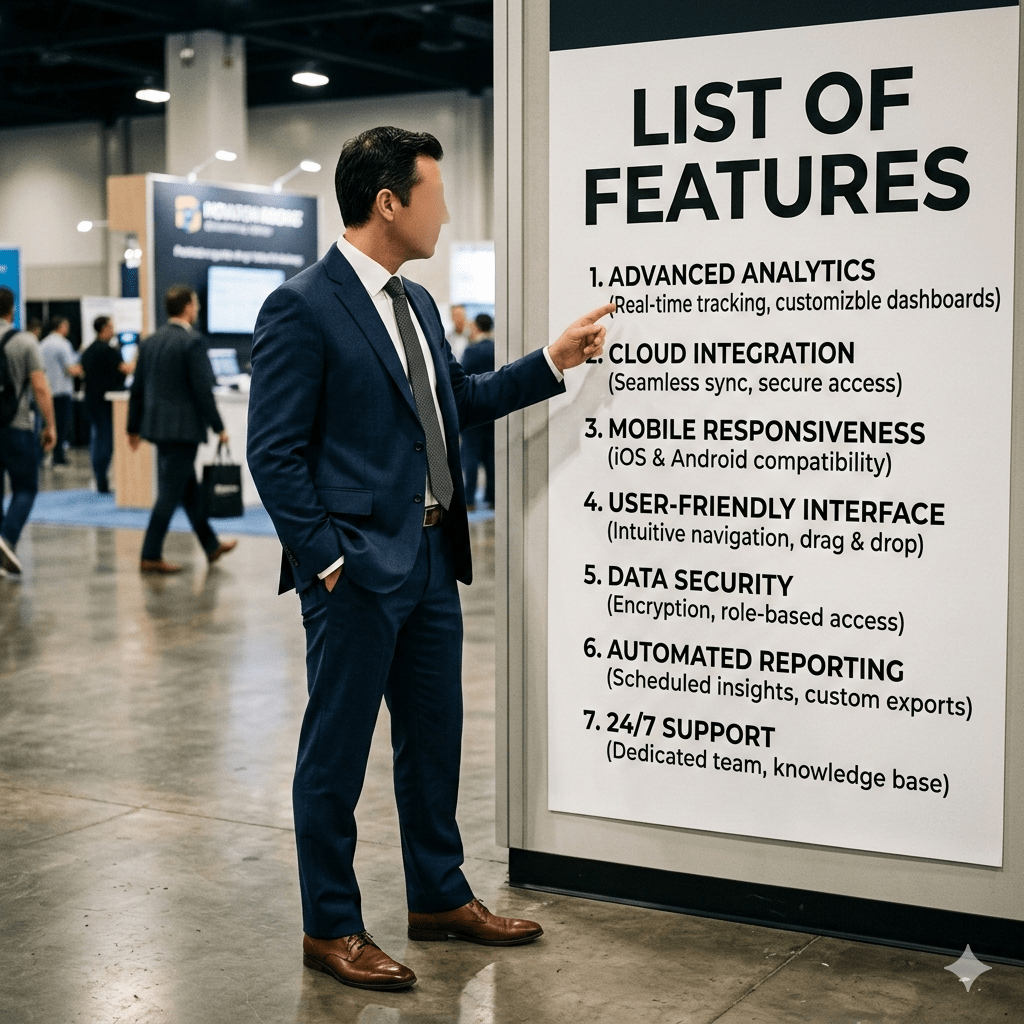
Take a particular company, which I will not name. Here is the “marketing” from this company.
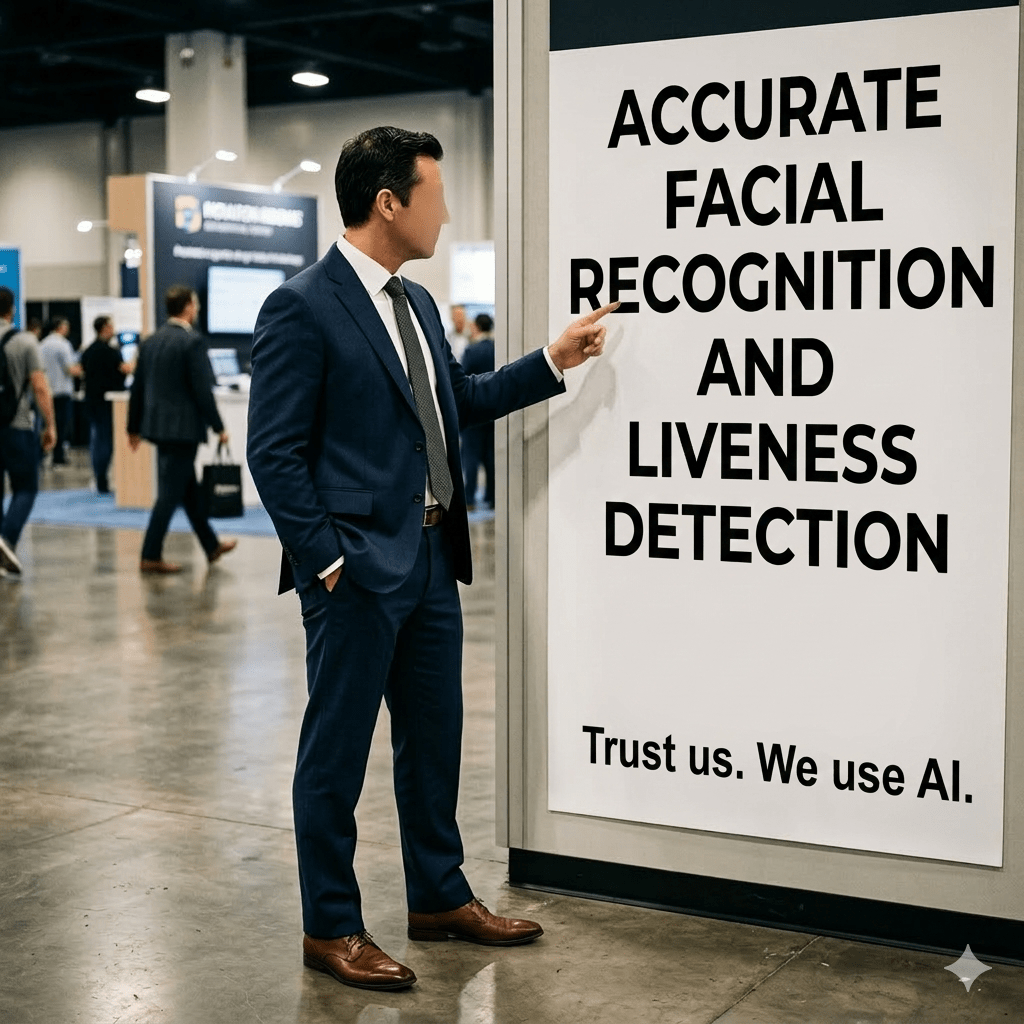
We claim high facial recognition accuracy but don’t publish our NIST FRTE results! (While the company claims to author its technology, the company name does not appear in either the NIST FRTE 1:1 or NIST FRTE 1:N results.)
We claim liveness detection (presentation attack detection) but don’t publish any confirmation letters! (Again, I could not find the company name on the confirmation letter lists from BixeLab or iBeta.)
Google Gemini.
So what is the difference between this company and the other 100+ identity verification companies…many of which explicitly state their benefits, trumpet their NIST FRTE performance, and trumpet their third-party liveness detection confirmation letters?
If you claim great accuracy and great liveness detection but can’t support it via independent third-party verification, your claim is “so what?” worthless. Prove your claims.
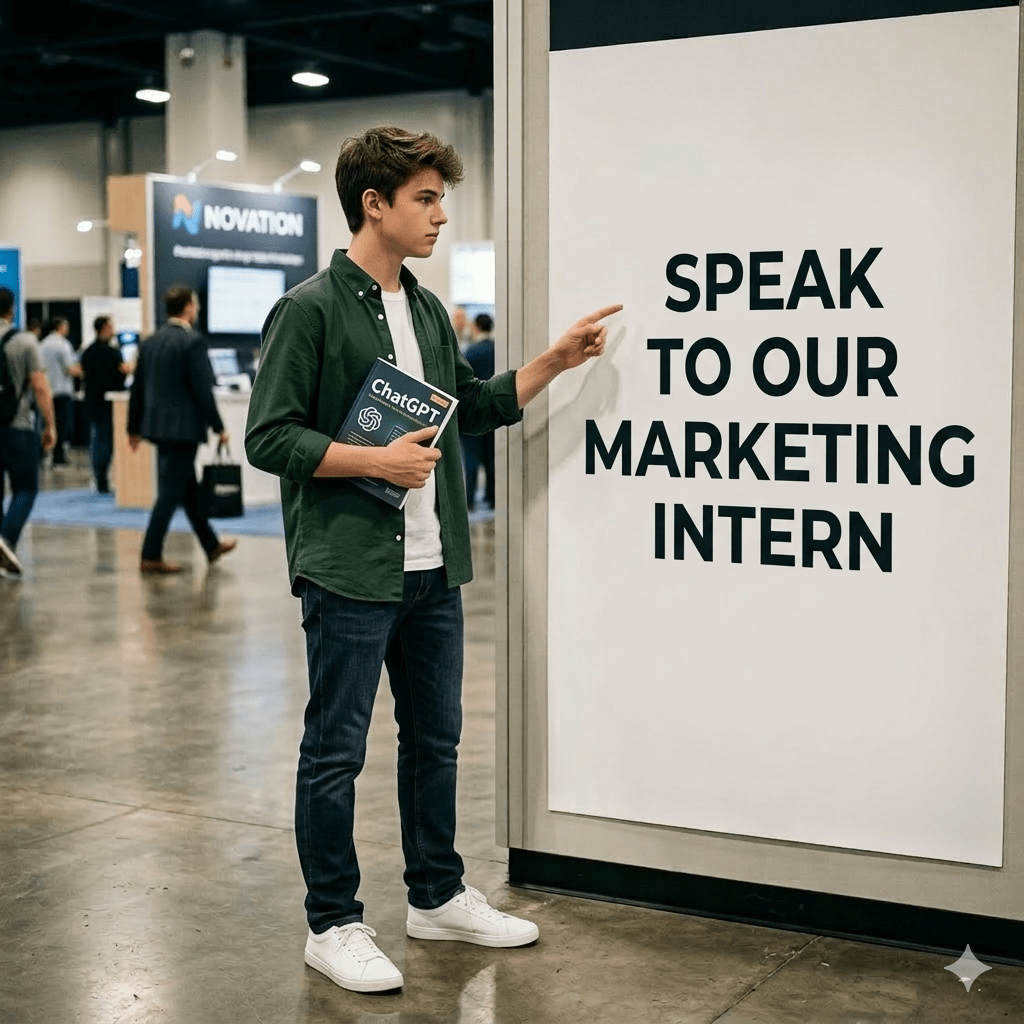
Now I’m sure I could help this company. Even if they have none of the certifications or confirmations I mentioned, I could at least get the company to focus on meaningful differentiation and meaningful benefits. But there’s no need to even craft a Bredemarket pitch to the company, since the only marketer on staff is an intern who is indifferent to strategy.
Google Gemini.
Because while many companies assert that all they need is a salesperson, an engineer, an African data labeler, and someone to run the generative AI for everything else…there are dozens of competitors doing the exact same thing.
But some aren’t. Some identity/biometric companies are paying attention to their long-term viability, and are creating content, proposals, and analyses that support that viability.
Take a look at your company’s marketing. Does it speak to prospects? Does it prove that you will meet your customers’ needs? Or does it sound like every other company that’s saying “We use AI. Trust us“?
And if YOUR company needs experienced help in conveying customer-focused benefits to your prospects…contact Bredemarket. I’ve delivered meaningful biometric materials to two dozen companies over the years. And yes, I have experience. Let me use it for your advantage.
I remember when I was working in Anaheim and keeping track of the latest BIPA lawsuits, back when you could count them on one hand…then on two hands…then there were too many.
I feel the same way about mypreviousattempts to track the vendors that offer solutions that conform to ISO 30107-3 Presentation Attack Detection Level 3. I thought I’d found them all, then I’d find another one.
So here’s my current (Friday afternoon) list of the PAD 3 conforming solutions.
While Google Gemini informed me that Veridas had also received Level 3 confirmation from iBeta, that turned out to be a hallucination. Veridas realizes the importance of Level 3, though, as do other selected vendors, so I suspect this table will be outdated soon.
Oh, and just to confuse things further, some of the other tests, such as CEN/TS 18099 injection attack detection tests, also may apply in some way to presentation attacks. Or maybe not. We’ll see.
This morning’s post listed three companies with independently demonstrated conformance to ISO 30107-3 presentation attack detection level 3: Aware, FaceTec, and Yoti.
The independent evaluators were BixeLab and iBeta.
But Ingenium provides PAD level 3 conformance assessments also.
So that’s a total of four companies at PAD Level 3: Aware, FaceTec, Paravision, and Yoti.
Who else did I miss?
And I will revisit my earlier question. Will consumers perceive that THEIR data is valuable enough to warrant Level 3 liveness detection? And avoid the solutions with “only” Level 2 conformance?
But iBeta isn’t the only entity performing PAD Level 3 testing.
FaceTec’s algorithm received PAD Level 3 confirmation from BixeLab in October.
Aware received a similar confirmation in November.
Will PAD Level 3 become the new floor for liveness detection? It depends upon your needs. Here’s how Mantra explains the difference between levels 2 and 3.
Level 2 (L2):
More realistic spoofs-high-quality 3D masks, composite fingers, better materials. Harder to detect, but still lab-craft attacks.
The “serious resources” part is key. Fraudsters will only spend “serious resources” if the target is valuable enough.
But will consumers perceive that THEIR data is valuable enough to warrant Level 3 liveness detection? And avoid the solutions with “only” Level 2 conformance?
There are numerous independent testing laboratories, holding testing certifications from various entities, that test a product’s conformance to the requirements of a particular standard.
For presentation attack detection (liveness), organizations such as iBeta and BixeLab test conformance to ISO 30107-3.
Vendors who submit their products to iBeta may optionally choose to have the results published; iBeta publishes these confirmation letters here.
In a similar manner, BixeLab publishes its confirmation letters here.
For injection attack detection, Ingenium tests conformance to CEN/TS 18099:2025, as well as testing that exceeds the requirements of that standard.
Unfortunately, I was unable to locate a central source of all of Ingenium’s testing results. So I had to hunt around.
Known Ingenium Injection Attack Detection Testing Results
Ingenium’s testing is relatively new, as is the whole idea of performing injection attack detection testing in general, so it shouldn’t be surprising that vendors haven’t rushed to get independent confirmation of injection attack capabilities.
But they should.
A brief reminder on Ingenium’s five testing levels
Level 1: CEN Substantial: This tier is equivalent to the CEN TS 18099:2025 ‘substantial’ evaluation level. A Level 1 test requires 25 FTE days and includes a focus on 2 or more IAMs and 10 or more IAI species. It’s a great starting point for assessing your system’s resilience to common injection attacks.
Level 2: CEN High: Exceeding the substantial level, this tier aligns with the CEN TS 18099:2025 ‘high’ evaluation level. This 30-day FTE evaluation expands the scope to include 3 or more IAMs and a higher attack weighting, providing a more rigorous test of your system’s defenses.
Level 3: This level goes beyond the CEN TS 18099:2025 standard to provide an even more robust evaluation. The 35-day FTE program focuses on a higher attack weighting, with a greater emphasis on sophisticated IAMs and IAI species to ensure a more thorough assessment of your system’s resilience.
Level 4: A 40-day FTE evaluation that further exceeds the CEN TS 18099:2025 standard. Level 4 maintains a high attack weighting while specifically targeting the IAI detection capabilities of your system. Although not a formal PAD (Presentation Attack Detection) assessment, this level offers valuable insights into your system’s PAD subsystem resilience.
Level 5: Our most comprehensive offering, this 50-day FTE evaluation goes well beyond the CEN TS 18099:2025 requirements. Level 5 includes the highest level of Ingenium-created IAI species, which are specifically tailored to the unique functionality of your system. This intensive testing provides the deepest insight into your system’s resilience to injection attacks.
Oh, and there’s a video
As I was publicizing my iProov injection attack detection post, I used Grok to create an injection attack detection video. Not for the squeamish, but injection attacks are nasty anyway.



 Bredemarket