

Bredemarket is the biometric product marketing expert. Learn more: https://bredemarket.com/mark/
Tag Archives: biometric product marketing expert
How Can CMOs Serve Hungry Prospects With Expert Biometric Content?

How can CMOs serve hungry prospects with expert biometric content?
(Imagen 4)
Biometric product companies offer a tasty mixture of fingerprint, face, iris, voice, DNA, and other biometric hardware and software. These companies employ Chief Marketing Officers (CMOs) responsible for their firms’ inbound product marketing. Hungry prospects devour any content the firm can provide, and the CMOs devour any employee or contractor who can provide the necessary content.
The CMO will appreciate this seasoned quote from Lee Densmer:
“Companies are outsourcing the writing at great expense….[I]t is a heavy lift to make sure daily content for the platform is useful, relevant, and align with your business. Outsourcing doesn’t really work unless the writer really knows your business, is in touch with corporate leaders, and stays on top of trends.”
Read Densmer’s article: https://www.linkedin.com/pulse/why-linkedin-b2b-growth-hard-right-now-what-youre-doing-lee-densmer-pqvgc
So if you’re a content-devouring CMO at a biometric company, doesn’t it make sense to contract with Bredemarket’s biometric product marketing expert to serve a delicious dinner of your content needs?
Talk to Bredemarket: https://bredemarket.com/mark/
(And yes, it is almost lunchtime. Why do you ask?)
Painting a Picture: The Content Challenges of a Biometric Chief Marketing Officer

(Imagen 4)
If this reads odd, there’s a reason.
Imagine a Chief Marketing Officer sitting at her desk, wondering how she can overcome her latest challenge within three weeks.
She is a CMO at a biometric software company, and she needs someone to write the first two entries in a projected series of blog posts about the company’s chief software product. The posts need to build awareness, and need to appeal to prospects with some biometric knowledge.
So she contacts the biometric product marketing expert, John E. Bredehoft of Bredemarket, via his meeting request form, and schedules a Google Meet for the following meeting.
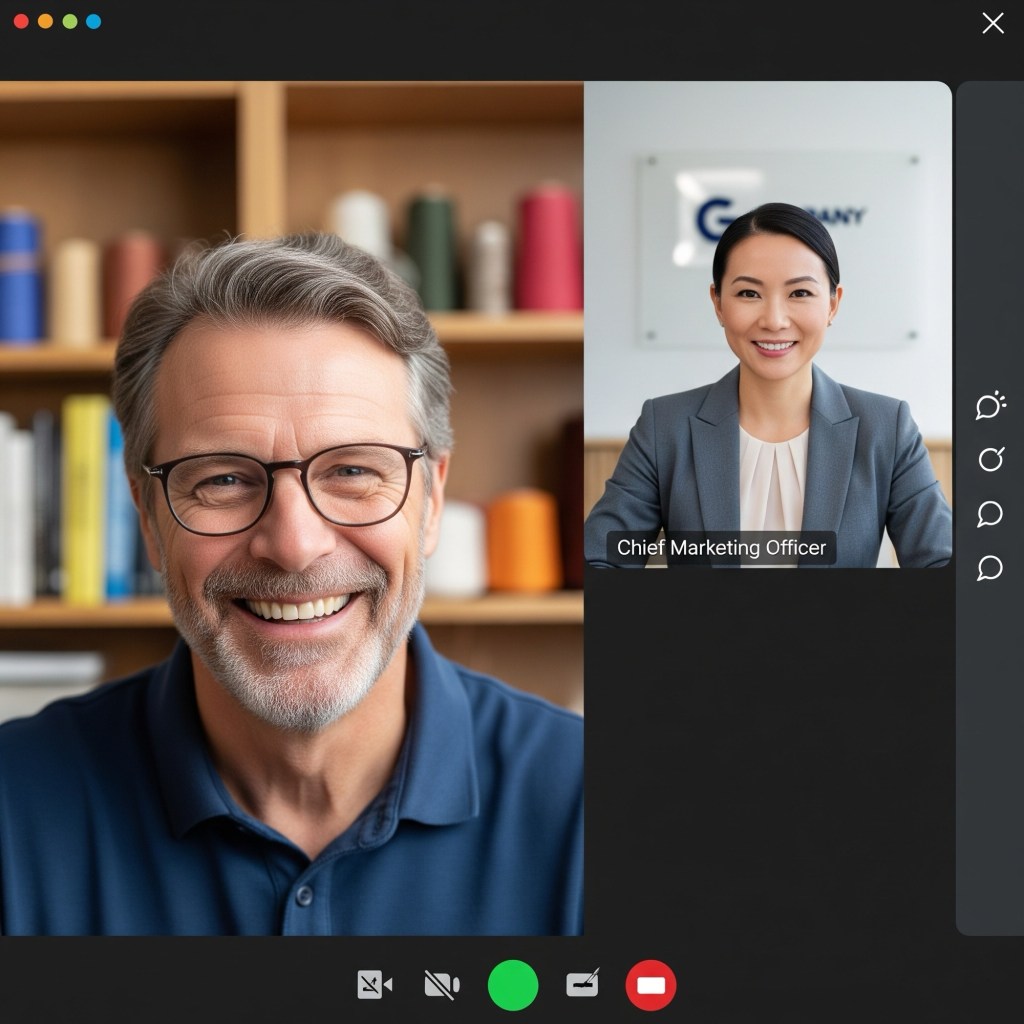
At the scheduled time she joins the meeting from her laptop on her office desk and sees John on the screen. John is a middle-aged Caucasian man with graying hair. He is wearing wire-rimmed glasses with a double bridge. He has a broad smile, with visible lines around his eyes and mouth. His eyes are brown and appear to be looking directly at the camera. He is wearing a dark blue collared shirt. While his background is blurred, he appears to be in a room inside his home, with a bookcase and craft materials in the background.
After some pleasantries and some identity industry chit chat, John started asking some questions. Why? How? What? Goal? Benefits? Target audience (which he called hungry people)? Emotions? Plus some other questions.
They discussed some ideas for the first two blog posts, each of which would be about 500 words long and each of which would cost $500 each. John pledged to provide the first draft of the first post within three calendar days.
After the call, the CMO had a good feeling. John knew biometrics, knew blogging, and had some good ideas about how to raise the company’s awareness. She couldn’t wait to read Bredemarket’s first draft.
If you are in the same situation as the CMO is this story, schedule your own meeting with Bredemarket by visiting the https://bredemarket.com/mark/ URL and filling out the Calendly form.
Remember how I warned you that this post was going to read odd? In case you’re wondering about the unusual phrasing—including a detailed description of what I look like—it’s because I fed the entire text of this blog post to Google Gemini. Preceded by the words “Draw a realistic picture of.” And here’s what I got.


My Biometric Product Marketing Expert Slogan Rewarded Me (SBDC at BizFest)
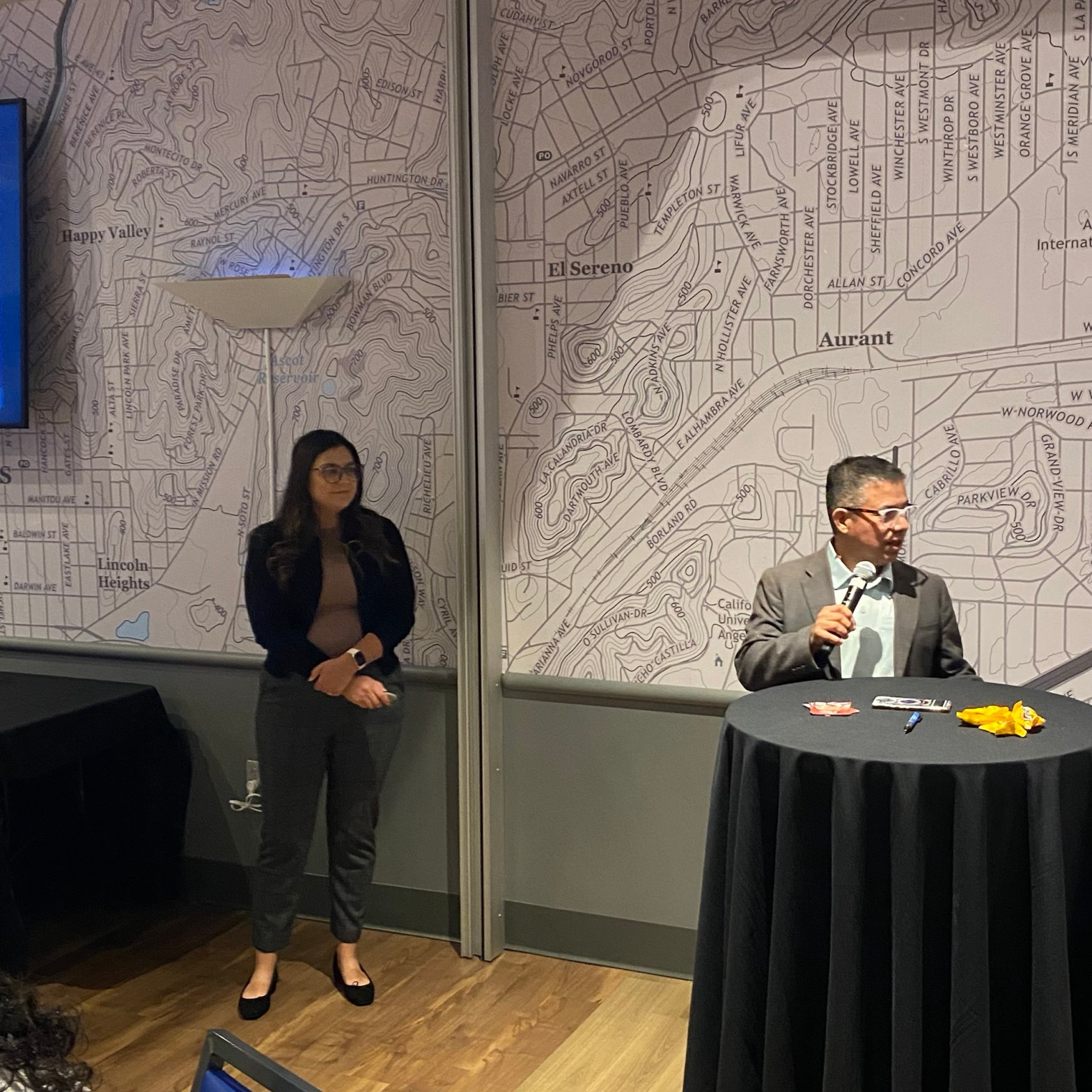
At the Inland Empire BizFest, I am listening to two Orange County-Inland Empire Small Business Development Center presenters.
When they asked if any of us had developed any SEO-related terms, I told them I was the biometric product marketing expert.
They gave me some M&Ms.

It’s All About Me 1: Biometric Product Marketing Expert

Lately I’ve been so busy promoting my Bredemarket marketing and writing consultancy that I’ve neglected to promote me, John E. Bredehoft.
So my first “It’s All About Me” (IAAM, for those in the know) focuses on my self-declaration as the biometric product marketing expert.
Some of you may have seen a similar reel targeted to Bredemarket consulting clients (identity/biometric marketing leaders). Actually there are two Bredemarket reel versions because of a landing page change. The existence of three reels shows my dedication to repurposing.
But none of the three versions is meaningful to cybersecurity firms, or third-party risk management (TPRM) firms, or content management system (CMS) firms, or healthcare firms (the non-identification biometric).
Hence Part Two.
When Social Platforms Convert Users Into Identity Verification Salespeople

(Imagen 4)
(Author’s preface: I was originally going to schedule this post for the middle of next week. But by the time I wrote it, the end of the post referenced a current event of astronomical proportions. Since said current event may be forgotten by the middle of next week, I am publishing it now.)
As a proponent of identity verification and a biometric product marketing expert I should like this…but I don’t.
I got the message and the message is clear
You get a message on a platform from someone you don’t know. The message may look something like this:
“John ,
“I hope this message finds you well. I came across your profile and was truly impressed by your background. While I’m not a recruiter, I’m assisting in connecting talented professionals with a startup that is working on a unique initiative.
“Given your experience, I believe you could be a fantastic fit for their senior consultant role. If you’re open to exploring this opportunity, I’d be happy to share more details and introduce you to the team directly. Please let me know if you’re interested!”
Let’s count the red flags in this message, which is one I actually received on May 30 from someone named David Joseph:
- The author was truly impressed by my background, but didn’t cite any specifics about my background that impressed them. This exact same message could be sent to a biometric product marketing expert, a nuclear physicist, or a store cashier.
- The author is not a recruiter, but a connector who will presumably pass me on to someone else. Why doesn’t the “someone else” contact me directly?
- The whole unidentified startup working on a unique initiative story. Yes, some companies operate as stealth firms before revealing their corporate identity. Amway. Prinerica. Countless MLMs with bad reputations. Trust me, these initiatives are not unique.
- That senior consultant title. Not junior consultant. Senior consultant. To make that envelope stuffing role even more prestigious.
I got the note and the note is even clearer
But I wasn’t really concerned with the message. I get these messages all the time.
So what concerned me?
The note attached to the message by the platform that hosted the message.
“Don’t know David? Ask David to verify their profile information before responding for added security.”
The platform, if you haven’t already guessed, is LinkedIn, the message a LinkedIn InMail.
Let’s follow the trail.
- LinkedIn let “David” use the platform without verifying his identity or verifying that Randstad is truly his employer as his profile states.
- LinkedIn sold “David” a bunch of InMail credits so that he could privately share this unique opportunity.
- Now LinkedIn wants me to do its dirty work and say, “Hey David, why don’t you verify your profile?”
Now the one thing in LinkedIn’s favor is that LinkedIn—unlike Meta—lets its users verify their profiles for free. Meta charges you for this.
But again, why should I do LinkedIn’s dirty work?
Why doesn’t LinkedIn prevent users from sending InMails unless their profiles are verified?
The answer: LinkedIn makes a ton of money selling InMails to people without verified profiles. And thus makes money off questionable businesspeople and outright scammers.
Instead of locking down the platform and preventing scammers from joining the platform in the first place.
It’s like LinkedIn openly embraces scammers.
And everyone knows it.

Bredemarket Identity Firm Services on LinkedIn
For Identity/Biometric Marketing Leaders Only (July 2025 version)

For identity/biometric marketing leaders only!
Make an impact with the biometric product marketing expert.
Bredemarket’s biometric product marketing expertise: https://bredemarket.com/bpme/
Discuss your content-proposal-analysis needs with me before your competitors steal your prospects: https://bredemarket.com/mark/
(New landing page.)
For Identity/Biometric Marketing Leaders Only

(This is the old version of this post. See the new version from July 8 with improved algorithmic landing page-ability.)
For identity/biometric marketing leaders only!
Make an impact with the biometric product marketing expert.
Bredemarket’s biometric product marketing expertise: https://bredemarket.com/bpme/
Discuss your content-proposal-analysis needs with me before your competitors steal your prospects: https://bredemarket.com/cpa/
Biometric Marketers: What About WRITER Personas?

(Imagen 4)
Biometric marketing leaders already know that I’ve talked about reader personas to death. But what about WRITER personas? And what happens when you try to address ALL the reader and writer personas?
Reader personas
While there are drawbacks to using personas, they are useful in both content marketing and proposal work when you want to tailor your words to resonate with particular types of readers (target audiences, or hungry people).
I still love my example from 2021 in which a mythical Request for Proposal (RFP) was issued by my hometown of Ontario, California for an Automated Biometric Identification System (ABIS). The proposal manager had to bear the following target audiences (hungry people) in mind for different parts of the proposal.
- The field investigators who run across biometric evidence at the scene of a crime, such as a knife with a fingerprint on it or a video feed showing someone breaking into a liquor store.
- The examiners who look at crime scene evidence and use it to identify individuals.
- The people who capture biometrics from arrested individuals at livescan stations.
- The information technologies (IT) people who are responsible for ensuring that Ontario, California’s biometric data is sent to San Bernardino County, the state of California, perhaps other systems such as the Western Identification Network, and the Federal Bureau of Investigation.
- The purchasing agent who has to make sure that all of Ontario’s purchases comply with purchasing laws and regulations.
- The privacy advocate who needs to ensure that the biometric data complies with state and national privacy laws.
- The mayor (Paul Leon back in 2021, and still in 2025), who has to deal with angry citizens asking why their catalytic converters are being stolen from their vehicles, and demanding to know what the mayor is doing about it.
- Probably a dozen other stakeholders that I haven’t talked about yet, but who are influenced by the city’s purchasing decision.
Writer personas
But who is actually writing the text to address these different types of readers?
Now in this case I’m not talking about archetypes (a topic in itself), but about the roles of the subject matter experts who write or help write the content.
I am currently working on some internal content for a Bredemarket biometric client. I can’t reveal what type of content, but it’s a variant of one of the 22 types of content I’ve previously addressed. A 23rd type, I guess.
Anyway, I am writing this content from a product marketing perspective, since I am the self-proclaimed biometric product marketing expert. This means that the internal content fits into a story, focuses on the customer, highlights benefits, and dwells on the product.
But what would happen if someone in a role other than product marketing consultant wrote this content?
- An engineer would emphasize different things. Maybe a focus on the APIs.
- A finance manager would emphasize different things. Maybe an ROI focus.
- A salesperson may focus on different things. Maybe qualification of a prospect. Or eventually conversion.
So the final content is not only shaped by the reader, but by the writer.
You can’t please everyone so you’ve got to please yourself
With all the different reader and writer personas, how should you respond?
Do all the things?
Perhaps you can address everyone in a 500 page proposal, but the internal content Bredemarket is creating is less than 10 pages long.
Which is possibly already too long for MY internal target audience.
So I will NOT create the internal content that addresses the needs of EVERY reader and writer persona.
Which is one truth about (reader) personas in general. If you need to address three personas, it’s more effective to create 3 separate pieces than a single one.
Which is what I’m doing in another project for this same Bredemarket biometric client, this one customer-facing.
And the content targeted to latent examiners won’t mention the needs of Paul Leon.
In which I address the marketing leader reader persona
So now I, the biometric product marketing expert writer persona, will re-address you, the biometric marketing leader reader persona.
You need content, or proposal content.
But maybe you’re not getting it because your existing staff is overwhelmed.
So you’re delaying content creation or proposal responses, or just plain not doing it. And letting opportunities slip through your fingers.
Plug the leaks and stop your competitors from stealing from you. Bring Bredemarket on board. Schedule a free exploratory meeting today at https://bredemarket.com/cpa/.
 Bredemarket