It’s All About the Data, And the (Lack of) Guardrails

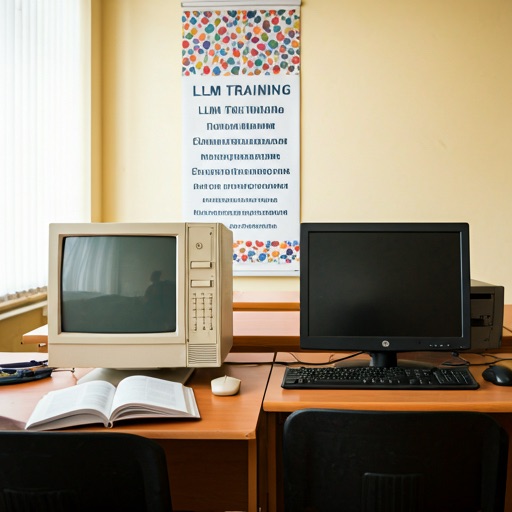
(All images Imagen 3)

Large Language Models (LLMs) are naturally influenced by their training data. Any biases present in the training data, whether intentional or unintentional, will naturally creep into the responses that the LLMs provide.

If I may take an extreme example (and prove Godwin’s Law in the process)…had Hitler developed an LLM in the late 1930s, you can imagine how it would answer selected questions about nationalities, races, or ethnic groups.

Of course that has nothing to do with the present day.

Red LLM, blue LLM?

But what IS newsworthy is that despite the presence of many technology leaders at President Donald Trump’s inauguration, I am unable to find any reference to a “red LLM.” Or, for that matter, a “blue LLM.”

Take the red LLM or the blue LLM.

Perhaps the terminology isn’t in vogue, but when you look at algorithmic bias in general, has anyone examined political bias?

Grok and bias

One potential field for study is Grok. Of all the godfathers of AI, Elon Musk is known both for his political views and his personal control of the companies he runs.

So it’s natural that the Center for Advancing Safety of Machine Intelligence would examine Grok, although their first example is not convincing:

“Specifically, Grok falsely claimed that Kamala Harris, the Democratic presidential nominee, had missed ballot deadlines in nine states—an assertion that was entirely untrue.”

Yes, it sounds bad—until you realize that as recently as January 2025 some Google AI tools (but not others) were claiming that you had to tip Disney World cast members if you want to exit rides. Does Alphabet have a grudge against Disney? No, the tools were treating a popular satirical article as fact.

What data does Grok use?

“Grok is trained on tweets—a medium not known for its accuracy—and its content is generated in real-time.”

Regardless of how you feel about bias within X—and just because you feel about something doesn’t necessarily mean it’s true—the use of such a limited data set raises concerns.

Except that the claim that Grok is trained on tweets misstates the truth. Take an early Grok release, Grok-1:

“The training data used for the release version of Grok-1 comes from both the Internet up to Q3 2023 and the data provided by our AI Tutors.”

Certainly X data is fed into Grok (unless you retract consent for Grok to use your data), but X isn’t the only training data that is used.

Grok and guardrails

But data isn’t the only issue. One common accusation about Grok is that it lacks the guardrails that other AI services have. 

No guardrails.

A little secret: there are several reasons why Bredemarket includes wildebeest pictures, but one of them is that my version of Google Gemini does not presently generate images of people because of past image generation controversies.

But are guardrails good, or are they bad? Sid Dani leans toward the latter:

“grok 2.0 image generation is better than llama’s and has no dumb guardrails”

Whether a particular guardrail is good or bad depends upon your personal, um, bias.

After all, guardrails are created by someone, and guardrails that prevent portrayal of a Black President, a man with a U.S. (or Confederate) flag wearing a red cap, or an independent Ukraine or Israel would be loved by some, unloved by others.

In essence, the complaints about Grok aren’t that they’re biased, but that they’re unfettered. People would be happy if Musk functioned as a fetterman (no, not him) and exerted more control over the content from Grok.

But Musk guardrailing Grok output is, of course, a double-edged sword. For example, what if Grok prohibited portrayal of the current U.S. President in an unfavorable light? (Or, if Musk breaks with Trump in the future, in a favorable light?) 

It doesn’t matter!

In the end, the LLM doesn’t control us. We control the LLM. I have set up my own “guardrails” for LLM use, although I sometimes violate them

Own the process yourself!

Can an AI Bot Decipher Medicare?

(Imagen 3) 

I’m not the only person interested in AI applications in health. Kerry Langstaff is exploring various AI applications in a series of LinkedIn articles, and her recent article is entitled “How AI Became My Caregiving Superpower: Managing Medical Tests, Doctor Visits, and More.”

Langstaff explores six possible applications. I’m not going to delve into all of them; read her article to find out about her success in using generative AI to understand medical tests, take appointment notes (with consent), understand terminology, organize medications, and figure out how to fold a wheelchair to fit in a car.

Understanding a health insurance plan

But I will look at her fourth application: navigating Medicare and medical equipment.

Medicare, or any U.S. health insurance plan (I can’t speak to other countries), definitely needs navigation assistance. Deductibles, copays, preventive, diagnostic, tiers, or the basic question of what is covered and what isn’t. Or, as Langstaff put it, it’s like solving a Rubik’s Cube blindfolded.

Such as trying to answer this question:

“How do I get approval for a portable oxygen concentrator?”

The old way

Now if I had tried to answer this question before reading the article, I would find a searchable version of the health plan (perhaps from the government), search for “portable oxygen concentrator,” not find it, finally figure out the relevant synonym, then confirm that it is (or is not) covered.

But that still wouldn’t tell me how to get it approved.

Langstaff was warned that the whole process would be a “nightmare.”

The new way

But generative AI tools (for example, NotebookLM) are getting better and better at taking disparate information and organizing it in response to whatever prompt you give it.

So what happened to Langstaff when she entered her query?

“AI walked me through the entire process, from working with her doctor to dealing with suppliers.”

But we all know that generative AI hallucinates, right? Weren’t those instructions useless?

Not for Kerry.

“I got it approved on the first try. Take that, bureaucracy.”

But wait

But I should add a caution here. Many of us use general purpose generative AI tools, in which all the data we provide is used to train the algorithm.

Including any Protected Health Information (PHI) that we feed into the tool.

Imagine if Langstaff had inadvertently included some PHI in her prompt:

“Here is the complete prescription for Jane Jones, including her diagnosis, date of birth, Social Security Number, home address, and billing credit card. The prescription is for a portable oxygen concentrator. How do I get it approved?”

Oh boy.

Most medical providers freak out if you include PHI in an email. What happens when you submit it to Stargate?

Be careful out there.

Your LMM Pharmacy

On Threads, Dr. Jen Gunter called our attention to the newly-introduced H.R. 238, “To amend the Federal Food, Drug, and Cosmetic Act to clarify that artificial intelligence and machine learning technologies can qualify as a practitioner eligible to prescribe drugs if authorized by the State involved and approved, cleared, or authorized by the Food and Drug Administration, and for other purposes.”

Ultra-modern healthcare?

Presumably these non-person entities would not be your run-of-the-mill consumer generative AI packages, by rather specially trained Large Medical Models (LMMs).

Kinda like my “Dr. Jones, NPE.

Even so, don’t count on this becoming law in the next two years. For one, Rep. David Schweikert introduced a similar bill in 2023 which never made it out of committee.

Why is Rep. Schweikert so interested in this and related topics? Because medical bills are too damn high:

““How do I make sure we’re embracing technology and using it to bring disruptive cures to market, or other opportunities to market?” Schweikert asked. “And does that also now help lower drug pricing?””

Before you reject this idea entirely, Rep. Schweikert cited one example of technology decision-making:

“Schweikert noted that the FDA last month approved Apple Watch’s atrial fibrillation feature for use in clinical trials — the first such digital health tool approved for inclusion in the agency’s Medical Device Development Tools program.”

But before anything like this will ever happen with prescriptions, the FDA will insist on extremely rigorous testing, including double-blind tests in which some prescriptions are written by currently-authorized medical professionals, while other prescriptions are written by LMMs.

And even when the ethical questions surrounding this are overcome, this won’t happen overnight.

If Tik Stops Tokking (in the U.S.)

Not that it’s authoritative, but I asked Google Gemini what may happen to TikTok users on Sunday, January 19. The text below was written by Gemini.

On Sunday, January 19th, 2025, if the current legal situation remains unchanged:

  •  New users will not be able to download TikTok.
  •  Existing users will likely still be able to use the app on their devices. However, the app will no longer receive updates or bug fixes, potentially leading to performance issues and security vulnerabilities over time.

Important Note: This is based on the current understanding of the legal proceedings. The situation could change if:

  •  The Supreme Court intervenes: They could potentially block or delay the ban.
  •  TikTok is sold: If TikTok is sold to an approved buyer, the ban may be lifted.

I recommend staying updated on the latest news and legal developments regarding this issue.

Idiot

(Imagen 3 Image)

On a Bredemarket Instagram story shared Friday afternoon (to disappear Saturday), I noted Meta’s AI advice NOT to call someone who flew a drone near firefighting equipment an “idiot.” I respectfully disagree. The term is appropriate.

Let me clarify that Meta is not trying to curtail free speech. Only governments can curtail free speech. Private entities cannot.

For example, if I still worked for IDEMIA, and used IDEMIA social media channels to declare the Thales ABIS the best ABIS ever, IDEMIA has every right to delete that post—and me.

In the same way, if Zuck insists that Meta users cannot refer to people threatening lives as “idiots,” that is Meta’s right.

But it’s idiotic.

NEC’s Other “Biometric” Information: Digital Pathology

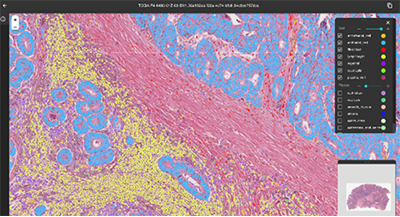
(Image: AI-predicted cell detection results of Biomy’s DeepPathFinder™. From the January 10, 2025 NEC press release.)

When I interact with the worldwide company NEC, I am usually dealing with automated biometric identification systems (ABIS).

Of course, ABIS is only a small part of what NEC does. It’s also involved in healthcare.

Consider…artificial intelligence and deep learning-powered digital pathology (“a field involving the digitization and computational analysis of pathology slides”).

Per today’s press release:

“NEC Corporation (NEC; TSE: 6701) and Biomy, Inc. (Biomy) have signed a Memorandum of Understanding (MoU) for a joint marketing partnership to develop and expand artificial intelligence/deep learning (AI/DL)-based analytical platforms in the field of digital pathology. Through this partnership, the two companies aim to promote precision medicine for cancer patients and contribute to the advancement of the healthcare industry.”

So what is Biomy contributing?

“Biomy, which aims to realize personalized medicine through pathological AI technology, has developed DeepPathFinder™, a proprietary, cloud-based, AI/DL automated digital pathology analytical platform.”

And NEC?

“NEC has positioned healthcare and life sciences as a core pillar of its growth strategy. With a strong foundation in image analysis and other AI technologies, NEC has a long history of providing medical information systems such as electronic medical records to healthcare institutions.”

As I’ve said before, healthcare must deal with privacy concerns (protected health information, or PHI) similar to those NEC addresses in its other biometric product line (personally identifiable information, or PII). I personally can’t do nefarious things if I fraudulently acquire your digital pathology slide, but some bad actors could. Presumably the Biomy product is well protected.

Vision Language Model (VLM)

(Flood image from Indian Navy)

A Vision Language Model (VLM) is a particular type of Large Multimodal Model (LMM).

Hugging Face:

“Vision language models are broadly defined as multimodal models that can learn from images and text. They are a type of generative models that take image and text inputs, and generate text outputs…. There’s a lot of diversity within the existing set of large vision language models, the data they were trained on, how they encode images, and, thus, their capabilities.”

Ipsotek:

“VISense (is) a groundbreaking addition to its VISuite platform that redefines real-time video analytics with Vision Language Models (VLMs). VISense represents a major advancement in Generative AI integration, using VLMs to achieve detailed scene understanding and contextual insights empowering operators to make informed decisions promptly….

“VISense allows users to ask questions like, “Let me know when something unusual is happening in any camera view” and receive a detailed response describing the unusual aspect of the captured behaviour. For instance, it might respond, “Yes, there is a flood; water levels are rising in the northern section, and several vehicles are stranded, causing heavy traffic congestion,” providing actionable insights that enable quick decisions.”

Type AI

In conclusion—and I will delve into this later—your beloved AI detector may deliver a bunch of false positives, or Type I errors.

For example, if every word in a post is spelled correctly, that’s an obvious sign the text wasn’t written by a human—correct? In the ever-expanding world of virtual communication, correct spelling is a dead giveaway of non-human content—as is the use of characters unavailable on a standard keyboard. Motörhead made a bunch of £ and € despite not being real. As the band never said,

“Timothy Leary’s dead

No, no, no, no, he’s outside, looking in”

(I had to include one hallucination in this post.)

Use MFAID (multi factor AI detection) to increase accuracy when you claim to detect generative AI.

(Timothy Leary image public domain; lyrics from the Moody Blues, “Legend of a Mind”)

If you want to delve into so-called signs of generative AI writing, see

When AI Jumped the Shark

Most product marketing references to artificial intelligence are meaningless. Some companies think that they can simply promote their product by saying “We use AI,” as if this is a sufficient reason for prospects to buy.

I’ve previously observed that saying “we use AI” is the 2020s equivalent to saying “we use Pentium.” 

It’s a feature without a benefit.

It’s gotten to the point where meaningless references to AI have jumped the shark.

Literally.

“(Several organizations) received a three-year, $1.3 million National Science Foundation grant to teach Florida middle school teachers and students how to use artificial intelligence (AI) to identify fossil shark teeth….Florida teachers learn to use a branch of AI called “machine learning,” to teach computers how to use shape, color, and texture to identify the teeth of the extinct giant shark megalodon.”

(From https://www.floridamuseum.ufl.edu/earth-systems/shark-ai/)

Now I come from the identity/biometrics industry, which uses machine learning extensively. But customers in this industry don’t really care about the “how,” (machine learning). They care about the “why” (identify individuals). For all the customers care, the vendors could use Pentium for identification. Or blockchain. Or Beatrice. As Loren Feldman says, “It doesn’t matter.”

Remember this the next time you want to identify extinct megalodon shark teeth. Now I admit the exercise serves an educational purpose by exposing teachers to the capabilities of machine learning. But if your sole interest is tooth classification, you can simply purchase the non-expurgated version of Olsen’s Standard Book of Extinct Sharks and get the job done.

Marketing executives, AI is no longer a differentiator. Trust me. If you need assistance with a real differentiator, I can help.

If you want to win business, learn more about Bredemarket’s content – proposal – analysis services here.