Have You Been Falsely Accused of NPE Use? You May Be Entitled To Compensation.

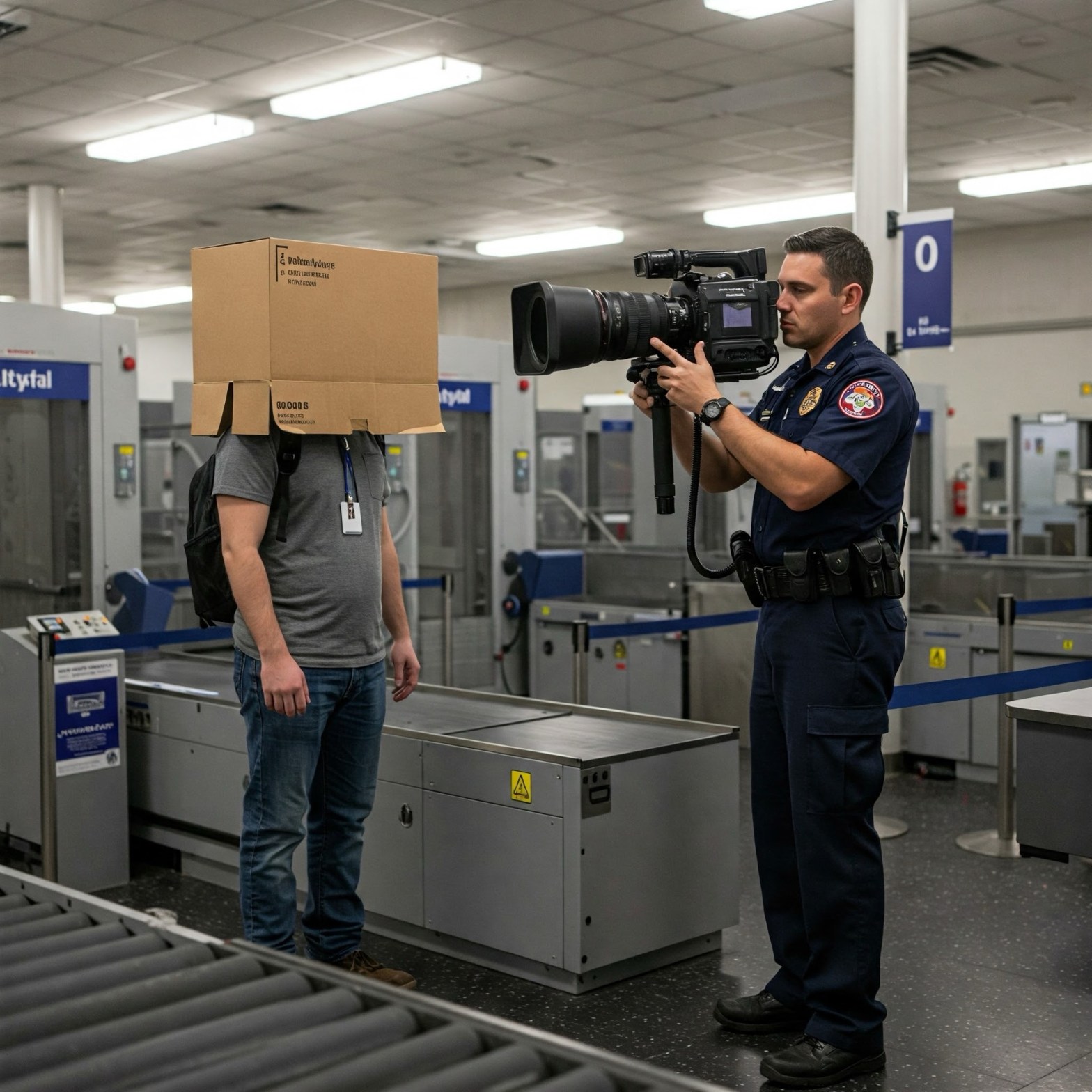
(From imgflip)

Yes, I broke a cardinal rule by placing an undefined acronym in the blog post title.

99% of all readers probably concluded that the “NPE” in the title was some kind of dangerous drug.

And there actually is something called Norpseudoephedrine that uses the acronym NPE. It was discussed in a 1998 study shared by the National Library of Medicine within the National Institutes of Health. (TL;DR: NPE “enhances the analgesic and rate decreasing effects of morphine, but inhibits its discriminative properties.”)

From the National Library of Medicine.

But I wasn’t talking about THAT NPE.

I was talking about the NPEs that are non-person entities. 

But not in the context of attribute-based access control or rivers or robo-docs

I was speaking of using generative artificial intelligence to write text.

My feelings on this have been expressed before, including my belief that generative AI should NEVER write the first draft of any published piece.

A false accusation

A particular freelance copywriter holds similar beliefs, so she was shocked when she received a rejection notice from a company that included the following:

“We try to avoid employing people who use AI for their writing.

“Although you answered ‘No’ to our screening question, the text of your proposal is AI-generated.”

There’s only one teeny problem: the copywriter wrote her proposal herself.

(This post doesn’t name the company who made the false accusation, so if you DON’T want to know who the company is, don’t click on this link.)

Face it. (Yes, I used that word intentionally; I’ve got a business to run.) Some experts—well, self-appointed “experts”—who delve into the paragraph you’re reading right now will conclude that its use of proper grammar, em dashes, the word “delve,” and the Oxford comma PROVE that I didn’t write it. Maybe I’ll add a rocket emoji to help them perpetuate their misinformation. 🚀

Heck, I’ve used the word “delve” for years before ChatGPT became a verb. And now I use it on purpose just to irritate the “experts.”

The ramifications of a false accusation

And the company’s claim about the copywriter’s authorship is not only misinformation.

It’s libel.

I have some questions for the company that falsely accused the copywriter of using generative AI to write her proposal.

  • How did the company conclude that the copywriter did not write her proposal, but used a generative AI tool to write it?
  • What is the measured accuracy of the method employed by the company?
  • Has the copywriter been placed on a blocklist by the company based upon this false accusation?
  • Has the company shared this false accusation with other companies, thus endangering the copywriter’s ability to make a living?

If this raises to the level of personal injury, perhaps an attorney should get involved.

From imgflip.

A final thought

Seriously: if you’re accused of something you didn’t do, push back.

After all, humans who claim to detect AI have not been independently measured regarding their AI detection accuracy.

And AI-powered AI detectors can hallucinate.

So be safe, and take care of yourself, and each other.


Jerry Springer. By Justin Hoch, CC BY 2.0, https://commons.wikimedia.org/w/index.php?curid=16673259.

The Wildebeest Speaks, (Almost) March Issue: How the Secret Breaches Hurt Us All

It’s February, but I’ve already published the March issue of Bredemarket’s LinkedIn newsletter, “The Wildebeest Speaks.” I hope you forgive me.

This issue looks at the wonderful world of data breaches, including what we know and what we don’t know.

What we don’t know is that many data breaches are never reported, even though organizations are required by law to do so.

The solution is to prevent data breaches from occurring in the first place.

Read more in the latest addition to the newsletter section of Bredemarket’s LinkedIn account.

https://www.linkedin.com/pulse/how-secret-breaches-harm-us-all-bredemarket-wk9bc/

What Do Chief Information Security Officers (CISOs) Fear?

(Imagen 3)

When marketers write content for Chief Information Security Officers, we need to ensure they’re listening. The content needs to speak to their concerns. Understanding their emotions helps us to do that.

Tapping into their emotions helps to ensure the CISOs are paying attention, and that the CISOs are not dismissing our content as unimportant and unworthy of their attention. (See what I did there, dear marketer?)

Are our prospects listening to us?

I’ve talked about emotions and content before. My approach is fairly simple, identifying the emotions encountered at two stages of the customer journey:

  • The negative emotions faced at the “problem” stage. Perhaps fear, anger, or helplessness.
  • The positive emotions faced at the “results” stage, after you have provided the customer with the solution to their problem. This could be the happiness or satisfaction resulting from hope, accomplishment, or empowerment.

What do CISOs fear?

I’m reworking a client piece targeted to Chief Information Security Officers (CISOs), and I needed to re-examine the things that keep CISOs up at night. I started with a rudimentary list.

  • Cyberattacks. (Duh.)
  • Technological complexity.
  • Resource constraints.
  • Corporate liability.
  • Job security.

A good list—well, I think so—but is it good enough? (Or big enough?) The elements are rather abstract, since you can discuss concepts such as “resource constraints” without FEELING them.

What do CISOs really fear?

Maslow’s famous hierarchy of needs is (literally) based upon physiological (survival) and safety needs. Can I translate the abstractions above into something more primal?

  • Loss of all our information, leaving us dumb and helpless.
  • Confusion and bewilderment in (as the AI bots are fond of saying) “the ever-changing landscape.”
  • Overwhelming burnout from too much to do.
  • No money after being sued into oblivion.
  • Wandering the streets homeless and starving after losing your job and your income.

How should we express those fears?

Now there are various ways to express those primal fears. I could go for maximum effect (will the wrong decision today leave you homeless and starving tomorrow?), or I could write something a little less dramatic (are you vulnerable to the latest cyber threats?). The words you choose depend on your company’s messaging tone, which is why I recently reshared my original brand archetypes post from August 2021. A Sage will say one thing, a Hero another.

Why?

Anyway, thank you for reading. Writing this helped me, and maybe it gave you some ideas. And if you want to know more about the seven questions I like to ask before creating content (emotions being the 7th), read my ebook on the topic.

I Was Parenthetically Incorrect

When a Bredemarket client was reviewing my draft, the client asked about my use of parentheses around individual letters.

“what is the purpose of the “()” in the “(L)eading organizations…” and “(G)en AI…“?”

So I explained.

“I would have to confirm, but presumably the original text said “leading” and “gen.” To properly use the quote as a partial quote I capitalized the words, but enclosed them in parentheses to indicate I modified the original text.”

But I thought I’d better check to see if I was right. Which is good, because I wasn’t. Nancy Lewis in Writing Commons:

“When writers insert or alter words in a direct quotation, square brackets—[ ]—are placed around the change. The brackets, always used in pairs, enclose words intended to clarify meaning, provide a brief explanation, or to help integrate the quote into the writer’s sentence.  A common error writers make is to use parentheses in place of brackets.”

Well, at least I’m not the only one. Lewis also provided several examples, including this one:

“[D]riving is not as automatic as one might think; in fact, it imposes a heavy procedural workload [visual and motor demands] on cognition that . . . leaves little processing capacity available for other tasks” (Salvucci and Taatgen 107).

I just corrected my client’s piece before publication, and will try to remember to use brackets as needed in all pieces day forward. I’m not going to go back through the hundreds of blog posts here and correct them.

Writing Samples I (Mostly) Can’t Share Publicly

So a Bredemarket prospect requested samples of my internal and external sales enablement content, so they could evaluate my writing style.

There were only two problems with the request.

  • First, I can’t provide samples of internal content for other clients. Even privately. Because they’re…internal.
  • Second, reviewing samples of my external content gives no hint of my writing style, since I adjust my writing style to my clients.

But I provided external samples of what I do anyway: two client short data sheets, three client long data sheets, three Bredemarket data sheets, two client landing pages, one Bredemarket landing page, and two other samples.

So I will share one of the landing pages with you, but not a client one. This is one of mine, for Bredemarket’s identity/biometric prospects.

Determined Perpetrator of Healthcare Violence

I don’t know that Oosto or even Evolv could have prevented this determined hospital attack in York, Pennsylvania.

“A man carrying a handgun and zip ties took hostages inside a Pennsylvania hospital on Saturday, fatally shooting a responding police officer and wounding five others before he was killed by police, officials said.

“The gunman entered UPMC Memorial hospital in York, Pennsylvania, on Saturday morning and went directly to the intensive care unit, where he took staff members hostage…”

https://www.reuters.com/world/us/gunman-takes-hostages-pennsylvania-hospital-one-officer-killed-2025-02-22/

But Don’t Talk to Me

The 3 marks of a “qualtiy” solicitation:

  • An unsolicited Instagram message offering paid placement in NY Weekly Magazine, from an Instagram account with no visible connection to the magazine, and only 1 follower.
  • Oh, and don’t respond to Sophi for the offer. Respond to a DIFFERENT Instagram account.
  • And the pitch? For me to appear in “Top 30 Female Leaders to Look Out For in 2025.” Doesn’t Sophi know that President Musk doesn’t allow that stuff any more?

I also get Instagram pitches to promote myself to Canadian users.

Meta is a worse cesspool than Microsoft (LinkedIn).

The Reality of Content Calendars and Content Management

(Imagen 3)

I have worked with several companies’ content calendars over the years.

  • Two of Bredemarket’s clients are using Jira to manage their content calendars.
  • Another of Bredemarket’s clients doesn’t (as far as I know) have an official content calendar, but is tracking some content in a go-to-market Excel workbook.
  • If I remember correctly, MorphoTrak also used Excel for content management. MorphoTrak’s parent Morpho used a social media management platform, but I can’t remember which one.
  • At the time I was at Incode, the company used Asana to host its content calendar. (I have no idea how Incode has managed its content since May 2023.)

Bredemarket creates its own content (this is an example), and I also use Asana as my official content management platform.

Sharp-eyed people spotted how I worded that last sentence.

What did I just say?

If you read it again, you’ll see that I only discussed my OFFICIAL content management platform.

Some content, including this blog post/LinkedIn post/wherever else the text ends up, never gets logged in Asana. I just started writing it in iOS Notes and I will add various checkboxes up top as I share it on the blog and social channels.

Some other content, also not logged in Bredemarket’s Asana, is repeatable content that I store in Notes and repost periodically.

Something I post to my identity-related social channels (BIFS = Bredemarket Identity Firm Services).

And sometimes—a lot of the time, actually—I just go to a platform and WRITE stuff.

As a sole proprietor, I enjoy absolute control over Bredemarket’s messaging, and therefore the blog and social media approval process is very…streamlined. That isn’t the case elsewhere, where even a simple tweet requires approval. This makes it hard to live-tweet an event when the approver is unavailable…but there are workarounds. Perhaps I will reveal them one day.

What about process?

But if your corporate environment requires you to impose a strict content management structure, where all content is logged in the content calendar and all content requires approval, make sure that your content logging and approval process protects your company but DOESN’T silence it.

Because if your content approvals are too onerous, you will end up with no content at all.

Or you will end up with…perhaps I will reveal that one day.

Privacy by John Maus

(AI wildebeest and iguana images from Imagen 3)

Discovered a song about privacy (by John Maus) and had to create a reel that used the song. Note the mDL privacy-preserving features toward the end of the reel.

“Dead bolts and windowed bars

Lowered drapes and screened calls

Headphones on tightly”

https://www.instagram.com/share/_ejtehYyr

Privacy.