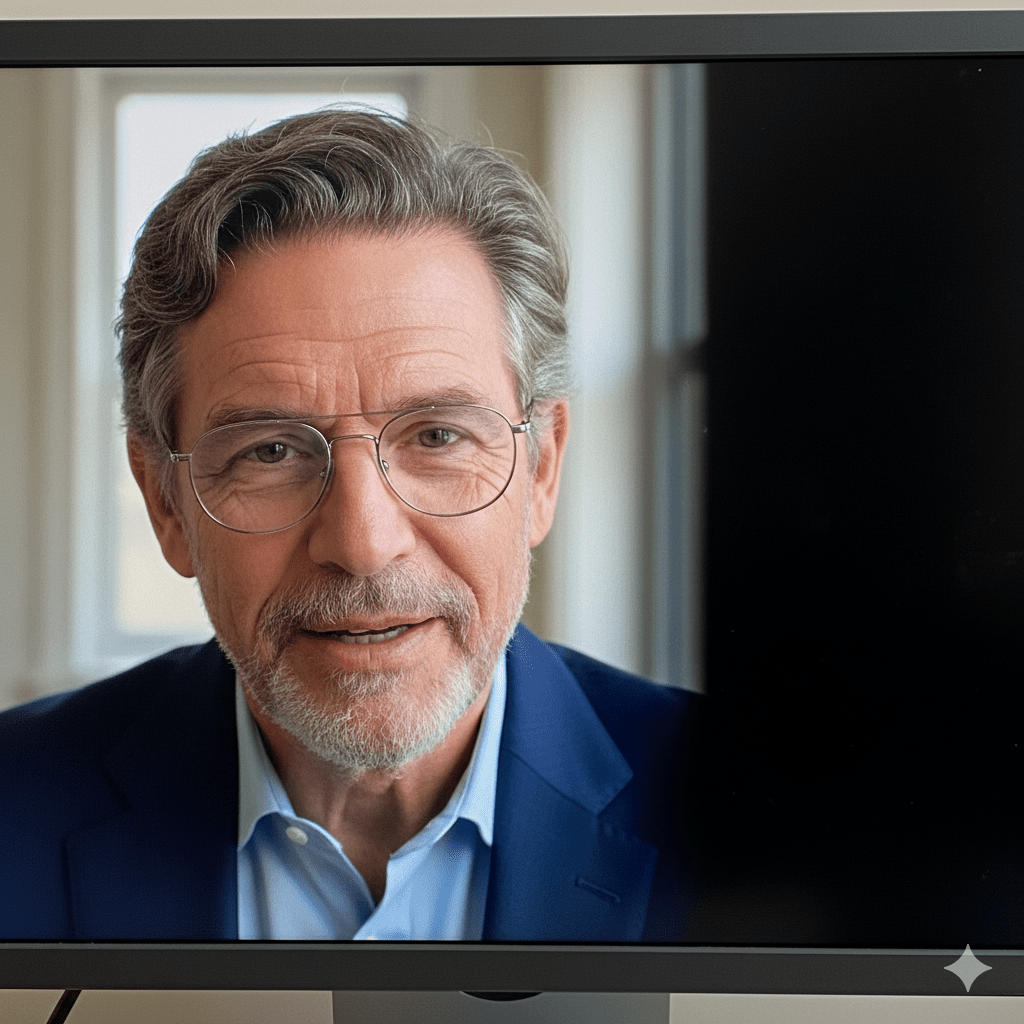
IB360° Launch Week Recap

(Imagen 4. A slight hallucination.)

Here’s a recap of all IB360° online content as of Friday September 12.

Integrated Biometrics (IB) public-facing IB360° content

The IB360° product page is here. It also includes the following downloads:

  • IB360 Overview
  • IB360 for Integrators: IB360 for Software Integrators | IB360 for Hardware Integrators | IB360 for Systems Integrators
  • IB360 Build Your Own Biometrics: IB360 SW BYOB | IB360 HW BYOB
  • IB360 Interviews: IB360 Spotlight Werner Cilliers

The IB360° press release is here.

The IB360° article “Navigating Identity Market Evolution with IB360 Software Integrator Solution” is here.

Bredemarket commentary on the above

Yes, I have commented on the items above.

Bredemarket posts to date are listed below, and can also be found at the IB360 tag.

Other commentary on the above

For those of you with a keen eye, Biometric Update mentioned IB360 over a year ago, back in September 2024.

IB360° Product Marketing Must Address as Many Target Audiences as A Spartanburg Buffet

(Imagen 4)

On Wednesday, in the process of explaining how B2B product marketers must address multiple “hungry people” (target audiences), I described the Bacchanal Buffet at Caesars Palace in Las Vegas, Nevada.

But buffets are not confined to Las Vegas.

I have not visited Spartanburg, South Carolina in decades. When my family was making regular drives from Virginia to Alabama, it was years before I learned how to spell “AFIS.” Yet I know that it has at least one good buffet serving multiple types of hungry people.

Not hungry for food.

Hungry for biometric software.

And no, I’m not talking about DataWorks Plus. They’re in Greenville.

But if you head east to Spartanburg, you’ll arrive at the headquarters of Integrated Biometrics, the company that just launched the IB360° software for partners and integrators.

But if you look at the IB360 web page, you’ll see that the various partners and integrators have different needs for software solutions. For example, here’s Integrated Biometrics’ messaging for hardware integrators:

“If you build with devices like fingerprint scanners or facial recognition cameras, IB360° helps you showcase your hardware’s full potential. Integrate quickly with modular licensing, create recurring revenue, and reduce reliance on external suppliers. Address multiple use cases with automated syncing and tight integration with Integrated Biometrics’ sensors.”

But software integerators and systems integrators have different needs than hardware integrators. You can view these on the web page.

Or you can download the appropriate brochure for your needs from the “Documents & Downloads” section at the bottom of the page.

Who or What is Evaluating Your Proposal?

As I’ve said before, you should write a proposal that resonates with the people who read it. In marketing terms, you write for the key personas in your target audience.

But what if your target audience never reads your proposal?

Diella, Albanian Minister of Procurement

In Albania, it’s possible that no person will read it.

“A new minister in Albania charged to handle public procurement will be impervious to bribes, threats, or attempts to curry favour. That is because Diella, as she is called, is an AI-generated bot.

“Prime Minister Edi Rama, who is about to begin his fourth term, said on Thursday that Diella, which means “sun” in Albanian, will manage and award all public tenders in which the government contracts private companies for various projects.”

Imagen 4.

The intent is to stop corruption from “gangs seeking to launder their money from trafficking drugs and weapons.”

When people evaluate proposals

But how savvy is Diella?

Let me provide a proposal evaluation example that has nothing to do with corruption, but illustrates why AI must be robust.

A couple of years before I became a proposal writer, I was a Request for Proposals (RFP) writer…sort of. A Moss Adams consultant and I assembled an RFP that required respondents to answer Yes or No to a checklist of questions.

When the consultant and I received the proposals, we selected two finalists…neither of whom responded “Yes” to every question like some submissions. 

We figured that the ones who said “Yes” were just trying to get the maximum points, whether they could do the work or not. 

Imagen 4.

The two finalists gave some thought to the requirements and raised legitimate concerns.

Can Diella detect corruption?

Hopefully Diella is too smart to be fooled by such shenanigans. But how can she keep the gangs out of Albania’s government procurements?

Imagen 4.

Certainly on one level Diella can conduct a Know Your Business check to ensure a bidder isn’t owned by a gang leader. But as we’ve seen before in Hungary, the beneficial owner may not be the legal owner. Can Diella detect that?

Add to this the need to detect whether the entity can actually do what it says it will do. While I appreciate that the removal of humans prevents a shady procurement official from favoring an unqualified bidder, at the same time you end up relying on a bot to evaluate the bidders’ claims to competency.

Of course this could all be a gimmick, and Diella will do nothing more than give the government the aura of scientific selection, while in reality the same procurement officers will do the same things, with the same results.

Let’s see what happens with the next few bids.

Huff + Puff, the Magic Camera Hardware Failure Correction

It was 8:48, just before an important client meeting this morning, and I was freaking out. I had scheduled the meeting in Google Meet, and I started up the session…and the right third of the camera view was obscured.

Imagen 4 re-creation. I didn’t think to take a screenshot at the time. And no, I don’t have facial hair.

I attempted various fixes:

  • I stopped Google Meet, started it again…and got the same result.
  • I logged off and logged back in again…and got the same result.
  • I restarted my computer (turn it off and turn it back on again)…and got the same result.
  • I tried Zoom…and got the same result.

Which meant that the possible problem was a hardware problem with the camera itself. Which meant a lot of hassle sending the computer in for a fix, which was especially upsetting because this was a new computer.

Bredebot proves useful

So I turned to my buddy Bredebot.

In a huddle space in an office, a smiling robot named Bredebot places his robotic arms on a wildebeest and a wombat, encouraging them to collaborate on a product marketing initiative.
Bredebot is the one in the middle.

And he wasn’t reassuring:

A black section in a laptop camera feed is most often due to a hardware issue, such as a damaged camera sensor or a problem with the ribbon cable that connects the camera to the motherboard. Software issues are less likely to cause a precise, consistent black area like this, but they’re still worth checking.

Then I began working down the checklist that Bredebot provided, beginning with the first item.

The most common and easiest issue to rule out is a physical object blocking the lens. This could be a speck of dust or debris, a stray piece of a sticker, or a misplaced privacy slider. Even a tiny particle on the lens can show up as a large black spot or area in the image.

A speck of dust? Just a simple speck of dust causing that major of an obstruction?

Not having a can of compressed air available, I used my mouth to blow on the top of the laptop screen.

The obstruction partially cleared, and now three fourths of the screen was visible.

One more blow, and my “critical hardware failure” was fixed.

What does this mean?

So some computer problems are NOT fixed by turning it off and turning it on again. Sometimes a lot of hot air is necessary.

Imagen 4.

By sheer coincidence, the Just A Band song “Huff + Puff” is on my current Spotify playlist. Nothing to do with computer video hardware, but it’s a good song.

Question 4: Are You a Marketing Leader Who Is Seeking a Strategic Partnership?

Continuing going through the points of my September 4 post and its analysis from Google Gemini. Here’s a small portion of it:

Here is a list of psychographic characteristics of your most likely buyer, the marketing leader at an identity, biometrics, or technology firm. These characteristics go beyond simple demographics and aim to uncover their motivations, challenges, and attitudes….

Seeking Strategic Partnership: While they need a service provider, they are really looking for a partner who can provide fresh, objective insights and strategic thinking. They value an external perspective that isn’t clouded by internal biases or politics.

For my part, I hunger for these strategic partnerships.

  • It’s one thing to get a topic for a blog post, write it, and throw it over the fence. You can get someone on Upwork to do that, or you can get a bot to do that.
  • It’s another thing entirely to take a step back, ask questions about your company and product/service, then figure out what you need. That’s the fun stuff.

But why should you consider Bredemarket as a strategic partner?

Technology product marketing expert. Imagen 4.

Because I’ve been there: as a technology product marketing expert, I’ve created strategy and tactics to market technical products for over 20 B2B/B2G companies and consulting clients.

Let’s hold a (free) conversation. I can tell you about me, you can tell me about you, and we can figure out what you need and how we can best work together.

Identity Market Evolution

(Imagen 4)

(Part of the biometric product marketing expert series)

I previously promised that I’d discuss why Integrated Biometrics felt the need to introduce IB360 for its partners.

Integrated Biometrics has identified four evolutionary changes in the identity market that prompt the need for such a solution.

I’m going to limit my thoughts to two of the four changes that Integrated Biometrics mentioned.

Decentralized systems

When I started in the biometrics industry in 1994, an automated fingerprint identification system (AFIS) was usually a centralized system. Tenprint and latent examiners at the state capital (there was no federal IAFIS back then) would work in buildings at or near a huge minicomputer that held the state’s fingerprint records. Perhaps there may have been a few remote tenprint and latent workstations connected by modem, and perhaps there were some livescan stations scattered around, but for the most part these client/server systems had a single server in a state computer room. (Well, except for the Western Identification Network, but WIN was ahead of its time.)

Fast forward 30 years, and while this model may work in the United States, it may not work elsewhere.

What if you don’t have internet or cellular communications? (Yes, cellular. Modern edge devices are a topic addressed in the Integrated Biometrics article that I won’t go into here.)

Or what if the communications are so incredibly slow that it would take forever to submit a search to the capital city, and return results to the originator?

This is where decentralized systems come into play. Rather than requiring everyone to ping the same central hub, the biometric database is distributed and synchronized among multiple servers in multiple locations.

Or maybe you’re getting ahead of me here and realizing that “servers” is too limiting. What if you could put all or part of a biometric database on your smartphone, so you can search a captured biometric against a database immediately without waiting for network communication time?

Such decentralized systems were impossible in 1994, but they are certainly possible today. And IB360 lets partners build their own biometric systems with decentralization and synchronization.

Speaking of building…

Demand for speed

As I mentioned, I’ve been in the biometric industry since 1994, and although my early years were spent in a pre-contract proposals role, I’ve seen enough post-contract deployments to know that they take a long time. Whether you were dealing with Printrak, NEC, Sagem Morpho, or the upstart Cogent, it would take many months if not years to deploy a fingerprint system.

  • For the most part, this is still true today with “pre-made” systems from NEC, IDEMIA, Thales, and the others.
  • And it’s also true if you decide to deploy your own “custom-built” fingerprint or biometric system from scratch.

Either way, there is a lot of engineering, integration, and orchestration that must take place before a system is deployed. You can’t take an AFIS for Bullhead City, Arizona and deploy it in Anaheim, California…or the state of Tennessee…or the nation of Switzerland. You need to perform months of tailoring/configuration first.

Integrated Biometrics asserts that waiting years for a biometric system is far too long.

Other changes

I’ll let you read the Integrated Biometrics article to learn about the other two evolutionary changes: more powerful hardware (I’ve alluded to this), and a myriad of use cases.

All of these changes have impacted the biometric market, and prompted Integrated Biometrics to introduce IB360. To read about this modular software suite and its benefits, visit the IB360 product page.

Well, Proposal People Aren’t Amateurs

I wrote a blog post earlier. Didn’t see any problems.

Posted it at 7:00 this morning. Didn’t see any problems.

Shared it on Facebook and LinkedIn. Didn’t see any problems.

Shared it on Slack. THEN I saw the problem, which is glaringly obvious:

“And it’s also what proposal professional professionals do, as we shall see.”

And you know what? I’m LEAVING it there.

Because proposal management, writing, and coordination are respectable occupations, and certainly professional times two.

Build Your Own (Integrated) Biometrics with IB360°

(Imagen 4. A slight hallucination.)

Now it can be told.

Integrated Biometrics made an announcement earlier today.

But not a hardware announcement about some new fingerprint or palm print scanner named after a 1970s crime fighter.

Book ’em, Danno! By CBS Television – eBay item photo front photo back, Public Domain, https://commons.wikimedia.org/w/index.php?curid=19674714.

A software announcement.

I’ve discussed Integrated Biometrics multiple times in the Bredemarket blog over the last five years. Sometimes in terms of hardware, such as Integrated Biometrics’ use of the RepelFlex MBED on its (then) fingerprint readers. Sometimes in terms of (then) cutting-edge software that captured fingerprints using a standard smartphone camera.

But the company’s newest announcement about the availability of IB360° is something else entirely.

Skipping the “leading provider” stuff, we get to this:

“Integrated Biometrics (IB)…formally announced today the launch of IB360, transforming the speed and cost to deploy identity systems. The IB360 platform is a low-code toolset of SDK-based software modules that allows our partners  and integrators to more efficiently create biometric identity-based solutions with minimal development cycles.”

Hence the “build your own biometrics” tagline.

But why do partners and integrators need IB360?

I’ll cover that in a future post.

Question 3: Are You a Marketing Leader Who Is Driven By Urgency?

Continuing going through the points of my September 4 post and its analysis from Google Gemini. Here’s a small portion of it:

Here is a list of psychographic characteristics of your most likely buyer, the marketing leader at an identity, biometrics, or technology firm. These characteristics go beyond simple demographics and aim to uncover their motivations, challenges, and attitudes….

Driven by Urgency: They are often facing deadlines and a “need it yesterday” mentality. They have projects to complete, campaigns to launch, and are looking for a reliable partner who can jump in and deliver high-quality work quickly and efficiently.

One observation: if you are driven by urgency, then you are a rare breed. Too many of my conversations sound like this:

Me: When do you want this?

CMO: As soon as possible.

Me: Good, can we meet at 7:00 am Pacific tomorrow to set up the parameters?

CMO: Maybe the week after next, if I don’t have any conflicts.

I promise you that I can meet your urgency. As I like to say, I ask, then I act.

I ask, then I act.

Once we’ve “set up the parameters,” I can run with them and create something for you. Short material in three days or less, longer material in seven days or less.

And then you provide your feedback in the same timeframe. Since you’re driven by urgency, I won’t have to wait a month of two for your comments.

Now let’s measure your drive for urgency. Are you going to schedule a free meeting with me this afternoon, or are you going to schedule it right now?