Is Your Content Up-to-date?

Are you a technology marketing leader who lies awake at night worrying about the following?

“Keeping up with the speed and complexity of the digital landscape.”

Well, maybe not that exact phrase. That sounds like something generative AI would write.

And in fact, my buddy Bredebot wrote it when answering a question about Chief Marketing Officer pain points relative to content.

In a huddle space in an office, a smiling robot named Bredebot places his robotic arms on a wildebeest and a wombat, encouraging them to collaborate on a product marketing initiative.
Bredebot is the one in the middle.

But I’m not going to let Bredebot write an entire post about it, because I’m going to write it myself.

The human way to reflect the sentiment above is to ask whether your content is up-to-date, or is as dated as a Pentium.

And that’s something that a marketing leader DOES worry about, because they (usually) want their firms to be perceived as innovative, not old fashioned.

Let me give you an example of outdated content that persists today.

SEO, AEO, GEO…I believe they’re different

For years we have been discussing search engine optimization, or SEO. The whole point of SEO is to ensure that your content appears at the top of results when you use Google or Bing or another search engine to launch a search. (Ignore “sponsored content” for a minute here.)

In case you haven’t noticed, fewer and fewer people are using search engines. Instead, they are searching for answers from their favorite generative AI tool, and now the new term the kids are using is answer engine optimization, or AEO. Or perhaps you can follow the lead of Go Fish and refer to generative engine optimization, or GEO.

Now some people are continuing to use SEO when they mean AEO and GEO, under the theory that it’s all just optimization, and it’s all just searching but just with a different tool. Personally, I believe that continuing to refer to SEO is confusing because the term has always been associated with search engines.

Plus, the concept of keywords is fading away, as Lisa Garrud noted in May.

“Unlike traditional SEO, which focuses on ranking for keywords, AEO concentrates on providing comprehensive, authoritative answers that AI systems can easily process and deliver to users….

“Think about how you use AI tools today. You don’t ask for ‘electrician Auckland residential services’, you ask, ‘What’s causing the flickering in my kitchen lights?’ or ‘How much should it cost to rewire a 1970s house?’ You want answers, not search results.”

But forget about XEO and let’s return to the content YOU create.

How do you keep YOUR content up-to-date?

Let’s say that you’ve reached the point in your content calendar where you have to write a blog post about pop music.

And let’s also say that you’re old enough to remember the 20th century.

You may have a problem.

For example, when you see the words “pop music,” you may immediately spell the second word with a “z” and a “k” when you TALK ABOUT.

Pop Muzik.

Or if someone mentions INTERPOL, you immediately respond with Deutsche Bank, FBI, and (und?) Scotland Yard.

Computer World.

And now that I’ve lost half my reading audience, you can see my point. While personas are approximations, you need to refer to them when crafting your content. If your hungry people (target audience) tend to be in their 20s and 30s, they’re probably not going to understand or respond to songs from M (Robin Scott) or Kraftwerk.

There are other things you can write that are obviously old, such as “fingerprint identification decisions are infallible.” That statement was questioned back in 2003BEFORE the whole Brandon Mayfield thingie.

So how does a marketer ensure that their content is not dated? By remembering to ask, then act. Question your assumptions, do your research, write your content, then check your content.

Question your assumptions

Before you write your content, ensure your premise is correct. For example, I didn’t assume without questioning that “keeping up with the speed and complexity of the digital landscape” was a pressing issue. I KNEW that it was a pressing issue, because I encounter it daily.

Do your research

Next, take a moment and check what you are about to say. Was your assumption about fingerprint examiner infallibility affected by the NAS report? Was your assumption affected by activities that occurred after the NAS report?

Write your content

At some point you have to stop asking and start acting, writing your content. Write your draft 0.5 to get your thoughts down, then write your draft 1.0. And keep your personas in mind while you do it.

Check your content

Once it’s drafted, check it again. Have your dated assumptions crept into your writing? Did you use the term “SEO” out of habit, by mistake? Fix it.

The results of up-to-date content

If you do all these things, you’ll ensure that your competitors don’t laugh at your content and tell you how out of touch you are.

Ideally, you want your competitors to show how out of date they are.

“Look at WidgetCorp, who doesn’t even know how to spell! Their writer’s left finger slipped while typing, and they typed the so-called word ‘AEO’ rather than ‘SEO’! Everybody know the term is SEO!”

Which gives you the opportunity to write a succinct reply to your bozo competitor.

I’ll give you the joy of writing it yourself.

Unless you want Bredemarket to write it, or other content. Book a free meeting to discuss your needs. https://bredemarket.com/mark/

Strategy is not Tactics

I’ve said that strategy is one of four essential elements of product marketing. But you have to know what strategy is…and what it is not.

To illustrate the difference between strategy and tactics, it helps to differentiate between abstract, long term goals and concrete, short term goals.

If your goal is to better the world, that’s a strategy.

If your goal is to excel in a particular industry, that’s a strategy.

Although strategies can change. Those who know of Nokia as a telecommunications company, and those who remember Nokia as a phone supplier, are not old enough to remember Nokia’s beginnings as a pulp mill in 1865.

If your goal is to secure business from a specific prospect, that’s a tactic. Or it should be.

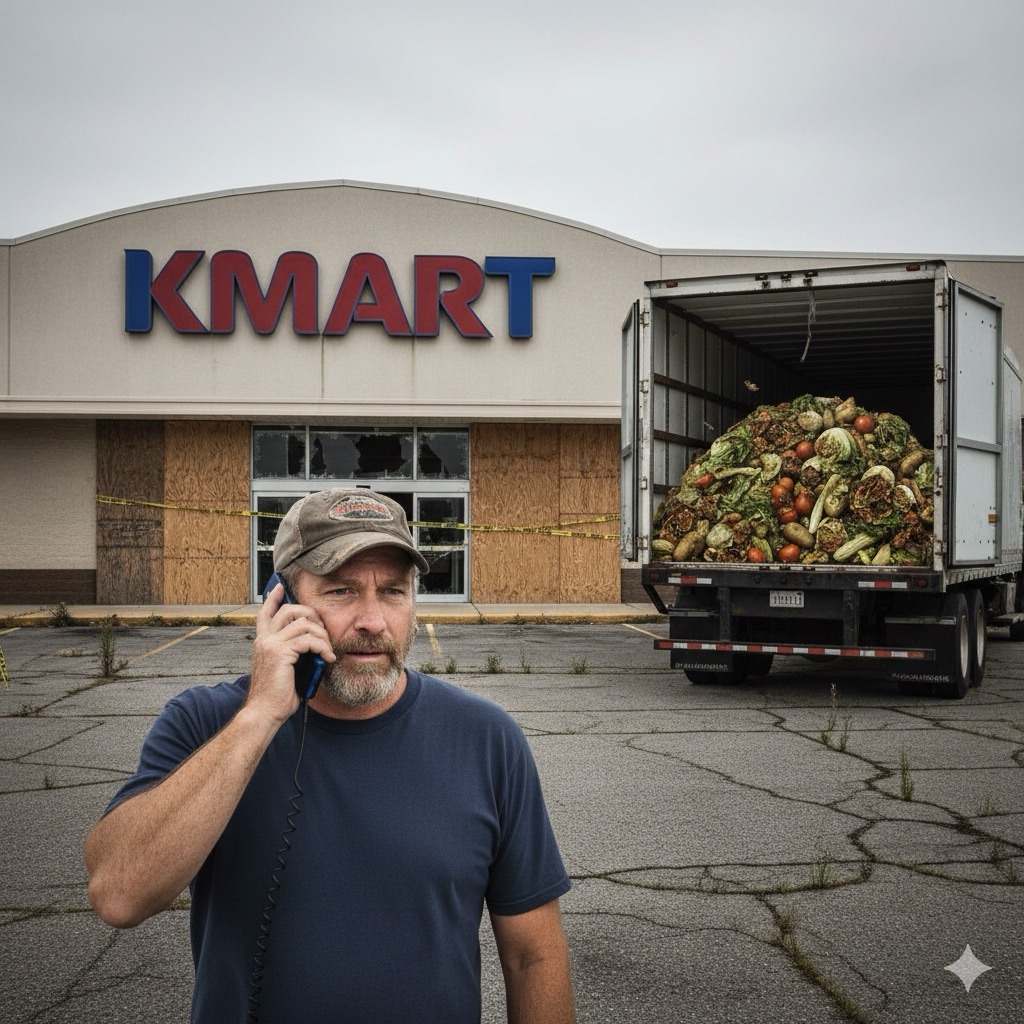
Fleming Companies secured a 10-year contract in 2001 as the main supplier of groceries to Kmart, accounting for 20% of Fleming’s revenue. Kmart cancelled that contract when it declared bankruptcy a year later. Fleming filed a $1.4 billion claim in Kmart’s bankruptcy case…but only got $385 million. Fleming itself ended up in bankruptcy court in 2003.

But Fleming’s strategy was to excel at food wholesaling through acquisition and innovation.

It’s just that one tactical blunder upended that strategy.

Whether Bredemarket pivots from biometric content to resume writing (not likely), I am presently equipped to address both your strategic and tactical product marketing needs. If I can help you, talk to me at https://bredemarket.com/mark/.

The Transitive Property, Technology, Biometrics, Content, and Product

Follow along.

If I am the technology product marketing expert

…and if I am the biometric product marketing expert

…and if content marketing and product marketing significantly overlap

…then I am not only the biometric content marketing expert…

…but am also the technology content marketing expert.

I’m claiming it all.

The Longer List of My Products

In my Saturday post “Technology Product Marketing Expert,” I listed several of my strategy, go-to-market, and sales enablement projects.

That was the SHORT list.

Here are the products I mentioned in Saturday’s post, along with news articles about a couple of them.

A long list…but it could have been longer. Here are the products I removed from the list.

  • Series 2000.
  • Omnitrak.
  • MorphoWAVE.
  • The SIGMA Series.
  • Driver’s license and mobile driver’s license services.
  • Enrollment services.
  • Adobe consulting services.

Why did I remove them? As I said on Saturday:

“But my past isn’t as important as your present challenges.”

Speaking of your present challenges, if Bredemarket can help you as a consultant, book a free meeting to discuss your needs at https://bredemarket.com/mark/

The Favor of a Share

I’ve written up a description of my technology product marketing expertise and repurposed it to four platforms: my consulting blog, LinkedIn, Substack, and Instagram. Actually more platforms than those four, but these are the biggies.

If you are on one of these platforms, and are so inclined, feel free to share this with any technology marketing leaders in your circles. I am open to both employment and consulting opportunities.

Technology Product Marketing Expert

(and elsewhere)

Technology Product Marketing Expert

Are you a technology marketing leader, struggling to market your products to your prospects for maximum awareness, consideration, and conversion?

I’m John E. Bredehoft. For over 30 years, I’ve created strategy and tactics to market technical products for over 20 B2B/B2G companies and consulting clients.

But my past isn’t as important as your present challenges. Let’s talk about your specific needs and how I would approach solving them.

Consulting: Bredemarket at https://bredemarket.com/mark/

Employment: LinkedIn at https://linkedin.com/in/jbredehoft/

Technology product marketing expert.

I Love You, I Pay Your Rent

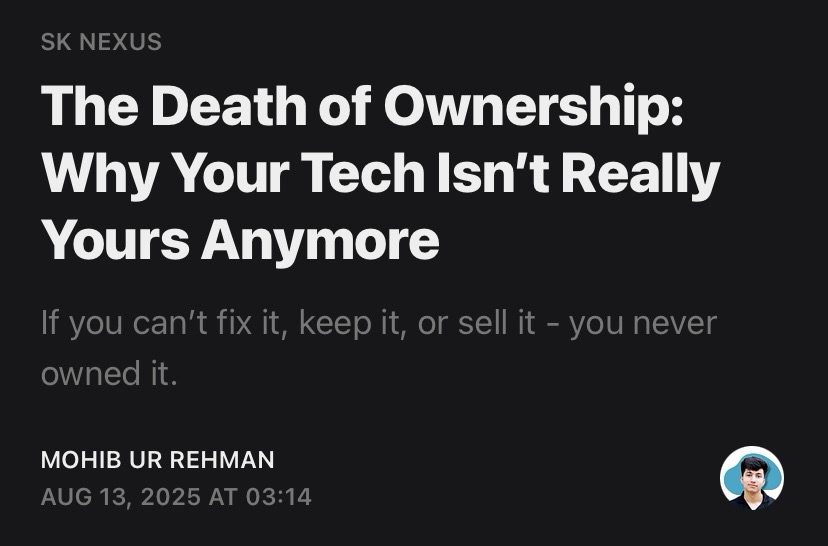
“Think about it – If you can’t fix it, mod it, or sell it without someone else’s permission… Did you ever really own it?

“Every example we’ve seen so far points to the same reality: the balance of power has shifted. You pay for the device or software, but they decide how it works, what it can do, and how long it will last.

“This isn’t just inconvenient – it’s a slow erosion of freedom and control.”

From “The Death of Ownership: Why Your Tech Isn’t Really Yours Anymore” by Mohib Ur Rehman (SK Nexus, Substack)

https://open.substack.com/pub/sknexus/p/the-death-of-ownership-in-tech

Icing Translations With Axon

The first paragraph of this Newsweek article is puzzling:

“Immigration and Customs Enforcement (ICE) no longer requires new recruits to take a five-week Spanish-language training program, according to the Department of Homeland Security (DHS).”

Until you get to the fourth:

“Axon, a company with a $5.1 million contract to provide Homeland Security with body-worn cameras, advertises that its latest body camera includes real-time “push-to-talk voice translation” in more than 50 languages.”

You may know Axon by its former name, TASER International. Needless to say, its product line has evolved.

Newsweek: https://www.newsweek.com/ice-immigration-spanish-language-new-recruits-2114110

Axon: https://www.axon.com/products/real-time-translation

(Picture from Axon)