The Missing Piece to Solve Your Firm’s Product Marketing Puzzle

Technology marketing leaders know that product marketing is a puzzle that your firm can solve…with the proper resources.

Think of these four product marketing puzzle pieces:

  1. Product marketing strategy (not tactics), including why, how, what, and process.
  2. Product marketing environment, including the market and competitive intelligence, the customer feedback loop, and the company culture.
  3. Product marketing content, both internal and external, including positioning, personas, go-to-market, sales enablement, launches, pricing, packaging, and proposals.
  4. Product marketing performance, including metrics, objectives, and key results.

Does your firm have all four puzzle pieces? Or are one or more of the pieces lacking?

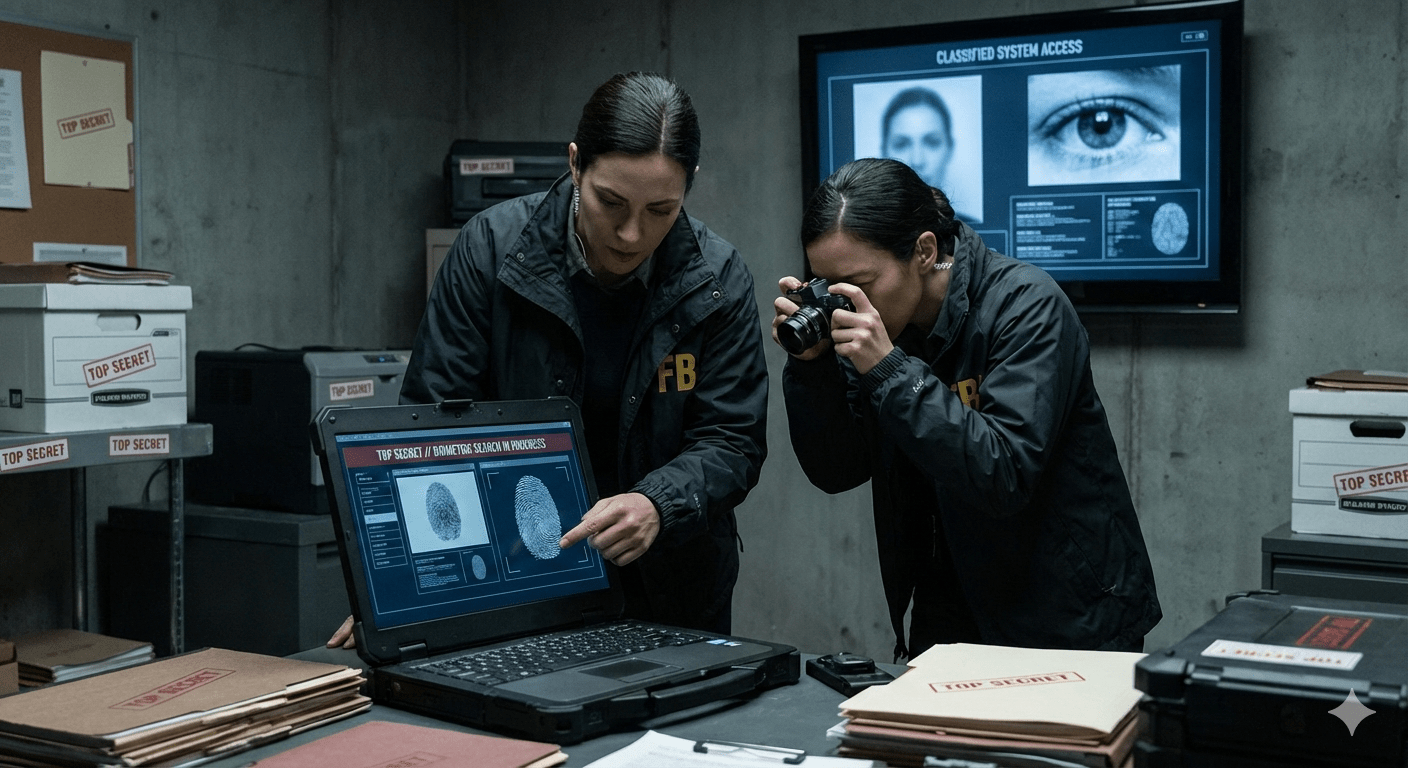
Imagen 4.

Can a technology product marketing expert with proven content, proposal, and analysis skills help your firm move forward?

Proven expertise from Printrak BIS, MorphoWay, and a recent launch for a Bredemarket client?

Recent Go-to-market.

If you are ready to move your firm’s product marketing forward with Bredemarket’s content-proposal-analysis services for technology firms, let’s discuss your needs and how Bredemarket can help you solve them. Book a free meeting at https://bredemarket.com/mark/.

Content for tech marketers.

On Bidding Everything

(Imagen 4)

In theory, the decision on whether or not to submit a bid for a business opportunity is a well-established process: the bid/no bid process…that is, if you assume that no bidding something is desirable.

As you would expect, Shipley Associates (I may have mentioned Shipley before) offers a detailed description of a bid decision.

“Bid decisions are decisions gate reviews triggered by ongoing customer or opportunity intelligence. The opportunity manager (or capture manager) along with management determines whether to advance, defer, or end the pursuit. The decision hinges on whether you have the capability or can obtain the resources to pursue and subsequently capture an opportunity that meets your business objectives.”

But why make one decision when you can make three?

“Consider splitting the bid decision into at least three distinct milestones: pursuit, bid, and bid validation. A positive pursuit decision initiates preparation of the capture/opportunity plan. A positive bid decision initiates preparation of the proposal plan. A positive bid validation decision initiates the final proposal kickoff meeting and the full proposal preparation process.”

In all seriousness, I agree with this.

The first part of the Shipley Business Development Lifecycle.

Any stage gate process, such as the Shipley Business Development Lifecycle, includes decision criteria at each gate. If you determine early on that you would never win the opportunity, why waste resources on it?

And, in a true Shipley fashion the first two decisions, and possibly even the third, occur BEFORE the actual Request for Proposal is released.

But for some people, this is just plain wrong.

The “Bid Everything” method

For some people, the Shipley, SMA, Sant, and other practitioners are restrictive. Why work on an opportunity years before the RFP is released?

For these people, it makes more sense to concentrate your resources and evaluate the final RFP.

Not that much evaluation is needed, since every RFP falls into one of two categories.

  • We are the incumbent provider. If this is the case, then we HAVE to bid so that we don’t lose ground.
  • We are not the incumbent provider. If this is the case, then we HAVE to bid so that we gain ground.

It’s all pretty simple. And for those who claim that chasing lost causes lowers our probability of win, well, they’re just giving up too early.

Hey, our customer just released an RFP for a new system. I had no idea that they were going to release an RFP this year. Well, we’ve been the incumbent for years, and the people using our software seem to like us. I think. I don’t know the person who actually released the RFP, but my cousin’s brother-in-law knows him. As long as we come in with the lowest price, we’re certain to win this!

And it’s even better when your bid decision has full executive support…as in “I support the fact that you had better win this. And I will show up two hours before the submission time to help you by rewriting everything and changing the price.”

Luckily they’re not ALL like that…

Are you stretched?

But if you are stretched and need proposal help, book a free meeting with Bredemarket at https://bredemarket.com/mark/.

Stop losing prospects!
Stretched?

The funny thing about this picture…

…is the seal on the contract award.

Especially since these documents are now electronic.

But I truly have managed hundreds of proposals.

Hundreds of proposals.

And I can manage yours.

Proposal services (managing, writing, editing, other). My proposals have won business for Bredemarket clients and for my former employers.

Talk to me.

Who or What is Evaluating Your Proposal?

As I’ve said before, you should write a proposal that resonates with the people who read it. In marketing terms, you write for the key personas in your target audience.

But what if your target audience never reads your proposal?

Diella, Albanian Minister of Procurement

In Albania, it’s possible that no person will read it.

“A new minister in Albania charged to handle public procurement will be impervious to bribes, threats, or attempts to curry favour. That is because Diella, as she is called, is an AI-generated bot.

“Prime Minister Edi Rama, who is about to begin his fourth term, said on Thursday that Diella, which means “sun” in Albanian, will manage and award all public tenders in which the government contracts private companies for various projects.”

Imagen 4.

The intent is to stop corruption from “gangs seeking to launder their money from trafficking drugs and weapons.”

When people evaluate proposals

But how savvy is Diella?

Let me provide a proposal evaluation example that has nothing to do with corruption, but illustrates why AI must be robust.

A couple of years before I became a proposal writer, I was a Request for Proposals (RFP) writer…sort of. A Moss Adams consultant and I assembled an RFP that required respondents to answer Yes or No to a checklist of questions.

When the consultant and I received the proposals, we selected two finalists…neither of whom responded “Yes” to every question like some submissions. 

We figured that the ones who said “Yes” were just trying to get the maximum points, whether they could do the work or not. 

Imagen 4.

The two finalists gave some thought to the requirements and raised legitimate concerns.

Can Diella detect corruption?

Hopefully Diella is too smart to be fooled by such shenanigans. But how can she keep the gangs out of Albania’s government procurements?

Imagen 4.

Certainly on one level Diella can conduct a Know Your Business check to ensure a bidder isn’t owned by a gang leader. But as we’ve seen before in Hungary, the beneficial owner may not be the legal owner. Can Diella detect that?

Add to this the need to detect whether the entity can actually do what it says it will do. While I appreciate that the removal of humans prevents a shady procurement official from favoring an unqualified bidder, at the same time you end up relying on a bot to evaluate the bidders’ claims to competency.

Of course this could all be a gimmick, and Diella will do nothing more than give the government the aura of scientific selection, while in reality the same procurement officers will do the same things, with the same results.

Let’s see what happens with the next few bids.

Well, Proposal People Aren’t Amateurs

I wrote a blog post earlier. Didn’t see any problems.

Posted it at 7:00 this morning. Didn’t see any problems.

Shared it on Facebook and LinkedIn. Didn’t see any problems.

Shared it on Slack. THEN I saw the problem, which is glaringly obvious:

“And it’s also what proposal professional professionals do, as we shall see.”

And you know what? I’m LEAVING it there.

Because proposal management, writing, and coordination are respectable occupations, and certainly professional times two.

Your Product Marketing Must Address as Many Target Audiences as A Las Vegas Buffet

Messaging. It’s what B2B product marketers do. And it’s also what proposal professional professionals do, as we shall see. 

But even the simplest B2B product suffers with one-dimensional messaging.

Why? Because even simple products often require many types of people to get involved in the purchasing cycle.

Marketers often talk about target audiences. I personally believe that term doesn’t describe the concept properly, so I prefer to refer to hungry people.

Which brings us to the Las Vegas buffet.

Variety for hungry people

Las Vegas is a destination visited by over 40 million people per year from all over the world. And the casino hotels know that they’re hungry for food, and they hope the hungry people will stay on property.

So do they serve Caesars Burgers?

Um, no. 40 million people don’t eat the same thing.

This becomes very clear if you visit the Bacchanal Buffet at Caesars Palace, with over 250 items prepared in 10 kitchens.

“From Roman-style pizza to Carne Asada Tacos inspired by the food trucks of L. A., there’s something for everyone. Find a world of flavor at our nine live-action cooking stations. Indulge in originals like slow-cooked prime rib, smoked beef brisket, crab, and wood-fired pizza. Or try something different, like whole Ahi Tuna Poke, roasted duck, or Singaporean Blue Crab and seasonal agua frescas.”

(Imagen 4)

There is literally something for everyone. And the hungry person salivating for Ahi Tuna Poke doesn’t care about the beef brisket.

Which brings us to local police automated fingerprint identification system (AFIS) proposals.

Variety for hungry people

If you had asked me in September 1994 (before I started at Printrak in October) the target audience for local police AFIS, I would have replied, “fingerprint people.”

That answer would be incorrect.

Tenprint and latent people 

Because, even if you limit things to the criminal AFIS world, there are (at least) two types of fingerprint people: tenprint examiners, and latent examiners. I asked my buddy Bredebot to summarize the stereotypical differences between the two. Here is some of what he said:

“‘Assembly line‘ comparisons: Because tenprint comparisons use high-quality, known impressions taken under controlled conditions, their work can be automated and is often perceived as a high-volume, less complex task. This is in contrast to the specialized analysis required for latent prints.

“Artistic and subjective: Because latent prints are often smudged, distorted, and incomplete, examiners must make subjective judgments about their suitability for comparison. This has led to the criticism that the process is more of an art than a science.”

Bredebot has never attended an International Association for Identification conference, but I have. Many many years ago I attended a session on tenprint examiner certification. Latent examiners had this way cool certification and some people thought that more tenprint examiners should participate in their way cool certification program. As I recall, this meeting way heavily attended…by latent folks. Even today, the number of Certified Latent Print Examiners (CLPEs) is far greater than the number of Certified Tenprint Examiners (CTPEs).

Other people

But you can’t procure an AFIS by talking to tenprint and latent people alone.

As I noted years ago, other people get involved in a local police AFIS procurement, using Ontario, California as an example:

(Imagen 4)
  • The field investigators who run across biometric evidence at the scene of a crime, such as a knife with a fingerprint on it or a video feed showing someone breaking into a liquor store.
  • The information technologies (IT) people who are responsible for ensuring that Ontario, California’s biometric data is sent to San Bernardino County, the state of California, perhaps other systems such as the Western Identification Network, and the Federal Bureau of Investigation. 
  • The purchasing agent who has to make sure that all of Ontario’s purchases comply with purchasing laws and regulations. 
  • The privacy advocate who needs to ensure that the biometric data complies with state and national privacy laws.
  • The mayor (still Paul Leon as I write this), who has to deal with angry citizens asking why their catalytic converters are being stolen from their vehicles, and demanding to know what the mayor is doing about it. 
  • Probably a dozen other stakeholders that I haven’t talked about yet, but who are influenced by the city’s purchasing decision.

Feeding the hungry people 

So even a relatively simple B2B product has multiple target audiences.

Should product marketers apply the same one-dimensional messaging to all of them?

Um, no.

If you did that, purchasing agents would fall asleep at mentions of “level 3 detail,” while latent examiners would abandon their usual attention to detail when confronted by privacy references to the California Information Practices Act of 1977. (The CCPA, CPRA, and CPPA apply to private entities.)

So, whether you like it or not, you need separate messaging for each of your categories of hungry people.

(Imagen 4)

One time, as part of an account-based marketing effort, I had to construct a multi-variable messaging matrix…for a product that is arguably simpler than an AFIS.

And yes, I used Microsoft Excel.

And I can use my mad Excel skillz for you also, if your company needs content, proposal, or analysis assistance in your technology product marketing operations. Contact Bredemarket at https://bredemarket.com/mark/.

Content for tech marketers.

And proposal professional professionals, read this.

How Does It Feel?

Whether you’re a marketer, a biometric expert, a technologist, or just someone scrolling the webs, you can feel a variety of emotions after reading a Bredemarket blog post.

Maybe amused.

Maybe informed, 

Maybe empowered.

But some will experience more powerful emotions.

For a targeted few who find themselves paralyzed, maybe afraid. Afraid that your competitors will steal your prospects unless you act.

Or for those targeted few who despise powerlessness and want to act, maybe hungry. Hungry to get your product’s benefits to your prospects so they convert.

I have to be honest. Some of the people who are inspired to act are perfectly capable of acting on their own. Because they’re not complete unknowns.

But others can use the help of an outside consultant such as Bredemarket.

Content, proposals, analysis. I can help with all of them.

You’re the ones I’m talking to right now.

And perhaps you should take the time to talk to me. https://bredemarket.com/mark/

Stop losing prospects!

An IMEI Number Is NOT Unique to Each Mobile Phone

(Imagen 3)

Have you ever used the phrase “sort of unique”? Something is either unique or it isn’t. And International Mobile Equipment Identity (IMEI) numbers fail the uniquness test.

Claims that International Mobile Equipment Identity (IMEI) numbers are unique

Here’s what a few companies say about the IMEI number on each mobile phone. Emphasis mine.

  • Thales: “The IMEI (International Mobile Equipment Identity) number is a unique 15-digit serial number for identifying a device; every mobile phone in the world has one.”
  • Verizon: “An IMEI stands for International Mobile Equipment Identity. Think of it as your phone’s fingerprint — it’s a 15-digit number unique to each device.”
  • Blue Goat Cyber: “In today’s interconnected world, where our smartphones have become an indispensable part of our lives, it is essential to understand the concept of IMEI – the International Mobile Equipment Identity. This unique identifier plays a crucial role in various aspects of our mobile devices, from security to tracking and repairs.”

These and other descriptions of the IMEI prominently use the word “unique.” Not “sort of unique,” but “unique.”

Which means (for non-person entities, just like persons) that if someone can find a SINGLE reliable instance of more than one mobile phone having the same IMEI number, then the claim of uniqueness falls apart completely.

Examples of non-uniqueness of IMEI numbers on mobile phones

People who claim IMEI uniqueness obviously didn’t read my Bredemarket blog post of April 1, in which I WASN’T fooling.

  • I talked about an incident in India in which a cyber fraud operation “specialised in IMEI cloning.”
  • And an incident in Canada in which someone was scammed out of C$1,000, even though the phone had a valid IMEI.

IMEICheck.net even tells you (at a high level) how to clone an IMEI. It’s not easy, but it’s not impossible.

“In theory, hackers can clone a phone using its IMEI, but this requires significant effort. They need physical access to the device or SIM card to extract data, typically using specialized tools.

“The cloning process involves copying the IMEI and other credentials necessary to create a functional duplicate of the phone. However, IMEI number security features in modern devices are designed to prevent unauthorized cloning.”

So don’t claim an IMEI is unique when there is evidence to the contrary. As I said in my April post:

NOTHING provides 100.00000% security. Not even an IMEI number.”

What does this mean for your identity product?

If you offer an identity product, educate your prospects and avoid unsupportable claims. While a few prospects may be swayed by “100%” claims, the smarter ones will appreciate more supportable statements, such as “Our facial recognition algorithm demonstrated a 0.0022 false non-match rate in the mugshot:mugshot NIST FRTE 1:1 laboratory testing.”

When you are truthful in educating your prospects, they will (apologizes in advance for using this overused word) trust you and become more inclined to buy from you.

If you need help in creating content (blog posts, case studies, white papers, proposals, and many more), work with Bredemarket to create the customer-focused content you need. Book a free meeting with me.