Bredemarket’s Three (So Far) Industry Pillar Pages

Since I started creating (sort of) pillar pages in April 2022, I’ve built more, including three devoted to particular industries.

My “Banking Changes” Post Needs an Update

Back in July 2023, I wrote a post about financial remote onboarding which included a section entitled “Three changes in banking over the last fifty years.” The first change I addressed was locational change.

The first crack in the whole idea of “going to the bank” was the ability to bank without entering the door of the bank…and being able to bank on Sunday at midnight if you felt like it. Yes, I’m talking about Automated Teller Machines (ATMs), where the “teller,” instead of being a person, was a bunch of metal and a TV screen.

But when I was recently reading a Bluesky post from mclevin that stated (correctly) that the decline in tellers didn’t start with artificial intelligence, but automated teller machines, it occurred to me that even the once-revolutionary ATM is itself outdated in financial terms.

Think about it.

What are the two most important functions of an ATM?

  • To deposit paper checks.
  • To obtain physical cash.

I think you see where this is going.

While the ATM still fulfills these functions today, how often do we receive paper checks? And even if we do, why go to a distant ATM to deposit the check when you can often perform the same function using your mobile phone?

And how often do we use cash to pay for things? Often we use a card…or a mobile phone.

Door-to-door Scamming

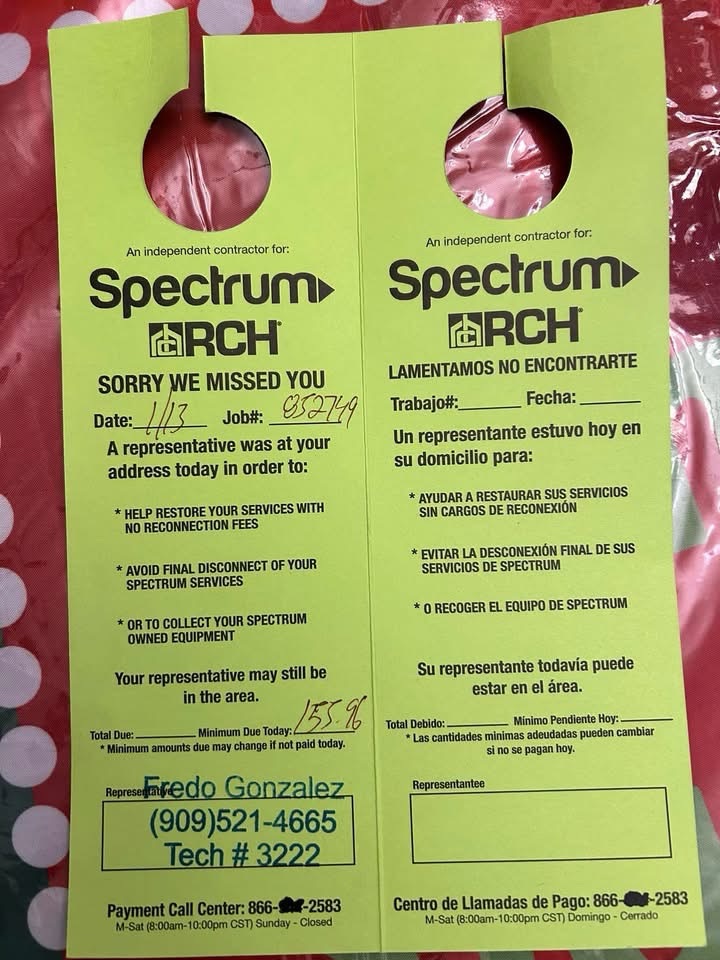
This was shared on a private Facebook group. Looks REALLY scammy.

Here is what Spectrum says about scams:

“If you’re curious about the status of your account, you can always use the My Spectrum App or sign in to your Spectrum account to check the details. Those are safe and secure ways to connect to your account anytime and from anywhere.”

A3ML: When Regular AML is Not Good Enough

As some of you know, AML stands for Anti-Money Laundering. It ensures that money given to Johnny Angel doesn’t end up in the hands of Vladimir Putin. This impacts financial institutions:

“Banks had to follow government regulations (know your customer, anti-money laundering, know your business), even in the midst of a worldwide pandemic.”

But AML goes far beyond banks because of its national security implications. Which means the military has to get involved.

Therefore DARPA has entered the picture, with its Program Announcement (posted on SAM as DARPA-SN-25-23) for something DARPA calls “Anticipatory and Adaptive Anti-Money Laundering,” or A3ML.

Uh, what? GovTribe explains:

“The program seeks to develop sophisticated algorithmic methods that can analyze financial transaction graphs and detect suspicious patterns more effectively than existing manual processes. This initiative represents a significant shift towards proactive and predictive financial crime detection methodologies.”

Of course, the introduction of the word “predictive” raises alarm bells, based upon activities outside of banking. At best, police potentially waste a lot of time investigating every single broken tail light. At worst, Muslim lawyer Brandon Mayfield becomes a suspect for a crime he didn’t commit.

Hopefully the people pursuing A3ML can minimize bias.

Why No BOI?

(Business terrorist image Imagen 3/Google Gemini)

I asked my good buddy Google Gemini to describe the court arguments against FinCEN beneficial ownership reporting (which as of this hour is on a court-mandated hold pending a possible Supreme Court stay). Two of the items identified by Gemini are Bill of Rights related.

“Some argue the reporting requirements force businesses to disclose information about their owners, which they consider a form of compelled speech. The First Amendment protects freedom of expression, and this argument suggests the government is overstepping its bounds.”

“Critics argue that the collection of beneficial ownership information constitutes a search under the Fourth Amendment. They contend that this collection is overly broad and lacks sufficient justification to meet the constitutional standard of reasonableness.”

Human sources, including Engage Wealth Advisors, mention these same concerns.

So the big boys are still subject to KYC, KYB, and AML regulations, while the little boys (sole proprietors) aren’t. The ones in the middle who would have been subject to the Corporate Transparency Act remain in a state of limbo.

Of course, if an anonymous entity claimed that BOI opponents are Putin lovers who want to hide terrorist activities, those same opponents would want to know who is saying that about them. What’s good for me isn’t good for thee…

Oh BOI Again, Subject to Change

On December 23, 2024, we learned that Beneficial Ownership Information (BOI) reporting WOULD be required, albeit later than originally planned.

The next day, December 24, I wrote a Bredemarket blog post about this.

Two days later, December 26, my December 24 blog post was already outdated. 

“On December 26, 2024, a different panel from the Fifth Circuit issued an order that vacated the court’s prior December 23 order granting a stay of the preliminary injunction. As a result, the injunction issued in Texas Top Cop Shop remains in effect nationwide and reporting companies are currently not required to file beneficial ownership information with FinCEN.”

The notice above was published on January 4.

Check back on January 6.

Title vs. Physical Possession of a Vehicle

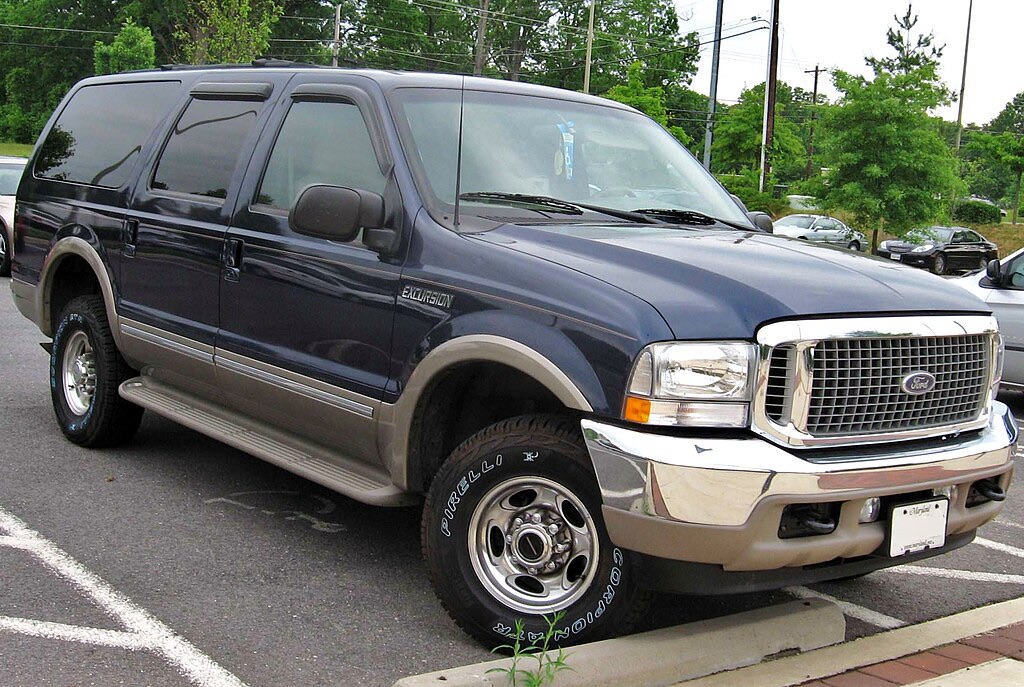
(2002 Ford Excursion image public domain)

I’ve talked about non-person entities (NPEs) before, but usually about a computer, or a file (such as a top secret file).

What about sport utility vehicles (SUVs)? 

Or houses?

But I’m going to concentrate on sport utility vehicles here.

Because of their expense, certain NPEs such as vehicles and real estate are associated with title, or proof of ownership. 

Just because I have physical possession of a car or house doesn’t mean that I’m the lawful owner. Maybe I am house sitting. Or renting a car. Or I am a squatter or thief. When it comes to legal (and financial) title, possession is NOT 9/10ths of the law. Otherwise, Hilton and Hertz would be out of business.

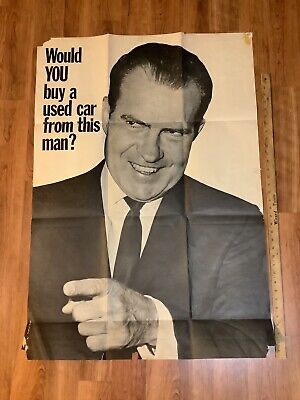
Old anti-Richard Nixon ad.

But what happens when the physical NPE and the title diverge? Two victims of now-convicted car salesman Ronald Johnson found out the hard way, according to KTTN:

“In 2022, Johnson orchestrated a scheme that led to a Pennsylvania buyer paying $41,750 for a 2002 Ford Excursion that he had already sold to a South Dakota buyer for $45,000. The South Dakota buyer received the title, while the Pennsylvania buyer was given the SUV, leaving the latter unable to register the vehicle lawfully.”

But how do you verify that the title is real? For vehicles:

“The title should have a watermark, a raised seal, a unique vehicle identification number, a unique title number, and the owner’s information.”

And as for the owner, my regular readers know how to verify THAT.

Oh BOI

Beneficial Ownership Information alert. From Proskauer:

“On December 23, 2024, the Fifth Circuit of the United States Court of Appeals (the “Fifth Circuit”) issued an order that has the effect of reinstituting the deadlines under the Corporate Transparency Act (the (“CTA”)….

“The CTA requires a range of entities, primarily smaller, otherwise unregulated companies, to file a report with the U.S. Department of the Treasury’s Financial Crimes Enforcement Network (“FinCEN”) identifying the entities’ beneficial owners—the persons who ultimately own or control the company—and provide similar identifying information about the persons who formed the entity.

“FinCEN has recognized that the timing of the order lifting the injunction may be particularly burdensome and has extended the reporting deadlines.  Accordingly, reporting companies created prior to January 1, 2024, that are not eligible for an exemption, are required to file beneficial ownership reports by January 13, 2025 (and not January 1, 2025).”

Financial Fraud by Kids? No, by Impersonators

If you look at the evidence, it may appear that financial fraud is being committed by kids. But that’s not accurate; it’s being committed by fraudsters who are impersonating kids, according to the National News.

“”Fraudsters are targeting children’s identities because they can exploit the information for an extended period,” said Rob Woods, director of fraud and identity for LexisNexis Risk Solutions….

“With criminals well aware of the likelihood of the child’s identity theft going undetected, Mr Woods said LexisNexis is seeing criminals opening bank accounts, applying for loans and even committing other financial crimes with the fake identity.”

So perhaps you had better check Junior’s credit rating.

Do You Service These Seven Vertical Markets That Use Identity and Biometrics?

As Identity and biometrics solution providers know, their applications are found in a variety of vertical markets.

A LARGE variety of vertical markets.

Seven of these markets include financial services, travel and hospitality, government services, education, health, criminal applications, and venues. (Among others.)

Which three vertical markets does the Prism Project examine?

To start this post, I’m going to cheat and “appropriate” the work already performed by the Prism Project.

This effort is managed by Maxine Most’s Acuity Market Intelligence and supported by a variety of partners (including industry partners).

The Prism Project has identified 3 (so far) critical vertical markets for identity and biometrics. While this doesn’t pretend to be a comprehensive list, it’s a good starting point to illustrate the breadth of markets that benefit from identity and biometrics.

  • The Prism Project has already released its report for financial services, which businesses can download here.
  • The Prism Project has started to develop its report for travel and hospitality. You can preview the report here.
  • Finally, the Prism Project plans to release a report addressing government services later in the year. For the latest status of this report, visit the Prism Project home page.

As you can see, identity and biometrics apply in wildly diverging vertical markets. You can use identity verification to open a bank account, enter your hotel room, or pay your taxes.

But those aren’t the only markets that use identity and biometrics.

Let me school you on two other markets, education and health

Let’s look at two markets that the Prism Project hasn’t covered…yet.

Education

Chaffey High School, Ontario, California.

Another example of a market that uses identity and biometrics is the education market.

  • Who is allowed on a physical campus? Students? Teachers? Staff? Parents and guardians?
  • Who is NOT allowed on a physical campus? Expelled students? Fired faculty and staff?
  • Who is taking that remotely-administered online test?

Bredemarket has written several posts about educational applications for identity and biometrics. You can read all my education writing on Bredemarket’s “Educational Identity” information page.

Health

What, did you expect me to post a Marcus Welby picture here? I’m sharing a real medical professional: Jonas Salk administering the polio vaccine. By Yousuf Karsh, photographer – Wisdom Magazine, Aug. 1956 (Vol 1, No. 8), PD-US, https://en.wikipedia.org/w/index.php?curid=27746788.

Similarly Bredemarket has written several posts about healthcare applications for identity and biometrics, including some that dwell on the unique privacy legislation that covers healthcare. You can read all my health writing on Bredemarket’s “Health” information page. (It’s not called “Health Identity” because healthcare has both identity and technology aspects.)

Another source on finance

By the way, Bredemarket also has a page on “Financial Identity,” but the Prism Project’s content is more comprehensive.

But wait…there’s more!

So this is the point where Ed McMahon intones, “So Acuity Market Intelligence and Bredemarket have identified all five of the markets that benefit from the use of identity and biometrics!”

By photo by Alan Light, CC BY 2.0, https://commons.wikimedia.org/w/index.php?curid=3048124.

And you know how Johnny (Johnny Carson, or Johnny Bredehoft) would respond to that.

By Johnny_Carson_with_fan.jpg: Peter Martorano from Cleveland, Ohio, USAderivative work: TheCuriousGnome (talk) – Johnny_Carson_with_fan.jpg, CC BY 2.0, https://commons.wikimedia.org/w/index.php?curid=12750959.

So let’s look at two more markets that benefit from the use of identity and biometrics-two markets that I know very well from the beginning and end of my time at Printrak/Motorola/MorphoTrak/IDEMIA.

Criminal applications

There are government services, and then there are government services.

I started my biometric journey over 29 years ago when I wrote proposals addressed to law enforcement agencies who wanted to find out who left their fingerprints on a crime scene, and whether the person being arrested was who they said they were.

I don’t know if Maxine Most is going to classify criminal applications as a subset of government services, but there are clear reasons that she may not want to do this.

  • When you pay your taxes or apply for unemployment benefits, you WANT the biometric system to identify you correctly.
  • When you steal a car or rob a bank, you do NOT want the biometric system to identify you correctly.

Big difference.

Stadiums, concert halls, and other venues

If someone asked me in late 2019 what my career five year plan was, I would have had a great story to tell.

As I was wrapping up over 24 years in identity and biometrics, I was about to help my then-employer IDEMIA enter a new market, the venue market. This market, which CLEAR was already exploring at the time, replaced the cumbersome ticketing process with the use of frictionless biometrics to enter sports stadiums, concert halls, trade shows, and related venues. Imagine using your face or IDEMIA’s contactless fingerprint solution MorphoWave to enter a venue, enter secure restricted areas, or even order food and beverages.

Imagine the convenience that benefit consumer and venue operator alike.

What could go wrong? I mean, the market was robust, and we certainly would NEVER face a situation in which all the stadiums and all the concert halls and all the trade shows would suddenly close down.

Michael Jordan image from Yahoo Sports on X, https://x.com/YahooSports/status/1259846638639763459.

Since early 2020 when a worldwide pandemic DID shut down a lot of things, many identity/biometric firms have entered the venue market with a slew of solutions to benefit fans, teams, and venues alike.

And still more

There are many more vertical markets than these seven, ranging from agriculture to automobile access to computer physical/logical access to construction to customer service (mainly voice) to critical infrastructure to gaming (computer gaming) to gaming (gambling) to the gig economy to manufacturing to real estate to retail to telecommunications to transportation (planes, trains, buses, taxis, and cruise ships).

And all these markets have a biometric story to tell.

Can Bredemarket help you describe how your identity/biometric solution addresses one or more of these markets?