Remember last month when I created the Meta AI character N. P. E. Bredemarket? “He” identifies as “wisdom in technology, at your service.” Although I need to train him more, he is fairly good at illuminating technology topics.
N. P. E. Bredemarket.
But he doesn’t make me money.
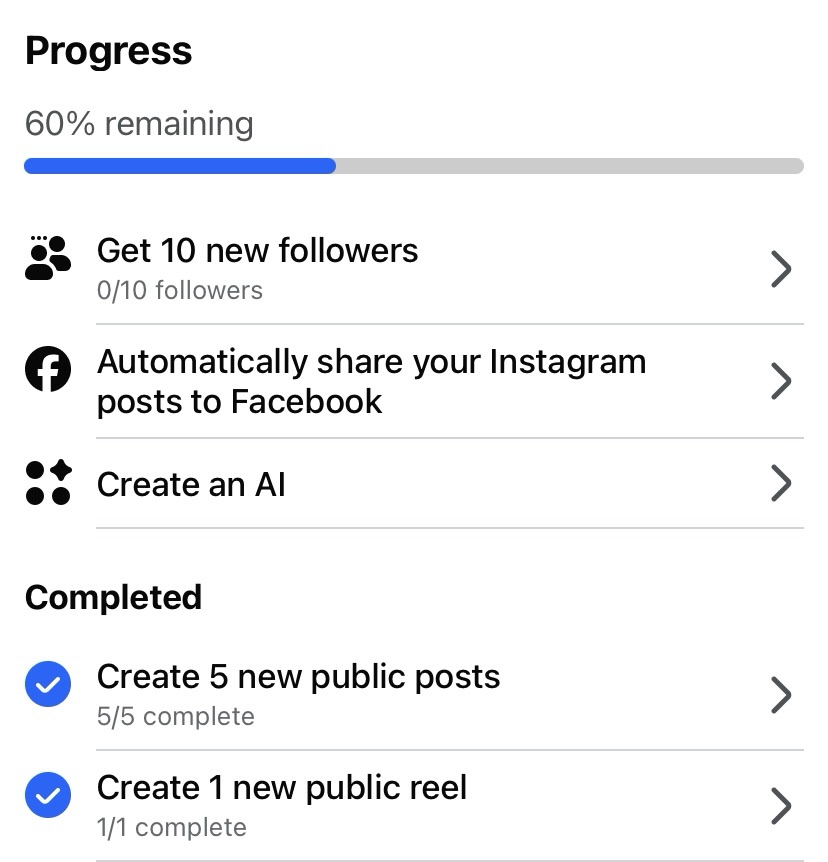
To make money, I need an influencer to promote Bredemarket.
But not a macro-influencer like a Kardashian or Jenner.
“She” is still in anti-hallucination training; at one point she said that I was the past president of the International Biometric Association (whatever that is). But she’s getting better.
Will she drum up business for Bredemarket? Probably not, since my Instagram influence pales in comparison to my Facebook and LinkedIn influence. But I’m curious to try it.
I even scheduled a Facebook event. Because Meta wants me to turn every Facebook post into an event, I set one up for Monday at 8 am (Pacific Daylight Time).
Nothing special at the event; I’m not even planning to go live. Just a time to check to see if the video is posted, and to spend 32 seconds watching it.
Last Friday I shared my beef with the so-called LinkedIn “experts” and their championing of generic pablum.
“The ideal personal communication is this: ‘I am thrilled and excited to announce my CJIS certification!’”
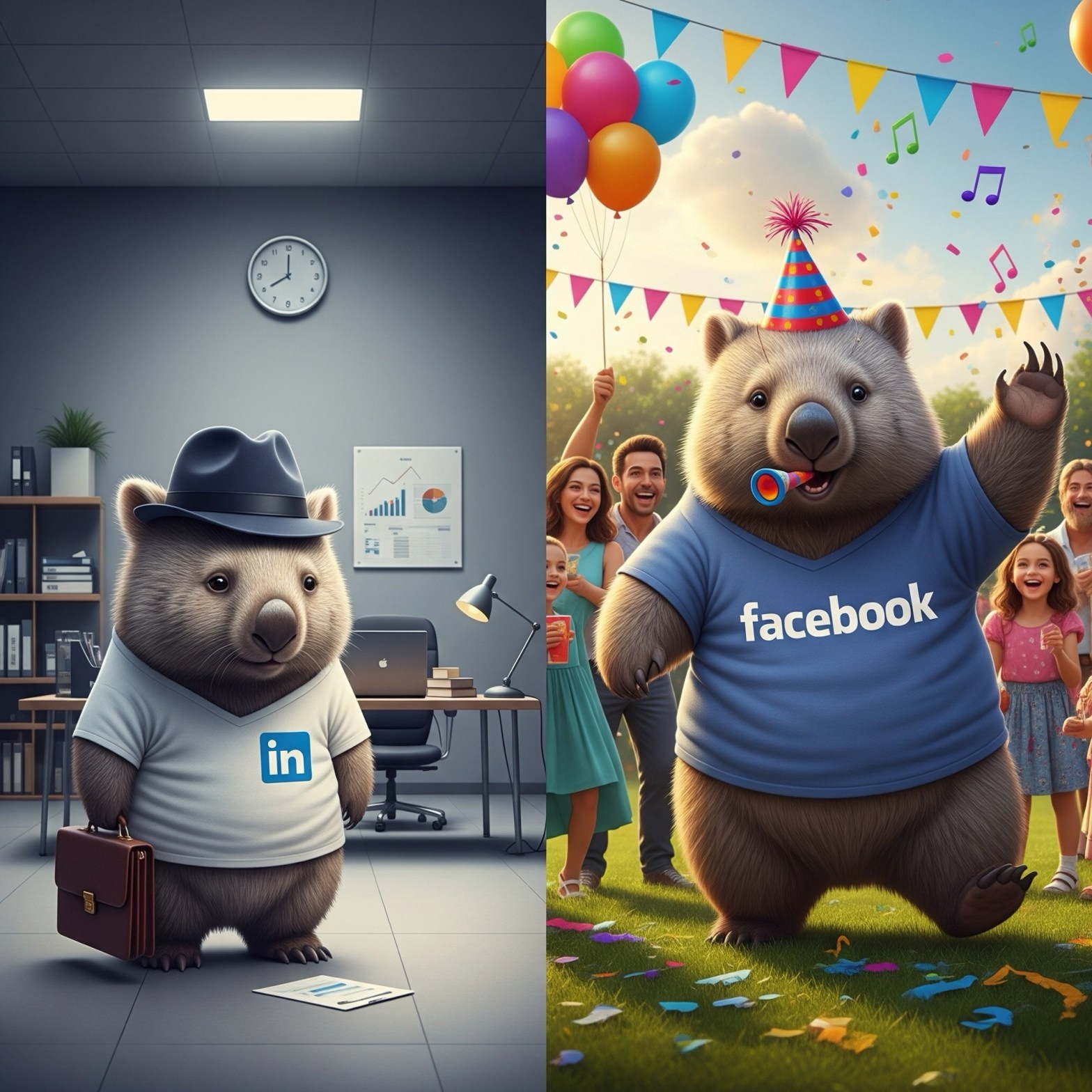
This drivel is rooted in the idea that LinkedIn is a business network…and anything else is just “Facebook.”
Oddly enough, my Bredemarket consulting blog gets much more traffic from Facebook than it does from LinkedIn.
Despite me emphasizing LinkedIn more than Facebook for Bredemarket social media.
And despite the fact that Bredemarket’s LinkedIn pages have many more followers than Bredemarket’s Facebook page and groups.
It appears that Facebook users are more willing to click on links (and leave the walled garden).
Perhaps that’s not “businesslike” on LinkedIn.
Therefore, despite my issues with the Metabot at times, I’m paying more attention to Facebook these days.
And if Facebook users pay more attention to Bredemarket than LinkedIn users…well, I won’t impede on the LinkedIn users as they perform thrilling and exciting things.
In the distance.
By the way, I probably won’t post an anti-LinkedIn “experts” diatribe on the Bredemarket blog next Friday…
I’m experimenting with more detailed prompts for generative AI.
If you haven’t noticed, I use a ton of AI-generated images in Bredemarket blog posts and social media posts. They primarily feature wildebeests, wombats, and iguanas, although sometimes they feature other things.
My prompts for these images are usually fairly short, no more than two sentences.
By the way, here is my prompt, which Google Gemini (Imagen 4) stored as “Eerie Scene: Sara’s Fake Bills.”
“Draw a realistic picture of a ghost-like woman wearing a t-shirt with the name “Sara.” She is holding out a large stack of dollar bills that is obviously fake because the picture on the bill is a picture of a clown with orange face makeup wearing a blue suit and a red tie. Next to Sara is a dead tree with a beehive hanging from it. Bees buzz around the beehive. A laptop with the word “HiveLLM” on the screen sits on the rocky ground beneath the tree. It is night time, and the full moon casts an eerie glow over the landscape.”
I didn’t get exactly what I wanted—the bills are two-faced—but close enough. And the accident of two-faced bills is a GOOD thing.
I’m moving in a different direction on social media. Well, personal social media anyway.
There are multiple schools of thought about whether small companies with well-known leaders should share content on their company platforms or their personal social media platforms.
On one extreme, companies only share content on company channels, to better establish the brand of WidgetCorp or whatever.
On the other extreme, company heads only share content on their personal channels because their personal connections are so important to the company’s success. In fact, these company heads may not even bother to create separate company pages.
Obviously, most companies and company heads adopt a “do both” tactic. Maybe the company head reshares company posts. Or maybe the company reshares company head posts.
Or they do something that John Bredehoft and Bredemarket have done in the past: share the same content on both the company and the personal channels.
I might not do that any more.
The experiment
The rationale behind sharing company posts on your personal channels is that your personal friends like you and will engage with your company posts.
But this rationale ignores one very pertinent fact: most of my friends have NO interest in identity, biometrics, cybersecurity, or related technologies.
Why would they engage with such content if it doesn’t interest them?
I’d share Bredemarket Facebook content to my personal Facebook feed…and with very few exceptions I’d end up with crickets.
Or I’d share some Bredemarket LinkedIn content to my personal LinkedIn account. Often…crickets.
But most painful of all was when I would share Bredemarket Instagram posts to my Instagram stories. Higher impressions then the same stories on the Bredemarket account…but absolutely no engagement. Crickets again.
So on Monday afternoon I intentionally conducted an experiment on my personal Facebook, Instagram, and LinkedIn accounts, where together I have a combined 3,396 connections. My Monday afternoon identity/biometric and product marketing-related content received a total of 9 engagements…and that’s counting the Instagram user who requested “Can u share it @canadian.icon”).
Even acccounting for the three algorithms involved…that’s low.
And it…um, prompted me to ask myself a “why” question.
Why share corporate content on personal feeds?
Good question.
So for now I’m “moving in a different direction” (a few of you know where THAT phrase originated) and not bothering to share Bredemarket content on my personal feeds. At least for now.
Those who are dying to see Bredemarket content will subscribe to the appropriate Bredemarket Facebook, Instagram, or LinkedIn feeds.
But frankly, my friends have no need or desire to see Bredemarket content, so they won’t.
In my case, my high school friends, church friends, and even some of my former coworkers (who left the identity/biometric industry years ago) are NOT Bredemarket’s hungry people. So I’ll spare them the parade of wildebeests, wombats, and iguanas.
There are some things that I don’t bother to share in the Bredemarket blog, but instead just share to my socials.
This morning, I shared a story about the third-party risk management firm Whistic to LinkedIn’s Bredemarket Technology Firm Services page.
From LinkedIn.
You can see an oft-used Bredemarket technique: rather than sharing everything from a third party (geddit?) article, I only share a bit of it, then encourage the reader to click on the link to see the rest of the content. Makes everybody happy. What could go wrong?
Then I shared the same story to Facebook’s Bredemarket Technology Firm Services page.
Or tried to.
First attempt to share to Facebook
Facebook removed the post, accusing me of using “misleading links or content to trick people.”
I’m so devious that even I couldn’t figure out what I did.
Until I re-read the post and noticed this parenthetical comment.
(And one more key finding. Read the article.)
Doesn’t seem like a trick to me, but I explicitly urged people to leave Facebook’s walled garden and read something.
I do this all the time—Facebook is the second most popular traffic source for Bredemarket, after Google—but apparently the way I did it in the Whistic post was a trick to Facebook’s readers.
Second attempt to share to Facebook
The solution was simple: repost the article WITHOUT the offensive parenthetical comment.
So I did.
And Facebook removed the post again.
This isn’t the first time Facebook has rejected content that other platforms accepted without question…including other Meta platforms such as Instagram, Threads, and WhatsApp.
I was this close to ceasing content sharing on Facebook altogether.
But then I had an idea.
Now I’m engaging in real trickery
If I am offending Zuck by using text to supposedly trick people into clicking on a link…
…what would happen if I ONLY posted a link with no text at all?
And rather than posting the text of interest in Facebook’s walled garden…
…I put the text of interest in the Bredemarket blog, along with the Whistic link that offended Facebook so much?
Then I could share it on character-limited platforms such as Threads and Bluesky.
You see the irony here. For a while I’ve strived to place social content natively on each platform. Now the platforms are forcing me to place the real content on a platform I control.
And the text would look something like this:
What I tried to say this morning
Every year, Whistic surveys hundreds of Risk-Management and Information Security leaders to understand the trends, challenges, and opportunities that are actively shaping the third-party risk management (TPRM) industry.
In 2025, the average company in our survey works with 286 vendors—up by 21% versus last year….That increased demand comes with increased risk.
[C]ompanies are spending more time, more money, and more resources on TPRM, but still not meeting their own risk standards or reducing security events.
I just read a post by SentinelOne, but it’s too early to tell if this is just a string of buzzwords or a legitimate endeavor.
The post about a proposed “Autonomous SOC Maturity Model” (ASOCMM?) includes buzzwords such as “autonomous,” “SOC” (system and organizational controls, or security operations center – take your pick), “agentic AI,” and of course “maturity model.”
Having done my maturity model time during my days at Motorola Solutions predecessor Motorola (although our group stuck with CMM rather then moving on to CMMI), I’ve certainly seen the benefits and drawbacks of maturity models for organizations large and small. Or for organizations large: I shudder at the thought of implementing a maturity model at a startup; the learning curve at the Printrak part of Motorola was bad enough. You need to hit the target between no process, and process for process’ sake.
So what of this autonomous SOC maturity model? Perhaps it can be real.
“At SentinelOne, we see the Autonomous SOC through the lens of a maturity model. We welcome debate on where we, as an industry, are on this evolutionary revolution. We hope most will agree that this is a better way to look at Autonomous SOC innovation and adoption – far better than the binary, all-or-nothing debates that have long fueled analyst, vendor, and industry watcher blogs and keynotes.”
If nothing else, a maturity model approach lends (or can lend) itself to continuous improvement, rather than just checking off a box and saying you’re done. A Level 5 (or Level 4 on a 0-4 scale) organization, if it believes what it’s saying, is ALWAYS going to improve.
Bredemarket promotes itself in all sorts of places. My LinkedIn newsletter is an example, but there are other places where Bredemarket speaks, including the Bredemarket blog and a number of social channels.
The channels that Bredemarket uses have varied over time. While wise minds such as Jay Clouse have recommended to not spread yourself thin, I ignored his advice and found myself expanding from LinkedIn to TikTok. (TikTok is a Chinese-owned social media platform. You may have heard of it.)
Then in May 2024 I contracted my online presence, announcing that I was retreating from some social channels “that have no subscribers, exhibit no interest, or yield no responses.” After I had shed some channels, I ended up on a basic list of Facebook, Instagram, LinkedIn, and Threads.
Now I may contract again, and I may expand again, but for now I want to touch upon the reasons why a business should post or not post on multiple social channels, and how the business can generate content for all those channels.
Why should you only post on a single social channel?
There is no right or wrong answer for every business, and there are some businesses that should only post on a single social channel.
If all your prospects are using a single social channel and are on NO OTHER channel, then you only need to post on that channel.
If you are NOT in danger of losing your account on that social channel because of some automated detection of a violation (“You violated one of the terms in our TOS. We won’t tell you which one. YOU figure it out.”), then you can continue to post on that channel and no other.
If the social channel is NOT in danger of business liquidation or forced government closure, then you can continue to post on that channel and no other.
Why should you post on multiple social channels?
Not all businesses satisfy all the criteria above. For one, your “hungry people” (target audience) may be dispersed among several social channels. From my personal experience, I know that some people only read Bredemarket content in my blog, some only read my content on LinkedIn, some only read my content on Facebook (yes, it’s true; one of Bredemarket’s long-term champions primarily engages with me on Facebook), some only on Instagram, and so forth.
What would happen if I decided to can most of my social channels and only post TikTok videos? I’d lose a lot of engagement and business.
Even if I concentrated on LinkedIn only, which seems like a logical tactic for a B2B service provider, I would lose out. Do you know how many people on Threads NEVER read LinkedIn? I don’t want to lose those people.
So that’s where I ended up. And if you know my system, the question after the “why” question is the “how” question…
How can you post on multiple social channels?
Repurposing…intelligently.
You don’t have to create completely unique content for every platform. You can adapt content for each platform, when it makes sense.
So now I’m going to eat my own wildebeest food and see where I can repurpose this text, which was originally a LinkedIn article. Yes, even on TikTok. I may not come up with a whopping 31 pieces of content like I did in a 2023 test, but I can certainly get this message out to people who hate LinkedIn. Perhaps maybe even to my mailing list, for people who have subscribed to the Bredemarket mailing list.
I haven’t figured out what I’ll do in this particular instance, but here are some general guidelines on content repurposing:
You can just copy and paste the entire piece of content on another platform. For example, I took all this text and copied it from the original LinkedIn article. But I hope I remembered to edit all the phrases that assume this content is posted on LinkedIn. And I’d have to consider something else…
You can just copy and paste the entire piece of content on another platform and remove the links. To be honest, no social media platform likes outbound links, but some platforms such as Instagram REALLY don’t like outbound links. So before you do this, ask if the content still makes sense if the links aren’t present.
You can provide a summary of the content and link back to the original content for more detail. Isolate the important points in the content, just publish those isolated points, and then link back to the original content if the reader wants more detail. Bear in mind that they probably won’t, because clicking on a link is one extra step that most people won’t want to do.
You can provide a really short summary of the content and link back to the original content for more detail. Bluesky and other Twitter wannabe platforms have character limitations, so often you have to really abridge the content to fit it in the platform. I’ve often written a “really short” version of my content for resharing, then discovered that even that version is too long for Bluesky.
You can address the content topic in an entirely different medium. Because of my preferences, I usually start with text and then develop an image and/or a video and/or audio that addresses the topic. But trust me—if I convert this blog post (yes, I rewrote the preceding three words when I copied this from the original LinkedIn article) into video or audio format, it will NOT include all the words you are reading here. Unless I’m feeling particularly cranky.
Oh, and if you’re using pictures with your content, don’t forget to adjust the pictures as needed. A 1920×1080 LinkedIn article image will NOT work on Instagram.
So there you have it. Posting on multiple social channels helps you reach people you may not otherwise reach, as long as you don’t spread yourself too thin or get discouraged. And you can repurpose content to fit within the expectations of each of these social channels, allowing you to re-use your content multiple times.
If you’ll excuse me, I have a lot of work to do. (Plus the usual Bredemarket services: I onboarded a new client yesterday and hope to onboard another one this week.)