Are You a Marketer Who is Contributing to Identity Theft?

I still receive “snail mail” at home. And every time I look at it I get enraged.

In fact, I’m this close to opening most of the pieces of mail, removing the postage-free reply envelope, and returning it to the originator with the following message:

Thank you for contributing to rampant identity theft.

How do companies, possibly including YOUR company, contribute to identity theft? Read on.

Snail mail, a treasure trove of PII

Let me provide an example, heavily redacted, of something that I received in the (snail) mail this week. I won’t reveal the name of the company that sent this to me, other than to say that it is an automobile association that does business in America.

John Bredehoft

[HOME ADDRESS REDACTED]

John Bredehoft…

You and your spouse/partner are each eligible to apply for up to $300,000.00 of Term Life Insurance reserved for members – and with Lower Group Rates ROLLED BACK to 2018!

… SCAN THIS [QR CODE REDACTED] Takes you right to your personalized application

OR GO TO [URL REDACTED] and use this Invitation Code: [CODE REDACTED]

So that’s the first page. The second page includes a Group Term Life Insurance Application with much of the same information.

And there’s the aforementioned return envelope…with my name and address helpfully preprinted on the envelope.

What could go wrong?

Google Gemini.

Dumpster divers

Now obviously the sender hopes that I fill out the form and return it. But there is a very good chance that I will NOT respond to this request, in which case I have to do something with all these papers with personally identifiable information (PII).

Obviously I should shred it.

But what if I don’t?

And some dumpster diver rifles through my trash?

  • Perhaps the dumpster diver will just capture my name, address, and other PII and be done with it.
  • Or perhaps the dumpster diver will apply for term life insurance in my name and do who knows what.

Thanks, sender, you just exposed me to identity theft.

But there’s another possible point at which my identity can be stolen.

Mailbox diverters

What if this piece of snail mail never makes it to me?

  • Maybe someone breaks into my mailbox, steals the mail, and then steals my identity.
  • Or maybe someone breaks into a mail truck, or anywhere on the path from the sender to the recipient.

Again, I’ve been exposed to identity theft.

All because several pieces of paper are floating around with my PII on it.

Multiply that by every piece of mail sent to every person, and the PII exposure problem is enormous.

Email marketers, you’re not off the hook

Now I’m sure some of you are in a self-congratulatory mood right now.

John, don’t tarnish us with the same brush as junk mailers. We are ecologically responsible and don’t send snail mails any more. We use email, eliminating the chance of pieces of PII-laden paper floating around.

Perhaps I should break the news to you.

  • Emails are often laden with the same PII that you find in traditional snail mail, via printed text or “easy to use” web links.
  • Emails can be stolen also.
Google Gemini.

So you’re just as bad as the snail mailers.

What to do?

If you’re a marketer sending PII to your prospects and customers…

Stop it.

Don’t distribute PII all over the place.

Assume that any PII you distribute WILL be stolen.

Because it probably will.

And if you didn’t know this, it won’t make your prospects and customers happy.

Proof of IAL3

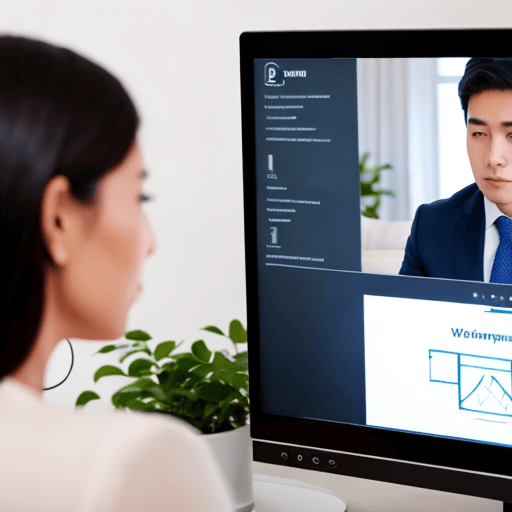
I was up bright and early to attend a Liminal Demo Day, and the second presenter was Proof. Lauren Furey and Kurt Ernst presented, with Lauren assuming the role of the agent verifying Kurt’s identity.

The mechanism to verify the identity was a video session. In this case, Agent Lauren used three methods:

  • Examining Kurt’s ID, which he presented on screen.
  • Examining Kurt’s face (selfie).
  • Examining a credit card presented by Kurt.

One important note: Agent Lauren had complete control over whether to verify Kurt’s identity or not. She was not a mere “human in the loop.” Even if Kurt passed all the checks, Lauren could fail the identity check if she suspected something was wrong (such as a potential fraudster prompting Kurt what to do).

If you’ve been following my recent posts on identity assurance level, you know what happened next. Yes, I asked THE question:

“Another question for Proof: does you solution meet the requirements for supervised remote identity proofing (IAL3)?”

Lauren responded in the affirmative.

It’s important to note that Proof’s face authentication solution incorporates liveness detection, so there is reasonable assurance that the person’s fake is not a spoof or a synthetic identity.

So I guess I’m right, and that we’re seeing more and more IAL3 implementations, even if they don’t have the super-duper Kantara Initiative certification that NextgenID has.

Unlocking High-Value Financial Transactions: The Critical Role of Identity Assurance Level 3 (IAL3)

(Picture designed by Freepik.)

I’ve previously discussed the difference between Identity Assurance Level 2 (IAL2) and Identity Assurance Level 3 (IAL3). The key differentiator is that IAL3 requires either (1) in-person identity proofing or (2) remote supervised identity proofing.

Who and how to use IAL3

Who can provide remote supervised identity proofing?

“NextgenID Trusted Services Solution provides Supervised Remote Identity Proofing identity stations to collect, review, validate, proof, and package IAL-3 identity evidence and enrollment data for CSPs operating at IAL-3.”

And there are others who can provide the equivalent of IAL3, as we will see later.

How do you supervise a remote identity proofing session?

“The camera(s) a CSP [Credential Service Provider] employs to monitor the actions taken by a remote applicant during the identity proofing session should be positioned in such a way that the upper body, hands, and face of the applicant are visible at all times.”

But that doesn’t matter with me now. What matters to me is WHEN we need remote identity proofing sessions.

Mitek Systems’ Adam Bacia provides one use case:

“IAL3 is reserved for high-risk environments such as sensitive government services.”

So that’s one use case.

But there is another.

When to use IAL3 for financial transactions

Governments aren’t the only entities that need to definitively know identities in critically important situations.

What about banks and other financial institutions, which are required by law to know their customers?

Now it’s one thing when one of my Bredemarket clients used to pay me by paper check. Rather than go to the bank and deposit it in person at a teller window (in person) or at an ATM (remote supervised), I would deposit the check with my smartphone app (remote unsupervised).

Now the bank assumed a level of risk by doing this, especially since the deposited check would not be in the bank’s physical possession after the deposit was completed.

But guess what? The risk was acceptable for my transactions. I’m disclosing Bredemarket company secrets, but that client never wrote me a million dollar check. Actually, none of my clients has ever written me a million dollar check. (Perhaps I should raise my rates. It’s been a while. If I charge an hourly rate of $100,000, I will get those million dollar checks!)

So how do financial institutions implement the two types of IAL3?

In-person

Regarding IAL3 and banks, in-person transactions are supported in certain cases, even with the banks’ moves to close branches.

“If you need to initiate a funds transfer payment, an authorized signer for your account may also initiate funds (wire) transfers at any Chase branch.”

Note the use of the word “may.” However, if you don’t want to go to a branch to make a wire transfer, you have to set up an alternate method in advance.

Remote supervised

What about remote supervised transactions at financial institutions, where you are not physically present, but someone at the bank remotely sees you and everything you do? Every breath you take? And every move you make? Etcetera.

It turns out that the identity verification providers support video sessions between businesses (such as banks) and their customers. For example, Incode’s Developer Hub includes several references to a video conference capability. 

To my knowledge, Incode has not publicly stated whether any of its financial identity customers are employing this video conference capability, but it’s certainly possible. And when done correctly, this can support the IAL3 specifications.

Why to use IAL3 for financial transactions

For high-risk transactions such as ones with high value and ones with particular countries, IAL3 protects both the financial institutions and their customers. It lessens the fraud risk and the possible harm to both parties.

Some customers may see IAL3 as an unnecessary bureaucratic hurdle…but they would feel differently if THEY were the ones getting ripped off.

This is why both financial institutions and identity verification vendors need to explain the benefits of IAL3 procedures for riskier transactions. And do it in such a way that the end customers DEMAND IAL3.

To create the content to influence customer perception, you need to answer the critically important questions, including why, how, and benefits. (There are others.)

And if your firm needs help creating that content, Underdog is here.

I mean Bredemarket is here.

Visit https://bredemarket.com/mark/ and schedule a time to talk to me—for free. I won’t remotely verify your identity during our videoconference, but I will help you plan the content your firm needs.

Battling deepfakes with…IAL3?

(Picture designed by Freepik.)

The information in this post is taken from the summary of this year’s Biometrics Institute Industry Survey and is presented under the following authority:

“You are welcome to use the information from this survey with a reference to its source, Biometrics Institute Industry Survey 2025. The full report, slides and graphics are available to Biometrics Institute members.”

But even the freebie stuff is valuable, including this citation of two concerns expressed by survey respondents:

“Against a backdrop of ongoing concerns around deepfakes, 85%
agreed or agreed strongly that deepfake technology poses a
significant threat to the future of biometric recognition, which
was similar to 2024.
“And two thirds of respondents (67%) agreed or agreed strongly
that supervised biometric capture is crucial to safeguard against
spoofing and injection attacks.”

Supervised biometric capture? Where have we heard that before?

IAL3 requires “[p]hysical presence” for identity proofing. However, the proofing agent may “attend the identity proofing session via a CSP-controlled kiosk or device.” In other words, supervised enrollment.

Now remote supervised enrollment and even in-person supervised enrollment is not a 100.00000% guard against deepfakes. The subject could be wearing a REALLY REALLY good mask. But it’s better than unsupervised enrollment.

How does your company battle deepfakes?

How do you tell your clients about your product?

Do you need product marketing assistance? Talk to Bredemarket.

When Prospects Ask Technical Marketers the Tough Questions

Some technical marketers are expert at spinning soft fluffy stories about how their AI-powered toilet paper can cure cancer…which can be very persuasive as long as the prospects don’t ask any questions.

  • For example, let’s say you’re telling a Chick-fil-A in Kettering, Ohio that you’ll keep 17 year olds out of their restaurant. Are you ready when the prospect asks, “How do you KNOW that the person without ID is 17 years and 359 days old, and is not 18?”
  • Or let’s say you’re telling a state voter agency that you’ll enforce voter ID laws. Are you ready when the prospect asks, “How do you KNOW that the voter ID is real and not fake? Or that it is fake and not real?”

Be prepared to answer the tough questions. Expert testimonials. Independent assessments of your product’s accuracy. Customer case studies.

Analyze your product’s weaknesses. (And the threats, if you’re a SWOT groupie.)

And call in the expert help.

Identity Assurance Level 3 (IAL3): When Identity Assurance Level 2 (IAL2) Isn’t Good Enough

(Picture designed by Freepik.)

(Part of the biometric product marketing expert series)

I’ve talked about Identity Assurance Levels 1, 2, and 3 on several occasions. Most notably regarding Login.gov’s initial failure to adhere to Identity Assurance Level 2 (IAL2). (Old news; after the pilot, Login.gov is now certified for IAL2.)

But as usually happens, IAL2 is yesterday’s news. Because biometric tech always gets harder better faster stronger.

Refresher on IAL1, IAL2…and IAL 3

Let’s review the three identity assurance levels.

For our purposes, the big difference between IAL2 and IAL3 is that IAL2 allows “either remote or physically-present identity proofing,” while IAL3 requires “[p]hysical presence” for identity proofing. However, the proofing agent may “attend the identity proofing session via a CSP-controlled kiosk or device.” In other words, supervised enrollment.

When do you need IAL3? Mitek’s Adam Bacia clarifies:

“IAL3 is reserved for high-risk environments such as sensitive government services.”

How are solutions approved for a particular Identity Assurance Level?

Now I could get on my product marketing soapbox and loudly proclaim that my service is IAL2 compliant, or IAL3 compliant, or IAL4 compliant. (“What? You don’t know about IAL4? Obviously you’re not authorized to know about it.”)

But I doubt you would, um, trust my declaration.

Enter the Kantara Initiative, which manages an Identity Assurance Approval Process. For our purposes, we want to focus on the NIST 800-63 rev.3 class of approval:

“Available to Credential Service Providers offering Full or Component Credential Management Services. Modeled on best practice (drawing from, among other sources, ISO/IEC 27001, ISO/IEC 29115), this Class of Approval ensures the provider organization’s good standing and management / operational practices and assesses criteria which are derived strictly from NIST SP 800-63 rev.3 requirements, ensuring a conformant technical provision of the provider organization’s service.

“Assurance Levels: IAL2, IAL3; AAL2, AAL3; FAL2, FAL3”

  • You see that the Kantara Initiative doesn’t even offer an approval for IAL1, just for IAL2 and IAL3.
  • It also offers approvals for AAL2 and AAL3. I’ve previously discussed Authenticator Assurance Levels (AALs) in this post. Briefly, IALs focus on the initial identity proofing, while AALs focus on the authentication of a proven identity.
  • And you can also see that it offers approvals for FAL2 and FAL3. I’ve never discussed Federation Assurance Levels (FALs) before.

Component Services IAL2 approvals…and an IAL3 approval

Now if you go to the Kantara Initiative’s Trust Status List and focus on the Component Services, you’ll see a number of companies and their component services which are approved for NIST 800-63 rev.3 and offer an assurance level of IAL2.

With one exception.

“NextgenID Trusted Services Solution provides Supervised Remote Identity Proofing identity stations to collect, review, validate, proof, and package IAL-3 identity evidence and enrollment data for CSPs operating at IAL-3. The NextGenID TSS Identity Stations enable remote operators to remotely supervise NIST SP 800-63A compliant Supervised Remote Identity Proofing (SRIP) sessions for credentialing.”

So if remote identity assurance is not good enough for you, there’s a solution. I’ve already discussed NextgenID’s SUPERVISED remote identity proofing in this post. And there’s a video.

Trust Swiftly has also designed a remote IAL3 solution, but I couldn’t find Trust Swiftly on the Kantara Initiative’s Trust Status List. Perhaps it was processed under another accredited assessor.

But clearly biometric product marketers are paying attention to the identity assurance levels…at least the real ones (not IAL4). But are they communicating benefit-oriented messages to their prospects?

Biometric product marketing has to be targeted to the right people, with the right message. And the biometric product marketing expert at Bredemarket can help a company’s marketing organization create effective content. Talk to Bredemarket.

PoisonSeed and FIDO Update

Update to my July 21 post “PoisonSeed: Cross-Device Authentication Shouldn’t Allow Authentication on a Fraudster’s Device.” FIDO’s cross-device authentication is NOT inherently insecure.

From Chris Burt at Biometric Update:

“A reported passkey vulnerability has been walked back, and FIDO is recommended as the fix to the vulnerability of “phishable” MFA wreaking havoc on corporate networks around the world.

“The PoisonSeed attack reported by security company Expel earlier this month does not give access to protected assets, if the FIDO Cross-Device Authentication flow is properly implemented.”

Proper implementation and configuration is essential.

PoisonSeed: Cross-Device Authentication Shouldn’t Allow Authentication on a Fraudster’s Device

(Important July 30 update here.)

(Imagen 4)

The FIDO Alliance is one of the chief proponents of the “death of passwords” movement, and is working on delivering secure authentication. But even the most secure authentication method is not 100% secure. Nothing is.

Authentication is a complex undertaking, and the ability to authenticate on a new device is a special challenge. But the FIDO Alliance has addressed this:

“Cross device authentication allows a user to sign in with their device using a QR code. 

“FIDO Cross-Device Authentication (CDA) allows a passkey from one device to be used to sign in on another device. For example, your phone can be linked to your laptop, allowing you to use a passkey from your phone to sign into a service on your laptop.

“CDA is powered by the FIDO Client-to-Authenticator Protocol (CTAP) using “hybrid” transport. CTAP is implemented by authenticators and client platforms, not Relying Parties.”

What could go wrong? Well, according to Expel, plenty:

“After entering their username and password on the phishing site, the user was presented with a QR code…. 

“What happened behind the scenes is the phishing site automatically sent the stolen username and password to the legitimate login portal of the organization, along with a request to utilize the cross-device sign-in feature of FIDO keys. The login portal then displayed a QR code….

“In the case of this attack, the bad actors have entered the correct username and password and requested cross-device sign-in. The login portal displays a QR code, which the phishing site immediately captures and relays back to the user on the fake site. The user scans it with their MFA authenticator, the login portal and the MFA authenticator communicate, and the attackers are in.

“This process—while seemingly complicated—effectively neutralizes any protections that a FIDO key grants, and gives the attackers access to the compromised user’s account, including access to any applications, sensitive documents, and tools such access provides.”

Presumably the FIDO Alliance will address this soon.