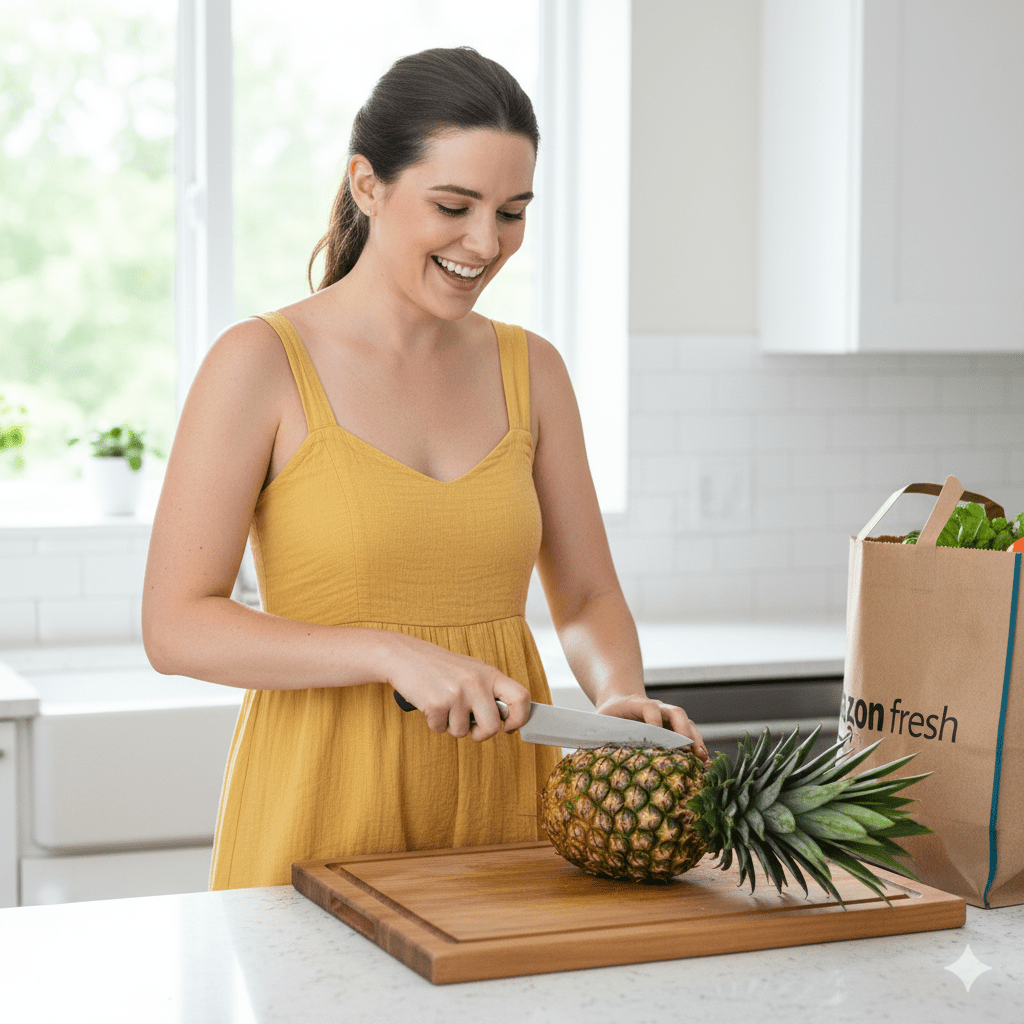
I’ve talked at length about the new Amazon Fresh store in Upland, even before it opened. Now that it’s been open for over a half year, I was wondering how others felt about the store.
The average Yelp review, based upon 51 reviews as of December 18, is about a 3.5, which is good. But what’s interesting is the polarity of the reviews, with 28 5-star reviews and 12 1-star reviews.
You can’t please everybody, but some of the 1-star reviews are interesting.
“very, very few employees at this location are incompetent and have no customer service skills. also no manners or decency.”
I think the reviewer meant “competent,” but hey.
“No matter what time of day I go there, there are always workers blocking the isles with large carts. That makes it impossible to shop.”
Again, “aisles.” But the reviewer noted a common complaint: the store appears to prioritize delivery orders over people coming in-store to shop, and multiple reviewers have noted the rudeness of the workers fulfilling delivery orders.
And apparently the rudeness does not coincide with speed.
“The order wasn’t ready for pickup hours after scheduled”
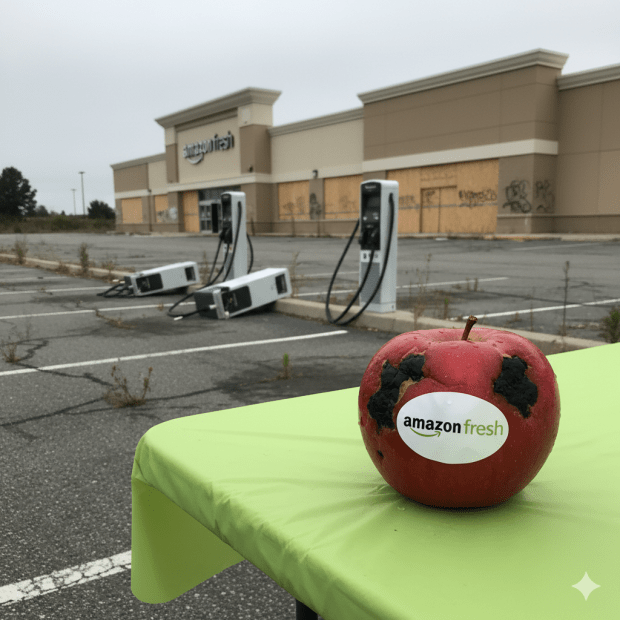
However, this particular review was written just a few days after the store opened, so some hiccups are expected.
Google Gemini.
And those who love the store LOVE it.
“Nice clean store. Cheap prices. The dash cart is awesome. Very helpful employees.”
And
“The store is clean, spacious, and very easy to navigate. Shopping here is simple and enjoyable. The staff is friendly and ready to help, which made the experience even better.”
So it appears that experiences can vary anywhere. Hopefully this store will last longer than the La Verne one.
Some of us authenticate ourselves to unlock our smartphones. Others authenticate to access confidential corporate information. A few authenticate to wield the power to annihilate the world.
The football and the biscuit
In the United States, the President (Commander-in-Chief) has a “biscuit.”
Google Gemini.
“The nuclear biscuit is a card with authentication codes that acts as the President’s personal key to unlocking America’s nuclear arsenal.
“The biscuit acts a lot like a two-factor authentication device or app. Its codes are updated regularly, and it works in connection with the nuclear football to verify the President’s identity. Without the biscuit, the President can’t order a nuclear strike, even if they have the football itself.”
“Something you have is quite an obvious one, you needed to have the actual Biscuit and the codes within.
“Something you know is when you opened the Biscuit. It had many codes printed on the cards and all were false apart from one. The President would have been told the position of the real code when he first took office. He would also be told each time the Biscuit was changed.
“For something you are, the phone line the President would need to contact has no number. It can only be contacted via a secure military phone. This phone would be handed to the President by one of his security team who would obviously not hand this phone to anyone but the President.”
Now you can argue that the phone line is not a TRUE something you are factor. A devious security team member could hand the phone to someone who SOUNDS like the President.
And there’s another complication.
Passing the football
Let’s say that a President is away from Washington. Say, at a school in Florida.
And all of a sudden attacks are launched in multiple U.S. cities.
What if an attack were launched in Florida, incapacitating the President, either temporarily of permanently?
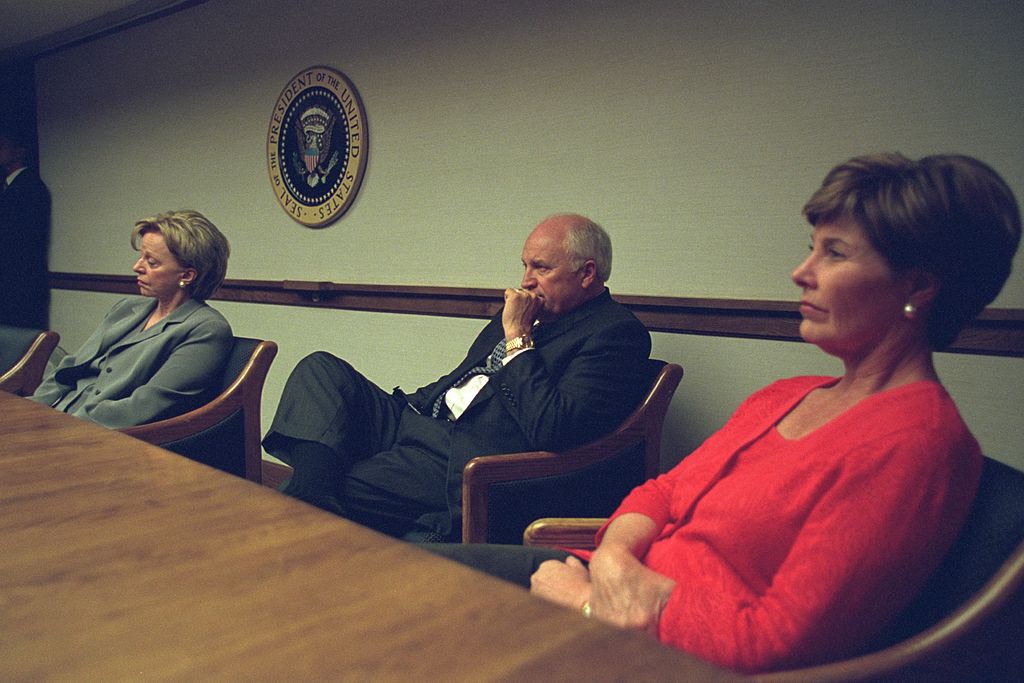
In such an attack, the country and the world cannot afford to wait for hours for the football to be flown to wherever Richard Cheney is.
“Believing that the vice president should be a partner in national security policymaking, President Jimmy Carter assigned a football to Vice President Walter Mondale and this became the practice for future U.S. administrations.”
Outside the U.S. Russia has a similar system called the “Cheget,” and other nuclear countries presumably have similar procedures to authenticate the persons or persons authorized to launch nuclear weapons.
Your football and biscuit
If you are an identity vendor or customer, you may have your own authentication and authorization procedures. While a breach of your procedures won’t result in the annihilation of civilization, it could create its own damage.
Do you need help describing the security of your identity solution?
ProfitLabs is a vendor of a hotel management system, the self-described “best hotel management system for budget hotels.” Now I’ve been on the periphery of hotel management for a while with my identity verification work in the hospitality industry, so I appreciate that ProfitLabs requires partnerships to provide its solution.
And according to a ProfitLabs post, one of its valuable partners is…HiveLLM.
Why?
“One platform that has truly made a difference for us is HiveLLM—a revolutionary solution that bridges the gap between artificial intelligence and real human expertise.
“Unlike conventional AI tools that rely solely on automated outputs, HiveLLM offers access to a vetted community of experts, providing actionable, up-to-date consulting in real time.”
“I received a suspicious email from “Sara Romano,” a “scout” with HiveLLM who wanted me to bid on a biometric content calendar with a budget of “75000” (no currency specified).
“HiveLLM has no corporate address, no LinkedIn presence, … and an advertised business model in which you can ask a question for 10 cents.”
The good news is that there have been no recent mentions of “scout” Sara Romano on the series of tubes. Maybe she got sent to the minor leagues.
Bredemarket writing offerings as of December 2025 (Bredemarket 400 Short Writing Service, Bredemarket 2800 Medium Writing Service, Bredemarket 4000 Long Writing Service, and Bredemarket 4444 Partner Retainer).
THIS VIDEO IS FAKE. U.S. Government pictures are public domain, so I altered and animated the original picture a bit. Inspired by a picture shared by Mitch Wagner of Kirk and Spock in ugly Christmas sweaters.








 Bredemarket